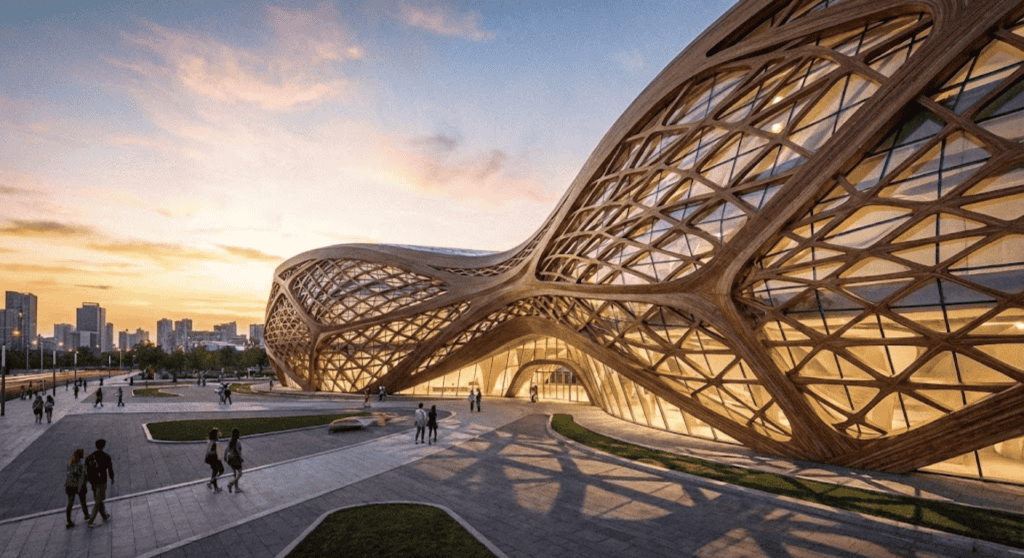
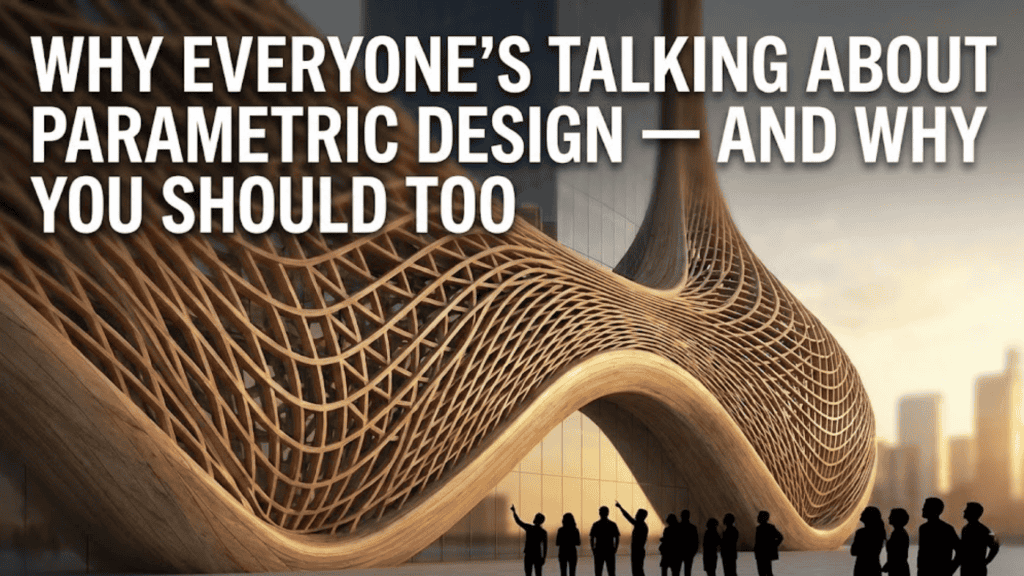
Parametric architecture in India is undergoing a dramatic transformation. Across cities like Mumbai, Jaipur, Chennai, and Pune, a new wave of residential buildings is redefining the urban skyline — not with height, but with breathtaking facade complexity. The era of the flat, tiled apartment block is giving way to algorithmically designed ACP panel screens, twisted aluminium fin cladding, organic wave forms, and intricate perforated jali panels that blur the boundary between art and architecture.
At SOGA Design Studio, we have been at the forefront of this movement, developing parametric facade systems specifically calibrated for Indian climatic conditions, plot constraints, and construction budgets. This post explores the four dominant parametric facade typologies reshaping Indian residential architecture in 2025-26.
1. Diamond & Rhombus Panel Facades — Jaipur
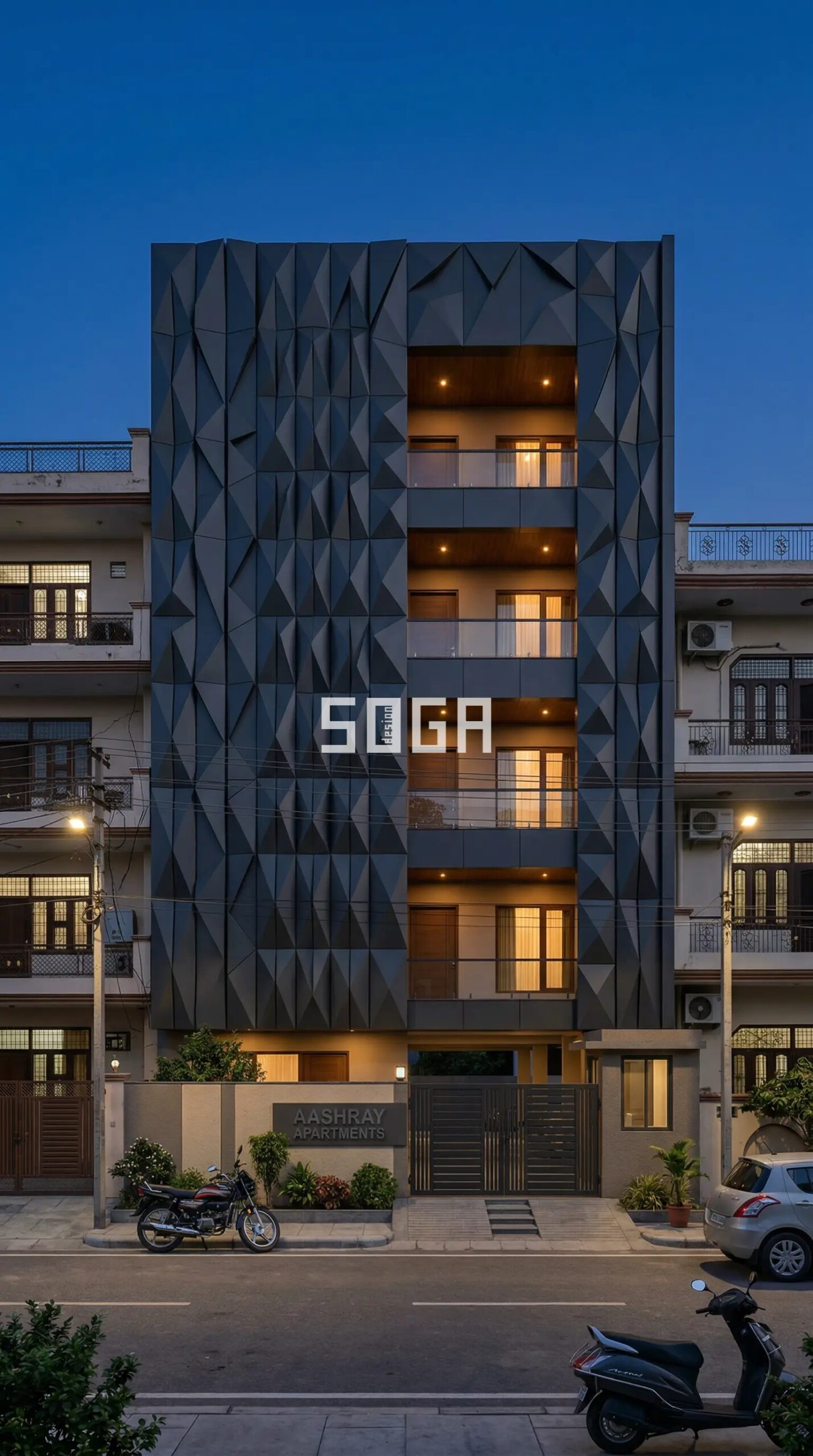
The diamond or rhombus-pattern parametric ACP panel is arguably the most popular facade typology in Rajasthan’s luxury residential market right now. Buildings clad in 3D diamond-shaped aluminium composite panels in charcoal grey or anthracite create a visual depth that flat cladding simply cannot match. Each panel is cut and folded at a precise angle, creating a relief surface where light and shadow play across the facade throughout the day.
In Jaipur’s hot-dry climate, this type of panel system offers a secondary benefit beyond aesthetics: the deep shadow relief actually reduces direct solar heat gain on the primary wall surface behind it. Recessed balconies with full-height glass railings sit behind the panel screen, giving residents visual privacy without sacrificing natural light. Ground floor compound walls with decorative iron gates complete the ensemble, maintaining the residential character even as the building pushes design boundaries.
Key design parameters: 3D fold angle 30–45°, panel size 600×600mm to 900×900mm, charcoal/anthracite/dark bronze finishes, 50–75mm standoff depth for shadow relief.
2. Twisted Aluminium Fin Cladding — Mumbai
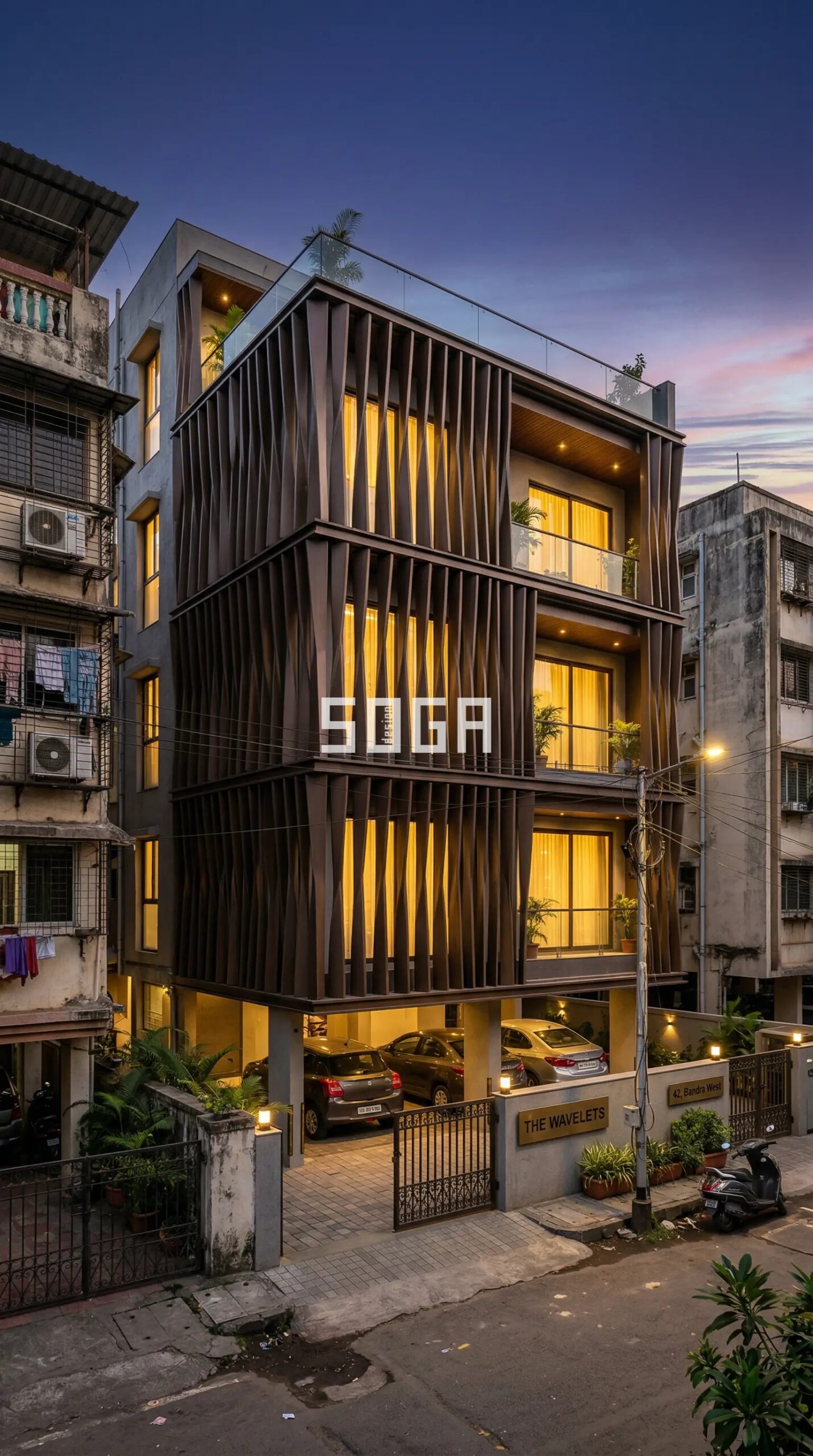
If diamond panels represent geometric precision, twisted fin cladding represents parametric dynamism. Vertical aluminium fins, rotated at continuously varying angles along the height and width of the building, create a facade that appears to shift and shimmer as the viewer moves. In Mumbai’s coastal environment, the dark bronze anodised finish holds up exceptionally well against the humid, salt-laden air.
The parametric logic governing the fin rotation follows a mathematical function — typically a sine wave or gradient field — so that the overall pattern is coherent and visually resolved despite the individual randomness. At dusk, when interior lights glow warm behind the fin screen, the effect is extraordinary: the building appears to be lit from within, with golden light leaking between the bronze fins against a purple-blue sky.
For Mumbai’s crowded residential lanes, the vertical fin system also provides natural ventilation benefits. The fins act as wind catchers, directing coastal breezes into the recessed balconies behind them — a genuinely bioclimatic design solution that is as functional as it is beautiful.
Key design parameters: Fin width 80–120mm, rotation range 0°–60°, spacing 150–250mm on centre, dark bronze / gun-metal / champagne gold finishes.
3. Organic Wave & Curved Panel Facades — Chennai
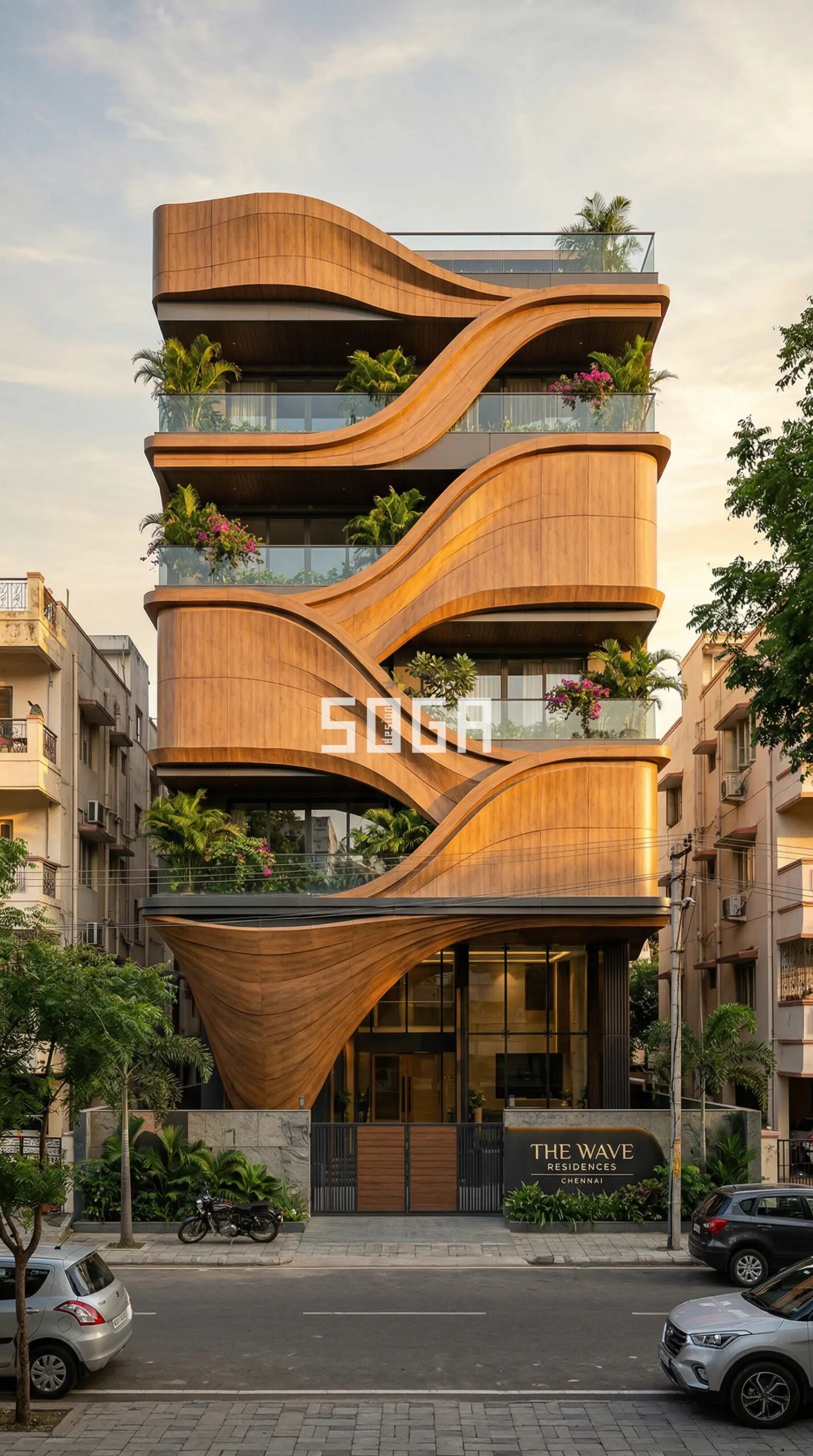
Chennai’s luxury residential market has embraced the organic wave facade with particular enthusiasm. Where diamond panels and twisted fins speak the language of angular precision, the wave form panel system speaks of fluidity and nature — qualities that resonate strongly with the cultural aesthetic preferences of South India’s high-net-worth homebuyers.
Large-scale wave-form panels in warm wood-look finish (typically HPL or wood-grain ACP) flow across the facade, alternating with recessed glass balconies. The curvature is generated parametrically — the wave amplitude and frequency are tuned to the building’s proportions, ensuring the organic form reads as intentional rather than arbitrary. A curved sculptural canopy over the entrance reinforces the flowing vocabulary, while lush plantings on balconies bring the biophilic character full circle.
In Chennai’s warm, humid climate, the wood-look finish must be specified carefully. High-quality HPL panels with UV-resistant coatings retain their warmth and visual richness for 15+ years even in tropical conditions. The curving form also sheds rain effectively, minimising water staining — a critical practical consideration in a city with intense monsoon rainfall.
Key design parameters: Wave amplitude 200–400mm, HPL or wood-grain ACP panels, minimum 2.5mm thickness, UV-resistant polyurethane topcoat, concealed fixing system.
4. Perforated Screen & Jali Panel Facades — Pune
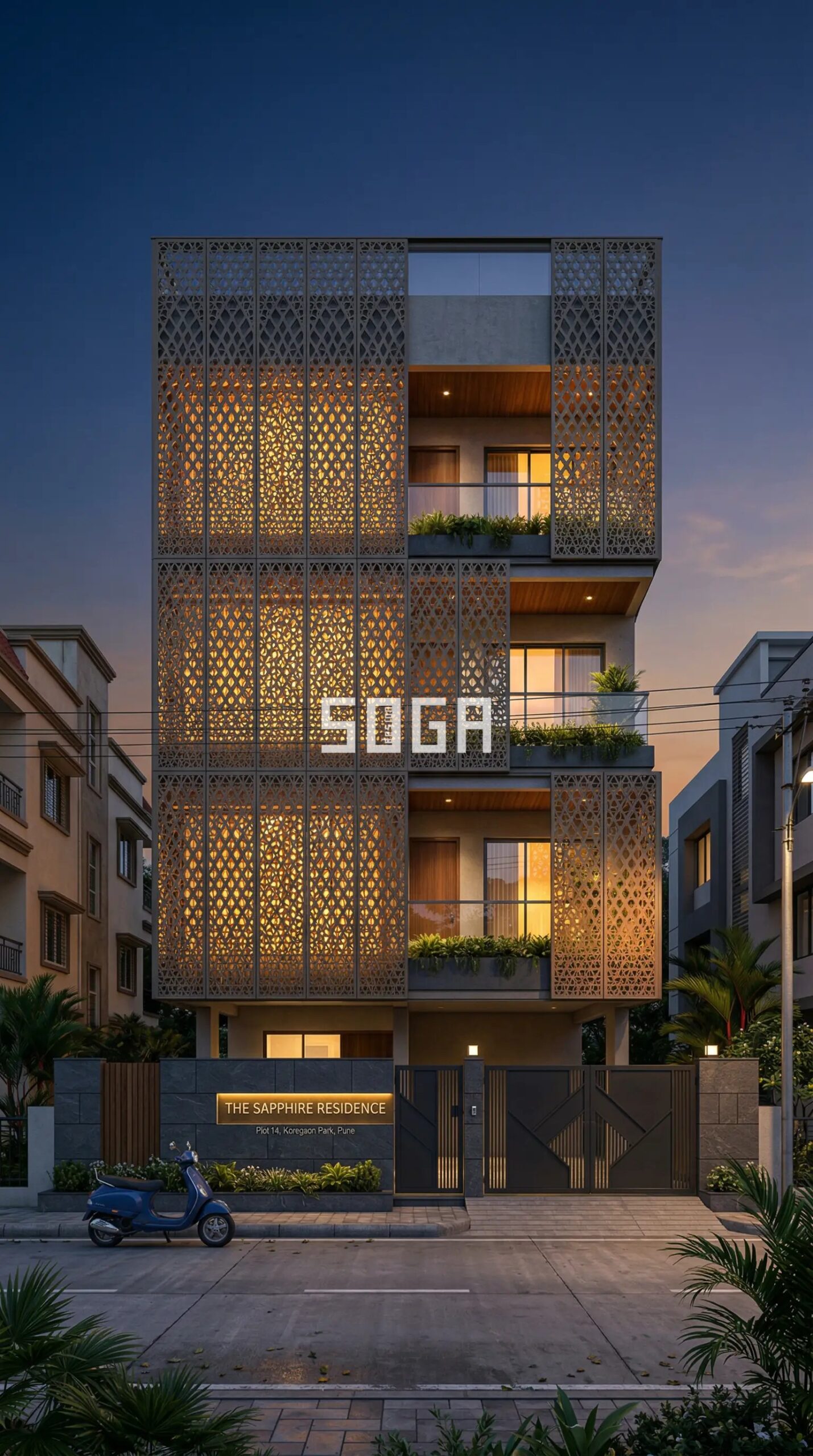
The perforated screen or contemporary jali is perhaps the most culturally resonant parametric facade typology in the Indian context. The jali — a perforated stone or metal screen — has been a defining element of Indian architecture for centuries, from the intricate sandstone screens of Mughal tombs to the carved marble jalis of Rajput palaces. The contemporary parametric jali translates this ancient tradition into a modern architectural vocabulary using CNC-cut metal panels.
In Pune’s thriving residential market, large-format perforated gunmetal panels with diamond or hexagonal cutout patterns are backlit by interior light at dusk, creating a dramatic glowing effect that makes these buildings instantly recognisable landmarks in their neighbourhoods. The visual drama is heightened by the strong contrast between the dark gunmetal panels and the warm amber glow filtering through thousands of precisely cut perforations.
Beyond aesthetics, the perforated screen offers substantial functional benefits: it provides solar shading, natural ventilation, visual privacy from the street, and acoustic insulation — all while creating a visually spectacular facade. Pune’s climate, with its temperate winters and warm summers, is ideally suited to this typology, where the screen can remain in place year-round without the heat build-up that would be problematic in more extreme climates.
Key design parameters: Panel thickness 3–4mm CNC-cut mild steel or aluminium, perforation ratio 30–45%, gunmetal / blackened steel / raw corten finishes, structural subframe for wind load resistance.
The Future of Parametric Facades in Indian Residential Architecture
These four typologies represent the leading edge of parametric facade design in India today, but the movement is accelerating rapidly. Advances in CNC fabrication, the falling cost of aluminium composite panels, and the increasing availability of skilled parametric designers are democratising access to these facade systems — moving them from ultra-luxury tier to premium mid-market projects.
SOGA Design Studio is currently developing next-generation parametric systems that integrate passive solar control, natural ventilation optimisation, and structural efficiency into the facade design logic from the ground up. If you are planning a residential or commercial project in India and want to explore what parametric facade design could do for your building, get in touch with our team.