SOGA Design Studio Pioneers Biophilic Architecture Through Tree-Inspired Parametric Design
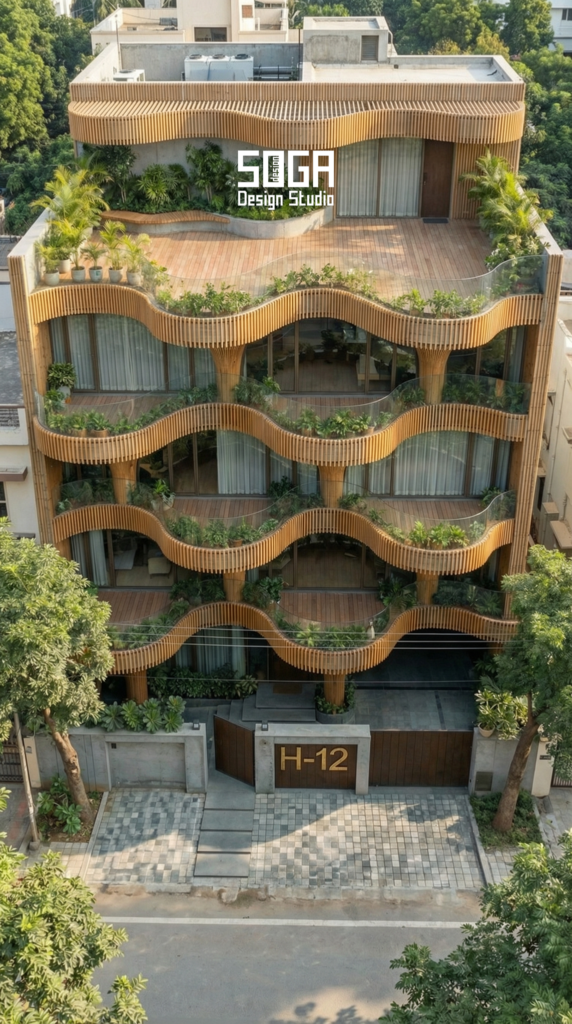
In an era where urban residents increasingly crave connection with nature, Anand Vriksham (Sanskrit for “Tree of Joy”) emerges as a revolutionary residential project that literally brings the forest into the city. Designed by SOGA Design Studio, India’s premier parametric design company specializing in computational design and biophilic architecture across India and Dubai, this residence transforms every level into a private green retreat through flowing engineered wood fins and integrated sky gardens.
Living Facade: Architecture That Breathes
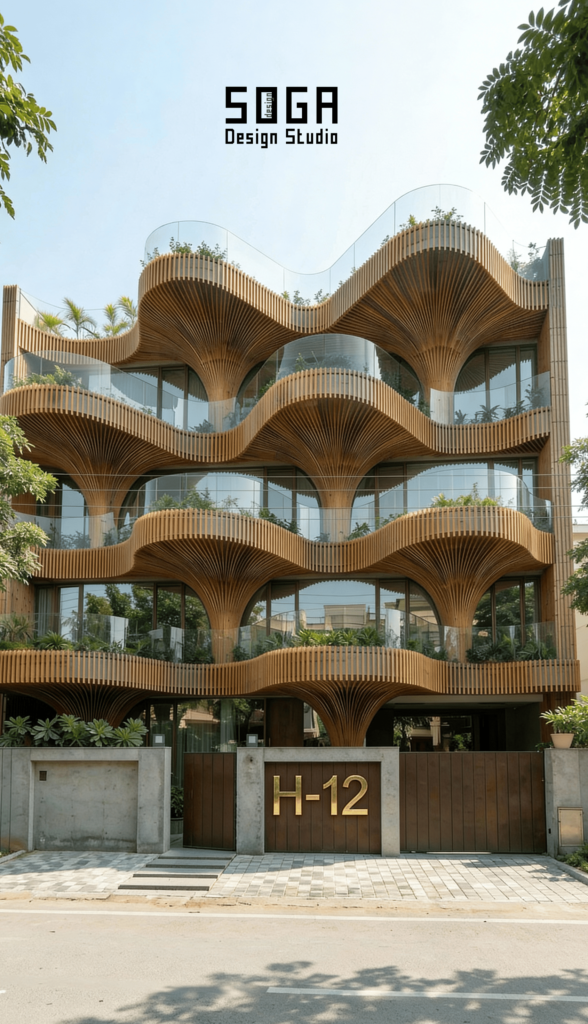
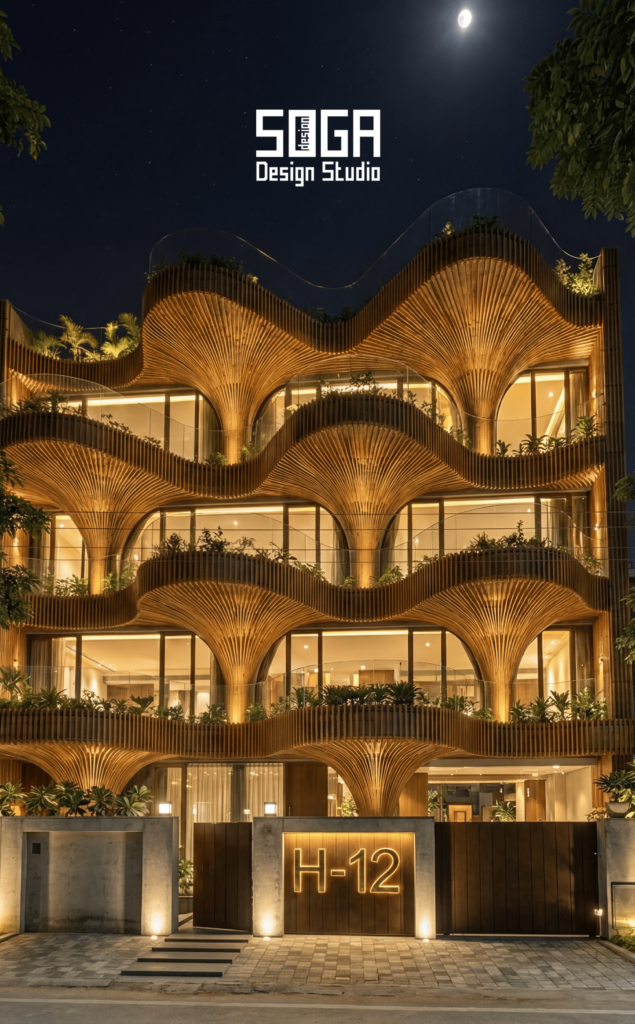
Anand Vriksham’s defining innovation is its living facade—a biophilic architectural system that blurs the boundary between building and nature, creating residences that feel like treehouses elevated above the urban streetscape.
Tree-Inspired Parametric Columns
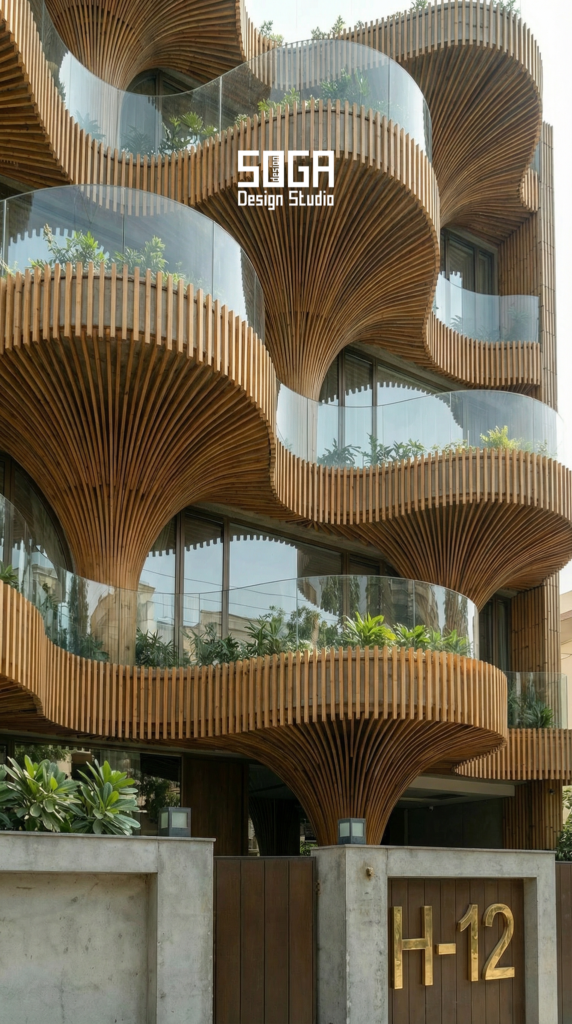
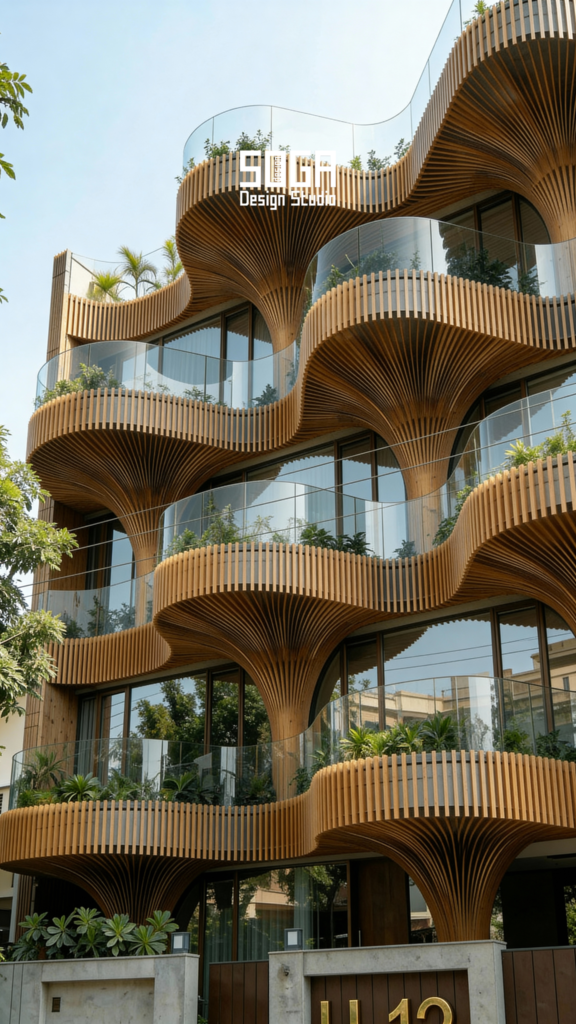
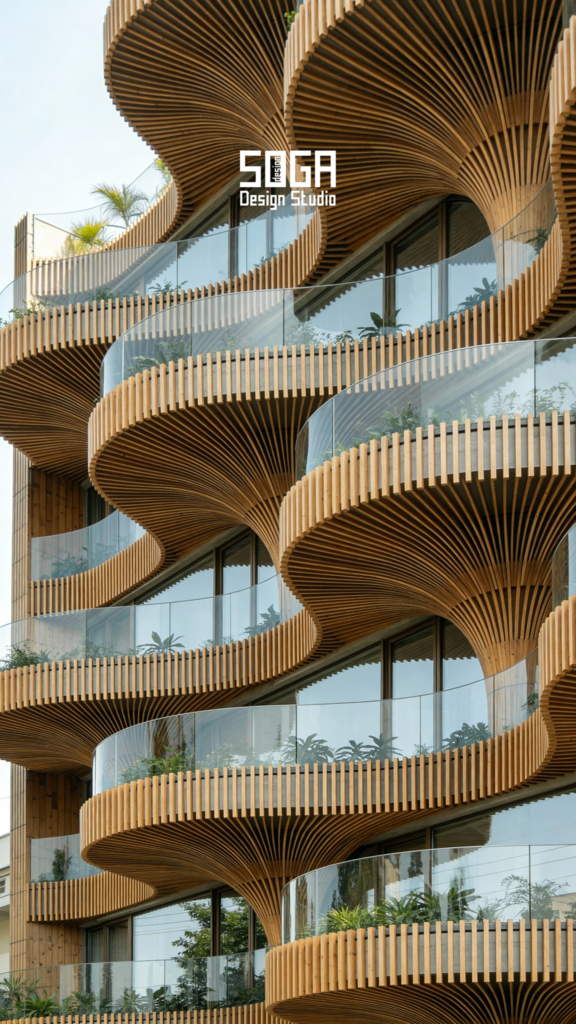
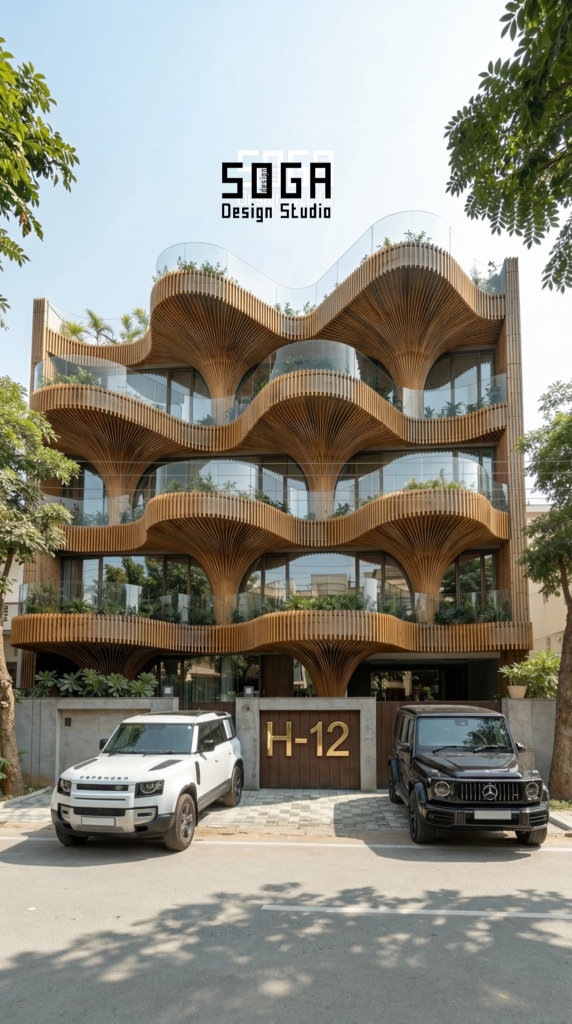
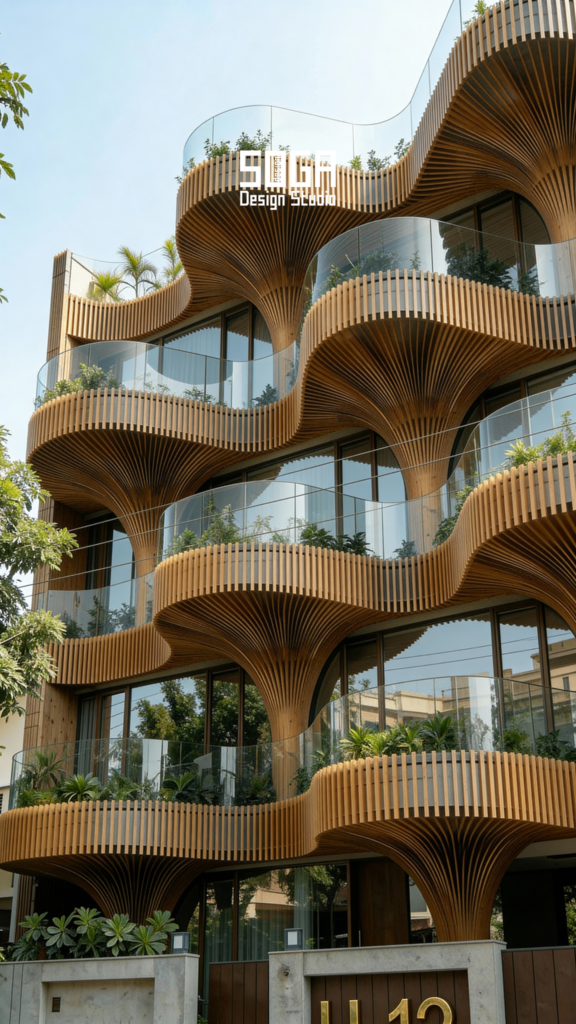
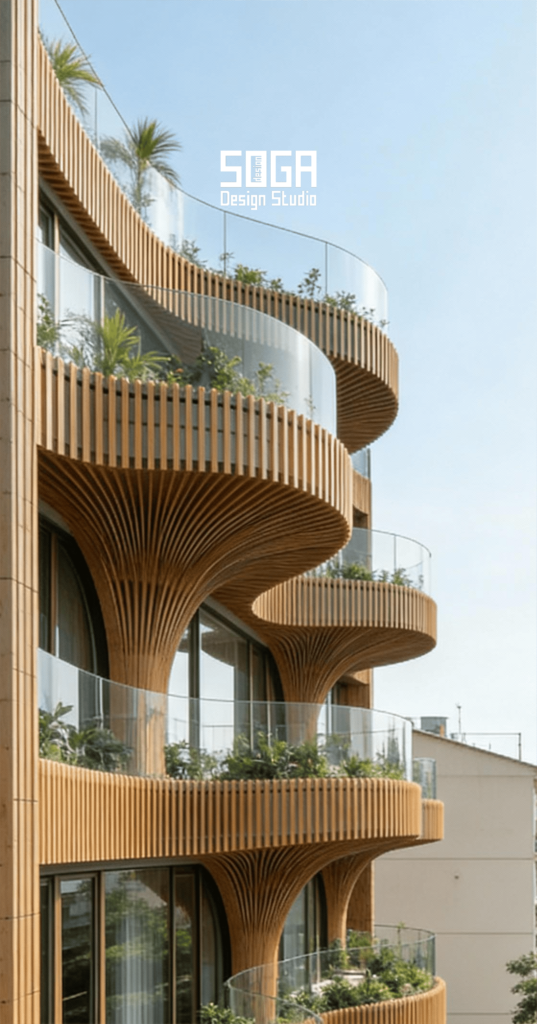
The facade’s most dramatic feature is a series of parametric “tree” columns that rise through multiple levels, their branches spreading organically to support flowing balconies:
Organic Structural Forms: Unlike conventional rectangular columns, these parametric tree forms expand and branch as they rise—narrow at their base, flaring outward like actual tree trunks to create cantilevered supports for the balconies above. This isn’t decorative sculpture—it’s structural engineering expressed through biomorphic parametric design.
Engineered Wood Construction: The tree columns are fabricated from high-performance engineered wood—a sustainable, dimensionally stable material that combines wood’s natural warmth with superior structural properties. Engineered wood enables the complex curved geometries that solid timber couldn’t achieve economically or reliably.
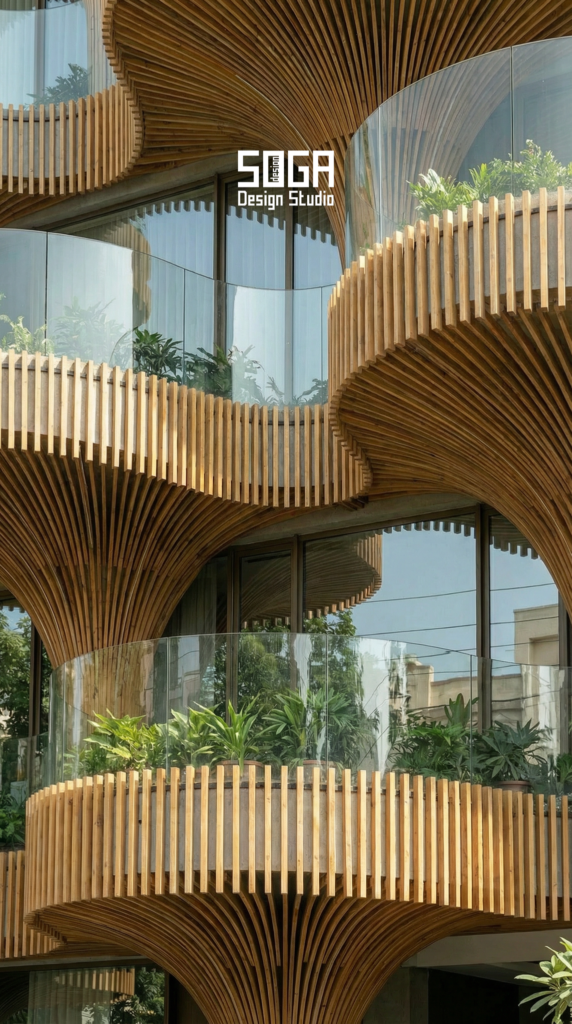
Radial Fin Pattern: Each tree column features radial fins that fan outward like palm fronds or unfurling leaves. These fins aren’t random—they’re parametrically generated with precise angular spacing and curved profiles that optimize both structural support and visual drama.
Natural Color Palette: The warm honey tones of the engineered wood create immediate visual warmth, contrasting beautifully with the white concrete structure and glass balconies. This material choice ensures the building feels warm and inviting rather than cold and institutional.
Flowing Timber Fins: Vertical Forest Texture
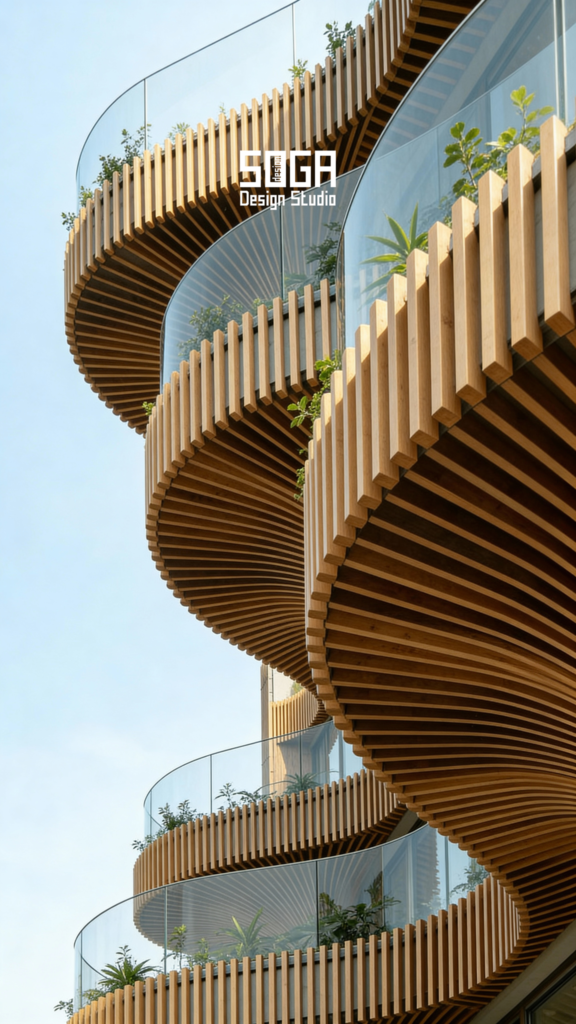
Complementing the tree columns, horizontal bands of engineered wood fins wrap around each level:
Continuous Horizontal Flow: The timber fins create horizontal visual movement that contrasts with the vertical tree columns. This interplay between horizontal and vertical wood elements mimics the layered structure of natural forests.
Privacy and Transparency Balance: The spaced fins provide privacy screening without creating complete enclosure. Residents can see out through the gaps while passersby cannot easily see in—achieving privacy without sacrificing the open, airy feeling of the sky gardens.
Solar Shading: The engineered wood fins provide substantial solar shading to the glass balcony enclosures, reducing heat gain while allowing filtered daylight. The spacing and depth were parametrically optimized for local climate conditions.
Dynamic Shadow Play: Throughout the day, the fins cast constantly changing shadow patterns on the white balcony floors and ceilings, bringing temporal awareness and connection to natural cycles of sun movement.
Wind Screening: The fins provide gentle wind screening for the balcony gardens, creating more comfortable microclimate conditions for both plants and residents.
Biophilic Balconies: Private Forest Retreats at Every Level
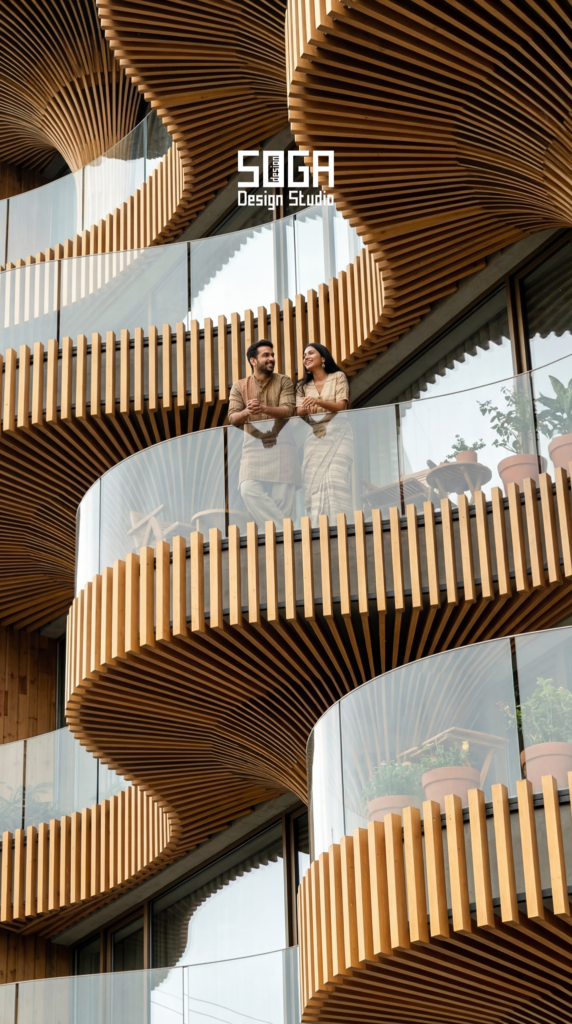
Each residence at Anand Vriksham features expansive biophilic balconies that function as private sky gardens:
Green Living Spaces
Generous Planting Areas: The balconies incorporate substantial planting beds and containers that support mature shrubs, small trees, and diverse plant collections. These aren’t token planters—they’re serious gardens that create genuine forest-like environments.
Vertical Layering: The planting design creates vertical layering similar to natural forests—ground covers, mid-height shrubs, and taller specimens—providing visual depth and ecological diversity.
Year-Round Greenery: Plant selections prioritize evergreen and hardy species that maintain visual appeal throughout seasons, ensuring the living facade remains lush and vibrant year-round.
Wildlife Attraction: The extensive greenery attracts birds, butterflies, and beneficial insects, bringing urban biodiversity directly to residents’ homes and creating dynamic living environments.
Spatial Quality
Inside-Outside Integration: The balconies are designed as true outdoor rooms—not leftover spaces but integral parts of the living environment where residents spend significant time.
Multiple Zones: Larger balconies incorporate different functional zones—dining areas, relaxation spaces, active gardening areas—supporting diverse activities and uses.
Weather Protection: The overhanging tree forms and floor above provide shelter from rain and intense sun, making the balconies comfortable in various weather conditions.
Privacy Gradients: The parametric arrangement of tree columns and timber fins creates graduated privacy—more open toward views, more enclosed toward neighboring buildings.
SOGA Design Studio: Pioneering Biophilic Parametric Design in India
Anand Vriksham represents SOGA Design Studio’s leadership in merging biophilic architecture with parametric design methodologies:
Computational Design for Organic Forms
Creating the tree-inspired facade required sophisticated parametric design processes:
Biomimetic Algorithm Development: Our team studied actual tree branching patterns, analyzing how natural trees distribute loads through branching structures. These observations informed parametric algorithms that generate structurally efficient tree forms with organic aesthetic qualities.
Structural Optimization: Each parametric tree column was analyzed using computational structural tools to ensure adequate strength and stiffness while minimizing material usage. The branching angles, fin thicknesses, and connection details all emerged from this optimization process.
Solar Analysis: Parametric environmental simulation evaluated how the tree forms and timber fins perform for solar shading throughout the year. The fin spacing, orientation, and depth were calibrated to maximize shading effectiveness while preserving views and natural ventilation.
Growth Simulation: Using parametric tools, we simulated how the balcony plantings will grow over time, ensuring that mature plant sizes would integrate harmoniously with the architectural forms rather than overwhelming them.
Fabrication Rationalization: The organic curves of the tree forms needed translation into manufacturable components. Our rationalization algorithms converted smooth parametric surfaces into assemblies of CNC-cut engineered wood pieces that could be fabricated efficiently.
Engineered Wood Expertise
SOGA Design Studio’s expertise in engineered wood facades was critical to Anand Vriksham’s success:
Material Selection: We specified high-performance engineered wood products—cross-laminated timber (CLT) or laminated veneer lumber (LVL)—that provide superior dimensional stability compared to solid wood, preventing warping and cracking in India’s variable climate.
Weather Protection: The engineered wood received multi-layer protective treatments—water-repellent primers, UV-resistant stains, and protective topcoats—that ensure long-term durability despite exposure to sun, rain, and humidity.
Sustainable Sourcing: The engineered wood was sourced from sustainably managed forests with appropriate certifications, supporting SOGA Design Studio’s commitment to environmental responsibility.
Fire Treatment: Fire-retardant treatments were applied to meet building code requirements while maintaining the natural appearance of the wood.
Maintenance Design: Details were designed for long-term maintainability, with accessible inspection points and provisions for refinishing or replacing individual components without major facade disassembly.
Premium Residential
The “H-12” designation places Anand Vriksham in a prime residential neighborhood characterized by:
Established Community: represents a mature, well-established residential area with tree-lined streets and quality infrastructure.
Urban Context: Dense urban surroundings make the biophilic design approach particularly valuable—bringing nature to a context where it might otherwise be scarce.
Aspirational Location: The address commands premium positioning, appropriate to the innovative architectural approach and high-quality execution.
Contextual Sensitivity: The living facade creates a positive contribution to the neighborhood, improving visual quality and environmental performance compared to conventional residential buildings.
Parametric Biophilic Design: Theory Meets Practice
Anand Vriksham demonstrates how biophilic design principles can be implemented through parametric architecture:
Biophilic Design Principles
Direct Nature Connection: The extensive greenery provides direct visual and physical contact with nature—proven to reduce stress, improve mood, and enhance wellbeing.
Natural Patterns and Forms: The tree-inspired columns and organic curves echo natural forms, creating subconscious comfort and aesthetic preference rooted in human evolutionary psychology.
Dynamic and Diffuse Light: The timber fins create filtered, dappled light similar to forest canopies, providing the ever-changing illumination patterns humans find most comfortable.
Material Connection: Natural wood materials create tactile and visual warmth that synthetic materials cannot replicate, strengthening occupants’ psychological connection to nature.
Spatial Refuge: The balconies create protected spaces with controllable boundaries—offering refuge while maintaining prospect views—satisfying deep human spatial preferences.
Parametric Implementation
Algorithmic Organic Forms: Parametric tools enable the organic, tree-like forms that would be extremely difficult to design and build using conventional methods.
Performance Optimization: Computational analysis ensures that the biophilic elements (trees, fins, gardens) also perform functionally—providing shade, privacy, and environmental control.
Fabrication Precision: CNC fabrication of engineered wood components allows the complex curved geometries to be manufactured affordably and accurately.
Scalability: The parametric approach allows the biophilic design system to be adapted to buildings of different sizes or configurations, making the concept replicable.
Engineered Wood: Sustainability Meets Performance
The choice of engineered wood as the primary facade material offers multiple advantages:
Environmental Benefits
Carbon Sequestration: Wood is the only major building material that sequesters atmospheric carbon. The engineered wood facade at Anand Vriksham stores approximately 30-40 tons of CO2 that would otherwise contribute to climate change.
Renewable Resource: Unlike metals, concrete, or plastics derived from fossil fuels, wood is renewable when harvested from sustainably managed forests.
Low Embodied Energy: Producing engineered wood requires significantly less energy than steel, aluminum, or concrete, reducing the building’s embodied carbon footprint.
Biogenic Material: At end of life, wood can biodegrade naturally or be combusted for energy with minimal environmental impact compared to synthetic materials requiring landfilling.
Technical Performance
Dimensional Stability: Engineered wood’s laminated construction provides superior dimensional stability compared to solid timber, preventing warping, twisting, or checking that could compromise facade performance.
Structural Efficiency: Engineered wood products achieve higher strength-to-weight ratios than solid timber, enabling longer spans and more dramatic cantilevers in the tree columns.
Precision Manufacturing: CNC fabrication of engineered wood components achieves tolerances of ±1mm, ensuring perfect fit and professional appearance during installation.
Workability: Engineered wood can be cut, drilled, and shaped using standard woodworking equipment, making complex geometries practical to fabricate locally.
Day-to-Night Transformation
Anand Vriksham offers dramatically different experiences across 24-hour cycles:
Daytime Character
Natural Warmth: During daylight, the honey-toned engineered wood glows warmly in natural light, creating inviting, comfortable appearance.
Green Abundance: The sky gardens appear lush and vibrant, with sunlight filtering through plants and highlighting the variety of textures and colors.
Shadow Dynamics: The parametric tree columns and timber fins cast constantly changing shadow patterns that mark time’s passage and create ever-varying visual interest.
Urban Forest Impression: From street level, the building reads as a vertical forest—wood and greenery dominating the visual impression over concrete and glass.
Nighttime Transformation
Uplighting Drama: Integrated uplighting within the tree columns creates theatrical effects, illuminating the radiating fins and creating dramatic silhouettes against the night sky.
Glowing Interior: Illuminated residential interiors visible through the timber fin screens create a lantern-like effect, suggesting warmth and inhabitation.
Highlighted Gardens: Strategic plant lighting within the balcony gardens maintains the green presence after dark, ensuring the living facade concept remains evident 24 hours daily.
Golden Warmth: The wood’s warm color tones are enhanced by warm-white lighting, creating inviting visual warmth that contrasts with the coolness of surrounding buildings.
Technical Innovation: Building the Living Facade
Executing Anand Vriksham’s vision required solving numerous technical challenges:
Structural Integration
Load Distribution: The parametric tree columns transfer loads from multiple floors to the primary structure below. Structural engineering coordinated these load paths with the organic aesthetic forms.
Connection Details: Each branching point in the tree columns required engineered connections using concealed steel brackets and fasteners that maintain visual cleanliness while ensuring structural integrity.
Cantilever Engineering: The dramatic cantilevers of the balcony slabs required careful structural design using post-tensioned concrete or structural steel to achieve the floating appearance.
Lateral Stability: The tree columns don’t provide lateral stability for the building—that’s handled by the concrete core—allowing the wood elements to serve primarily aesthetic and environmental functions.
Waterproofing and Drainage
Balcony Waterproofing: Each balcony floor received multiple layers of waterproofing membranes, drainage layers, and protective systems to prevent water infiltration into occupied spaces below.
Planter Drainage: Integrated drainage systems within planting beds collect irrigation runoff and rainwater, directing it to downpipes that prevent water damage to facades and structure.
Wood Protection: All engineered wood surfaces exposed to weather received protective treatments and were detailed to shed water rather than trap it, preventing rot and decay.
Irrigation Systems
Automated Watering: Drip irrigation systems provide controlled watering to balcony plants, programmed to deliver appropriate moisture without waste.
Smart Controls: Moisture sensors and weather stations optimize irrigation scheduling based on actual conditions, conserving water while ensuring plant health.
Maintenance Access: Irrigation components are accessible for maintenance and adjustment without disrupting plant growth or interior spaces.
Plant Selection and Care
Climate-Appropriate Species: Plant selections prioritize species proven to thrive in local climate conditions with reasonable maintenance requirements.
Container Design: Planting containers provide adequate root volume and drainage while integrating seamlessly with architectural design.
Maintenance Program: A professional landscape maintenance program ensures the sky gardens remain healthy and attractive, with regular pruning, fertilization, and plant health monitoring.
Living in the Canopy: Residential Experience
Anand Vriksham creates a unique residential experience fundamentally different from conventional apartments:
Psychological Benefits
Stress Reduction: Research consistently demonstrates that views of nature and greenery reduce psychological stress and promote mental wellbeing—benefits residents experience daily.
Connection to Seasons: The changing appearance of plants through seasons creates temporal awareness and connection to natural cycles often lost in urban environments.
Sense of Place: The distinctive architecture and living facade create strong sense of place and identity that generic apartments cannot match.
Pride of Residence: Living in an architecturally significant building creates pride and satisfaction that enhances quality of life.
Practical Benefits
Climate Moderation: The green balconies and wood shading moderate temperature extremes, creating more comfortable outdoor spaces and reducing indoor cooling loads.
Air Quality: Plants filter air pollution and produce oxygen, creating healthier breathing environments.
Noise Reduction: The combination of vegetation and timber elements provides acoustic dampening, reducing traffic and city noise intrusion.
Privacy: The parametric fins and strategic planting provide visual privacy without requiring complete enclosure.
Flexibility: The generous balconies offer flexible space that residents can adapt to their preferences—gardens, outdoor dining, children’s play areas, work-from-home spaces.
SOGA Design Studio’s Biophilic Portfolio
Anand Vriksham joins SOGA Design Studio’s growing portfolio of projects that integrate nature with parametric design:
Residential Innovation: Anand Vriksham (living facade), Vikram Ahuja Residence Mumbai (organic curves), demonstrating biophilic residential expertise.
Commercial Biophilia: Projects increasingly incorporate green walls, sky gardens, and natural materials even in commercial contexts.
Material Diversity: While known for metal facades (brass, copper, aluminum), SOGA Design Studio’s engineered wood expertise adds sustainable biophilic options to our palette.
Climate Responsiveness: Each project responds to specific local climate through parametric environmental analysis and appropriate material selection.
This portfolio demonstrates that biophilic parametric design isn’t a niche specialty but an approach applicable across building types, scales, and contexts throughout India and internationally.
SEO Keywords: Biophilic Parametric Architecture Leadership
SOGA Design Studio’s expertise at Anand Vriksham establishes leadership in:
Biophilic Architecture India: Pioneering nature-integrated architecture that enhances human wellbeing through design.
Parametric Design in India: Applying computational design to create organic, nature-inspired forms.
Living Facade: Creating building envelopes that integrate vegetation and architecture seamlessly.
Engineered Wood Facade: Expertise in sustainable, high-performance wood facade systems.
SOGA Design Studio: India’s premier parametric design company with biophilic specialization.
Parametric Residential Design: Creating homes through computational design that enhances quality of life.
Sustainable Facade Design: Material choices and design strategies that reduce environmental impact.
Tree-Inspired Architecture: Biomimetic design that learns from natural structural systems.
Sky Garden Design: Integrating elevated green spaces with residential architecture.
Computational Design India: Leading India’s adoption of algorithmic design methodologies.
This comprehensive expertise positions SOGA Design Studio as India’s go-to firm when projects demand biophilic innovation, parametric sophistication, and sustainable material expertise.
The Future of Urban Living
Anand Vriksham points toward a future for urban residential architecture:
Nature Integration: Future urban housing will increasingly integrate nature directly rather than treating it as external amenity.
Material Innovation: Sustainable materials like engineered wood will replace energy-intensive steel and concrete in appropriate applications.
Wellbeing Focus: Architecture will be evaluated not just on functionality and aesthetics but on measurable health and wellbeing impacts.
Parametric Tools: Computational design will become standard methodology for creating complex, nature-inspired forms efficiently.
Climate Adaptation: Buildings will respond actively to climate through natural systems (shade, vegetation, ventilation) supplementing mechanical systems.
Individual Identity: Mass-produced generic housing will give way to parametrically customized buildings with distinctive character.
Conclusion: Growing a New Architecture
Anand Vriksham—the “Tree of Joy”—represents more than an individual building; it’s a manifesto for a new direction in Indian residential architecture. Through SOGA Design Studio’s expertise in parametric design, biophilic architecture, and sustainable engineered wood construction, urban living transforms from isolated existence to integrated connection with nature.
The flowing timber fins, tree-inspired parametric columns, and abundant sky gardens demonstrate that dense urban housing need not sacrifice connection to nature. Through computational design and sustainable materials, architects can create vertical forests—buildings that improve residents’ wellbeing while contributing positively to urban environmental quality.
As India’s leading parametric design company and pioneer in biophilic architecture, SOGA Design Studio proves that Indian expertise can lead globally in creating architecture that serves both human needs and environmental responsibility. The future of urban housing isn’t more glass towers—it’s living facades that breathe, grow, and connect residents to the natural world.
Anand Vriksham invites us to reimagine urban residential architecture—where every home feels like a treehouse, where forests grow vertically through our cities, and where parametric design serves the ancient human need for connection with living nature.
About SOGA Design Studio
SOGA Design Studio is India’s premier parametric design company and computational design firm, specializing in biophilic architecture and sustainable facade solutions across India and Dubai. As a leading parametric facade company offering integrated design-build services, we create distinctive architectural experiences through advanced algorithmic design, nature integration, and innovative sustainable materials including engineered wood, recycled metals, and bio-based composites. Our portfolio includes the living facade at Anand Vriksham, along with parametric projects at Padmaja Regal Jewellery Mysuru, Kanak Jewellery Sangli, One 9 Group GIFT City, and numerous other landmark buildings throughout India.
For inquiries about biophilic parametric design, living facades, engineered wood facades, sky garden integration, or to discuss how our expertise can create wellbeing-focused architecture for your project anywhere in India or Dubai, contact SOGA Design Studio.
Project Details:
- Project Name: Anand Vriksham (Tree of Joy)
- Design and Build: SOGA Design Studio
- Facade System: Living facade with parametric engineered wood tree columns and timber fins
- Key Features: Biophilic balconies, sky gardens at every level, tree-inspired structural forms, flowing timber fins
- Building Type: Luxury residential / Multi-family housing
- Materials: Engineered wood (CLT/LVL) with protective treatments, glass, concrete, integrated planting systems
- Design Approach: Biophilic parametric design with biomimetic structural forms
- Significance: India’s pioneering living facade residence integrating nature, parametric design, and sustainable engineered wood construction
Instagram Post from SOGA Design Studio