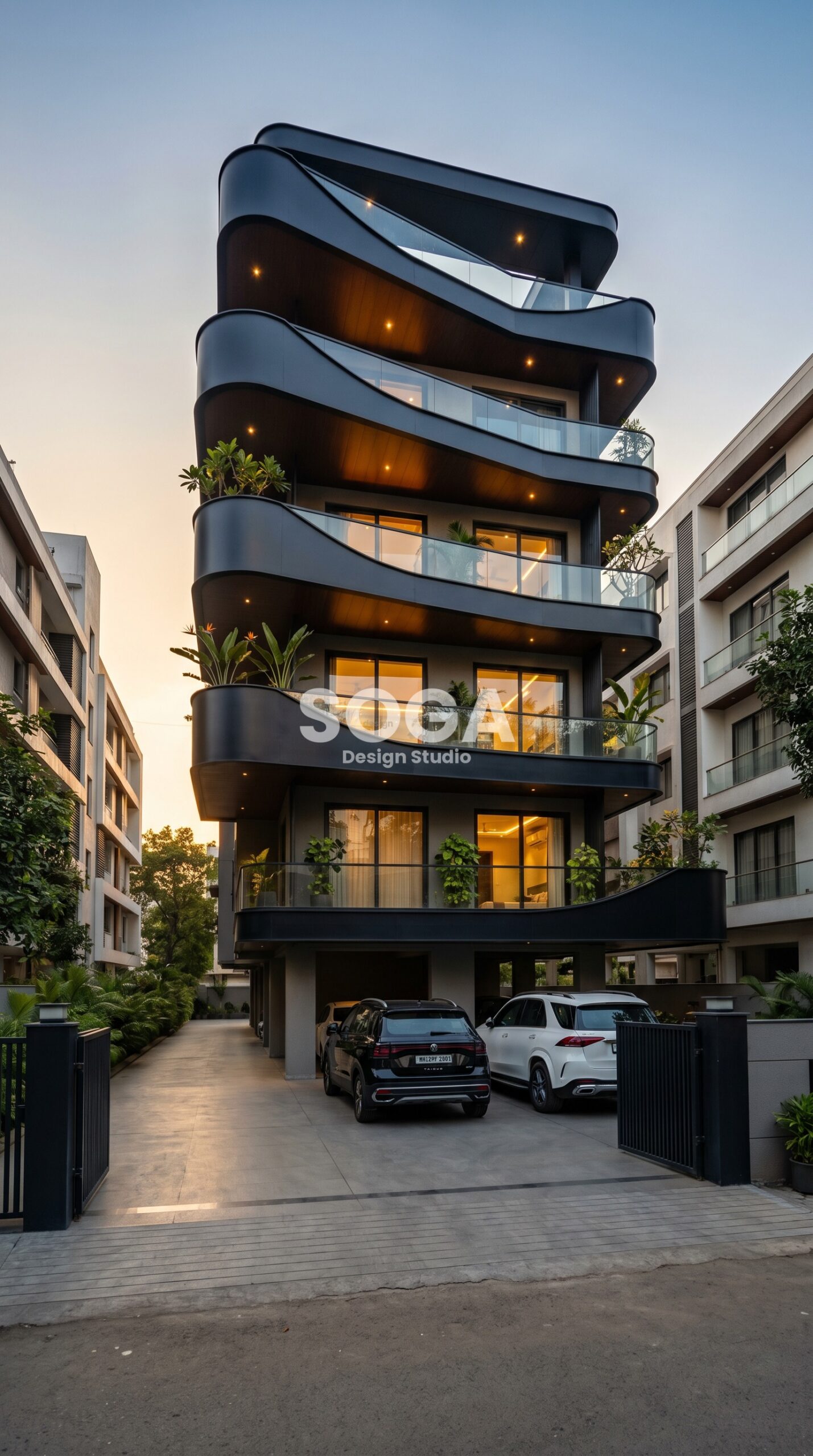
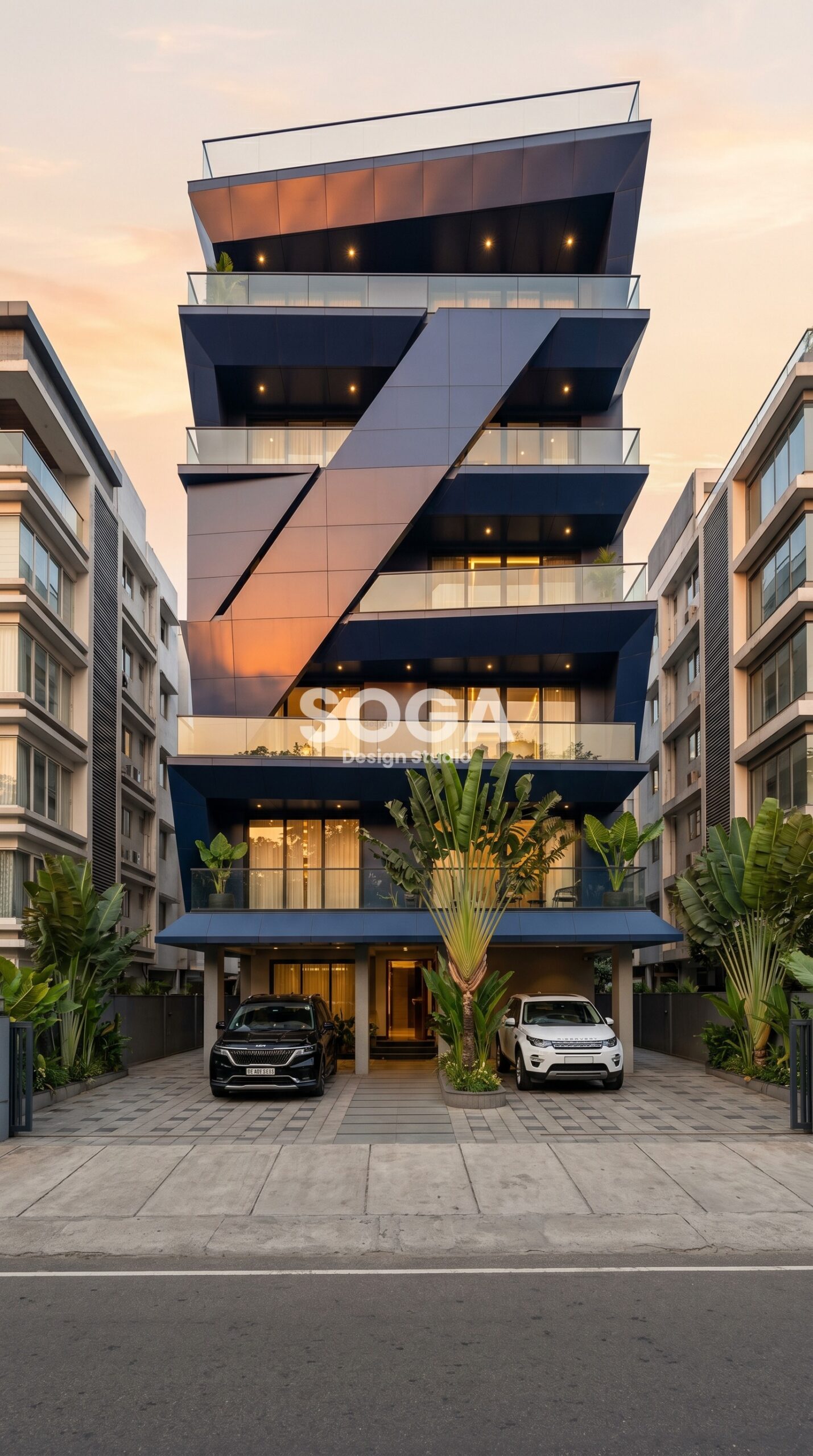
Parametric architecture in Kochi is redefining the skyline of one of India’s most progressive cities. The diagonal slash-cut metal panel facade with angular overhangs executed in matte deep navy blue ACP panels represents the pinnacle of contemporary facade engineering — where computational design meets material precision to create buildings that are simultaneously functional, expressive, and climatically responsive.
The Rise of Parametric Architecture in Kochi
Kochi has long been a city that embraces bold ideas — from its historic maritime trade routes to its thriving contemporary arts scene. Today, parametric architecture in Kochi is the latest chapter in this story of innovation. The diagonal slash-cut metal panel facade with angular overhangs approach, characteristic of SOGA Design Studio’s work, responds directly to the coastal city’s unique climate: the angular overhangs provide deep shade during Kerala’s intense monsoon and summer sun, while the matte deep navy blue ACP panels maintain their visual integrity through humidity and salt air exposure. Buildings in Marine Drive, Edappally, and Kakkanad are increasingly adopting this architectural vocabulary, signalling a city-wide shift toward design-forward residential and commercial facades.
What sets parametric facade design apart from conventional approaches is the depth of computational intelligence embedded in every panel, joint, and overhang. Architects at SOGA use algorithmic tools to optimize shading angles, structural load distribution, and material usage simultaneously — resulting in facades that look sculptural but perform with engineering precision.
Matte Deep Navy Blue ACP Panels: Material of the Moment
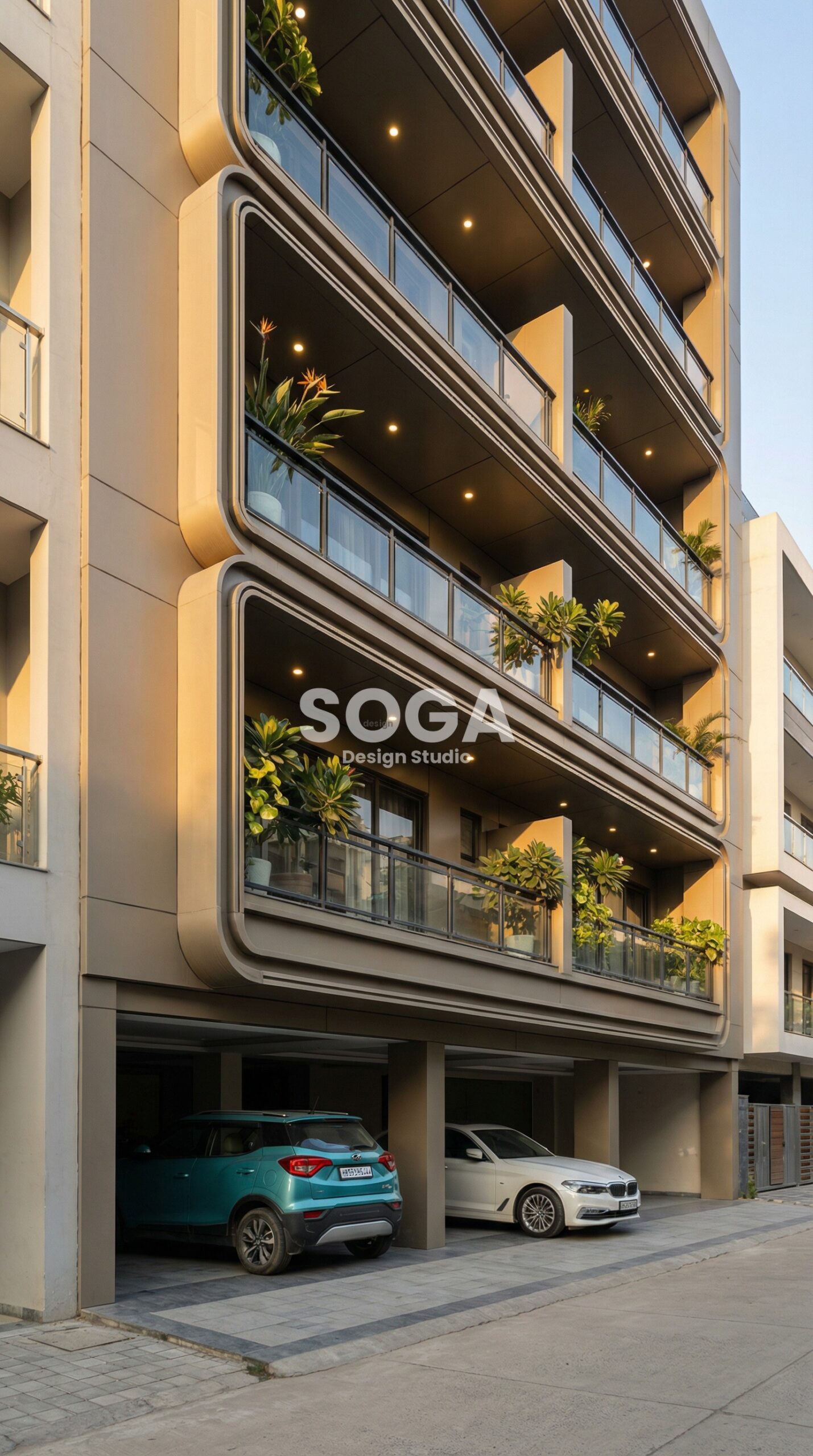
matte deep navy blue ACP panels have emerged as the defining material choice for high-end residential facades in Kerala’s urban centres. Unlike reflective or gloss finishes, the matte surface absorbs and diffuses light — creating a rich, depth-filled visual quality that shifts dramatically between morning and evening light conditions. In the context of Kochi’s golden-hour sunsets over the backwaters, a navy blue ACP facade becomes almost luminous, catching warm amber tones against the deep blue ground. The material’s thermal properties are equally compelling: the dark, matte finish dissipates heat effectively when combined with proper ventilation detailing, making it well-suited for buildings where passive cooling is a priority.
From a maintenance perspective, aluminium composite panels offer a significant advantage in Kerala’s coastal climate. They resist corrosion, require minimal cleaning, and retain colour fidelity for 15–20 years without recoating. For developers and homeowners investing in premium residential architecture in Kochi, matte deep navy blue ACP panels represent an optimal balance of aesthetic impact, durability, and lifecycle cost.
Key Design Features of the Diagonal Slash-Cut Facade Typology
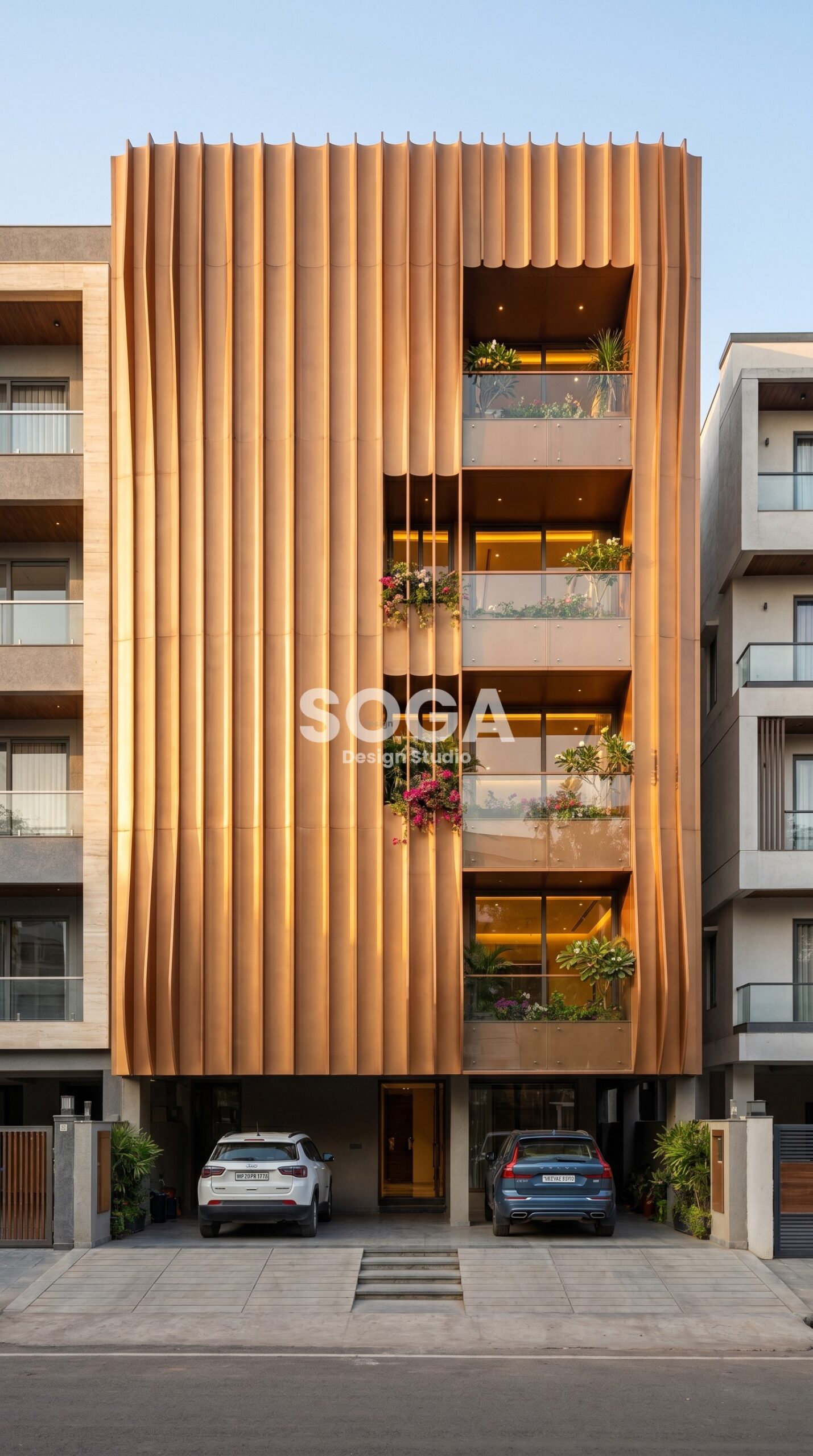
The diagonal slash-cut metal panel facade with angular overhangs is not merely a surface treatment — it is a structural and spatial strategy. The diagonal cut angles create angular overhangs at each floor plate, generating a cascade of shade that reduces direct solar gain on glazed areas by 40–60% compared to flat facades. The angular geometry also creates a sense of dynamic movement when viewed from street level: as you approach or move past the building, the facade appears to shift, revealing shadow depths and material planes that a flat elevation could never achieve.
Structurally, the angular metal panels are anchored to a concealed aluminum sub-frame that allows thermal expansion without telegraphing stress to the panel face. Every corner, return, and joint is engineered to drain rainwater efficiently — critical in a city that receives 250–300cm of annual rainfall. The result is a facade that performs as flawlessly in July’s monsoon as it does in the dry summer months.
Why Parametric Design Works for Indian Cities in 2026
India’s rapidly urbanising cities face a common challenge: how to build at speed and scale without sacrificing architectural quality. Parametric design offers a compelling answer. Because the design logic is encoded algorithmically, the same system that generates a facade for a G+6 building in Kochi can be adapted for a G+10 tower in Gurugram or a boutique residence in Pune — maintaining design coherence while accommodating local site constraints, orientation, and programme. This scalability makes parametric architecture in India not just an aesthetic preference but a practical necessity for architects and developers who need to deliver quality across multiple projects simultaneously.
Beyond scalability, parametric facades address India’s growing sustainability requirements. The Energy Conservation Building Code (ECBC) increasingly mandates performance standards for building envelopes, and parametric shading systems are one of the most effective tools for achieving compliance without compromising design ambition.
SOGA Design Studio’s Vision for Kochi
At SOGA Design Studio, we believe that every city in India deserves architecture that reflects its identity — its climate, its culture, its aspirations. Our parametric facade work in Kochi is grounded in this conviction. Whether it is a luxury independent house in Marine Drive or a premium multi-family building in Kakkanad, we approach each project with the same rigour: computational precision in design, material excellence in execution, and a commitment to creating buildings that will remain relevant and beautiful for generations. Contact SOGA Design Studio to explore how parametric architecture can transform your next project in Kochi.