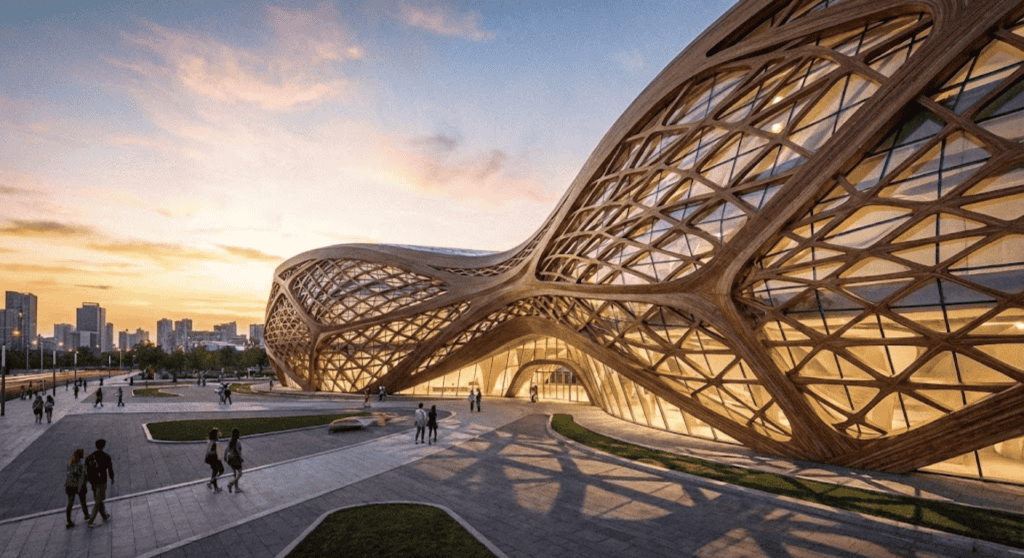
Parametric facade design is the most significant shift in Indian building skins in a generation — the move from a facade that is drawn to one that is generated. Instead of repeating a fixed pattern, an algorithm tunes every panel’s depth, angle, and density to the building’s exact climate, orientation, and brief. The result is a facade that performs like a machine and looks like sculpture. But the term gets thrown around loosely, so this guide explains what parametric facade design actually is, the real design-to-fabrication process, what it costs per square foot in India, the landmark projects that prove it, and how SOGA Design Studio delivers it fabrication-first.
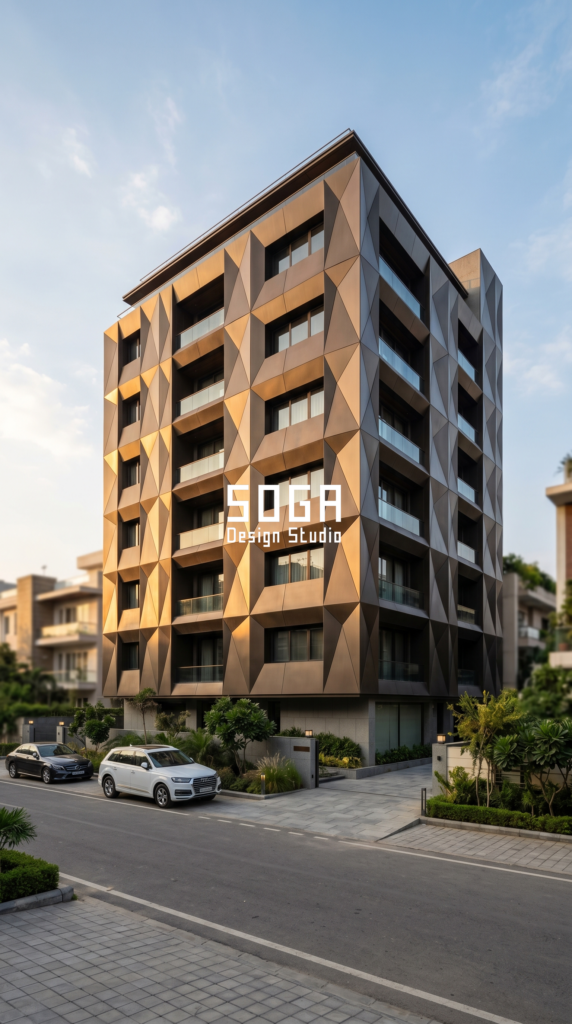
What Parametric Facade Design Actually Is
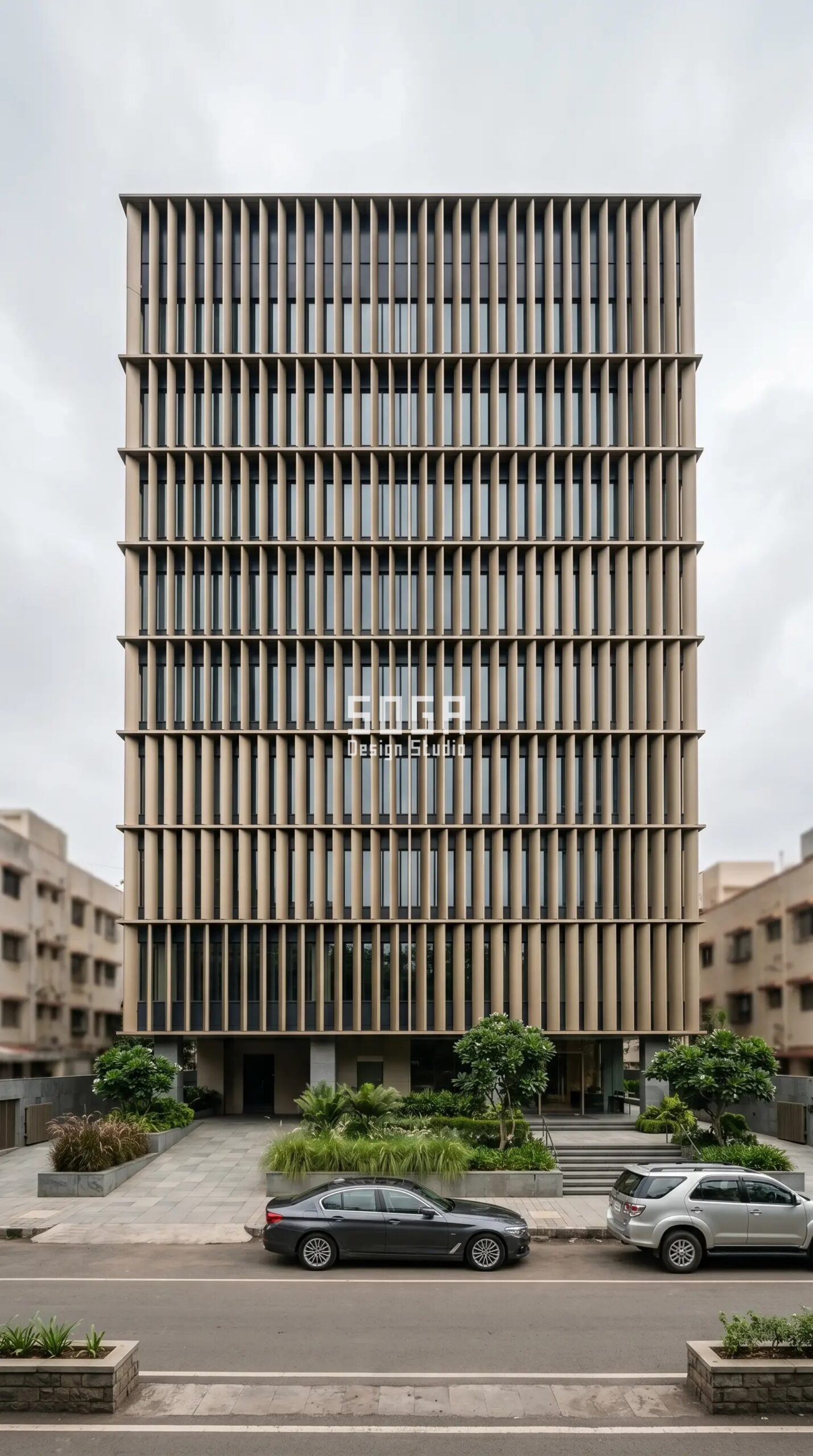
Parametric facade design uses algorithmic rules — driven by parameters like sun angle, view, privacy, structure, and budget — to generate a building skin where every element is mathematically calibrated rather than uniformly repeated. Change a parameter (say, the solar load on the west face) and the whole facade updates: panels deepen, openings tighten, the pattern flows. This is computational design applied to the building envelope. The payoff is a facade that is simultaneously high-performing (it shades, ventilates, and daylights precisely where needed) and unmistakably original — no two parametric facades look alike, because no two briefs and sites are alike. It is the direct computational descendant of India’s traditional jaali screen, which tuned openings by hand centuries ago.
The Parametric Design-to-Fabrication Process
What separates real parametric facade design from a pretty render is that it is built fabrication-first. The SOGA process runs in five stages:
1. Brief & Site Analysis
Plot dimensions, orientation, sun path, views, privacy needs, regulations, and budget are captured as the parameters that will drive the design.
2. Parametric Modelling (Rhino + Grasshopper)
The facade is built as a live algorithmic model in Rhino and Grasshopper. Designers adjust parameters and instantly see dozens of variations — panel depth, density, rhythm — rather than redrawing each one.
3. Performance Simulation
Solar radiation, daylight, and shading are simulated per orientation. The geometry is optimised so the skin cuts heat where the sun is harsh and opens where light and breeze are wanted.
4. Fabrication-Ready Output (GFRC / CNC)
The model outputs exact panel sizes, joints, fixings, and a sub-frame — ready for GFRC casting or CNC cutting. This is the step most “parametric” projects skip, and where they fail to get built.
5. Fabrication & Installation
Vetted Indian fabricators produce the panels; the facade is installed on its engineered sub-frame. What was approved on screen is what goes up on site.
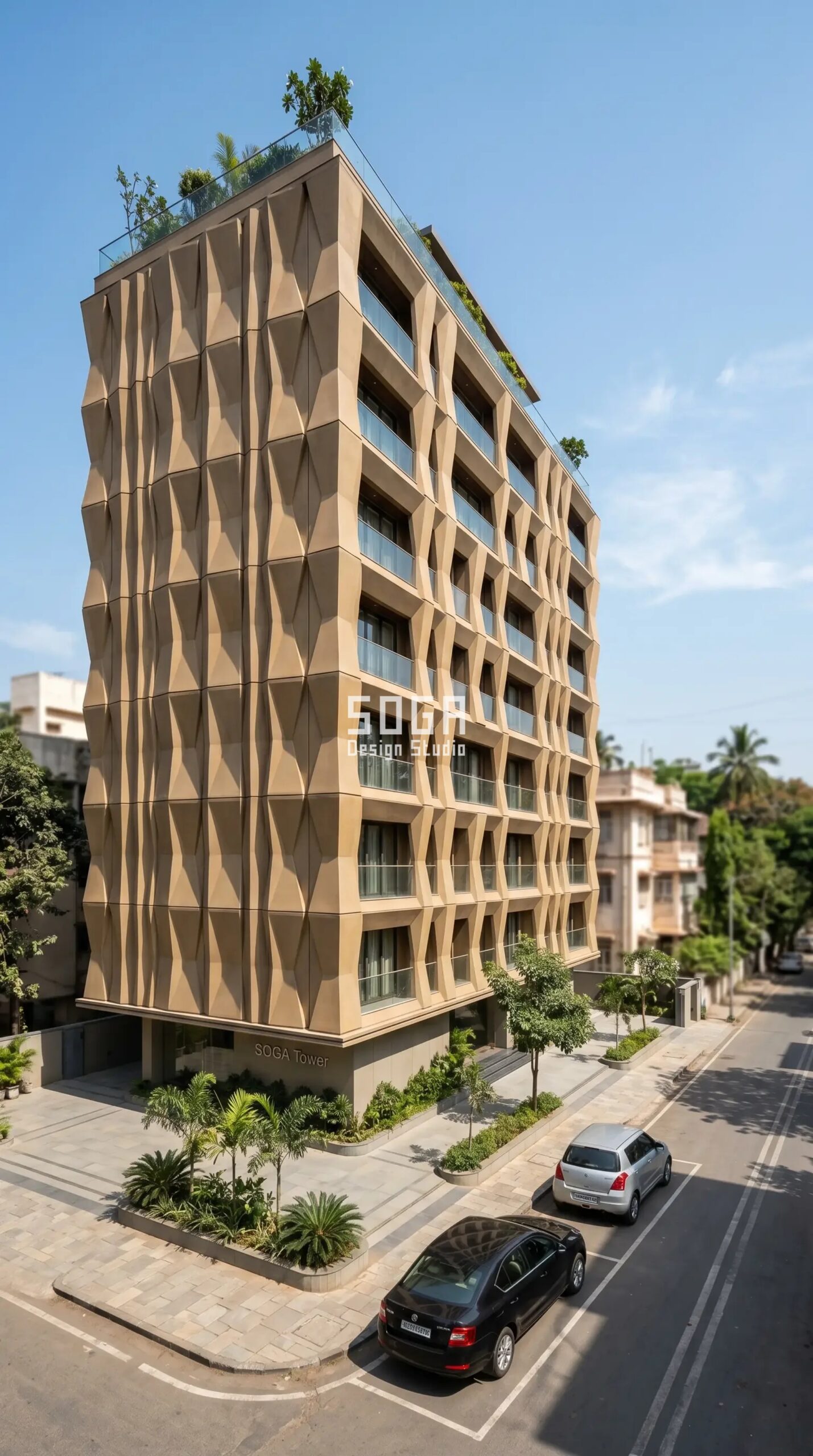
Parametric Facade Cost Per Square Foot in India (2026)
| System | Installed cost (₹ per sq ft) | Character |
|---|---|---|
| Powder-coated aluminium parametric screen | ₹800–₹2,500 | Lightweight, any pattern |
| GFRC parametric panels | ₹900–₹2,200 | Sculptural depth, mass |
| Steel parametric facade | ₹1,200–₹2,800 | Robust, large spans |
| Zinc / Corten specialty | ₹1,500–₹3,000 | Statement, premium |
| Solid aluminium panels | ₹800–₹1,800 | Flat premium metal |
Cost depends on material, panel complexity, facade area, and building height. The myth that parametric design is unaffordable comes from confusing it with one-off bespoke fabrication; in reality, a well-built parametric model standardises panel families and optimises cutting, which controls cost. SOGA Design Studio prepares an itemised estimate from the parametric model itself, so the number is grounded in real panel counts — not a guess.
Real Parametric Architecture in India
Parametric thinking is already proven at landmark scale in India. The Lotus Temple in Delhi resolves 27 marble petals into one parametric form. The Indira Gandhi International Convention Centre wears a jali-inspired computational skin. Sanjay Puri Architects’ Cielo Tower in Nagpur (completed 2026) is a 12-storey residential tower whose sectional inhabitable jaali responds to 40°C-plus summers. The Tanishq flagship in Mumbai uses a parametric metal coin facade. These prove the approach works in Indian conditions and culture — and parametric architecture India is now scaling down from monuments to everyday G+3 to G+7 homes and commercial buildings, which is exactly where SOGA Design Studio works.
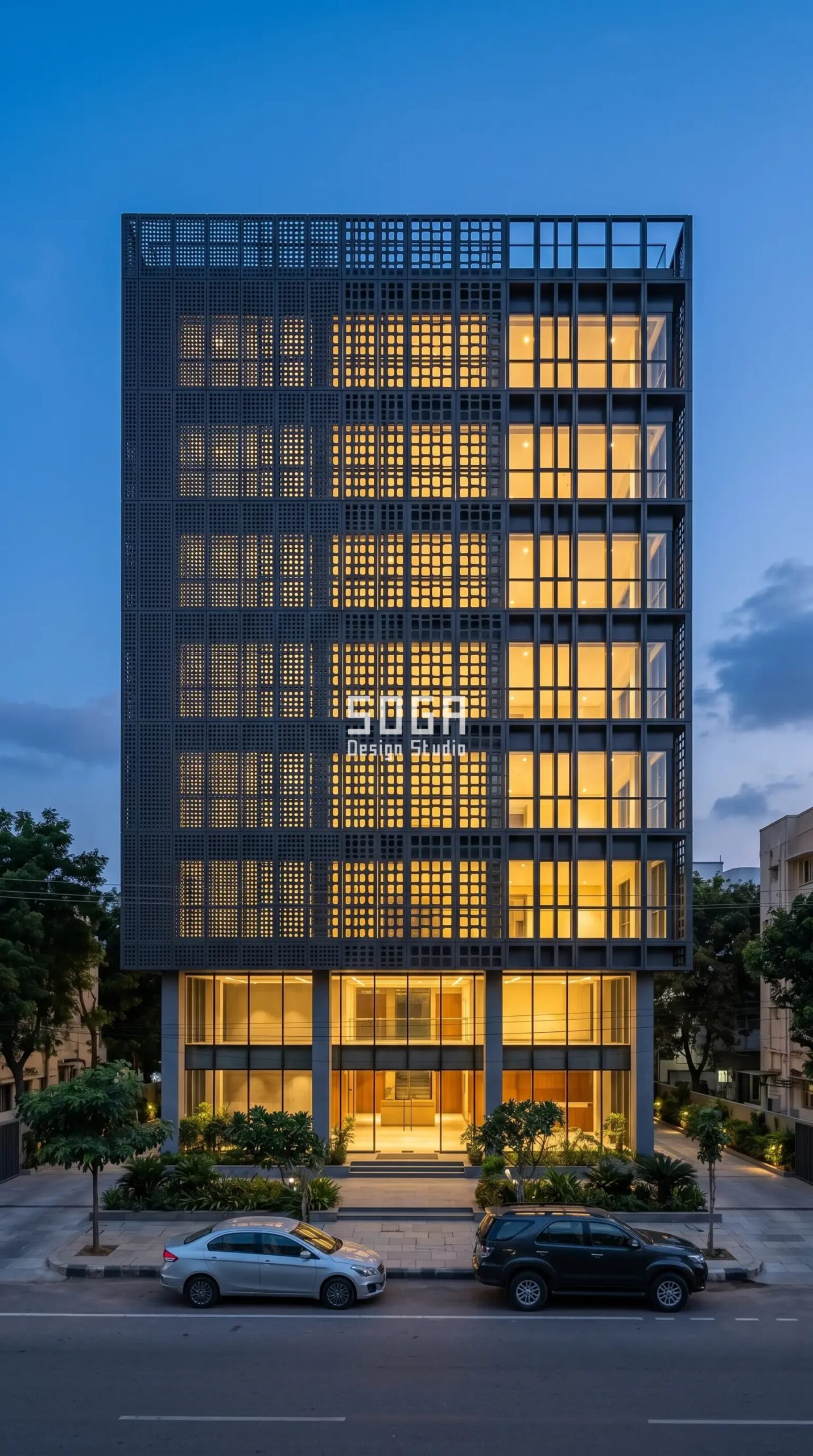
Why Parametric Beats Conventional Facade Design
Conventional facade design repeats a fixed module regardless of where it sits, so the same panel shades a hot west wall and a cool north one identically — wasteful in both directions. Parametric facade design tunes each panel to its exact position, which means better heat control (25–40% lower solar heat gain where it matters), better daylight, and a stronger, more original identity, often for a comparable cost once fabrication is optimised. It also compresses the design timeline: generating and testing dozens of variations takes days in a parametric model versus weeks of manual redrawing. For a serious project, the question in 2026 is no longer whether to go parametric, but how well it is executed.
Why SOGA Design Studio
SOGA Design Studio is a parametric and computational architecture firm based in Gurugram, India, working across India, Dubai, and Singapore. Parametric facade design is not a service we add on — it is how we work. Every project is built as a live Rhino and Grasshopper model, simulated for the Indian climate, and taken fabrication-first through GFRC and CNC production to installation, so the facade performs and gets built exactly as designed. Our signature systems — the Para-Timber Ribbon facade, Para-Scale Shingle facade, Para-Chevron Diagrid, and Para-Hex 3D Module — give each building a distinct, climate-tuned identity. Explore our full parametric facade design services for residential, commercial, and mixed-use projects. Get a custom facade concept for your building — contact SOGA Design Studio at sogadesignstudio.com/contact.
Frequently Asked Questions
What is parametric facade design? Parametric facade design uses algorithmic rules driven by parameters — sun, view, privacy, structure, budget — to generate a building skin where every panel is calibrated rather than repeated. The result is a facade that controls heat and daylight precisely while expressing a unique, sculptural identity.
How much does a parametric facade cost per square foot in India? A parametric facade costs ₹800–₹2,500 per sq ft for powder-coated aluminium, ₹900–₹2,200 for GFRC, and ₹1,200–₹2,800 for steel, installed. Cost depends on material, panel complexity, and facade area; a well-built parametric model optimises panels to control cost.
Is parametric facade design only for large buildings? No. While landmarks like the Lotus Temple and Cielo Tower made it famous, parametric facade design is now common on G+3 to G+7 homes and commercial buildings across India. The same computational process scales down efficiently to individual plots.
What software is used for parametric facade design? Rhino with the Grasshopper plugin is the industry standard for parametric facade design, paired with solar and daylight simulation tools. The parametric model also outputs fabrication-ready data for GFRC casting and CNC cutting, linking design directly to production.
Does SOGA Design Studio design parametric facades remotely? Yes. SOGA Design Studio designs parametric facades for clients across India and NRI clients in Dubai, Singapore, and the UK. The Rhino and Grasshopper model, climate simulation, and fabrication-ready drawings are all developed and delivered through a full remote workflow.