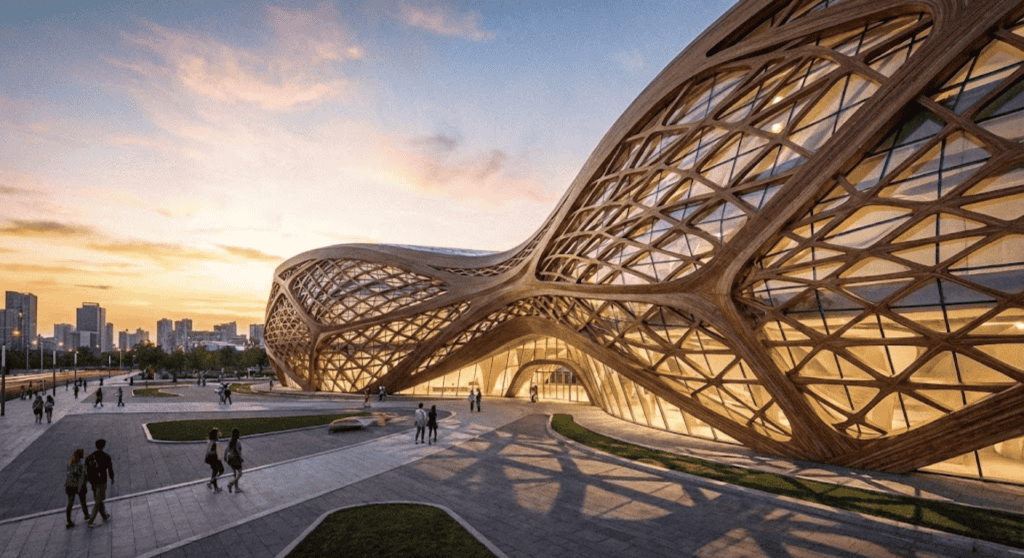
Introduction to Parametric Design
Parametric design is an innovative approach to design that involves the manipulation of parameters to create intricate and adaptive forms and structures. This concept is rooted in computer-aided design (CAD) technologies, which enable designers and engineers to define relationships between various parameters and geometric entities. By adjusting these parameters, users can swiftly generate a multitude of design alternatives, all while maintaining coherent relationships within the model. The significance of parametric design is particularly evident in fields such as architecture and engineering, where it fosters creativity and enhances efficiency in the design process.
In architectural practice, parametric design facilitates the exploration of complex forms that would be cumbersome or impossible to achieve using traditional methods. Designers can easily modify aspects like shape, size, and structural properties, leading to dynamic and responsive environments. This adaptability plays a crucial role in addressing diverse project requirements, optimizing materials, and improving overall performance. As a result, parametric design has become a vital tool for architects who aspire to push the boundaries of conventional design and elevate the aesthetic quality of their work.
Moreover, parametric design influences engineering by streamlining workflows and enhancing precision. Engineers can utilize parametric models to automate processes such as structural analysis, detailing, and fabrication. The ability to swiftly adjust parameters not only accelerates the design phase but also assists in identifying and resolving potential issues at an early stage. Ultimately, parametric design serves as a powerful catalyst for innovation across various disciplines, emphasizing the synergy between technology and creativity in shaping our built environment. As industries continue to evolve, understanding the fundamentals of parametric design remains essential for professionals aiming to harness its full potential.
The Historical Evolution of Parametric Design
Parametric design, a method that defines and manipulates design parameters in order to generate forms and structures, has a rich historical background. Its origins can be traced back to early geometric modeling techniques that date as far back as ancient civilizations. The Greeks, for instance, utilized geometric principles to create architectural forms, laying the foundations for what would later evolve into parametric concepts.
The significance of mathematics and geometry in the design process became increasingly noticeable through the Renaissance period. Influential figures such as Leonardo da Vinci and Albrecht Dürer explored the intersections of mathematics and art, contributing to the conceptual framework that would support modern parametric design. The advent of these early explorations in mathematical relationships paved the way for more complex design practices that utilized parameters to define and manipulate forms.
With the onset of the 20th century, technological advancements began to play a pivotal role in the evolution of parametric design. The development of computers in the mid-1900s revolutionized how designers approached form generation. The introduction of computer-aided design (CAD) software in the 1980s allowed designers to automate calculations and visualize intricate models, facilitating the application of parametric principles on a larger scale.
The evolution continued into the 21st century, where software such as Rhino, Grasshopper, and Autodesk’s Revit began to dominate the design landscape. These tools empowered architects and designers to create responsive environments and structures through a series of interconnected parameters. The ability to iterate designs rapidly through computational algorithms represents a significant shift in the design paradigm, enabling exploration beyond traditional constraints. As a result, parametric design has emerged as a foundational approach in contemporary architecture and beyond, reflecting an ongoing dialogue between technology and creativity.
Core Principles of Parametric Design
Parametric design is a revolutionary approach in the field of architecture and product design that hinges on the interplay between parameters and design variables. At its core, a parameter is a measurable factor that can be adjusted to influence the outcome of a design. This could encompass dimensions, materials, or performance metrics. By manipulating these parameters, designers can explore a variety of design possibilities and optimize their solutions effectively.
Another fundamental principle is the relationship between rules and constraints. In parametric design, rules serve as the guiding framework for the design process, while constraints define the boundaries within which a design must exist. Together, they establish a productive dialogue that informs the iteration and evolution of a design solution. For instance, if a designer is tasked with maximizing natural light in a building, the rules may dictate the orientation and size of windows, while constraints might include budget limitations or site-specific regulations. This balance empowers designers to create innovative solutions that are both aesthetically pleasing and functional.
Algorithms play a pivotal role in the generation of design solutions within parametric design. They function as the computational backbone that processes the defined parameters and rules, yielding real-time visualizations and iterations based on the modifications made. This algorithmic approach not only streamlines the design workflow but also enables greater precision and adaptability. For instance, using software such as Grasshopper or Dynamo, designers can develop complex geometries that respond dynamically to changes in parameters, allowing for a more exploratory and integrated design process.
Overall, understanding these core principles equips designers with the tools they need to harness the full potential of parametric design, fostering creativity while adhering to practical constraints.
Tools and Software for Parametric Design
Parametric design has evolved significantly over the years, leading to the emergence of various tools and software that facilitate this innovative approach. Among the most notable are Grasshopper, Rhino, and Revit, each offering unique features and capabilities suited for different aspects of parametric modeling.
Grasshopper, a visual programming language integrated with Rhino, is a popular choice among architects and designers. It allows users to create complex geometries and intricate designs through a node-based interface, which enhances their ability to manipulate and visualize parametric data. Grasshopper’s versatility makes it suitable for various applications, including algorithmic design, optimization, and computational formfinding. Moreover, an extensive library of plugins is available, expanding its functionality and enabling more specialized tasks.
Rhino, on the other hand, serves as the fundamental CAD platform that supports Grasshopper. It is renowned for its ability to handle complex 3D modeling tasks and offers tools that cater to both surface and solid modeling. Rhino’s integration with various rendering and analysis tools makes it an ideal choice for a wide range of design projects, from conceptual sketches to detailed architectural models.
Revit is another significant software in the realm of parametric design but is primarily focused on building information modeling (BIM). It allows architects and construction professionals to create accurate representations of building designs while embedding parametric definitions into elements. This capability facilitates seamless changes across the entire model when modifying a single parameter, enhancing collaboration and construction accuracy. Although it has a steeper learning curve compared to Grasshopper and Rhino, a multitude of tutorials and online resources are available to help new users adapt quickly.
Overall, these tools for parametric design present various pathways for designers to explore and innovate. With continued advancements in technology, mastering these software platforms will likely yield further opportunities in the architectural and design fields.
Applications of Parametric Design in Architecture
Parametric design has emerged as a revolutionary approach in architecture, fundamentally altering the ways architects visualize and create structures. This design methodology allows for the use of algorithms and computational tools to manipulate parameters, thereby resulting in innovative and efficient architectural forms. One of the standout applications of parametric design in architecture is the ability to generate complex geometries that traditional design methods may find challenging to achieve. By utilizing parameters such as size, shape, and orientation, designers can create unique solutions tailored to specific environmental contexts and client needs.
Iconic structures like the Eden Project in Cornwall, UK, exemplify the successful implementation of parametric design. This project features geodesic domes constructed from hexagonal honeycomb panels, demonstrating how parametric principles can facilitate sustainability and functionality. The design was driven by factors such as climate, materials, and local ecology, resulting in a facility that blends seamlessly with its surroundings while optimizing energy efficiency. Similarly, the Beijing National Stadium, known as the “Bird’s Nest,” features a striking steel lattice structure that was achieved through parametric modeling techniques that allowed architects to visualize the interplay between form and structural integrity.
While the benefits of parametric design are significant, there are also challenges architects must navigate. The reliance on advanced software and computational tools necessitates a certain level of technical proficiency, which can limit accessibility for some designers. Moreover, as parametric design heavily depends on data input and computational processing, architects need to ensure a deep understanding of the algorithms that drive their designs to avoid unintended results. Despite these challenges, the diverse applications of parametric design continue to reshape architectural practices, merging creativity with technological advancements to produce structures that are not only visually stunning but also environmentally responsible.
Parametric Design in Engineering and Manufacturing
Parametric design plays a pivotal role in engineering and manufacturing, fundamentally reshaping how products are conceived, designed, and ultimately produced. At its core, parametric modeling involves creating a set of parameters or variables that define the relationships between different aspects of a design. This enables engineers and manufacturers to alter one element and see automatic adjustments across the entire model, significantly enhancing workflow efficiency.
In product design, parametric design enables rapid prototyping and iterative refinements. For instance, in automotive engineering, the ability to adjust dimensions, material specifications, or aesthetic features without rebuilding the entire model saves considerable time and resources. Designers can test various configurations quickly, promoting innovation while maintaining quality standards. Companies like Tesla have embraced these techniques to streamline their design processes, leading to quicker iterations and cutting-edge vehicles.
Component manufacturing also benefits profoundly from parametric design. Utilizing software that supports parametric modeling allows manufacturers to produce highly complex components with precision. For example, in aerospace engineering, the integration of parametric design significantly enhances the manufacture of intricate parts required for aircraft, where weight and performance are critical factors. Companies such as Boeing utilize this approach to optimize designs while adhering to rigorous safety and efficiency standards.
Furthermore, parametric design supports system optimization within engineering projects. By using algorithms to analyze different variables, engineers can identify optimal solutions that may not be immediately apparent. This method has been key in infrastructure projects like bridges and buildings, where variables such as material strength, load distribution, and environmental factors all play critical roles. The effectiveness of parametric design in these scenarios underlines its importance as a transformative tool in modern engineering and manufacturing.
Benefits and Challenges of Parametric Design
Parametric design has gained prominence in various disciplines, particularly in architecture and industrial design, due to its unique approach to problem-solving and creative exploration. The benefits of parametric design are manifold, starting with increased efficiency. By employing algorithms that respond to changes in parameters, designers can swiftly explore a wide range of design scenarios. This capability allows for rapid iterations, enabling teams to refine concepts without the need to start from scratch with each alteration.
Additional advantages include design optimization. Parametric design tools allow for the integration of complex variables and constraints, ensuring that various aspects such as aesthetics, functionality, and environmental impact are considered simultaneously. This leads to more informed decision-making in the design process, resulting in solutions that are not only innovative but also viable and sustainable.
Moreover, parametric design fosters enhanced creativity by allowing designers to experiment with forms and relationships that might not be feasible through traditional methods. The generative nature of parametric design tools encourages out-of-the-box thinking, which can lead to groundbreaking designs and concepts that redefine conventional standards.
However, despite these advantages, there are also challenges associated with parametric design. The complexity of this design approach can be overwhelming for some practitioners, particularly those who are accustomed to conventional design methodologies. Additionally, various software tools may have limitations concerning user interface and functionality, which can hinder the design workflow.
Furthermore, a fundamental understanding of programming and algorithmic thinking is often required to fully leverage the potential of parametric design tools. This necessity can be a barrier for those without a technical background, potentially restricting the accessibility of parametric design to a broader audience.
As practitioners consider incorporating parametric design into their projects, it is crucial to weigh these benefits against the challenges to make informed decisions that align with their design objectives.
The Future of Parametric Design
The future of parametric design is poised to experience significant transformational changes driven by advancements in technology and an increasing integration of artificial intelligence (AI) and machine learning. As we explore these developments, it becomes evident that the architectural and industrial design landscapes will benefit immensely from these innovations, leading to a more efficient and creative design process. Notably, the adoption of AI tools can facilitate the automation of repetitive tasks, allowing designers to focus their attention on complex problem-solving and innovative ideation.
Emerging trends in computational design continue to expand the capabilities of parametric design, enabling designers to create intricate geometries and optimize performance outcomes. With the help of advanced algorithms and computational power, the design iterations can be generated and tested in real time, thus promoting an environment conducive to rapid prototyping and enhancing workflows. This progression not only bolsters creativity but also aligns with sustainable practices, allowing designers to evaluate the environmental impact of their creations effectively.
The integration of generative design techniques, which utilize algorithms to generate a wide array of design alternatives based on specified parameters, is another fascinating trend within this domain. As industries such as automotive, aerospace, and architecture embrace generative design, the focus on efficiency, sustainability, and performance optimization will undoubtedly influence product development strategies and outcomes. Furthermore, the continuous evolution of 3D printing technologies complements parametric design, providing designers with new avenues to realize complex forms and customized solutions beyond traditional manufacturing methods.
In contemplating the future of parametric design, it is essential to recognize the role of collaborative platforms and open-source software that facilitate an inclusive design environment. As these resources become more readily available, diverse participants can contribute to the design process, ultimately fostering innovation and cross-disciplinary collaboration. The collective impact of these advancements will define not only the trajectory of parametric design but also its potential to revolutionize various industries in the years to come.
Getting Started with Parametric Design
For beginners interested in delving into parametric design, the journey can be both exciting and challenging. The first step is to establish a strong theoretical foundation, which involves understanding the core principles of parametric modeling. Familiarizing oneself with the definitions and advantages of parametric design can help in appreciating its applications across various fields, including architecture, industrial design, and product development.
To effectively learn parametric design, one should consider taking online courses tailored to different skill levels. Platforms like Coursera, Udemy, and LinkedIn Learning offer a plethora of courses that cover basic to advanced topics in parametric design tools such as Rhino, Grasshopper, and Autodesk Fusion 360. These courses often include video tutorials, exercises, and projects that promote hands-on learning.
In addition to formal courses, numerous online tutorials can provide step-by-step guidance and visual demonstrations. Websites such as YouTube boast a wealth of content dedicated to parametric design, allowing learners to see the practical application of techniques and tools. These resources can help clarify complex concepts and provide insight into industry-standard practices.
An essential aspect of learning is engaging with the community. Online forums and social media groups dedicated to parametric design can connect beginners with seasoned professionals. Platforms like Reddit, Stack Exchange, or specialized Facebook groups facilitate knowledge sharing and mentorship opportunities. Mentorship is beneficial, as experienced designers can provide feedback, troubleshoot issues, and offer valuable insights from their own experiences.
Lastly, it is imperative to practice consistently. Beginners should start with small projects that incorporate basic parametric design principles and gradually increase the complexity as their skills improve. This hands-on approach will reinforce theoretical knowledge and build confidence in their design abilities. With patience and commitment, anyone can embark on a fulfilling journey into the world of parametric design.