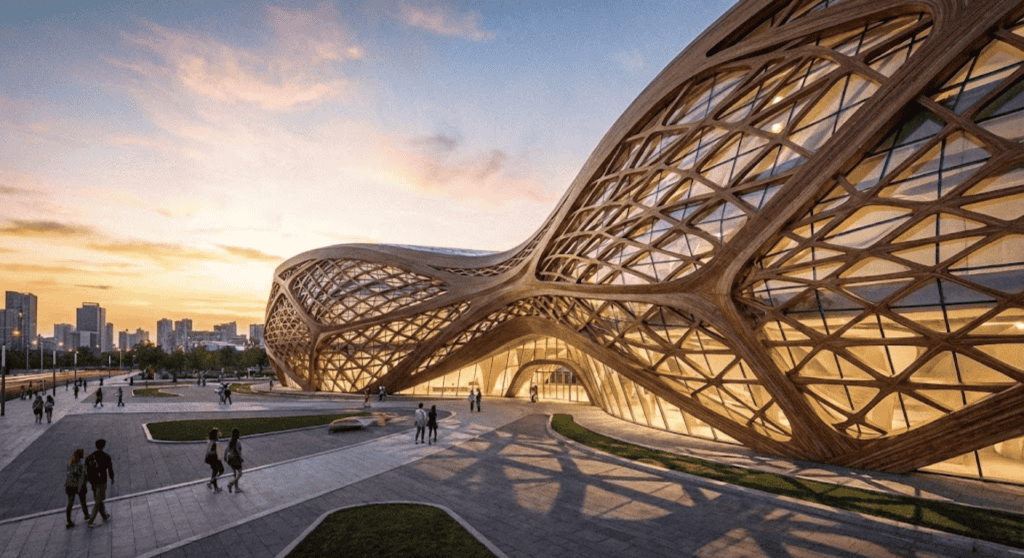
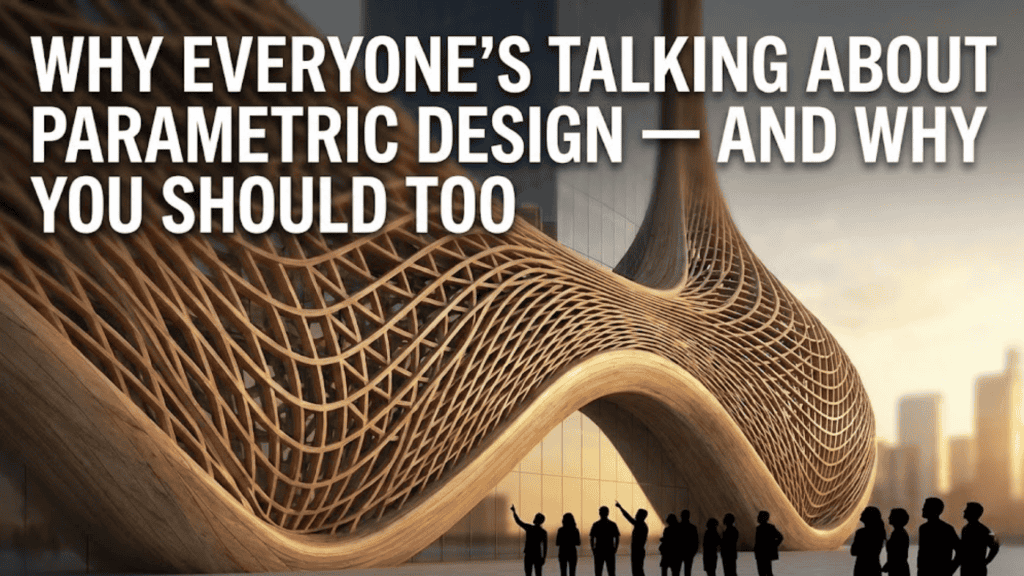
A Comprehensive Guide to Computational Design by SOGA Design Studio
Parametric design is revolutionizing the way we think about architecture. As one of India’s leading parametric design companies, SOGA Design Studio frequently receives questions about this innovative approach. We’ve compiled the most common questions to help you understand how parametric design is transforming the built environment across India and Dubai.
Q1: What exactly is parametric design in architecture?
A: Parametric design is a computational design approach that uses mathematical relationships and algorithms to create architectural forms. Think of it as designing with intelligence built into the process. Instead of drawing a building manually, architects establish rules and relationships between different design elements. When you change one parameter—say, the building height—all related elements automatically adjust accordingly.
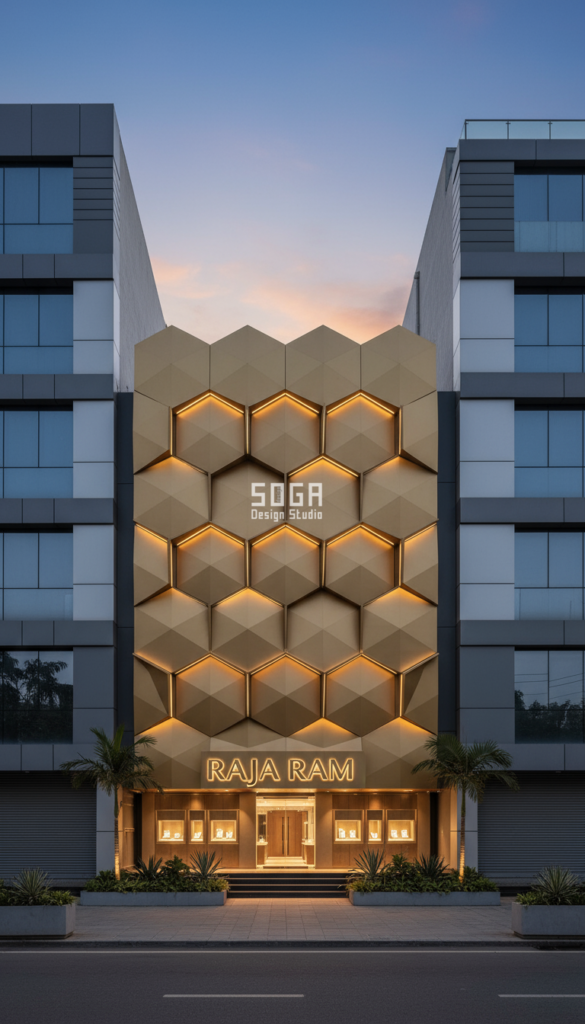
For example, at SOGA Design Studio, when we designed the hexagonal facade for Raja Ram in Pune, we used parametric tools to ensure that each hexagon maintained perfect proportions regardless of how we adjusted the overall pattern size or density. This intelligent responsiveness is what sets parametric design apart from traditional architectural methods.
Q2: How is parametric design different from traditional architectural design?
A: Traditional architecture relies heavily on manual drafting and static drawings. If you need to change the width of a building, you’d have to manually redraw walls, adjust columns, recalculate structural loads, and update every related element.
Parametric design transforms this process through algorithmic relationships. The key differences include:
Traditional Design:
Fixed forms that require manual changes
Linear design process
Limited exploration of design alternatives
Difficult to optimize multiple variables simultaneously
Parametric Design:
Dynamic forms that adapt automatically
Iterative, exploratory design process
Rapid generation of design variations
Multi-criteria optimization built into the workflow
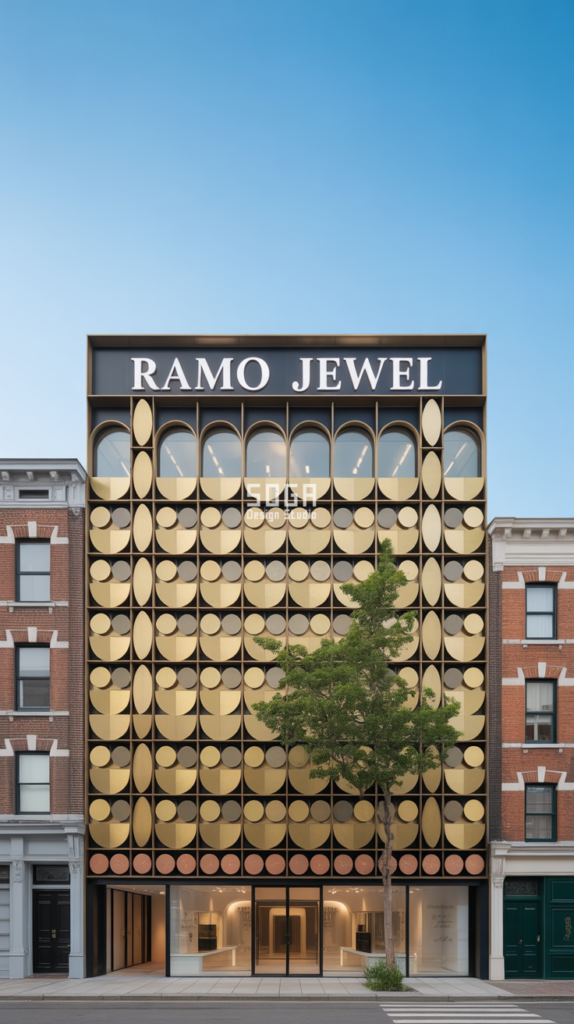
When we created the circular and elliptical pattern for Ramo Jewel in Chennai, parametric design allowed us to test hundreds of pattern variations in the time it would take to manually draw just one traditional facade option.
Q3: What software tools do architects use for parametric design?
A: At SOGA Design Studio, we leverage several powerful parametric design platforms:
Grasshopper for Rhino: This is the industry standard for parametric modeling. It uses a visual programming interface where you connect components to build complex algorithms. We use Grasshopper extensively for facade design, allowing us to create intricate geometric patterns like the Para Triblock panels at Savya hotel in Kolkata.
Python and C# Scripting: For highly customized solutions, we write custom scripts that give us complete control over the design algorithms. This is essential when creating proprietary systems like our hexagonal metal facade solutions.
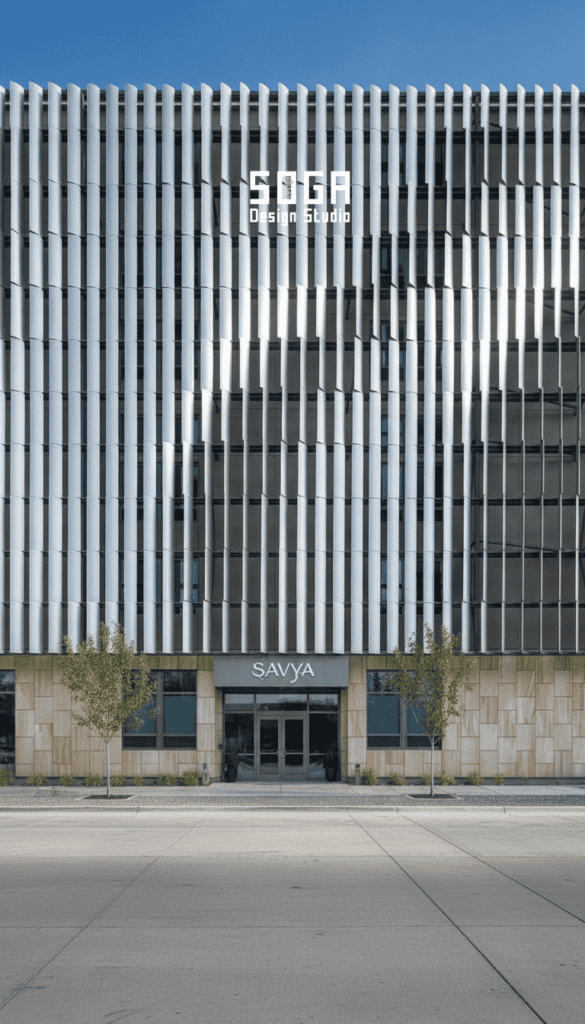
Generative Design Software: These AI-enhanced tools can explore thousands of design options automatically, optimizing for multiple criteria simultaneously—structural efficiency, material cost, aesthetic impact, and environmental performance.
The choice of tool depends on the project requirements, but the underlying principle remains the same: establishing intelligent relationships between design parameters.
Q4: What are the main advantages of using parametric design?
A: Parametric design offers transformative benefits that directly impact project success:
Design Efficiency: Automating repetitive calculations and adjustments dramatically reduces design time. What might take weeks using traditional methods can often be accomplished in days or hours with parametric tools. This efficiency translates directly to cost savings for our clients.
Design Exploration: The ability to rapidly generate design variations enables true design exploration. For the brass and copper facade of Ramo Jewel, we explored dozens of circular pattern arrangements, evaluating each for visual impact, structural performance, and cost before selecting the optimal solution.
Performance Optimization: Parametric tools can analyze designs against multiple performance criteria simultaneously. We can optimize a facade for solar shading, structural efficiency, material economy, and aesthetic impact all within the same workflow.
Error Reduction: Because relationships are mathematically defined, errors from manual calculations or coordination issues are virtually eliminated. When one element changes, all related elements update correctly and automatically.
Sustainability: Parametric design enables precise optimization of material usage and energy performance. We can test different facade configurations to find the one that provides optimal shading while minimizing material waste.
Client Communication: The ability to quickly generate design alternatives helps clients visualize options and make informed decisions. This iterative refinement process leads to better outcomes and higher client satisfaction.
Q5: Can parametric design help create more sustainable buildings?
A: Absolutely, and this is one of the most exciting aspects of parametric design from an environmental perspective.
Material Optimization: Parametric algorithms can minimize material waste by optimizing structural systems and facade patterns. For our metal facade projects, we nest cutting patterns to maximize material utilization, reducing waste to as little as 5-10% compared to 20-30% with traditional methods.
Energy Performance: Parametric tools can analyze solar exposure across building surfaces and generate facade geometries that provide optimal shading. The three-dimensional hexagonal pattern at Raja Ram, for example, provides significant solar shading that reduces cooling loads throughout the year.
Structural Efficiency: By analyzing load paths and stress distributions, parametric design can create structures that use less material while maintaining or improving performance. This reduces embodied carbon and construction costs simultaneously.
Climate Responsiveness: Parametric design can incorporate local climate data—sun angles, prevailing winds, temperature ranges—to generate forms optimized for specific locations. A facade designed for Chennai’s tropical climate will differ significantly from one designed for Dubai’s desert conditions.
Lifecycle Analysis: Advanced parametric workflows can even incorporate lifecycle carbon calculations, allowing architects to compare the environmental impact of different design options during the design phase rather than after construction.
Q6: Is parametric design only for complex, unusual-looking buildings?
A: This is a common misconception. While parametric design certainly enables complex geometries like those we’ve created at SOGA Design Studio, its benefits extend to projects of all types and scales.
Simple Geometries with Complex Requirements: Even a rectangular building can benefit from parametric design when optimizing window placement for daylighting, sizing structural elements for efficiency, or coordinating mechanical systems.
Pattern-Based Facades: Our geometric metal facades—whether circular patterns, hexagons, or triangular elements—may appear simple individually but achieve their impact through sophisticated parametric arrangement. The intelligence is in the relationships, not necessarily the individual forms.
Repetitive Elements: Buildings with many similar but slightly varying elements—like residential towers with different unit types—benefit enormously from parametric design, which can manage the variations efficiently.
Performance-Driven Design: Any project where performance optimization matters—and that should be every project—can benefit from parametric approaches, regardless of aesthetic complexity.
The architectural expression is a choice. Parametric design is simply a more intelligent way of working, whether you’re creating dramatic sculptural forms or refined minimalist compositions.
Q7: How does parametric design handle real-world data and site conditions?
A: This is where parametric design truly shines—its ability to incorporate real-world information directly into the design process.
Environmental Data Integration: We can import sun path data, wind patterns, temperature ranges, and rainfall information directly into our parametric models. The design then responds to these real conditions rather than generic assumptions.
Site Topology: Topographic survey data can be integrated directly, allowing the design to respond to the actual site conditions. This is particularly valuable for projects on sloped or irregular sites.
Structural Analysis: Real-time structural analysis can be built into the parametric model, so we see the structural implications of design decisions immediately rather than waiting for engineering consultants to run separate analyses.
Material Properties: Physical properties of materials—strength, thermal performance, cost, availability—can be incorporated as parameters, ensuring that designs are not just visually appealing but buildable and economical.
User Data: For some projects, we incorporate data about how people use spaces—circulation patterns, density requirements, visibility analyses—to generate designs that perform better for actual users.
This data-driven approach ensures that our designs respond to real-world conditions rather than abstract ideals.
Q8: What types of buildings or projects are best suited for parametric design?
A: While parametric design can enhance virtually any architectural project, certain building types particularly benefit from this approach:
Retail and Commercial Facades: Our core expertise at SOGA Design Studio. Parametric design excels at creating distinctive, brand-defining facades like those at Savya hotel in Kolkata, Ramo Jewel, and Raja Ram. The ability to create unique geometric patterns that optimize for visibility, shading, and brand identity makes parametric design ideal for retail architecture.
High-Performance Buildings: Projects with aggressive sustainability targets benefit from parametric optimization of energy performance, daylighting, and material efficiency.
Complex Geometries: Stadiums, cultural buildings, and transportation hubs with curved or faceted forms are often impossible to design efficiently without parametric tools.
Large-Scale Repetitive Projects: Residential towers, hotels, or office buildings with many similar elements can leverage parametric design to manage variations efficiently.
Adaptive Reuse: Renovations of existing buildings can use parametric design to create new elements that respond to irregular existing conditions.
Landscape and Urban Design: Parametric tools can design terrain, circulation networks, and plantings that respond to topography and usage patterns.
The unifying factor is that parametric design adds value wherever there are complex relationships to manage, performance to optimize, or variations to coordinate.
Q9: Do architects need to know programming to use parametric design?
A: The short answer is: it helps, but it’s not strictly necessary to get started.
Visual Programming: Tools like Grasshopper use visual programming interfaces where you connect components graphically rather than writing code. Many architects successfully use these tools without traditional programming knowledge.
Learning Curve: The logic of parametric thinking—understanding relationships, parameters, and constraints—is more important initially than programming syntax. These conceptual skills can be developed through practice.
Scripting Advantages: However, learning to write scripts (Python, C#, or JavaScript) significantly expands what’s possible. At SOGA Design Studio, our team includes computational design specialists who can write custom algorithms for unique project requirements.
Collaborative Approach: Many firms adopt a hybrid model where some team members specialize in parametric tools while others focus on design concepts and client relationships. This collaborative approach leverages different skill sets effectively.
Educational Resources: Numerous online courses, tutorials, and communities make learning parametric design more accessible than ever. The barrier to entry continues to decrease.
The key is starting with the fundamentals and building skills progressively. Even basic parametric capabilities can significantly improve design efficiency and outcomes.
Q10: What is the future of parametric design in architecture?
A: The future of parametric design is extraordinarily exciting, and we’re witnessing this evolution firsthand at SOGA Design Studio:
Artificial Intelligence Integration: AI is being integrated with parametric design to create generative design systems that can explore design spaces more intelligently, learning from previous projects to suggest optimal solutions.
Real-Time Collaboration: Cloud-based parametric platforms are enabling real-time collaboration across global teams, breaking down geographical barriers to integrated design.
Construction Integration: Parametric models are increasingly connected directly to digital fabrication equipment, enabling seamless flow from design to production. Our metal facade projects already leverage this connection.
Augmented Reality Visualization: AR technology allows clients and teams to visualize parametric designs in real-world contexts, making design decisions more informed and collaborative.
Performance Prediction: Machine learning models trained on building performance data can predict how parametric designs will perform in real-world conditions with increasing accuracy.
Accessibility: As tools become more intuitive and educational resources more widespread, parametric design is becoming accessible to smaller firms and individual practitioners, democratizing advanced design capabilities.
Regulatory Integration: Building codes and regulations are beginning to accommodate and even encourage parametric approaches, particularly for performance-based design compliance.
At SOGA Design Studio, we believe parametric design will become the standard approach for architectural practice, just as CAD replaced hand drafting. The question isn’t whether to adopt parametric methods, but how quickly you can develop these capabilities.
Q11: How does SOGA Design Studio apply parametric design to facade projects?
A: Our parametric design process for facades follows a systematic approach refined through numerous projects across India and Dubai:
Phase 1 – Conceptual Parameters: We begin by establishing the key design drivers—brand identity, site conditions, performance requirements, budget constraints. These become the foundational parameters for our algorithms.
Phase 2 – Pattern Development: Using Grasshopper and custom scripts, we generate multiple geometric pattern options. For example, we might explore variations of circular, hexagonal, or triangular tessellations, evaluating each for visual impact and technical feasibility.
Phase 3 – Performance Analysis: Each pattern option is analyzed for solar shading performance, structural efficiency, material economy, and fabrication complexity. This data-driven evaluation ensures we’re not just creating beautiful patterns but optimized systems.
Phase 4 – Refinement: Based on analysis results and client feedback, we refine the selected pattern, adjusting parameters to optimize the balance between aesthetics, performance, and cost.
Phase 5 – Documentation: The parametric model generates detailed fabrication drawings, material schedules, and installation sequences automatically. This ensures that the complex geometries we design can be built accurately and efficiently.
Phase 6 – Fabrication Coordination: We work directly with metal fabricators, providing them with CNC-ready digital files derived from our parametric models. This direct digital workflow minimizes errors and ensures quality.
This systematic approach has enabled us to deliver distinctive metal facades that meet aggressive schedules and budgets while maintaining uncompromising quality.
Q12: What challenges does parametric design present, and how can they be overcome?
A: Like any powerful tool, parametric design presents challenges that require thoughtful management:
Complexity Management: Parametric models can become extremely complex, making them difficult to maintain or understand. We address this through careful model organization, comprehensive documentation, and standardized workflows.
Over-Optimization: There’s a temptation to optimize for every possible variable, leading to analysis paralysis. We focus on the parameters that truly matter for each project, avoiding unnecessary complexity.
Technical Skills Gap: Building parametric design capabilities requires investment in training and specialized hiring. We’ve addressed this by developing internal training programs and partnering with computational design specialists.
Client Communication: Parametric processes can be abstract for clients unfamiliar with the approach. We use clear visualizations and simple explanations to make our process transparent and accessible.
Software Dependencies: Relying heavily on specific software creates risk if tools change or become unavailable. We maintain capabilities across multiple platforms and develop custom tools when appropriate.
Fabrication Coordination: Complex parametric geometries can challenge fabricators unfamiliar with digital workflows. We invest time in fabricator education and maintain close coordination throughout fabrication.
These challenges are manageable with experience, systematic processes, and commitment to both technical excellence and clear communication.Conclusion: Embracing the Parametric Future
Parametric design represents far more than a new set of tools—it’s a fundamental shift in how we think about architectural design. At SOGA Design Studio, we’ve witnessed how computational design approaches enable us to create facades that are more distinctive, more efficient, and more responsive to real-world conditions than would be possible through traditional methods.
Our projects across India and Dubai—from the triangular Para Triblock panels at Savya hotel in Kolkata to the circular patterns at Ramo Jewel and the hexagonal facade at Raja Ram—demonstrate the creative and technical possibilities that parametric design unlocks.
As parametric tools become more accessible and building performance requirements become more demanding, we believe computational design will become the standard approach for architectural practice. The future belongs to designers who can combine creative vision with computational thinking, crafting buildings that are not just beautiful but intelligently optimized for their purpose and context.
Whether you’re an architect looking to develop parametric skills, a developer seeking innovative design solutions, or simply someone curious about how modern buildings are designed, we hope this Q&A has provided valuable insights into the parametric design revolution transforming architecture.
About SOGA Design Studio
SOGA Design Studio is India’s leading parametric design company and computational design firm, specializing in innovative metal facade solutions across India and Dubai. As a top facade company, we combine advanced computational design tools with deep material expertise and fabrication knowledge to create distinctive architectural experiences. Our portfolio includes the Para Triblock panels at Savya hotel in Kolkata, the circular metal facade at Ramo Jewel Chennai, and the hexagonal pattern at Raja Ram Pune, among many other landmark projects.
For inquiries about parametric facade design, computational design services, or to discuss your next project, contact SOGA Design Studio.