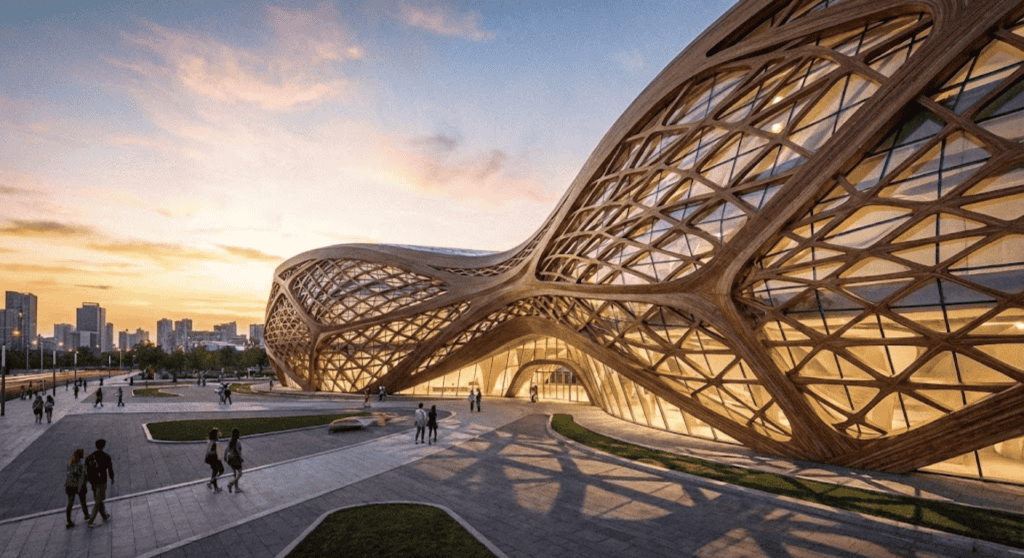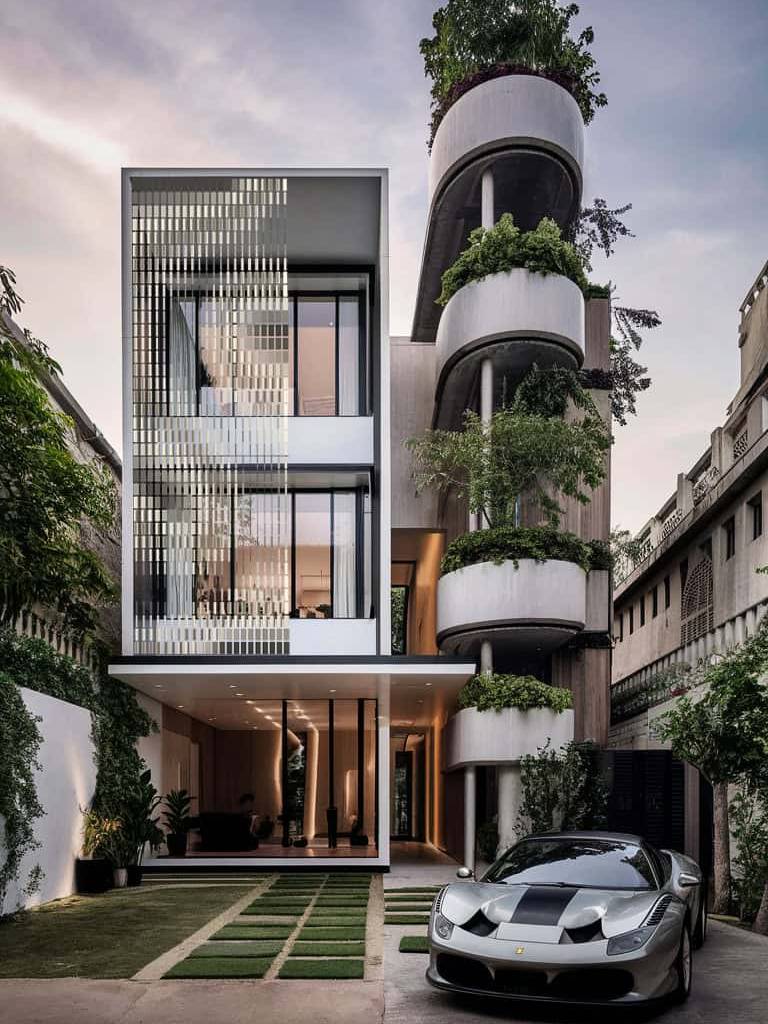
In today’s world, where climate change and urbanization are key challenges, sustainability has become a cornerstone of modern architecture. Parametric design, with its ability to adapt and optimize, is leading this charge. Parametric facades, in particular, are playing a vital role in India’s green revolution, offering energy efficiency and environmental responsiveness. SOGA Design Studio, a leader in parametric architecture, exemplifies how innovative design can align with sustainability goals.
What Are Parametric Facades?
Parametric facades are architectural surfaces designed using computational algorithms. These designs are highly adaptive, responding to environmental factors like sunlight, wind, and temperature. The result is a facade that is not only visually captivating but also functionally superior, reducing energy consumption and enhancing user comfort.
Sustainability Through Design
Parametric facades contribute to sustainability in several ways:
- Energy Efficiency: By controlling light and heat, parametric facades reduce the need for artificial lighting and air conditioning.
- Natural Ventilation: Their adaptive designs allow airflow to be optimized, improving indoor air quality.
- Material Efficiency: Computational methods ensure precise material usage, minimizing waste.
SOGA Design Studio’s Green Contributions
SOGA Design Studio has embraced these principles to create innovative, sustainable designs. A few examples from their portfolio demonstrate their expertise:
- Dynamic Facade for a Commercial Space
In one of their landmark projects, SOGA designed a facade that incorporates an array of perforated panels. These panels respond to the sun’s movement, reducing heat gain while allowing soft, diffused light indoors. This approach significantly cut down the building’s energy requirements, showcasing the power of parametric design in creating eco-friendly architecture. - Aquatic-Inspired Facade with Optimized Ventilation
For a project inspired by marine life, SOGA crafted a facade featuring fluid, wave-like patterns. These forms were not only aesthetically aligned with the theme but also enhanced ventilation, creating a healthier and more energy-efficient indoor environment.
Why Parametric Facades Are the Future
Parametric facades are not just a trend; they are a necessity for the future of architecture in India. They address critical issues like urban heat islands, rising energy demands, and resource scarcity. By blending computational design with sustainability, firms like SOGA Design Studio are paving the way for greener, smarter cities.
Conclusion
As India progresses toward a sustainable future, parametric facades are emerging as a game-changing solution. Their ability to harmonize beauty, function, and environmental responsibility makes them essential for modern architecture. SOGA Design Studio is at the forefront of this revolution, crafting designs that not only inspire but also contribute to a better world.
Parametric Facades as a Green Strategy
In India, cooling — not heating — drives most of a building’s energy use, and the facade is the front line of that battle. A sustainable parametric facade is one designed first to keep heat out: its shading depth, opening size and orientation are computed against the local sun path so the envelope self-shades during the hottest hours. That single move reduces air-conditioning load for the entire life of the building, making it one of the most effective green measures available.
How It Delivers a “Green Revolution”
- Lower cooling energy: optimised shading cuts solar gain on critical elevations.
- Daylight without glare: filtered light reduces the need for artificial lighting.
- Recyclable materials: aluminium and GFRC panels can be sourced with recycled content and are themselves recyclable.
- Long life: durable finishes mean the performance lasts decades with little maintenance.
Sustainability You Can See
What makes parametric facades powerful is that the sustainable choice and the beautiful choice are the same choice. The geometry that shades a building is also what gives it identity. For Indian developers facing tighter energy codes and rising cooling costs, that alignment of performance and appeal is why sustainable parametric facades are spreading so quickly.
Frequently Asked Questions
How does a facade save energy in India? By shading glazing during peak sun, it lowers heat gain and cooling demand — the biggest component of energy use in Indian buildings.
Are the materials recyclable? Aluminium and GFRC used in parametric facades can contain recycled content and be recycled at end of life.
Does sustainability mean higher cost? The shading benefit lowers running costs over time, often offsetting the added facade investment.