Location: Chennai, Tamil Nadu
Project by: Soga Design Studio
Facade Type: FRP (Fiber Reinforced Plastic) Parametric Facade
Project Details
Facade Material: High-quality FRP (Fiber Reinforced Plastic) panels
Design Technique: Parametric and computational design for complex geometries
Manufacturing: Lightweight FRP molding with precision-engineered modular system
Visual Impact: Elegant parametric patterns with superior finish and durability
Sustainability: Lightweight, weather-resistant, low maintenance, cost-effective
What is FRP Facade?
FRP (Fiber Reinforced Plastic) facades are modern architectural cladding solutions that combine lightweight materials with exceptional strength. FRP panels offer design flexibility, weather resistance, and cost-effectiveness, making them ideal for contemporary buildings. When integrated with parametric design, FRP facades can achieve stunning geometric patterns and sculptural forms.
Soga Design Studio: Pioneers in FRP Parametric Facade Design in India
Expertise: FRP facades, parametric design, computational architecture, luxury installations
Projects Across India: Chennai, Bangalore, Gurgaon, Delhi, Mumbai
Tools Used: Grasshopper, Rhino, Dynamo, advanced computational design software
USP: Custom FRP molding, innovative parametric patterns, precision fabrication, turnkey solutions
Chennai Project Key Highlights
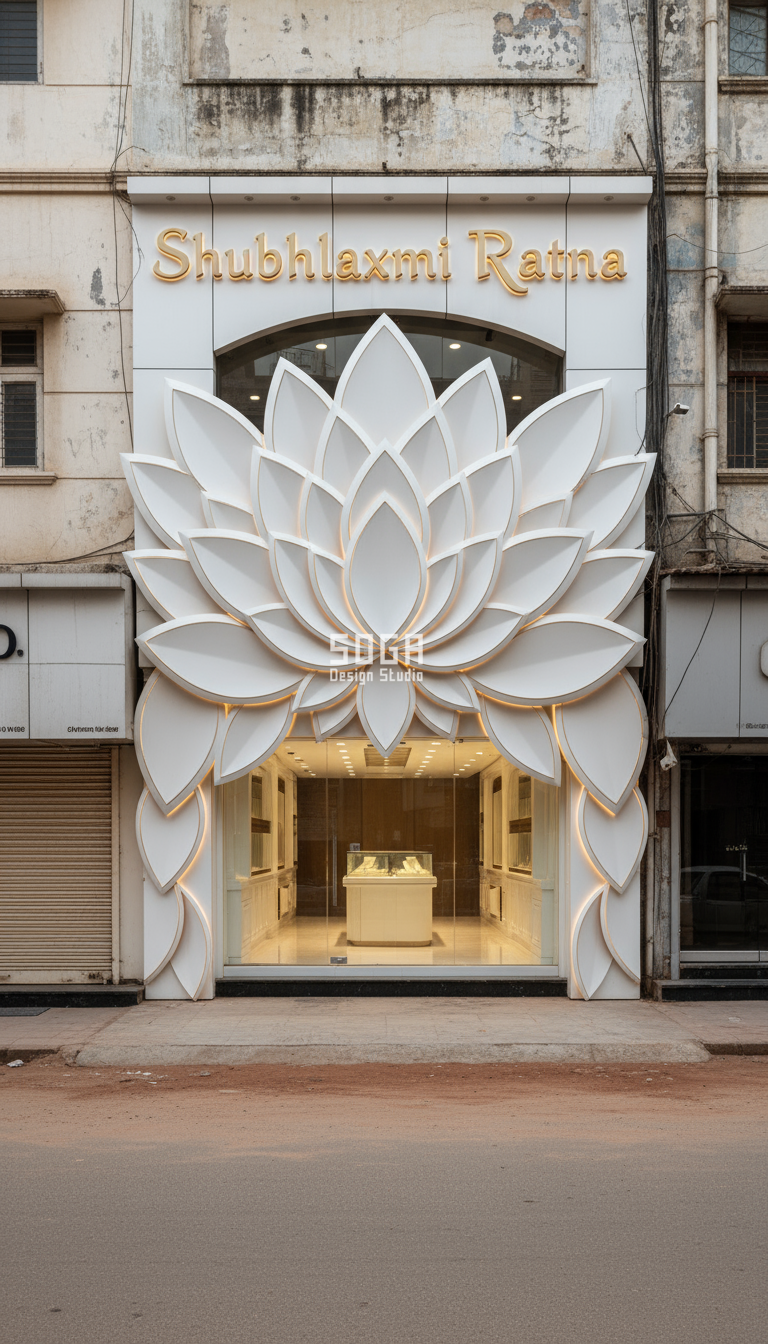
Modern Aesthetic: Shubhlaxmi Ratna facade creates a bold architectural statement in Chennai
FRP Benefits: Lightweight yet durable material perfect for coastal climate conditions
Parametric Geometry: Complex patterns and forms achieved through computational design
Fabrication Excellence: High-precision FRP molding ensures consistency and quality
Weather Resistance: Ideal for Chennai’s humid climate with excellent UV and moisture resistance
Design Workflow: Algorithm-driven design process for optimal panel arrangement and structural efficiency
Conclusion
Shubhlaxmi Ratna Chennai’s FRP parametric facade showcases Soga Design Studio’s innovation in combining traditional materials with cutting-edge computational design. FRP facades offer an excellent alternative to traditional cladding, providing lightweight, durable, and cost-effective solutions. This project sets a new benchmark for parametric facade design in South India, demonstrating how advanced design technology can create stunning architectural landmarks that are both beautiful and functional.
The Design Concept
Shubhlaxmi Ratna in Chennai uses an FRP (fibre-reinforced polymer) facade to achieve deep, sculptural three-dimensional form that would be heavy or costly in metal. FRP can be moulded into flowing, seamless shapes, so the facade becomes a single continuous sculpture wrapping the showroom — a strong, ownable identity for a jewellery brand on a busy Chennai street.
Material & Fabrication
FRP panels are cast from parametrically designed moulds, which means complex curves and undercuts are achievable at a fraction of the weight of stone or cast metal. The panels are finished with durable gel-coat or PU paint in the brand’s palette and fixed to a sub-frame with concealed brackets. FRP is corrosion-proof and unaffected by salt-laden coastal air, which makes it especially suited to Chennai’s hot, humid, seaside environment.
Why FRP Suits Chennai
Chennai’s humidity and coastal salt are punishing for many materials, but FRP does not rust or corrode and holds a moulded shape indefinitely. It also allows the deep, flowing geometry that makes a jewellery facade feel premium, while keeping structural loads — and therefore cost — low.
Frequently Asked Questions
What is an FRP facade? FRP (fibre-reinforced polymer) is a moulded composite that can be shaped into deep, seamless, sculptural forms while staying light and corrosion-proof.
Why use FRP instead of metal? For complex 3D curves, FRP is lighter, seamless and often more economical, and it resists coastal corrosion — ideal for Chennai.
How durable is the finish? Gel-coat or PU finishes on FRP are UV-stable and weather-resistant, needing only routine cleaning.