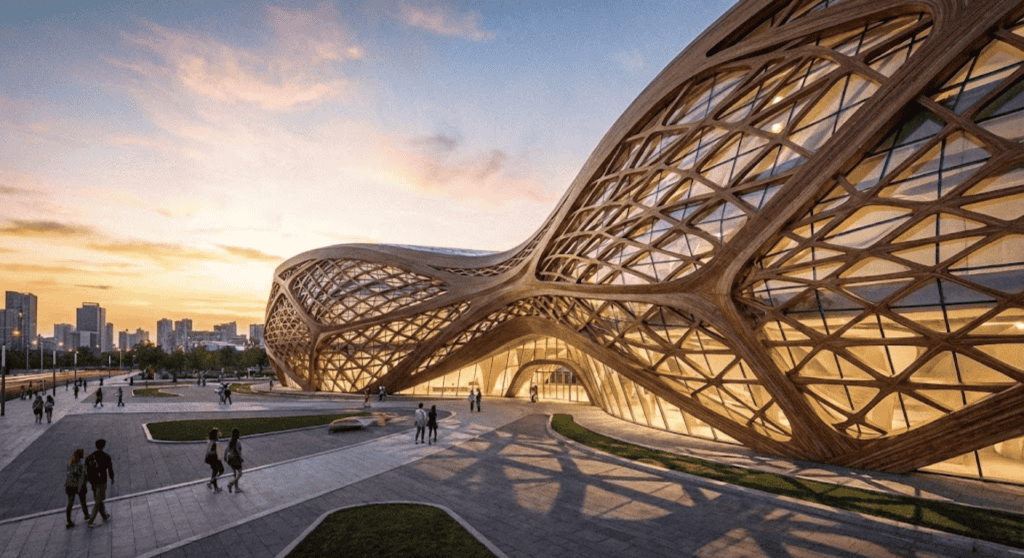
If you are planning a G+3 to G+10 residential, hospitality or boutique commercial project in India in 2026, hiring the right parametric architecture studio in India is the single highest-leverage decision you will make. The studio sets the visual identity, the construction tolerance, the fabrication chain and the long-term maintenance story for the building. Get this hire right and the project ships on schedule with a facade that photographs powerfully and performs in the Indian climate. Get it wrong and you spend the next two years apologising for it.
This guide gives you the eight questions every Indian homeowner, NRI client and developer should ask before signing with a parametric architecture studio in 2026 — plus the answers you should expect from a studio that genuinely delivers. It also shows how the SOGA Parametric Systems™ approach maps onto each of these questions, so you have a clear benchmark to compare any studio against.
Q1. What exactly is a parametric architecture studio — and how is it different from a regular architecture firm?
A parametric architecture studio uses computational tools — typically Rhinoceros, Grasshopper, Ladybug, Karamba3D and Revit + Dynamo — to generate building geometry as the output of defined inputs (plot, solar orientation, view priority, panel module, budget). A conventional architecture firm draws the facade manually and then asks an engineer to make it work. A parametric studio writes the rule, the computer outputs every panel, and the engineer validates the rule. The downstream effect is dramatic: every panel ships as a unique numbered piece, on-site cutting drops to near zero, and the facade as built matches the visualisation to within a few millimetres.
What to look for: ask the studio to show you the Grasshopper definition from a past project, not just the final render. A genuine parametric studio will walk you through the script logic. A studio that only has Photoshopped renders without a parametric model behind them is selling images, not architecture.
Q2. When does my project actually need parametric design — and when is it overkill?
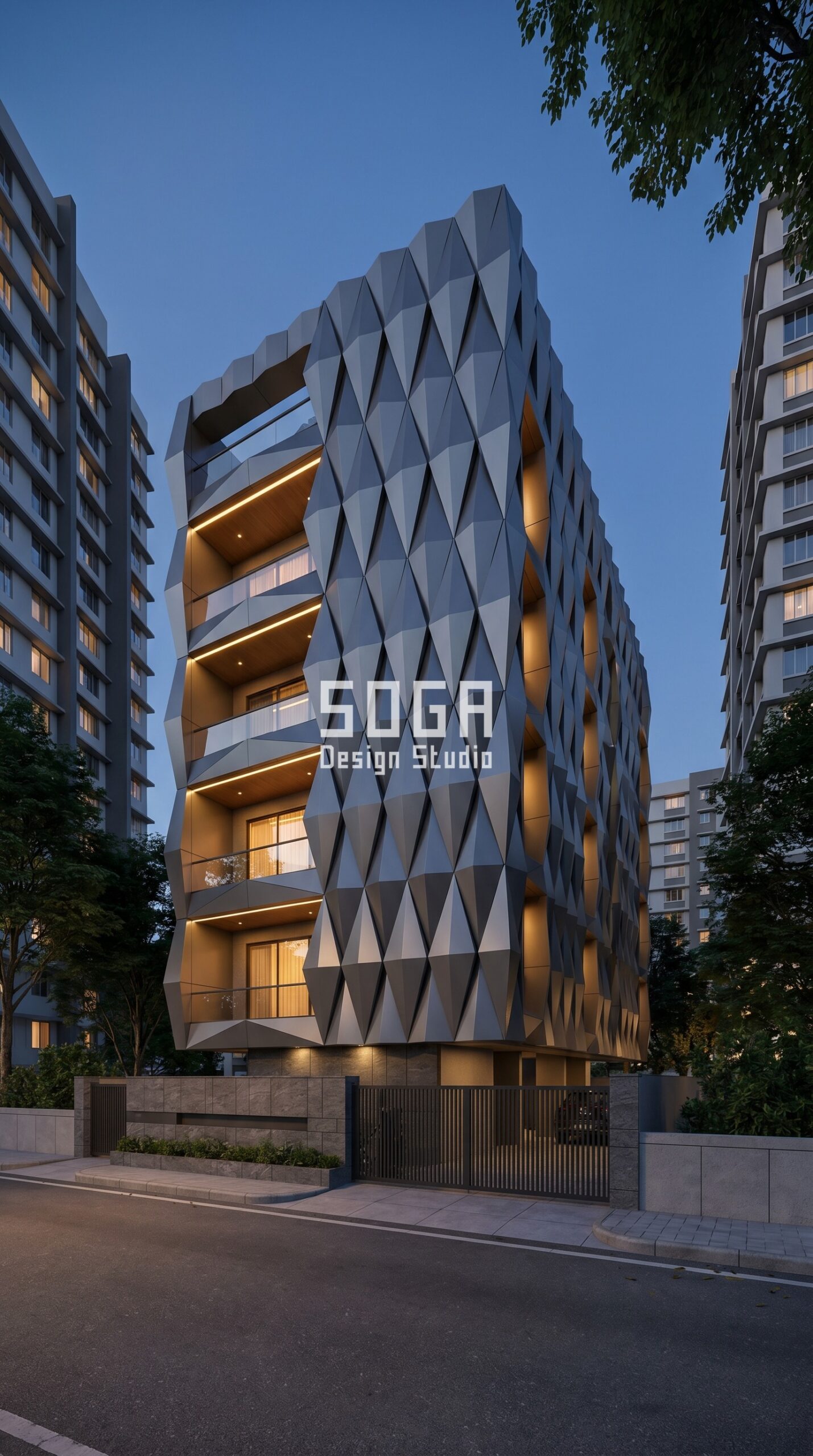
Parametric design pays for itself on three project types in 2026 India: (1) any residential project where the client wants a distinct, photographable street identity, (2) any building with significant east, west or south solar load on a habitable elevation, and (3) any retrofit where a lightweight aluminium screen can transform the elevation without disturbing interiors. The Mumbai G+4 SogaGrid™ visualisation above is the prototypical use case — a 2,400 to 3,200 sq ft plot with a need to read as architecturally deliberate from the street.
When parametric is overkill: very tight-budget G+1 to G+2 plots under 1,800 sq ft, back-of-house service blocks, and projects where the brief is purely speed-to-occupancy with no design ambition. For those, a conventional plaster-and-paint elevation is honest and economical. A good parametric studio will tell you this directly — that is itself a sign of an ethical practice.
Q3. What deliverables should a parametric architecture studio produce?
Many Indian clients sign with a studio expecting renders and end up paying separately for fabrication drawings. That is the wrong contract. A complete parametric architecture studio deliverable in 2026 should include the following — in writing, in the scope clause:
- Site analysis report — solar radiation, wind exposure, neighbour overlooking, view-priority mapping.
- Three facade option renders at 8K, with the parametric inputs documented for each.
- Selected option developed to fabrication-ready CAD — every panel numbered, every bracket detailed.
- Structural sub-frame coordination with your civil engineer (or in-house if turnkey).
- Fixed bill of materials and quantity takeoff.
- Powder coat / finish sample physical mock-ups for sign-off.
- On-site supervision schedule with a named site engineer for the installation period.
- Warranty documentation for substrate, finish and installation — minimum 10 years on powder coat, 25 on aluminium.
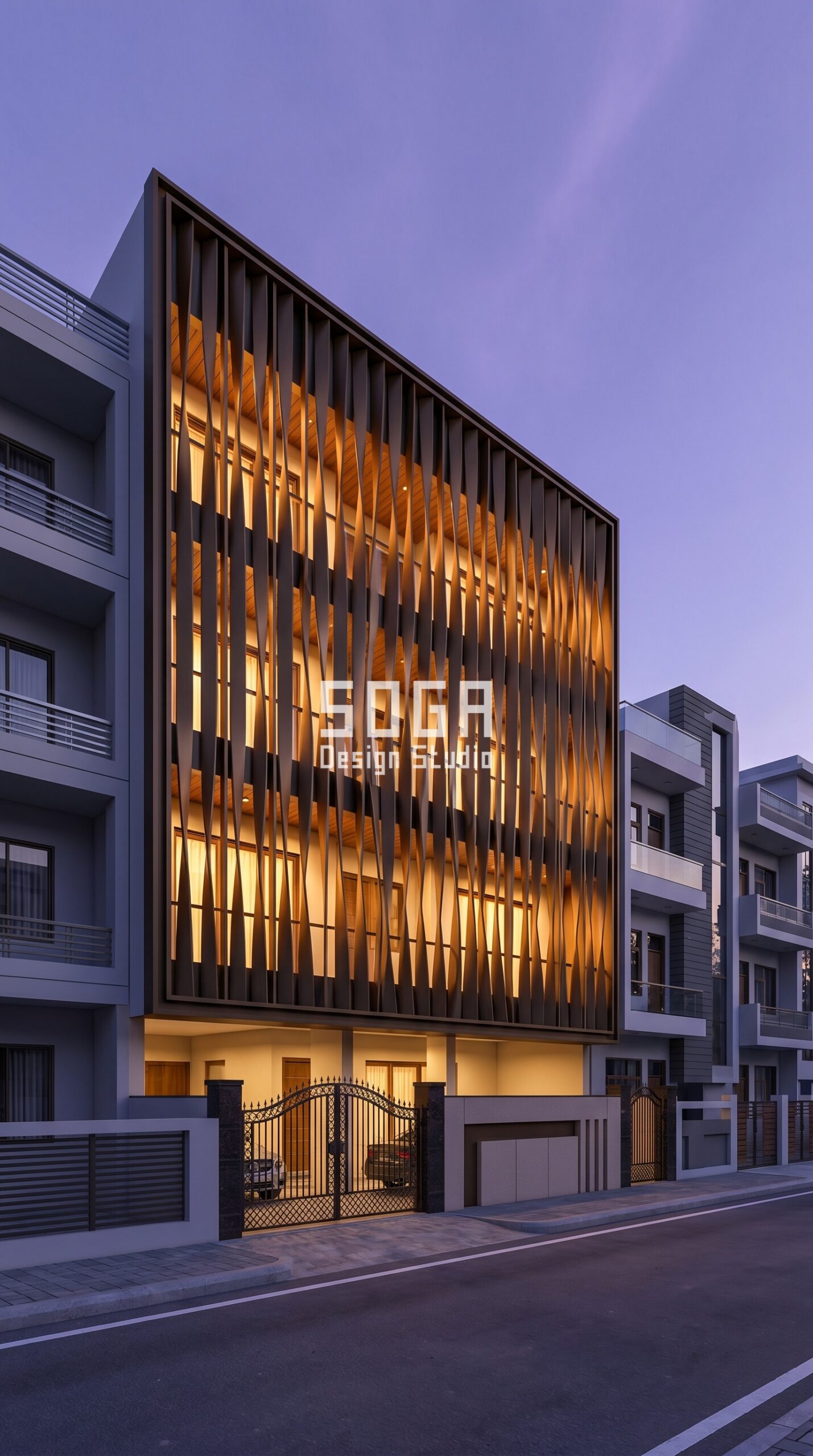
The Delhi G+3 SogaWeave™ visualisation above represents the level of geometric resolution every panel should reach before fabrication — twisted fin angles individually called out, fixing centres documented, panel schedule complete. If a studio cannot produce this depth of documentation on a past project, walk away.
Q4. How is the fee structured — and what is fair for the Indian market in 2026?
Three fee structures dominate the Indian parametric architecture studio market in 2026. Each has a place; your job is to know which is right for your scope:
- Percentage of construction cost (5–9% of facade value): standard for full design-to-handover scope. Aligns the studio’s incentive with project cost discipline. Best for medium and large projects.
- Lump-sum fixed fee: best for tightly-defined scope where the deliverables list (Q3 above) is fixed in advance. Removes ambiguity but the studio prices in a contingency.
- Per-square-foot of facade area (Rs 80–250 per sq ft of facade for design-only): increasingly common for SOGA Parametric Systems™ projects because the system library means the design effort is predictable.
Red flag: any studio that asks for a large upfront payment with no defined milestone schedule. Industry standard in India is 20% on signing, 30% on concept sign-off, 30% on fabrication-ready drawings, 20% on commissioning.
Q5. What software and engineering chain does the studio use?
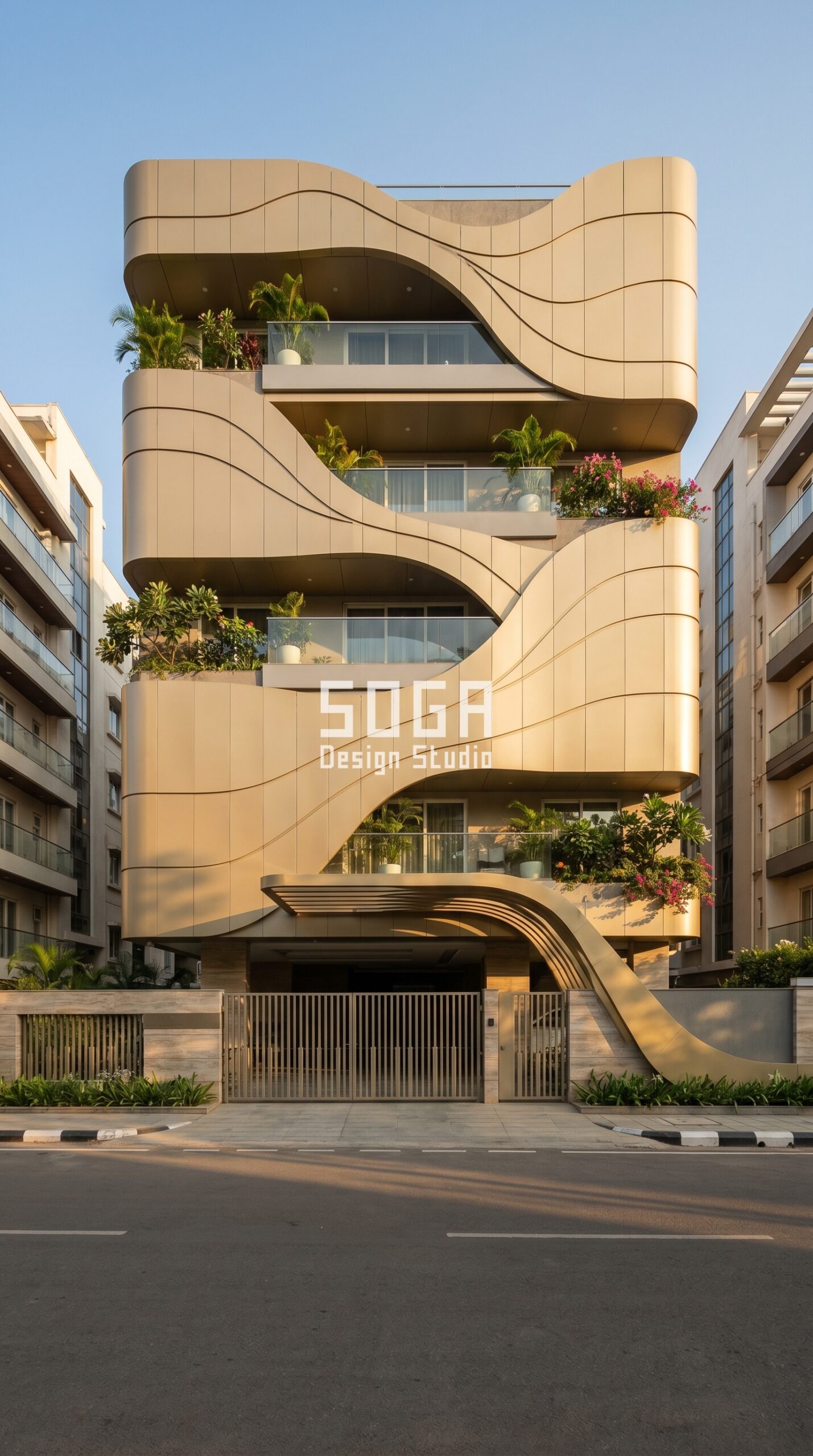
The Bangalore G+4 SogaShell™ concept above could not be drawn by hand at scale — it requires Kangaroo physics-driven form-finding plus Karamba3D structural analysis running on a Grasshopper definition. The right question to ask a studio is not ‘do you know Rhino?’ (everyone says yes), but rather:
- Which Grasshopper plug-ins do you actively use on residential projects? (Expect: Ladybug, Honeybee, Kangaroo, Karamba3D, Lunchbox.)
- How do you export panel geometry to fabrication? (Expect: direct CAM via Rhino’s RhinoCAM or fabricator-specific G-code.)
- Do you use Revit + Dynamo for BIM documentation, or stay in Rhino for the full project? (Either is valid; ambiguity is not.)
- How is structural validation handled? (Expect: in-house Karamba3D + third-party structural engineer sign-off.)
- Do you use AI image tools at concept stage? (Honest answer in 2026: yes, but only as a divergence tool; the parametric model is the truth.)
Q6. Does the studio have a published system library — or only one-off custom envelopes?
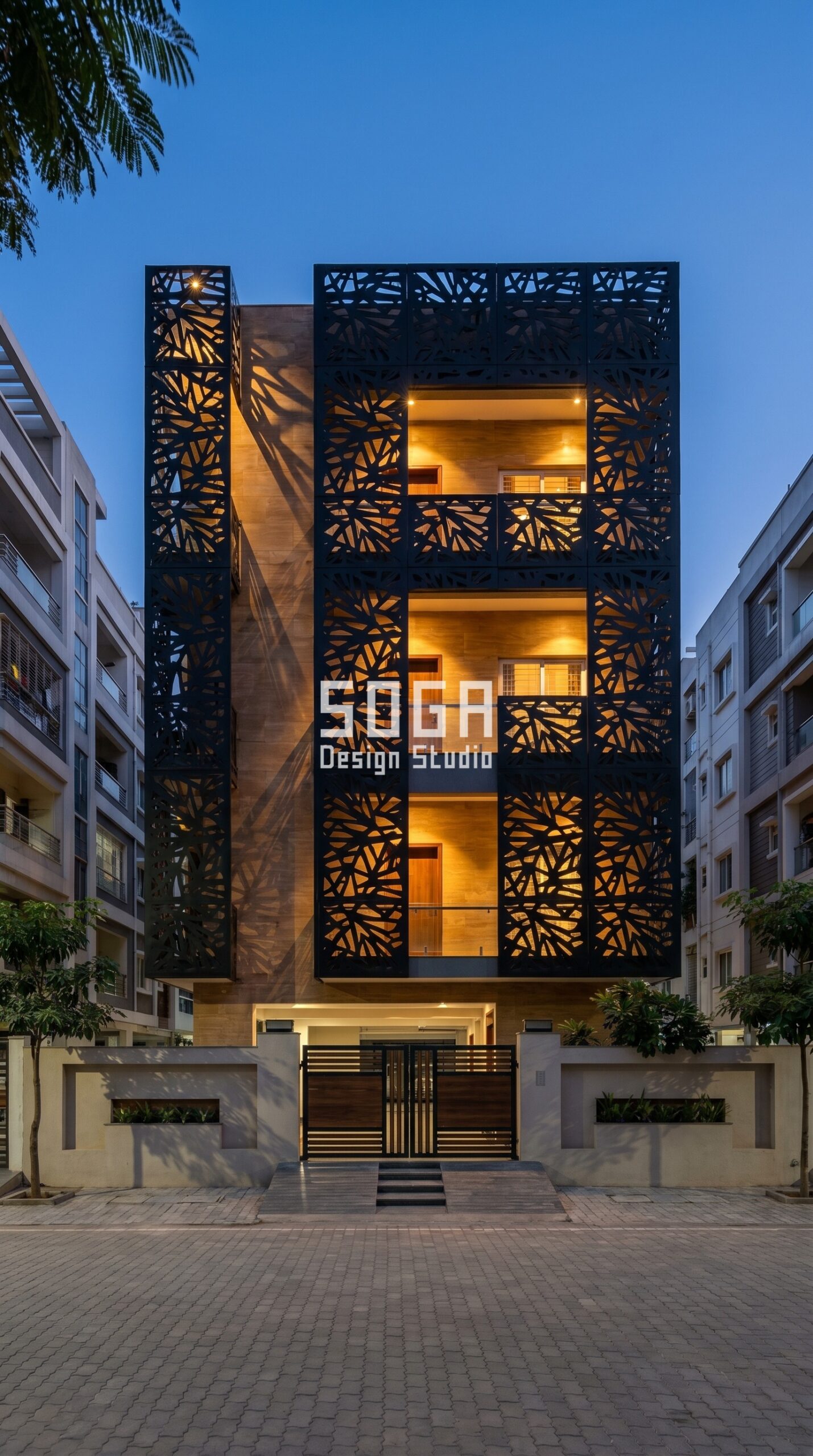
This is the single biggest filter for the 2026 Indian market. A studio that only does one-off custom envelopes will start every project at zero — 6 to 10 weeks of upfront geometric research before you see anything actionable. A studio with a published, costed, factory-ready system library can recommend a known system at the first meeting and skip directly to client-specific tuning.
SOGA Design Studio is the only Indian parametric practice publishing such a library — the five SOGA Parametric Systems™ (SogaGrid™, SogaWeave™, SogaShell™, SogaScreen™, SogaPulse™) with fixed module sizes, finishes and indicative rates. The Hyderabad SogaScreen™ visualisation above is the same system module used across India, Dubai and Singapore — geometric variability inside a fabrication-disciplined frame. If the studio you are evaluating cannot point to either a published system library or three near-identical past projects with fixed costs, your project is paying for their R&D.
Q7. Can the studio actually deliver across all of India — and into Dubai, Singapore, the Gulf?
Most Indian architecture studios are city-local. They have one fabrication partner, one supervisor, and one approval-drawings draftsman — all in one metro. That works fine for a Mumbai or Delhi project but breaks the moment you ask for delivery to Coimbatore, Indore, Lucknow, or — increasingly — Dubai, Singapore or Doha for an NRI client.
The right question is: how many cities have you completed installs in over the past 24 months, and can I speak to one client per city? A genuine pan-India parametric studio in 2026 will name a minimum of 8 to 12 Indian cities plus at least two GCC or Singapore deliveries. A studio that names only one metro is fine — for that metro. They are not the right hire for a multi-city portfolio or an NRI brief.
SOGA Design Studio’s delivery footprint in 2026 spans every Tier-1 Indian metro plus active tier-2 corridors (Indore, Coimbatore, Surat, Lucknow, Jaipur, Ahmedabad), and the SOGA Parametric Systems™ library ships globally with local install partners in Dubai, Singapore, Qatar and Saudi Arabia.
Q8. What happens after handover — warranty, maintenance, modification?
Most architecture engagements end at handover. The studio leaves, the warranty document goes into a drawer, and the homeowner is on their own when a panel needs replacing in year four. A parametric facade — especially one with custom panel geometries — needs a studio that stays accountable for the full warranty period. Ask the following before you sign:
- What is the substrate warranty? Aluminium structural warranty should be a minimum of 25 years.
- What is the finish warranty? Powder coat in India should carry a 10-year colour and adhesion warranty.
- What is the installation warranty? Industry standard is 2 years on installation, extendable to 5 years with an annual maintenance contract.
- If a panel is damaged in year six, can you fabricate a replacement to the same parametric specification? (Critical for SogaShell™ and SogaPulse™ — bespoke geometry.)
- What is the annual maintenance contract scope and price? Expect Rs 8–15 per sq ft per year for a covered facade.
Ask one more thing while you are at it: which of those documents expires first. The substrate, finish and installation warranties run on three different clocks, and the facade stops being covered as a system on the earliest of them — usually the installation one. That arithmetic, and how it changes across four markets, is set out in our guide to villa facade warranty cover and exclusions.
How the SOGA Parametric Systems™ Approach Answers All Eight Questions
Going through the eight questions above with most studios produces eight separate clauses to negotiate. With SOGA Design Studio, the entire framework is pre-packaged because the SOGA Parametric Systems™ library was built specifically to compress this hiring decision into a single signature:
- Q1 (parametric definition): SOGA’s design model is fully Rhino + Grasshopper from concept to fabrication, with the Grasshopper definition shared with every client at sign-off.
- Q2 (when needed): SOGA’s discovery call is a free 30-minute consultation that includes an honest ‘yes / no / partial’ on whether parametric is right for your specific plot.
- Q3 (deliverables): all eight deliverables in the standard scope, in writing, no separate fabrication-drawings fee.
- Q4 (fees): three pricing models offered — % of value, lump-sum, or per-sq-ft of facade — with milestone-locked payment schedule.
- Q5 (software): Rhinoceros 8, Grasshopper, Ladybug, Honeybee, Kangaroo, Karamba3D, Revit + Dynamo, AI concept-stage visualisation.
- Q6 (system library): five published, costed, factory-ready systems — SogaGrid™, SogaWeave™, SogaShell™, SogaScreen™, SogaPulse™.
- Q7 (delivery footprint): active installs across 12+ Indian cities, Dubai, Singapore, Qatar, Saudi Arabia.
- Q8 (post-handover): 10-year finish warranty, 25-year substrate warranty, annual maintenance contracts, and lifetime fabrication of replacement panels to the original parametric specification.
Frequently Asked Questions About Parametric Architecture Studios in India
How do I find a parametric architecture studio in India in 2026?
Start with the eight questions in this guide. A studio that can answer all eight in writing on the first meeting is qualified. A studio that gets defensive on questions 3, 6 or 8 is not the right hire for your project.
What is the average fee of a parametric architecture studio in India?
Design-only fees range from Rs 80 to Rs 250 per square foot of facade area in 2026. Full design-to-handover fees range from 5 to 9 percent of facade construction cost. Lump-sum quotes are typical for tightly-scoped residential projects.
Can a parametric architecture studio handle a small G+3 home, or only large projects?
Yes, G+3 and G+4 homes are the sweet spot for parametric systems-based studios. The SOGA Parametric Systems library is calibrated specifically for plots between 2,400 and 6,000 sq ft.
How long does a parametric architecture studio take from brief to handover?
Six to ten weeks design + fabrication + install for a SOGA Parametric Systems project. Custom one-off envelope studios typically run 14 to 20 weeks because of upfront geometric R&D.
Does a parametric architecture studio work remotely for NRI clients?
Yes. SOGA Design Studio runs a fully remote workflow for NRI clients in Dubai, Singapore, the UK, the US and Australia — virtual site survey, weekly video reviews, cloud document storage, dated on-site photo updates.
Should I hire the cheapest parametric architecture studio in India?
No. The cheapest studios in 2026 are typically the ones cutting corners on the deliverables list in Question 3 — usually fabrication drawings, structural validation, or post-handover warranty. The total project cost ends up higher because the missing scope re-emerges as change orders during construction.
What is the difference between a parametric architecture studio and a regular architect in India?
A parametric architecture studio uses computational tools (Rhino, Grasshopper, Karamba3D, Ladybug) to generate facade geometry as the output of defined inputs. A regular architect draws facades manually and engineers them afterwards. The downstream difference is dramatic: panel-level fabrication accuracy, climate-tuned shading, and a fully numbered bill of materials.
Can a parametric facade actually reduce energy consumption in an Indian climate?
Yes. Parametric perforated facades reduce solar heat gain by 25 to 40 percent on west and south orientations in Indian conditions, lowering interior surface temperatures by 4 to 7 degrees Celsius compared to bare RCC. Panel perforation density and angle are tuned per orientation.
Hire SOGA Design Studio — One Studio, Eight Answers, Pan-India + Global Delivery
If the eight-question framework above resonates with your project, book a free 30-minute discovery call with SOGA Design Studio. We will walk through your plot, recommend whether one of the five SOGA Parametric Systems™ fits, and return a fixed-fee design proposal within 48 hours. SOGA delivers across India, Dubai, Singapore and the Gulf — one studio, one accountability chain, one parametric vocabulary.