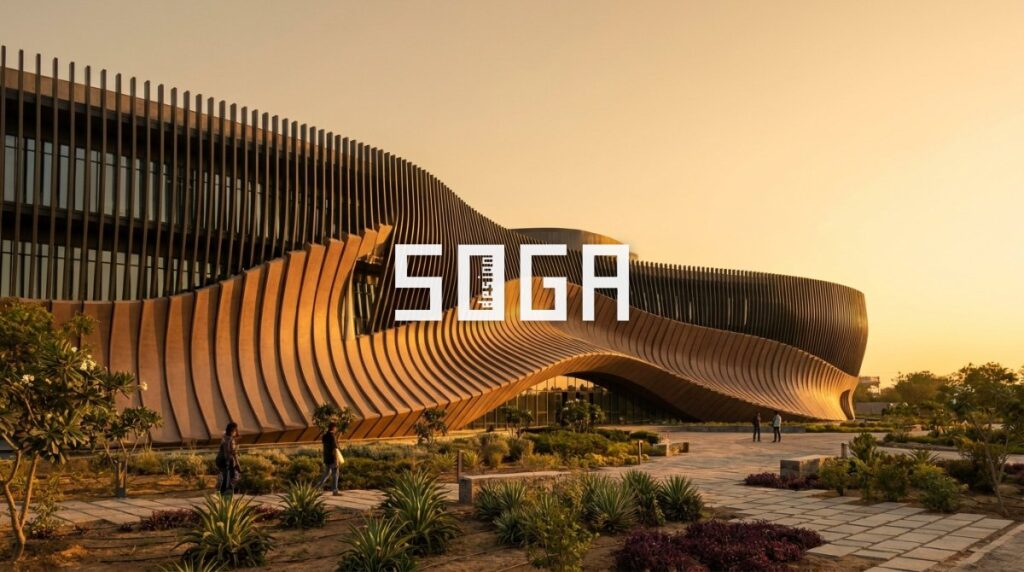
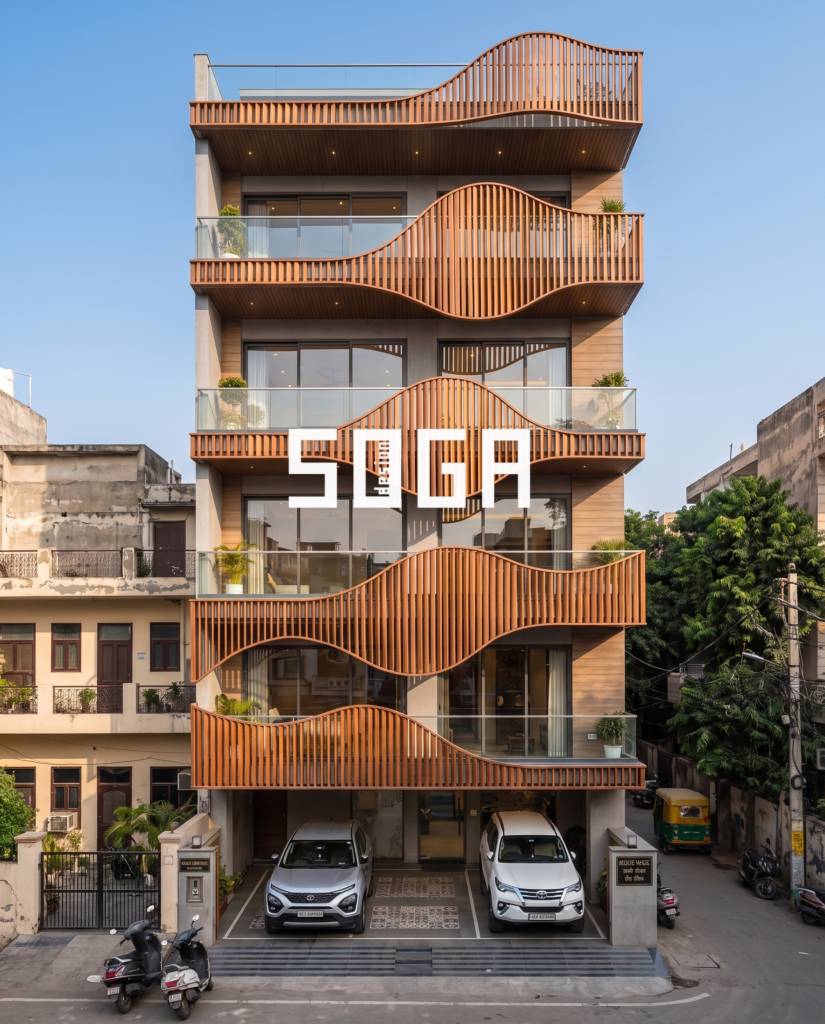
Quick answer: The best double-storey (G+1) house front elevations for 2026 keep clean horizontal lines and a neutral base, add one warm material (wood or stone), and layer a parametric fin or jali screen for shade, privacy and character — modern, climate-smart and timeless rather than over-decorated.
Your front elevation is your home’s first impression — and for a double-storey house it carries even more visual weight. In 2026, Indian homeowners are moving past busy, over-ornamented fronts toward clean, layered, parametric elevations that look premium and perform in our climate. Here are the double-storey (G+1) front elevation designs defining 2026, from SOGA Design Studio.
What makes a great double-storey elevation in 2026?
- Clean horizontal lines that make the house feel wider and calmer.
- One warm material — wood-finish aluminium or natural stone — against a neutral render base.
- A parametric fin or jali screen for shade, privacy and a signature pattern.
- Hidden services — concealed gutters, downpipes and AC units for a crisp look.
- Warm façade lighting so the elevation looks just as good at night.
8 double-storey house front elevation ideas for 2026
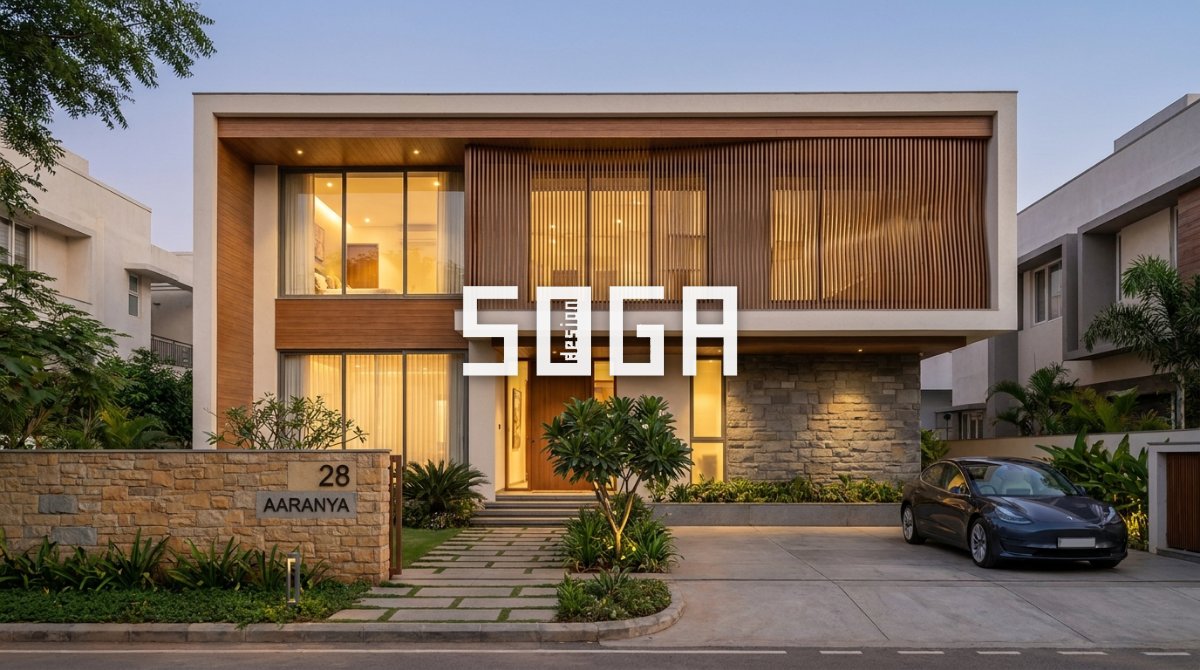
1. Contemporary render + wood + stone
The evergreen 2026 look: a warm white or grey render base, a wood-finish feature band on the upper floor, and a natural stone wall at the entrance. Simple, premium and budget-flexible.
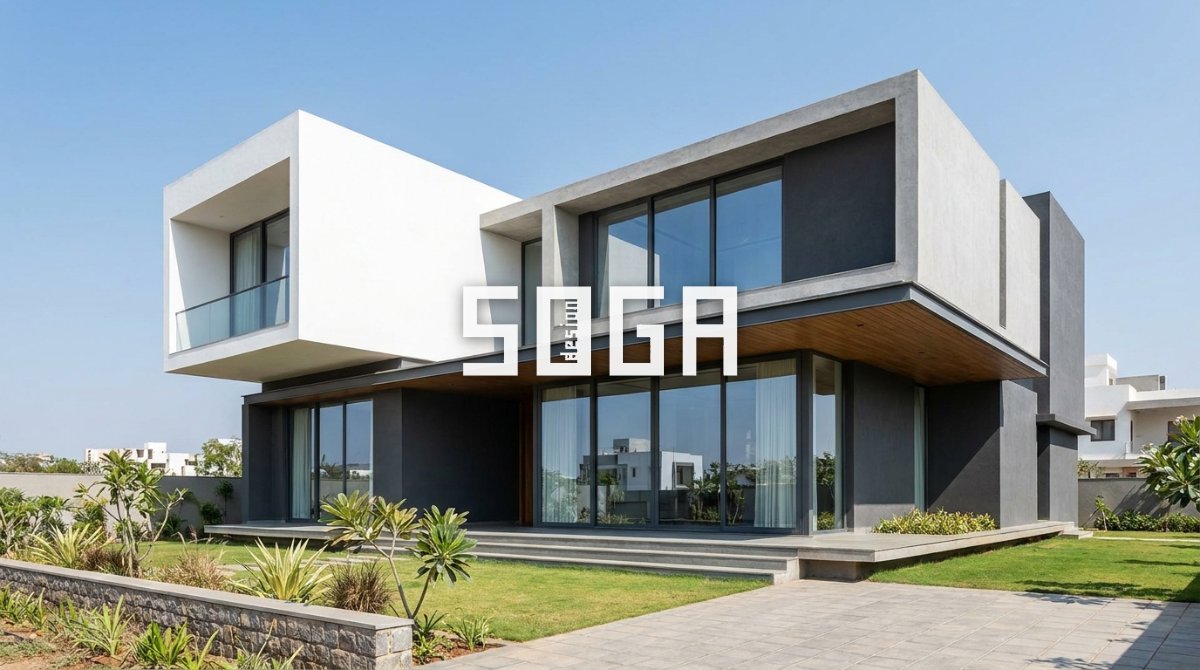
2. Minimalist white-and-grey with a cantilever
Crisp white and charcoal volumes with a cantilevered upper floor and floor-to-ceiling glazing read as architect-designed and high-end — perfect for narrow to mid-size plots.
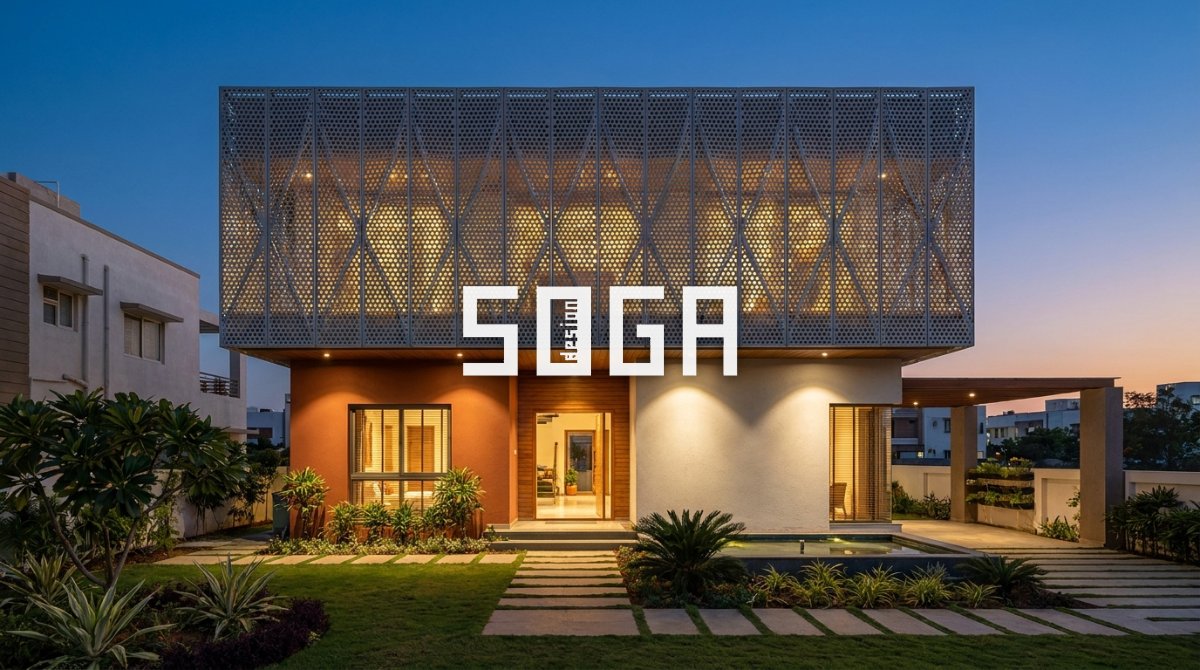
3. Parametric jali-screen elevation
Wrap the upper floor or staircase in a laser-cut aluminium jali with a parametric perforation pattern. It gives privacy and shade, glows beautifully at night, and turns an ordinary G+1 into a landmark.
4. Vertical fin façade
Slim vertical fins in wood-finish aluminium or GFRC run across the front, controlling the harsh western sun and making the elevation feel tall, rhythmic and refined.
5. Warm modern with brick or terracotta
Exposed brick or terracotta jali paired with white render and greenery gives a warm, earthy, breathable elevation that suits Indian climates and never dates.
6. Glass-forward elevation
Large glazed openings framed by deep overhangs and fins bring light in while controlling heat — best for north-facing fronts and homes that want an open, contemporary feel.
7. Biophilic elevation with vertical greenery
Integrated planters, a green wall, or timber screens with climbers soften the façade, improve microclimate, and feel genuinely 2026.
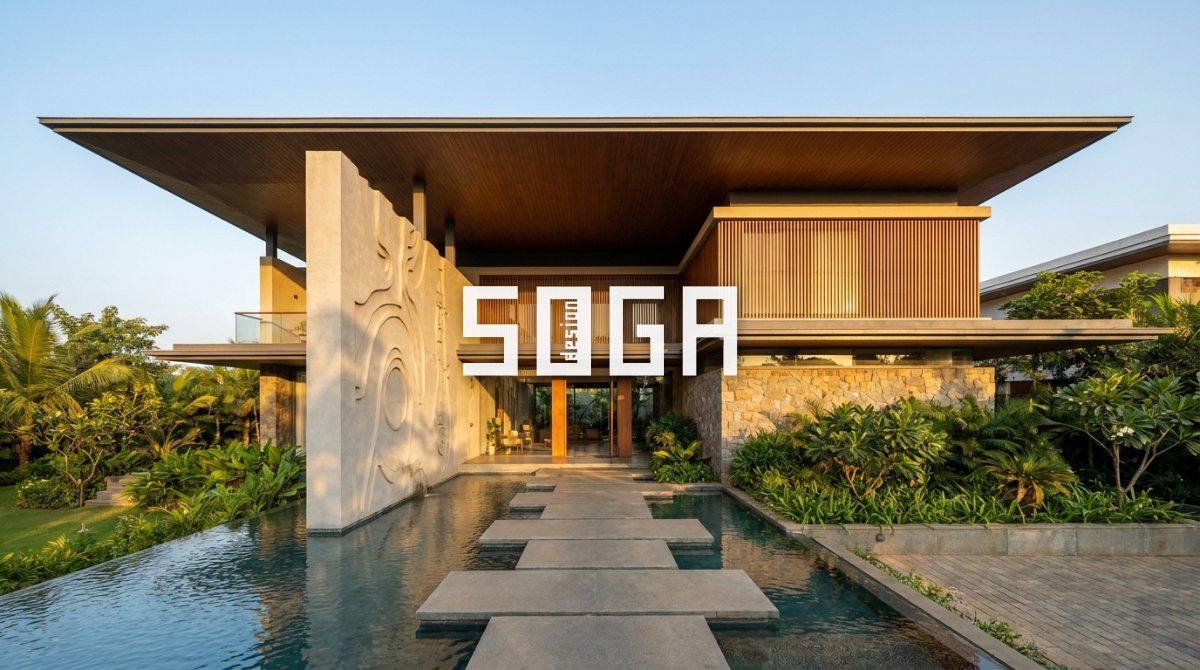
8. Luxury sculptural elevation with a GFRC feature
For premium villas, a sculptural GFRC feature wall, bold cantilevers, stone base and a water feature at the entrance create a truly one-of-a-kind arrival.
Best materials for a double-storey front elevation
A neutral render or paint base is the canvas. Add character with natural stone (entrance walls), wood-finish aluminium louvres (warmth without maintenance), a powder-coated aluminium jali (privacy + shade), and — on premium homes — a GFRC feature for sculptural form. These materials age far better than heavy plaster mouldings in Indian dust and monsoon. For a deeper comparison, read our guide to GFRC vs GRC vs ACP vs HPL facade materials.
Tips to get your elevation right
- Design for the sun. Add fins or jali on west/south fronts to cut heat; keep north more open.
- Limit the palette. Two or three materials look far more premium than five.
- Plan parking & entry early — the gate, driveway and porch are part of the elevation.
- Light it. Warm grazing lights on stone, fins or jali make the home glow at night.
Design your double-storey elevation with SOGA Design Studio
SOGA Design Studio creates modern, parametric front elevations for double-storey homes and villas across India — from Delhi NCR, Mumbai and Pune to Hyderabad, Bengaluru and Visakhapatnam. Share your plot and plan, and we’ll design an elevation that’s unmistakably yours and buildable to budget.
→ Get a custom front elevation concept for your home. Contact SOGA Design Studio.
Also see: Facade design ideas 2026 for homes, offices & commercial buildings.
Frequently asked questions
What is the most popular double-storey house front elevation in 2026?
Clean contemporary elevations that mix white or grey render with wood-finish accents and natural stone, softened by a parametric fin or jali screen for shade and privacy, are the most in-demand double-storey (G+1) look in 2026.
How can I make my double-storey house front elevation look modern?
Use simple horizontal lines, large windows, one warm material (wood or stone) against a neutral base, hidden gutters and downpipes, a parametric fin or jali screen on the upper floor, and warm façade lighting for the evening.
Which materials are best for a house front elevation in India?
A neutral render or paint base with natural stone, wood-finish aluminium louvres, and a powder-coated aluminium jali screen age well in Indian dust and monsoon. GFRC feature walls suit premium villas.
How much does a modern house front elevation cost in India?
It depends on materials and detail. Simple render-and-paint elevations are the most economical; adding stone, aluminium louvres, jali screens or a GFRC feature increases cost. Fix your material palette first, then design to that budget.