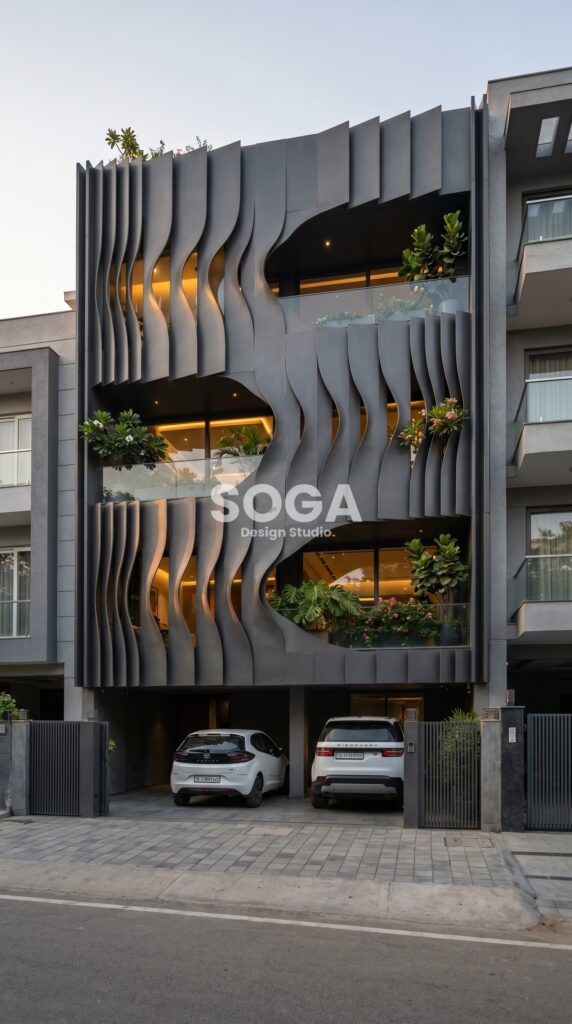
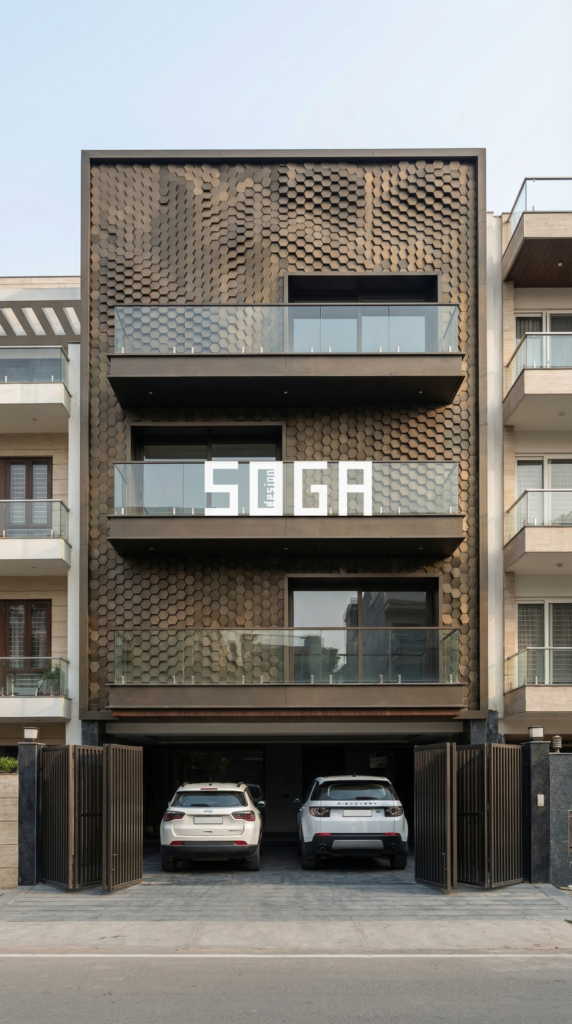
Walk past a modern luxury home in Coimbatore, Bengaluru, Ahmedabad, or Gurugram at 7 AM, and walk past it again at 5 PM. If the building has a parametric metal facade, it looks like two completely different structures. That is not a coincidence — it is the core intelligence of parametric facade design.
India’s top residential architects and developers are rapidly adopting parametric metal facade systems — not just for the visual drama, but because these facades are engineered to solve real problems: heat gain, maintenance cost, privacy, and urban identity. This article breaks down why this shift is happening and what it means for your next building project.
What Is a Parametric Metal Facade?
A parametric facade is one where every panel, fin, or module is computationally designed — its angle, depth, spacing, and profile are calculated algorithmically based on sun path analysis, view corridors, thermal performance targets, and visual composition. The result is a building skin that is never arbitrary. Every element serves a purpose.
In metal facade design, this approach is applied to aluminium composite panels, extruded aluminium fins, honeycomb-textured panels, anodised aluminium cladding, and powder-coated steel systems. The metal acts as the medium; the parametric logic is the designer’s intelligence embedded into the material.
Why Shadow Play Is the Real Design Value
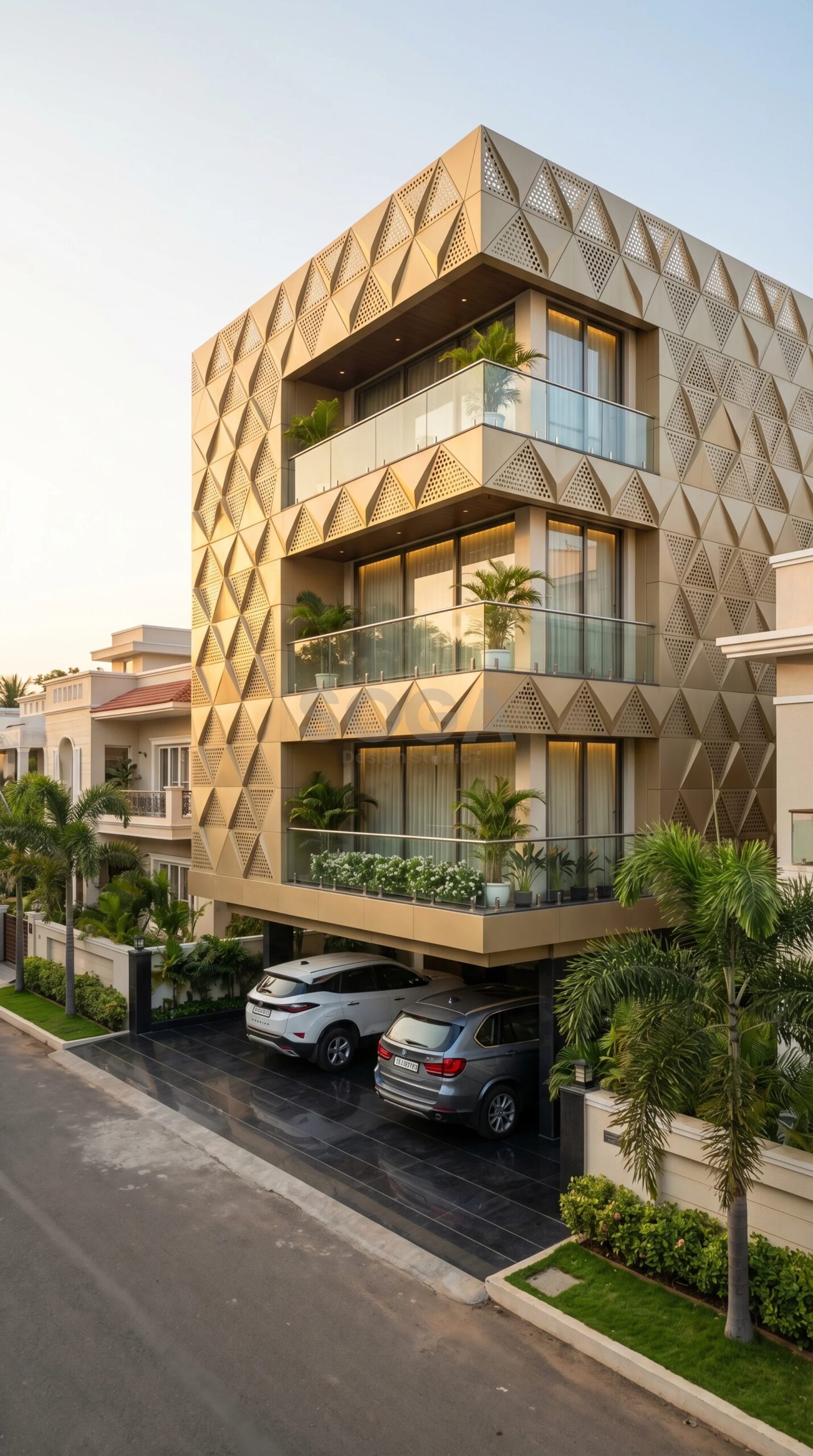
The most visually powerful quality of a parametric metal facade is its ability to generate dynamic shadow patterns. As the sun moves across the sky — morning to evening, summer to winter — the three-dimensional geometry of the facade casts constantly shifting shadows across its own surface. A building covered in 3D honeycomb aluminium panels at 8 AM looks textured and golden. By 3 PM, the deep shadow relief makes it appear bold and architectural. At dusk, with warm interior light glowing through recessed balconies, it transforms into something almost sculptural.
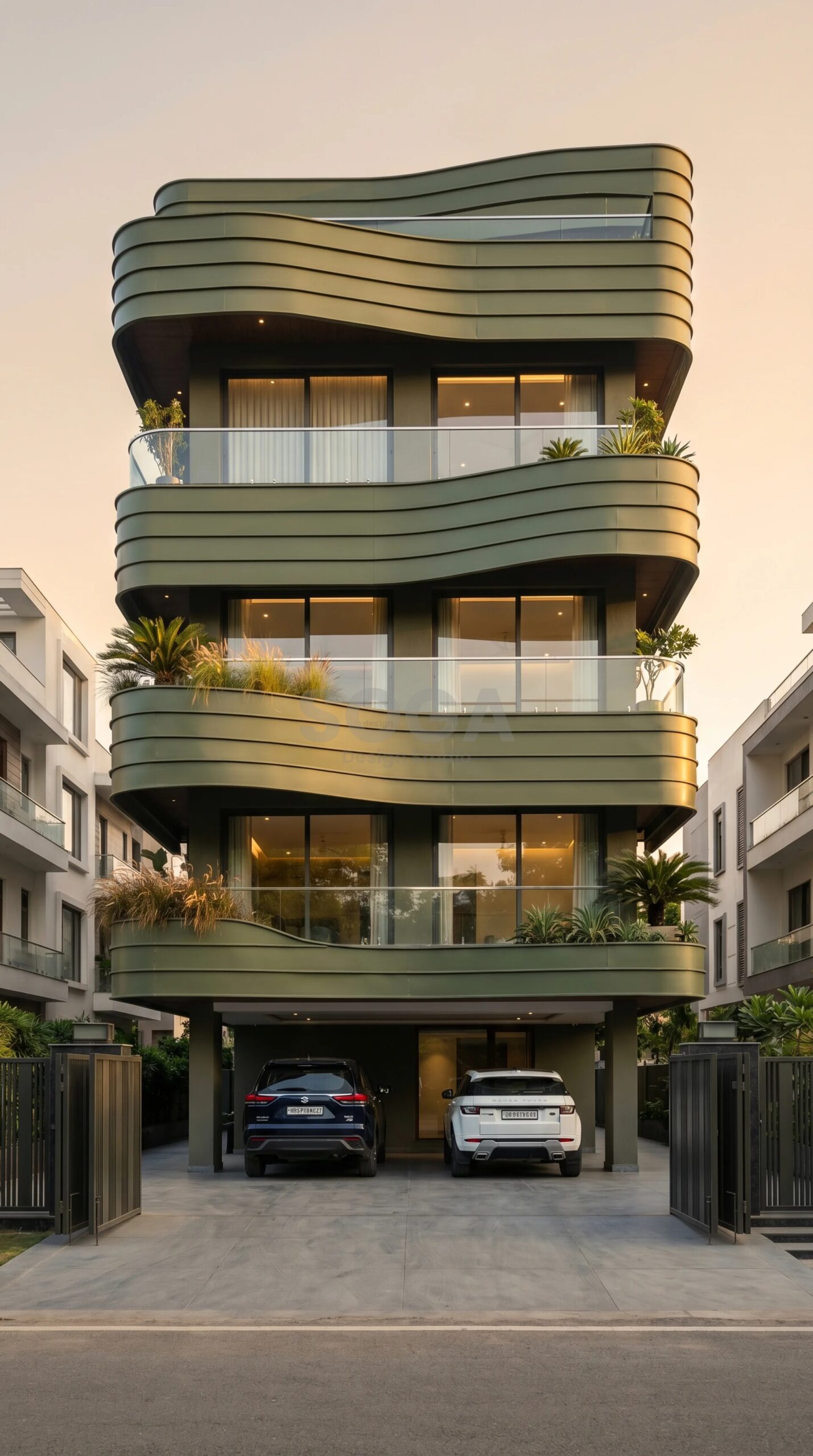
This is not just aesthetics. The depth of each panel module — whether a honeycomb cell, a twisted fin, or a rippling horizontal band — also creates shading for windows and glazing beneath it, reducing direct solar heat gain and cutting air conditioning loads. In Indian cities like Gurugram, Bangalore, and Coimbatore where summer temperatures routinely cross 38°C, this passive thermal benefit is enormously valuable.
Material Choices: What India’s Best Projects Are Specifying in 2026
The material palette for parametric facades in India has matured significantly. Here are the four dominant systems SOGA Design Studio sees specified on premium residential projects across metros:
Anodised Aluminium Panels: Champagne gold, dark bronze, and gunmetal grey anodised finishes dominate high-end residential projects. Anodising is not paint — it is an electrochemical process that permanently bonds the colour into the aluminium surface, giving a lifespan of 25–40 years with minimal maintenance. The finish has a depth and translucency that powder coat cannot replicate.
Powder-Coated Extruded Aluminium: For fins, louvers, and three-dimensional profile systems, extruded aluminium sections in RAL-specified powder coat colours remain the workhorse of parametric facade design. RAL 6003 military olive green, RAL 7016 anthracite grey, and RAL 9005 jet black are the most frequently specified colours on 2025–26 projects.
Dark Gunmetal Powder-Coated Steel: On projects where structural depth and bold industrial character are prioritised, mild steel sections with a dark gunmetal grey powder coat finish are being used to create cantilevered balcony frames, horizontal banding elements, and deep shadow-casting fins. The material reads as more assertive and architectural than aluminium, making it ideal for corner sites and landmark residential buildings.
The Urban Identity Argument: Why Your Building Must Stand Out
India’s tier-1 and tier-2 residential markets are saturated with identical glass-and-plaster apartment facades. The developer or homeowner who invests in a parametric metal facade system is buying something that no adjacent building will replicate — a unique urban identity that commands visual authority on its street and creates genuine brand recall for the developer or owner.
In cities like Ahmedabad, Gurugram, Bengaluru, and Coimbatore, we are seeing a growing segment of clients who understand that the facade is the building’s permanent visual equity. It is what gets photographed, shared on social media, remembered by future buyers, and associated with the owner’s personal brand. A building with a generic plaster-and-glass facade is invisible in the market. A building with a dark gunmetal cantilevered steel facade or a champagne gold honeycomb aluminium skin is a landmark.
Maintenance Reality: What Clients Actually Ask About
One of the most common questions SOGA receives from residential clients considering a parametric metal facade is about long-term maintenance. The honest answer is that a properly specified and installed aluminium facade system requires significantly less maintenance than painted plaster, natural stone, or ceramic tile cladding.
Anodised aluminium does not peel, crack, or require periodic repainting. It does not absorb moisture, making it resistant to India’s high-humidity monsoon conditions. Powder-coated systems should be cleaned with water and a mild detergent once or twice a year — a task that takes a building maintenance crew less than a day. Compare this to the every-3-to-5-year repainting cycle that consumes time, budget, and scaffolding costs with conventional plaster facades.
How SOGA Design Studio Approaches Parametric Facade Projects
Every SOGA facade project begins with a sun path analysis for the building’s specific orientation and latitude — whether that is Coimbatore at 11°N or Gurugram at 28°N. This analysis drives the depth, angle, and spacing of every panel module. We then model the facade in 3D, running shadow studies at 6 AM, 12 PM, 3 PM, and 6 PM across summer and winter solstice dates to verify that the shadow play meets the design intent and that solar shading targets are achieved for the glazed areas beneath.
Material selection follows function: if thermal mass is needed, extruded aluminium with deep profiles is specified. If visual lightness is the priority, thin honeycomb-textured aluminium composite panels are used. If the client’s brief calls for an industrial, assertive character, powder-coated steel is the right choice.
The result is a facade that is not decorative — it is architectural engineering expressed as design. And in India’s increasingly discerning residential market of 2026, that distinction is what separates a building that sells at a premium from one that waits.
Ready to Design Your Parametric Metal Facade?
SOGA Design Studio works with residential developers, independent homeowners, and commercial clients across India on facade design and architectural visualization. Whether your project is in Bengaluru, Ahmedabad, Gurugram, Coimbatore, or any other Indian city, our team can develop a parametric facade system tailored to your site’s solar orientation, budget, and design vision.
Contact SOGA Design Studio to discuss your project and receive a facade design consultation.