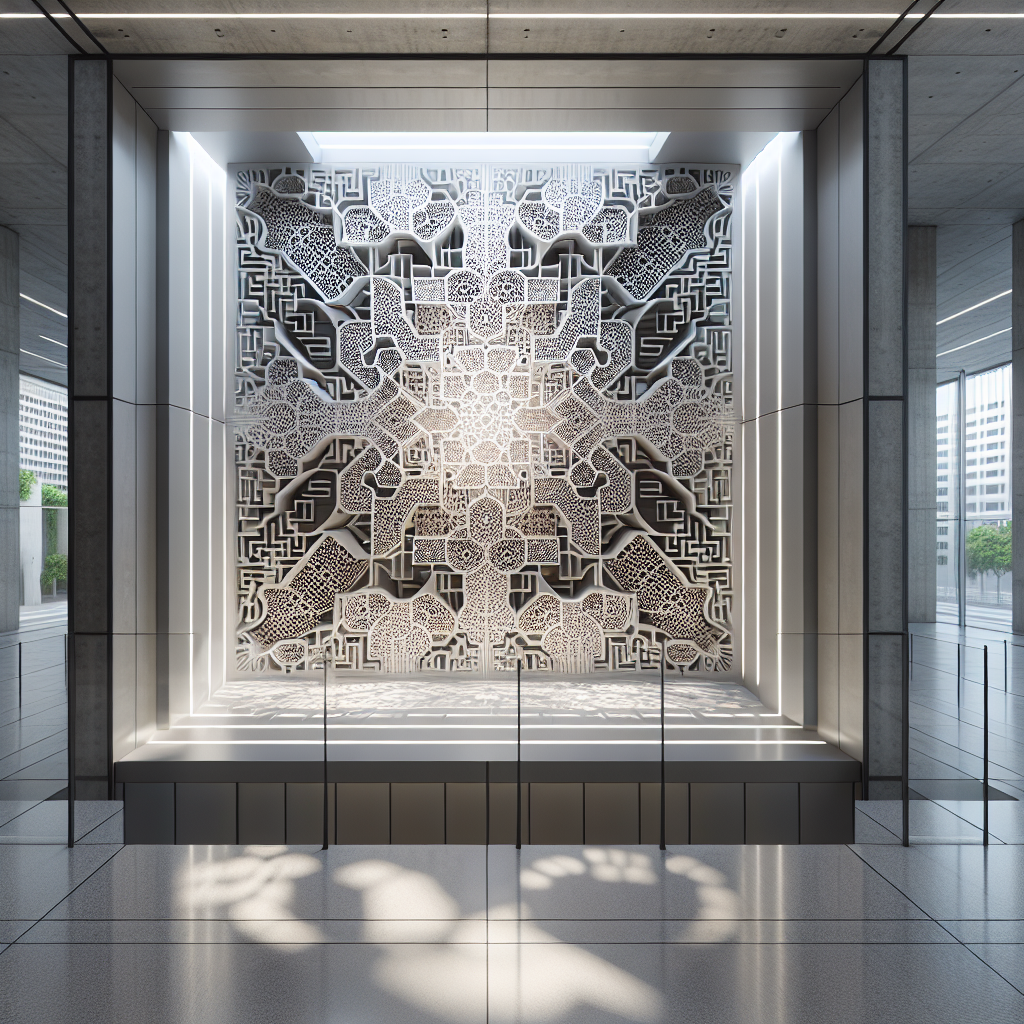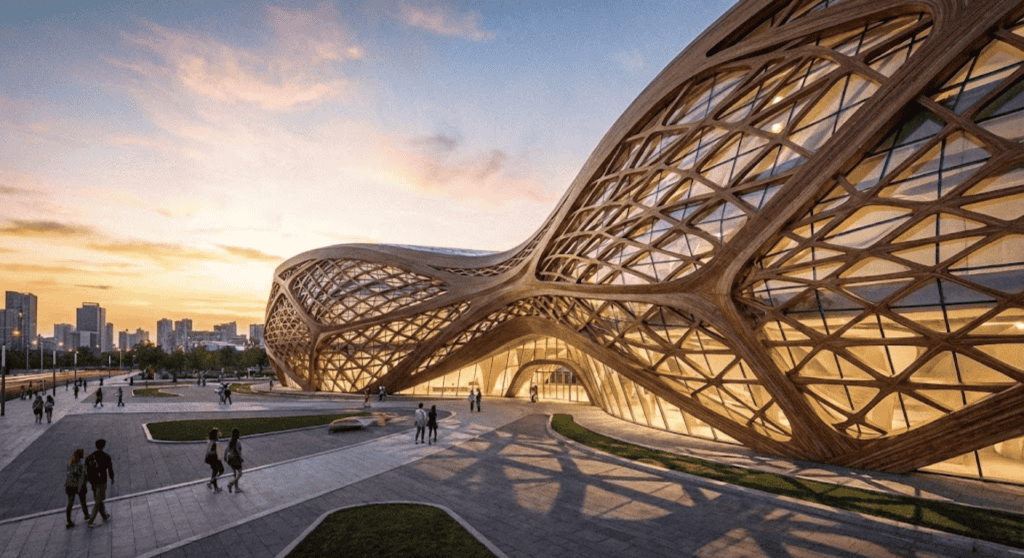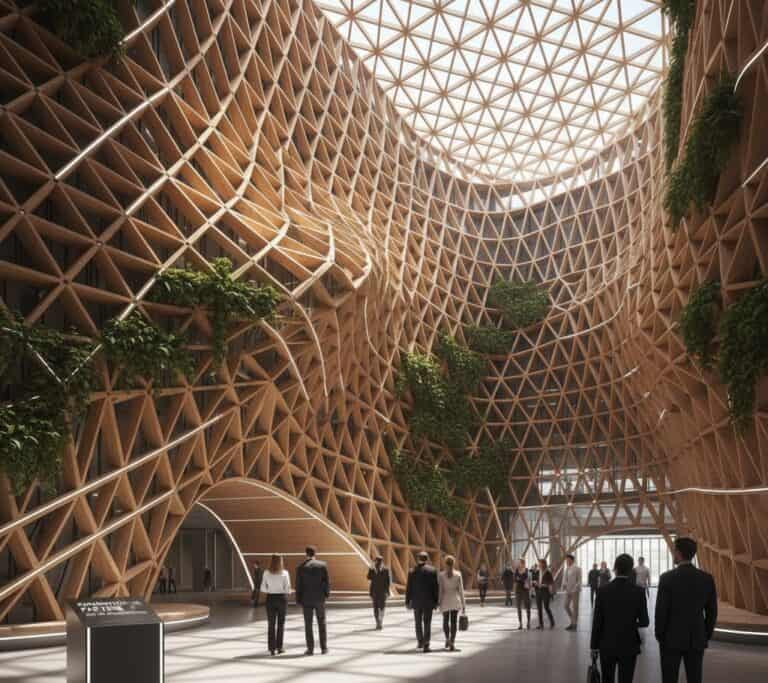
When we think of walls, we often imagine flat, static surfaces that simply divide spaces. But what if walls could become more—living sculptures that respond to our needs while delighting our senses? The intersection of mathematics, technology, and design has sparked a revolution in how we perceive the surfaces around us, transforming the utilitarian into the extraordinary. Parametric design has liberated architecture from conventional constraints, allowing walls to undulate, breathe, and perform in ways previously unimagined.
Where function meets beauty, walls cease being barriers and become opportunities for expression.
Have you ever walked into a space and felt a wave of emotion – intrigue, calm, excitement – without fully understanding why? Chances are, the walls around you were doing more than just standing there. When architectural design transcends mere function, we enter the realm where structure becomes art, where walls become living, breathing elements of our environment.
*Where mathematics meets beauty, parametric design transforms static walls into dynamic experiences – simultaneously solving practical problems while captivating our senses.*
The Evolution of Walls: From Barrier to Experience
For centuries, walls served primarily as barriers – separators dividing space and providing structural support. Today, through the magic of parametric design, walls have evolved into something far more nuanced. Modern wall panels do more than divide; they communicate, filter light, manage acoustics, and create emotional responses.
This transformation represents a fundamental shift in how we think about architecture. No longer must we choose between form and function – parametric patterns allow us to optimize both simultaneously.
What Exactly Is Parametric Design?
At its core, parametric design is a computational approach that uses algorithms and parameters to generate complex geometric forms. Rather than drawing a specific shape, designers define relationships and rules that generate patterns based on changing variables.
Imagine baking cookies. Traditional design is like following a recipe to make one specific cookie shape. Parametric modeling, however, is like creating a recipe that automatically adjusts based on variables like available ingredients, dietary needs, and flavor preferences – producing unique cookies optimized for each situation.
When applied to wall elements, this approach allows designers to create systems where:
- Environmental factors like sunlight angle can determine perforation patterns
- Acoustic requirements can shape surface geometries
- Traffic flow can influence density of elements
- Material constraints can mold overall forms
The result? Custom 3D wall elements that respond directly to their specific context while maintaining visual coherence.
The Science Behind the Beauty
The magic of parametric walls lies in pattern generation – the mathematical processes that create organized complexity. These aren’t random decorative elements but carefully calculated systems that can respond to various functions.
Mathematical Patterns with Purpose
Consider how nature creates its designs – the spacing of leaves on a stem, the arrangement of seeds in a sunflower, the branching pattern of trees. These natural patterns optimize for sunlight, structural stability, and resource distribution. Parametric wall designs often mimic these natural efficiencies.
For instance, a south-facing parametric wall might feature perforations that are densest at the top, gradually opening toward the bottom. This isn’t just visually striking – it’s a functional aesthetic choice that maximizes natural light distribution throughout the day while minimizing glare and heat gain.
The algorithm behind such a wall might consider:
- Sun angles throughout the year
- Desired interior light levels
- Heat management requirements
- View preservation needs
Each parameter influences the others, creating a solution that is both beautiful and intelligent.
When Walls Perform: Functional Benefits
Beyond their visual impact, parametric walls offer significant practical advantages that traditional walls simply cannot match.
Light Choreography
Perhaps the most dramatically apparent function of parametric walls is light filtration. By controlling aperture size, shape, and distribution, these walls transform harsh direct sunlight into a dance of light and shadow that changes throughout the day.
Remember how sunlight dapples through tree leaves? That natural filtering creates a pleasant, dynamic lighting environment. Parametric walls can recreate this effect with precision, turning ordinary spaces into ever-changing light experiences while reducing energy costs associated with artificial lighting.
Acoustic Intelligence
Sound management presents a persistent challenge in modern architecture. Hard, flat surfaces create echo chambers; completely soft surfaces feel deadened and absorb too much energy. Parametric wall panels offer a sophisticated middle path.
By varying surface geometry, designers can tune walls to diffuse sound waves at specific frequencies. A lecture hall might require different acoustic properties than a meditation space, and parametric design allows for this customization while maintaining visual cohesion.
Environmental Responsiveness
In our climate-conscious era, walls must do more environmental heavy lifting. Parametric designs can incorporate:
- Passive ventilation systems that respond to temperature differentials
- Integrated planting pockets that improve air quality and wellbeing
- Rainwater capture and distribution channels
- Solar heat management systems
A wall becomes not just a separator but an active participant in sustainable building function.
The Emotional Impact of Parametric Patterns
Beyond measurable functions, parametrically designed walls affect us on a deeper, psychological level. The complex yet ordered patterns stimulate our brains in ways that both basic geometric shapes and chaotic randomness cannot.
Studies in neuroaesthetics suggest that our brains are particularly responsive to the type of “organized complexity” that parametric design excels at creating. We find patterns that are neither too predictable nor too random most engaging – precisely what sophisticated parametric designs deliver.
This explains why people often linger in spaces with well-executed parametric elements. The walls themselves become objects of contemplation and emotional connection, encouraging engagement rather than mere passage.
Bringing Parametric Walls Into Your Space
You might be thinking, “This sounds fascinating, but is it accessible to ordinary projects?” Increasingly, the answer is yes.
Scaling to Fit
While spectacular examples exist in high-profile architectural projects, parametric design scales beautifully. Even modest applications can transform a space:
- A simple parametric screen dividing areas in an open plan
- A feature wall with subtle three-dimensional patterning
- An acoustically tuned headboard wall in a bedroom
- A light-filtering panel for a window or skylight
Each introduces the benefits of parametric thinking without overwhelming a space or budget.
Digital Fabrication Revolution
The accessibility of parametric design has exploded thanks to digital fabrication technologies. Custom 3D wall elements that would have required prohibitive handcrafting just years ago can now be produced affordably using:
- CNC milling for wood, stone, or foam materials
- 3D printing for complex components
- Laser cutting for precise perforations
- Robotic assembly for larger installations
These technologies translate complex digital designs into physical reality with remarkable precision.
Beyond Novelty: The Future of Wall Design
As parametric design tools become more intuitive and fabrication more accessible, we’re moving beyond the initial “wow factor” to more sophisticated integration of these techniques. The most exciting developments combine parametric patterns with other emerging technologies:
- Interactive walls that respond to human presence or touch
- Kinetic elements that physically adjust to changing conditions
- Embedded technologies like lighting, sensing, or display capabilities
- Biophilic systems that incorporate living elements
The wall of tomorrow isn’t just a smart surface – it’s an intelligent system that continuously adapts to human and environmental needs while maintaining its artistic integrity.
Next time you encounter a wall that makes you pause, look closer. Is it merely holding up the ceiling, or is it performing a complex symphony of functions while engaging your senses? In the hands of parametric design, walls transcend their humble origins to become something extraordinary – proof that our built environment can indeed be both art and function too.Every space we inhabit—from the ceilings that frame our aspirations to the walls that hold our stories—shapes the narrative of our lives. Just as a building’s facade reflects its character, our choices and actions reveal the depth of our inner world. By embracing challenges as opportunities to grow, we transform limitations into stepping stones, crafting a life that resonates with purpose.
Now, it’s your turn. What ceilings will you break through? What foundations will you strengthen? Share your journey in the comments, or take one small step today to align your outer world with your inner truth. The blueprint for a life well-lived starts with you—build it boldly.