Digital twins represent virtual replicas of physical assets, revolutionizing how construction projects are planned, executed, and maintained. By integrating real-time data with 3D models, digital twin technology enables predictive analytics, streamlined collaboration, and optimized building performance throughout the entire lifecycle.
Key Insights on Digital Twin Technology:
- Real-Time Monitoring: Digital twins provide continuous feedback on construction progress, enabling immediate identification of deviations from design specifications and schedules.
- Predictive Maintenance: IoT sensors integrated with digital models forecast equipment failures and maintenance needs, reducing downtime and extending asset lifespan.
- Enhanced Collaboration: Cloud-based digital twins facilitate seamless coordination among architects, engineers, contractors, and clients across geographical boundaries.
- Cost Optimization: Virtual simulation of construction scenarios identifies potential issues before they occur, minimizing expensive rework and material waste.
- Performance Analysis: Post-occupancy digital twins track energy consumption, space utilization, and environmental conditions to optimize building operations.
- Training and Safety: Virtual replicas enable construction teams to practice complex procedures in risk-free digital environments before on-site implementation.
India Context Example:
The Mumbai Trans Harbour Link project utilizes digital twin technology to manage the complex 22-kilometer sea bridge construction. Real-time monitoring of structural components, environmental conditions, and construction equipment has significantly improved safety protocols and accelerated project timelines.
Practical Conclusion:
Implementing digital twin technology requires upfront investment in sensors, software platforms, and training, but the long-term benefits in efficiency and asset management far outweigh initial costs. Begin with pilot projects to demonstrate value and build organizational expertise before scaling across larger developments.
Reference: buildingSMART International
What a Digital Twin Is
A digital twin is a live, data-connected 3D model of a building or project — not just a design model, but one linked to real information from sensors, schedules and site progress. In construction it lets teams simulate, monitor and manage a project virtually before and while it is built, catching clashes and delays early instead of on site.
How It Transforms Project Delivery
- Design coordination: architecture, structure and services are checked in one model, so clashes are resolved on screen, not in concrete.
- Construction planning: 4D sequencing ties the model to the programme, making delays visible early.
- Cost control: 5D links quantities to cost, so design changes show their budget impact immediately.
- Operations: after handover, the twin becomes a maintenance and energy-management tool for the finished building.
Why It Matters for Complex Facades
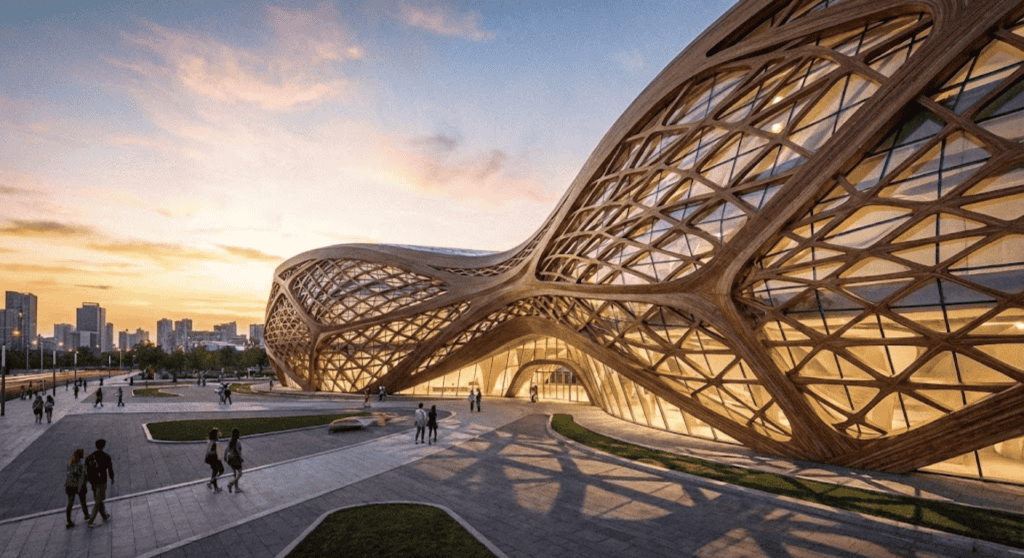
Parametric and free-form facades are exactly where digital twins pay off most. Every panel can be modelled, numbered and tracked from fabrication to installation, so a facade of thousands of unique parts is delivered accurately and on schedule. The same model then supports future maintenance and replacement.
Frequently Asked Questions
Is a digital twin the same as BIM? BIM is the model; a digital twin adds live data — sensors, progress, performance — so the model reflects the real building over time.
Does it help reduce cost? Yes, mainly by catching clashes and delays early and by giving accurate quantities, which reduces rework and waste.
Do small projects benefit? Even a coordinated 3D model with quantities and sequencing delivers much of the value on smaller or facade-focused projects.