Modular construction represents a paradigm shift in building delivery, where prefabricated components are manufactured off-site and assembled on location. This approach dramatically reduces construction timelines, minimizes site disruption, and delivers consistent quality while addressing labor shortages and improving safety standards across the construction industry.
Key Insights on Modular Construction:
- Time Efficiency: Parallel on-site preparation and off-site fabrication reduce overall project duration by 30-50% compared to traditional construction methods.
- Quality Control: Factory-controlled manufacturing environments ensure precision, consistent standards, and reduced material waste through optimized processes.
- Cost Predictability: Fixed factory production costs and reduced site labor requirements provide greater budget certainty and minimize cost overruns.
- Design Flexibility: Modern modular systems support diverse architectural expressions, from residential towers to commercial complexes and healthcare facilities.
- Sustainability Benefits: Reduced transportation trips, minimized material waste, and factory recycling programs lower environmental impact significantly.
- Site Safety: Controlled manufacturing reduces on-site activities and associated accident risks, improving overall construction safety metrics.
India Context Example:
T2 Terminal at Mumbai Airport utilized modular construction for interior fit-outs, enabling rapid completion of passenger facilities while maintaining operational continuity. The prefabrication approach allowed simultaneous infrastructure work and interior assembly, cutting completion time by several months.
Practical Conclusion:
Successful modular construction requires early design commitment, coordination with manufacturing facilities, and careful logistics planning. While upfront design investment is higher, the time savings, quality improvements, and cost predictability make modular approaches increasingly attractive for projects with tight schedules and high quality requirements.
Reference: Modular Building Institute
What Modular Construction Actually Means
Modular construction builds a project as a kit of prefabricated parts — volumetric room modules or flat panels — manufactured in a controlled factory and assembled on site. Because factory work happens at the same time as foundations and site works, projects finish far faster than conventional stick-build, often cutting programme by 30–50%. For developers under time pressure, that speed converts directly into earlier revenue and lower financing cost.
Where It Delivers the Most Value
- Repetitive typologies: hotels, student housing, hospitals and apartments, where one module repeats.
- Fast-track commercial work: showrooms, offices and retail fit-outs on tight deadlines.
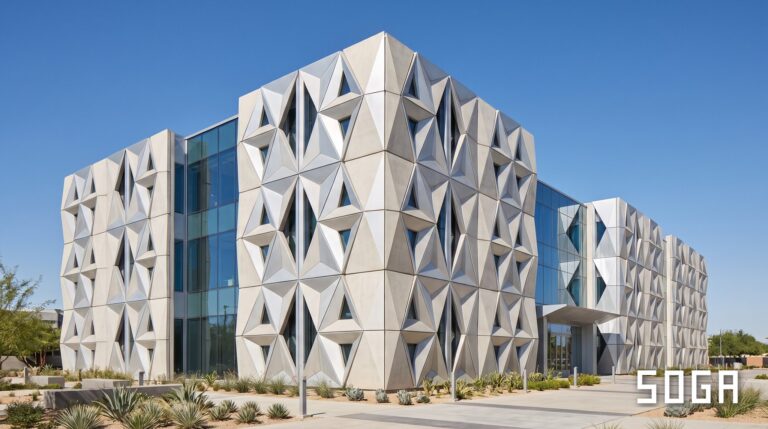
- Facades: unitised and parametric facade panels are themselves a form of modular construction — fabricated off-site and hung floor by floor.
Benefits and Trade-offs
Factory production improves quality control, reduces material waste and weather delays, and makes sites safer and quieter. The trade-offs are up-front design discipline — modules must be finalised early — and transport and craneage logistics. Projects that plan for modular from the start, rather than converting late, capture the biggest gains.
Frequently Asked Questions
Is modular construction cheaper? Often, once speed and reduced waste are counted; direct material cost can be similar, but faster completion and predictable quality usually lower the total delivered cost.
Does modular limit design? Not necessarily. Panelised and parametric facade systems let modular buildings look bespoke while keeping factory efficiency.
How much faster is it? Typical programmes shorten by around a third to a half versus conventional construction, because factory and site work run in parallel.