Adaptive reuse transforms obsolete or underutilized structures into vibrant new spaces, preserving cultural heritage while meeting contemporary functional needs. This sustainable approach reduces demolition waste, retains embodied energy, and maintains architectural character while addressing modern urban space demands and economic development goals.
Key Insights on Adaptive Reuse:
- Heritage Preservation: Maintains historical architectural elements and cultural significance while updating infrastructure, systems, and amenities for modern use.
- Environmental Benefits: Avoids demolition waste and new material production, typically reducing carbon footprint by 50-75% compared to new construction.
- Economic Revitalization: Transforms underperforming properties into productive assets, catalyzing neighborhood development and attracting investment to declining areas.
- Structural Challenges: Requires careful assessment of existing conditions, integration of modern building codes, and creative solutions for accessibility and safety requirements.
- Mixed-Use Opportunities: Historic buildings often accommodate diverse programs—converting industrial warehouses into creative offices, mills into residential lofts, or schools into community centers.
- Community Identity: Preserves collective memory and neighborhood character, fostering sense of place and continuity amid rapid urban change.
India Context Example:
Delhi’s iconic Bikaner House, originally built as a royal guesthouse in 1936, has been adaptively reused as a cultural center hosting exhibitions, workshops, and artistic performances. The restoration preserved the heritage facade and courtyard while inserting modern gallery infrastructure and event spaces.
Practical Conclusion:
Successful adaptive reuse demands thorough structural evaluation, understanding of heritage regulations, and creative problem-solving to balance preservation with functional requirements. Engage conservation specialists early in the design process to navigate regulatory frameworks and develop sensitive interventions that respect historical significance while enabling contemporary use.
Reference: National Trust for Historic Preservation
What Adaptive Reuse Is
Adaptive reuse is the practice of giving an existing building a new purpose instead of demolishing it — turning a mill into offices, a warehouse into retail, or an ageing structure into housing. It keeps the embodied carbon and character of the original while meeting new needs, and is one of the most sustainable moves in architecture because the greenest building is often the one that already exists.
Why It Is Gaining Momentum
- Sustainability: reusing structure avoids the huge carbon cost of demolition and rebuilding.
- Speed and cost: keeping the frame can shorten programmes and reduce structural spend.
- Character: old fabric gives a project authenticity that new-build struggles to buy.
- Urban value: it regenerates city centres and heritage precincts rather than expanding sprawl.
The Role of a New Facade
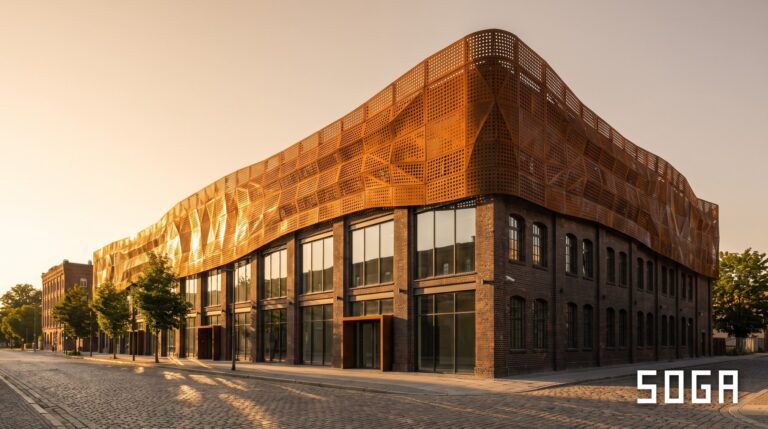
A contemporary parametric or metal facade is one of the most powerful tools in adaptive reuse: it can wrap a tired structure in a modern identity, upgrade thermal and shading performance, and signal the building’s new life — all while the original structure is retained. The contrast between old fabric and a crisp new skin is often what makes a reuse project memorable.
Frequently Asked Questions
Is adaptive reuse cheaper than new build? Frequently, because the existing structure and foundations are retained; savings depend on the condition of the original building.
Why is it considered sustainable? It preserves embodied carbon and avoids demolition waste, making it one of the lowest-impact ways to deliver new space.
Can old buildings meet modern performance standards? Yes — a new high-performance facade and upgraded services can bring a retained structure up to current comfort and efficiency levels.