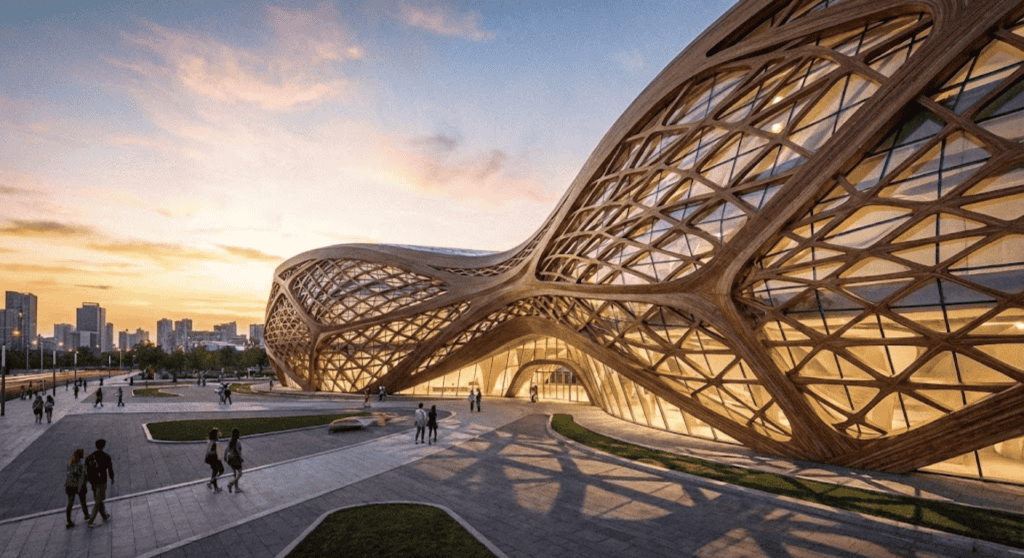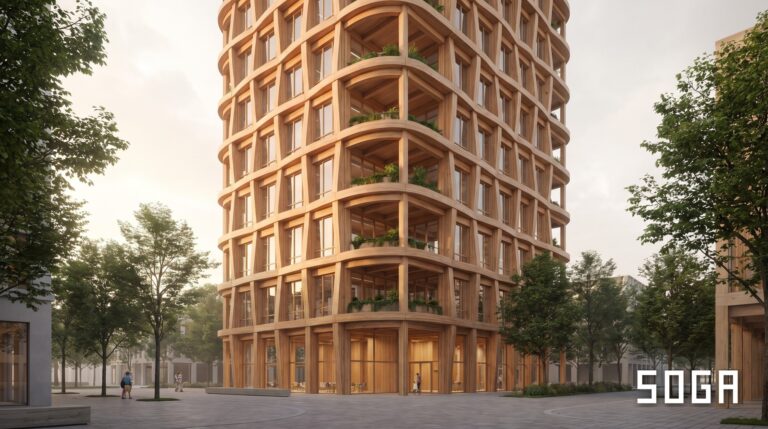
Mass timber construction represents a revolutionary shift in sustainable building practices, enabling wooden structures to reach heights previously reserved for steel and concrete. Engineered wood products like cross-laminated timber (CLT) and glulam combine renewable materials with advanced manufacturing to deliver strong, lightweight, carbon-sequestering building systems for tall structures.
Key Insights on Mass Timber Construction:
- Carbon Storage: Trees absorb CO2 during growth, and mass timber buildings lock this carbon for decades, creating carbon-negative structures when sourced from sustainably managed forests.
- Structural Performance: Engineered timber products achieve strength-to-weight ratios comparable to steel while offering excellent seismic resistance through controlled flexural behavior.
- Construction Speed: Prefabricated timber panels enable rapid assembly with minimal wet trades, reducing construction timelines by 25-30% compared to conventional methods.
- Fire Safety: Contrary to intuition, mass timber exhibits predictable charring behavior that maintains structural integrity during fires, meeting stringent building code requirements.
- Aesthetic Appeal: Exposed timber interiors create warm, biophilic environments that improve occupant well-being and provide distinctive architectural character.
- Design Limitations: Current building codes in many regions restrict timber building heights, though regulations are evolving as research demonstrates safety and performance capabilities.
India Context Example:
While India’s mass timber sector is emerging, the IIT Roorkee has established a Centre of Excellence in Mass Timber Construction to develop standards and promote engineered wood technology suited to Indian conditions, including bamboo-based mass timber products that leverage local resources.
Practical Conclusion:
Mass timber offers architects a sustainable alternative for mid-to-high-rise construction, particularly suitable for regions with sustainable forestry practices. Early engagement with structural engineers, fire safety consultants, and regulatory authorities is essential to navigate evolving codes and realize timber’s full potential as a low-carbon building solution.
Reference: Forest Products Laboratory, USDA
What Mass Timber Is
Mass timber uses engineered wood products — cross-laminated timber (CLT), glulam and LVL — as the primary structure of a building, in place of concrete or steel. These products laminate smaller pieces of timber into large, strong, fire-rated structural elements, making it possible to build tall, safe, low-carbon buildings from a renewable material.
Why It Is the Future of Sustainable High-Rise
- Low carbon: timber stores carbon and needs far less energy to produce than concrete or steel.
- Speed: prefabricated panels are craned into place quickly, shortening programmes.
- Lighter structure: lower weight can reduce foundation cost.
- Wellbeing: exposed timber interiors are shown to improve occupant comfort and mood.
Performance and Fire Safety
Modern mass timber is engineered to char predictably in a fire, retaining structural capacity, and is used worldwide in tall buildings under strict codes. Paired with a protective, well-detailed facade — including parametric metal or timber rainscreens — mass timber buildings achieve the durability and weather performance expected of any high-rise while keeping their sustainability advantage.
Frequently Asked Questions
Is mass timber safe in a fire? Yes. Engineered timber chars at a known rate and keeps its structural strength; tall mass-timber buildings are approved under modern fire codes.
Is it more sustainable than concrete? Generally yes — it stores carbon and has much lower embodied emissions than concrete or steel.
Can it be used for high-rise? Yes; CLT and glulam systems now support mid- and high-rise buildings around the world.