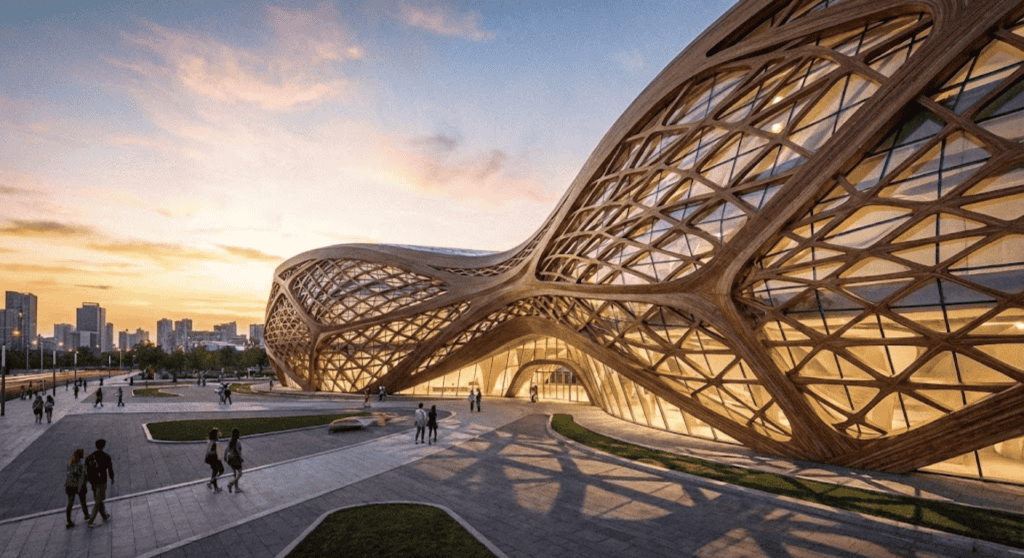
Walk past a new G+5 in Bandra or Greater Kailash and you will notice something the older buildings next door do not have: a second, outer layer of metal standing a few inches clear of the glass, casting its own shadow and quietly taking the sun before it ever reaches the rooms. That gap is the whole idea. A double skin facade in India wraps a building in two layers — an outer screen and an inner wall — with a ventilated air cavity between them. In a country where west and south walls can turn into radiators by 3 PM, that cavity is one of the most effective, and most under-used, tools a homeowner has. This 2026 guide explains what a double skin facade is, how it works, the four types, real cost per sq ft in India, and how to design one that looks as good as it performs.
What Is a Double Skin Facade? A Simple Definition
A double skin facade (also called a twin-skin or double-envelope facade) is a building exterior made of two layers separated by an air cavity. The outer skin is usually a metal screen, precision-cut metal panel or glazed layer; the inner skin is the actual weather wall — typically glazing or an insulated wall with windows. The cavity between them, anywhere from 200 mm to over a metre wide, is ventilated so heat that builds up in the gap escapes instead of soaking into the home. Think of it as a building wearing a light, breathable outer jacket over its real clothes: the jacket takes the sun and the wind, and the layer of moving air in between keeps the interior calm.
How a Double Skin Facade Works
The performance comes from three things working together. First, the outer skin intercepts direct sunlight and glare before it hits the inner glass, so the room behind stays cooler and softer-lit. Second, the air cavity uses the stack effect: as air in the gap warms up it rises and exits at the top, pulling cooler air in at the bottom and continuously flushing heat away — no electricity required. Third, the inner skin handles insulation, waterproofing and the actual openable windows. Adjustable shading or planting can sit inside the cavity for extra control. In an Indian climate the result is a facade that shades itself in summer, still lets in daylight, and cuts the load on your air-conditioning through the hottest part of the day.
Double Skin Facade Benefits for Indian Homes
For Indian residential projects — especially G+3 to G+7 homes on tight urban plots — a double skin facade solves several problems at once:
- Heat control: A ventilated metal outer skin can cut direct solar heat gain on west and south walls by roughly 25-40%, dropping interior surface temperatures by about 4-7°C versus a bare RCC or single-glazed wall.
- Lower cooling bills: Less heat reaching the rooms means the AC runs less, so running costs fall year after year and offset the higher upfront spend.
- Daylight without glare: The outer screen diffuses harsh sun, so you keep bright, even daylight without the hot, blinding patches a plain glass wall gives.
- Privacy: From the street the outer skin reads as a solid, elegant screen; from inside you still see out clearly.
- Acoustic buffer: The cavity and second layer dampen road and neighbour noise — valuable on busy Indian streets.
- A signature look: The depth and shadow of a two-layer facade simply looks more considered and premium than flat cladding.
The 4 Types of Double Skin Facade (With Examples)
Double skin facades are grouped by how the air cavity is divided and ventilated. Each type suits a different plot, budget and climate. Here are the four, with a SOGA concept for each.
1. Box-Window Double Skin Facade
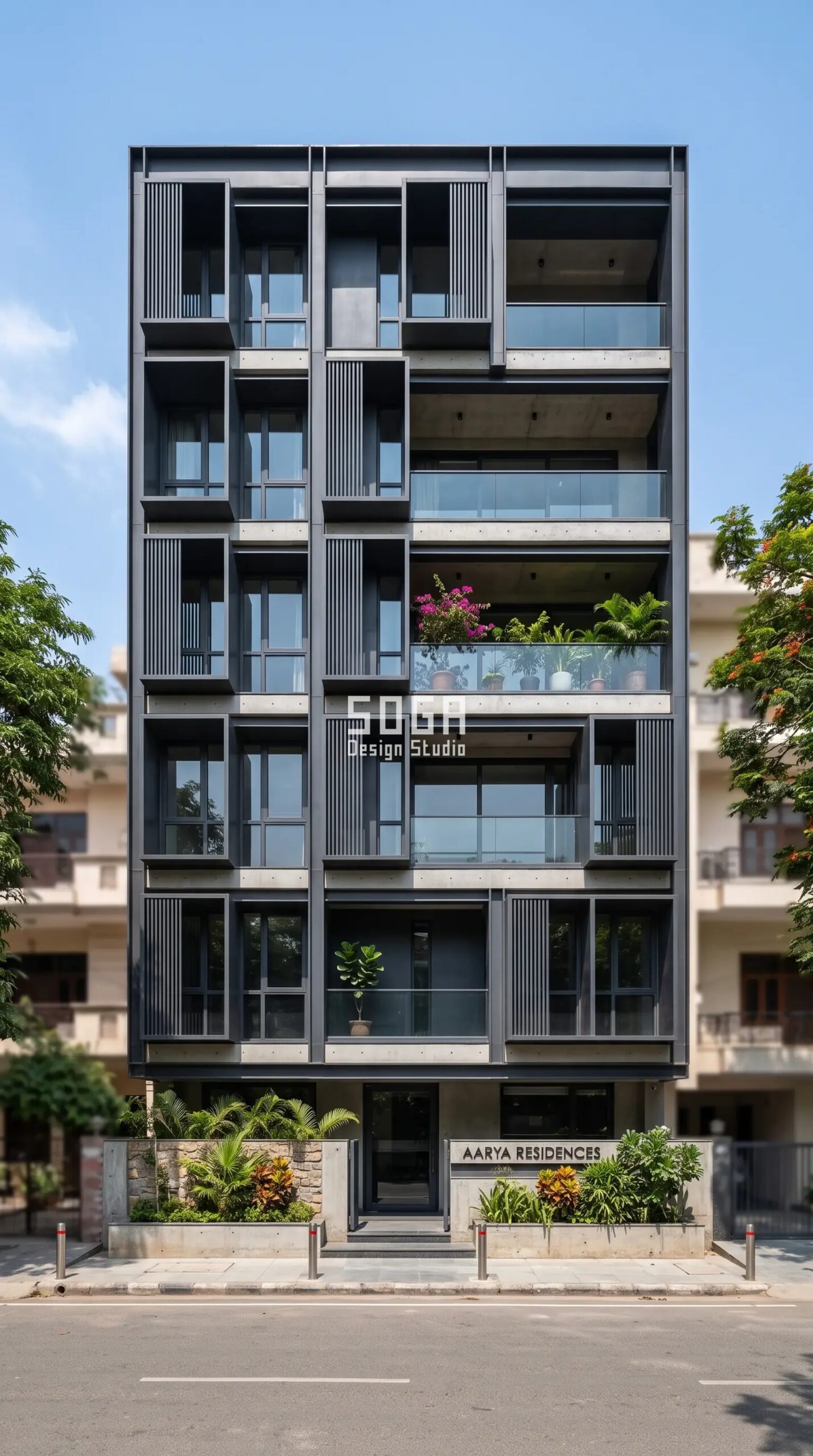
In a box-window facade the cavity is split into small, sealed boxes — one in front of each window or bay. Every box has its own inlet and outlet, so heat and noise stay compartmented and do not travel between rooms or floors. It is the most controlled and acoustically quiet type, which makes it a strong fit for busy Indian city plots. The Delhi concept above shows charcoal-grey metal screen boxes projecting a set distance in front of each opening, giving the elevation a crisp, ordered depth while shading every window individually.
2. Corridor Double Skin Facade
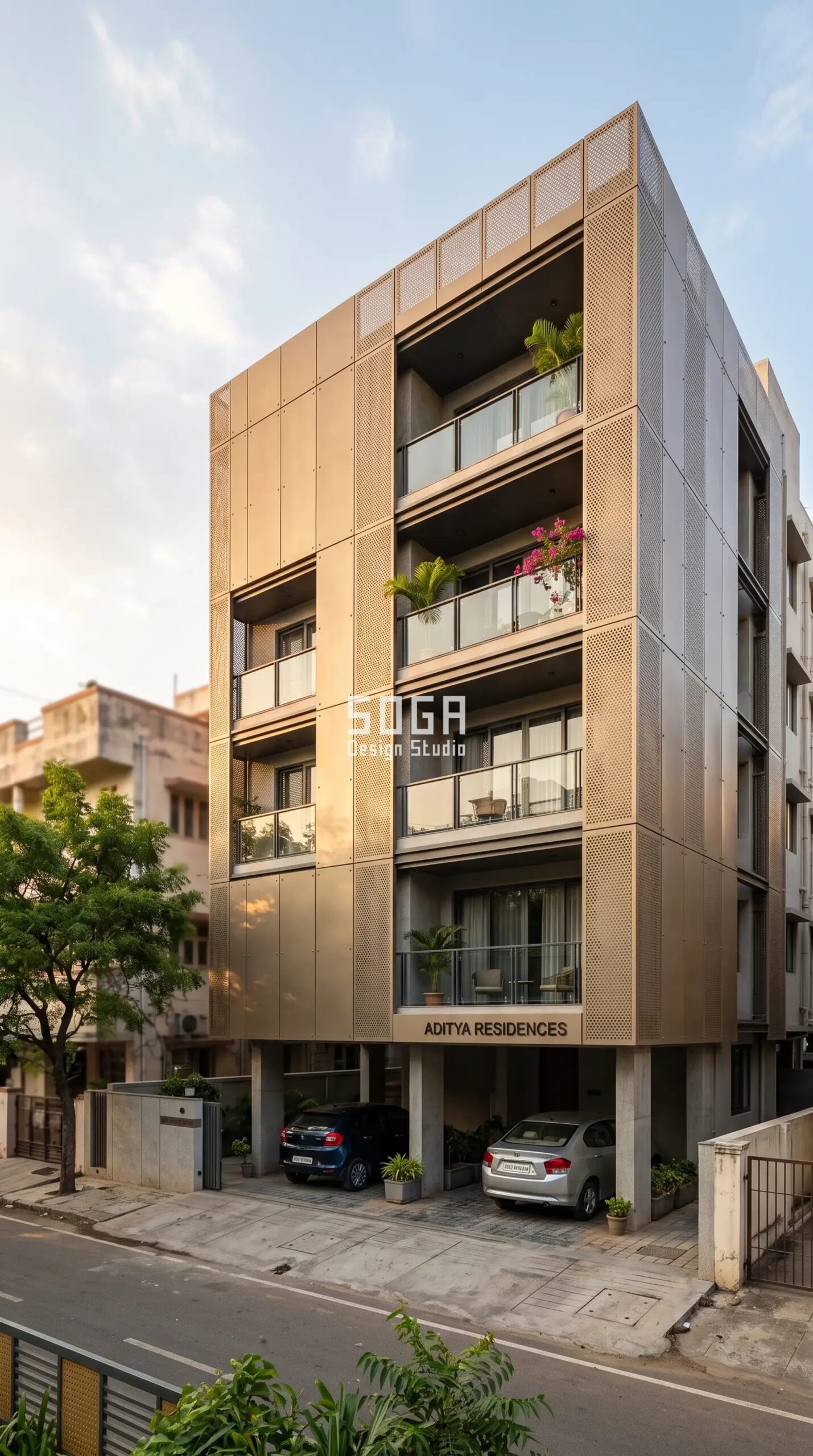
A corridor facade runs the cavity horizontally along each floor, like a continuous shaded balcony-width gap between the two skins. Fresh air enters and warm air exhausts at every level, giving excellent floor-by-floor ventilation and easy maintenance access. It works beautifully in warm, humid coastal cities. The Chennai concept uses a warm champagne-bronze outer metal screen held clear of the inner glazed wall, with the ventilated corridor visible behind it at each floor — cool, breezy and quietly luxurious.
3. Shaft-Box Double Skin Facade
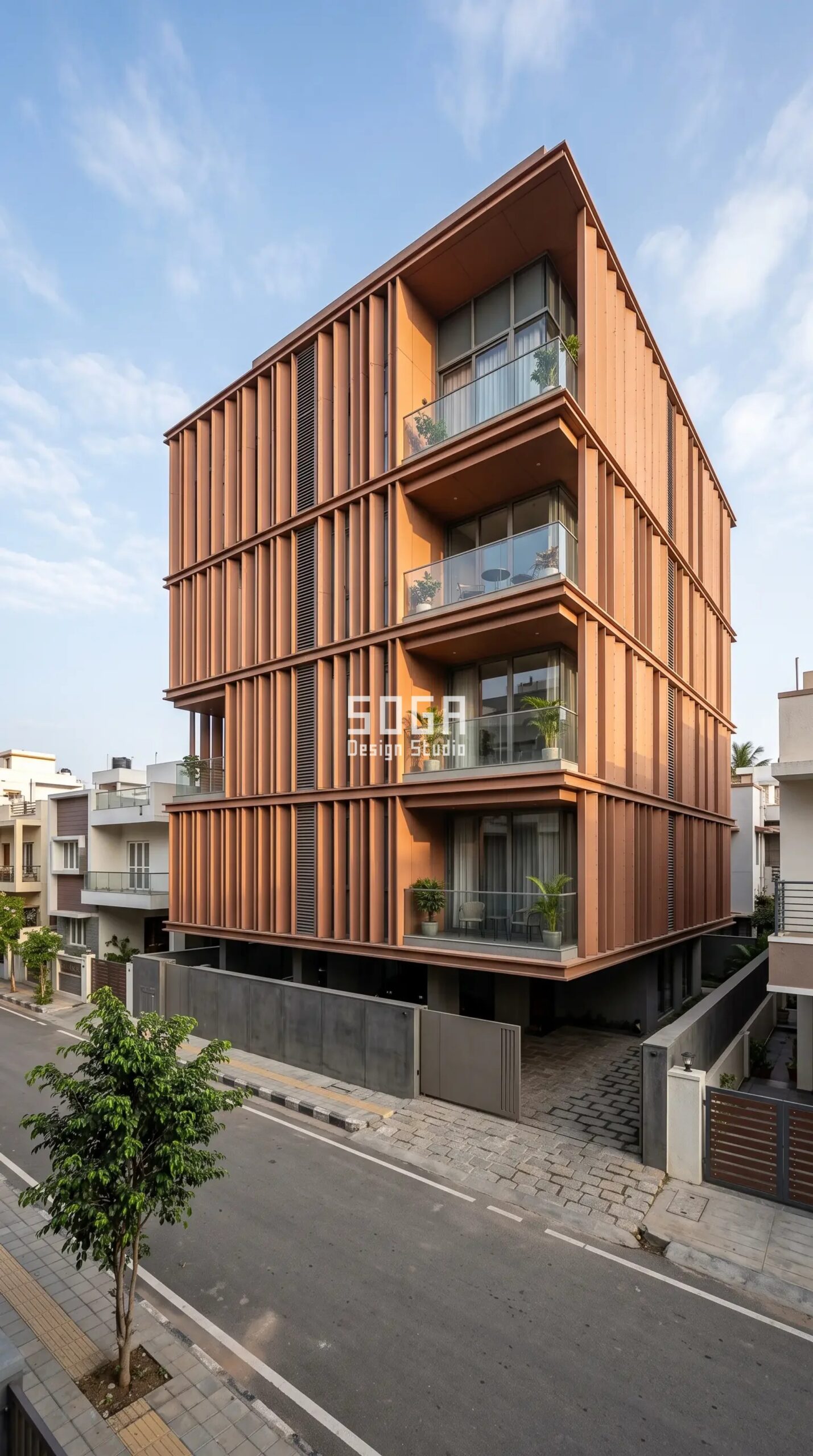
The shaft-box type combines box-windows with tall vertical shafts that run up the facade. The boxes feed warm air into the shafts, and the shafts act like chimneys, boosting the natural stack effect and pulling heat up and out. It is one of the most energy-efficient configurations for taller homes. The Bangalore concept shows warm terracotta-toned vertical metal fins standing proud of the glass, with a slim ventilation shaft reading as a darker vertical slot in the cavity — a facade that breathes on its own in Bengaluru’s mild climate.
4. Multi-Storey Double Skin Facade
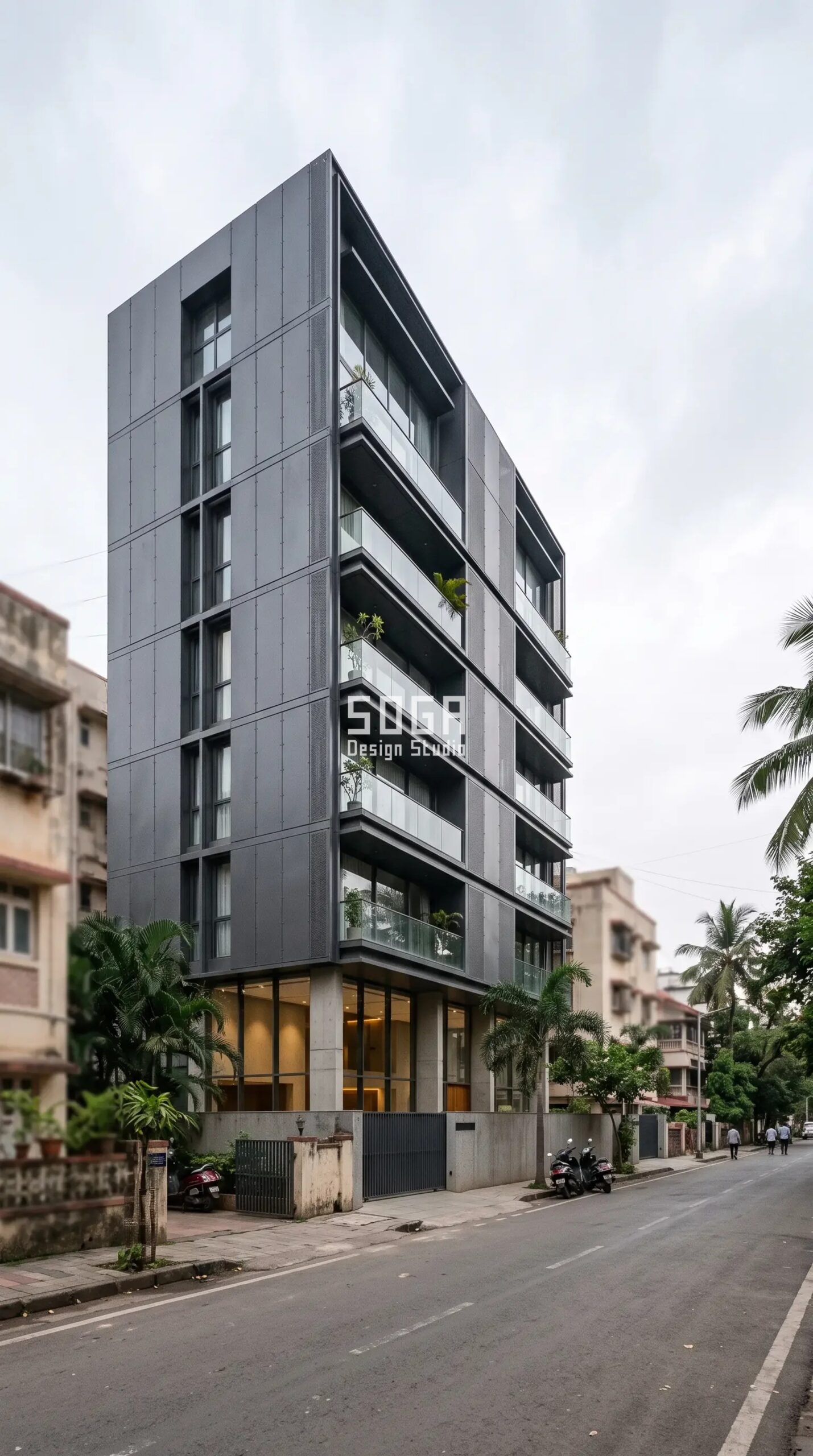
A multi-storey facade leaves the cavity open across the full height of the building — one large ventilated volume behind a single continuous outer skin. It gives the cleanest, most seamless exterior and the largest buffer against heat and noise, ideal for a bold, unified elevation. The Mumbai concept wraps the building in an anthracite-grey metal outer skin standing clear of an inner glass wall, the cavity reading at the reveals — a calm, monolithic facade that still works hard against the coastal sun.
Double Skin Facade Cost in India (2026)
The honest answer: a double skin facade costs more than plain cladding, because you are paying for two layers plus the cavity structure — but the outer skin is where most of the design (and most of the choice) sits. As a 2026 benchmark, here is the supply-and-install cost of common outer-skin materials in India, per sq ft of facade:
| Outer-skin material | Approx. cost (supply + install) |
|---|---|
| ACP (aluminium composite) panels, 3-4 mm | ₹200-350 /sq ft panel + ₹50-150 /sq ft install |
| Solid aluminium panels | ₹800-1,800 /sq ft |
| Powder-coated / anodised aluminium screen | ₹800-2,500 /sq ft |
| Steel screen | ₹1,200-2,800 /sq ft |
| Zinc | ₹1,500-3,000 /sq ft |
| Reference: conventional single-skin cladding | ₹400-1,200 /sq ft installed |
On top of the outer skin, budget for the inner glazing or wall and the cavity support framing. What moves the number most is facade area, panel complexity, the finish you choose, building height (access and scaffolding) and the fabricator’s location. The payback is real, though: studies in India’s warm-humid climate show a double skin facade delivers a relatively short payback period and a high return through lower cooling energy over the building’s life. SOGA gives every client an itemised, per-sq-ft estimate up front so there are no surprises.
Single Skin vs Double Skin Facade: Which Is Right for You?
| Factor | Single skin facade | Double skin facade |
|---|---|---|
| Upfront cost | Lower | Higher |
| Heat control | Basic | Excellent (25-40% less solar gain) |
| Cooling running cost | Higher | Lower over time |
| Daylight + glare | Glare-prone | Soft, even daylight |
| Acoustic comfort | Limited | Strong buffer |
| Look & depth | Flat | Layered, premium |
If the plot is shaded, low-rise and budget is tight, a well-detailed single skin may be enough. But on any west- or south-facing Indian elevation that cooks in the afternoon, a double skin facade usually pays for itself in comfort and running cost — and always looks more distinctive.
Why Metal Is the Ideal Outer Skin for Indian Double Skin Facades
At SOGA Design Studio we design the outer skin as a parametric metal screen — and for Indian conditions, metal is hard to beat. It is lightweight (so the cavity framing stays economical), it takes powder-coat and anodised finishes in almost any colour, it shrugs off monsoon and dust, and it can be precision-cut into patterns whose density we tune to the sun path — denser where the afternoon sun is fiercest, more open where a view or breeze is worth keeping. That means the outer skin is not just a sunshade; it is the building’s character. Whether it is the anthracite Mumbai concept, the champagne Chennai screen, the charcoal Delhi boxes or the terracotta Bangalore fins above, each is engineered to be genuinely buildable in ACP, aluminium or steel with vetted Indian fabricators.
Why Choose SOGA Design Studio for Your Double Skin Facade
SOGA Design Studio is a dedicated facade-design studio working with Indian homeowners, builders and NRI clients since 2022. We have developed and visualised double-skin and parametric metal facades for real G+3 to G+7 plots, running per-orientation climate analysis and fabrication-ready detailing for every concept — not just renders. We share real 2026 cost ranges and itemised per-sq-ft estimates up front, offer a free no-commitment consultation, and run a fully remote workflow for NRI owners in Dubai, Singapore, the UK and beyond, coordinating with trusted fabricators on the ground in India.
For more on the design system behind these facades, read our pillar guide to parametric facade design in India.
Related Reading
- Parametric Facade Design in India (pillar guide)
- What Is Building Facade Design? Complete Guide for India
- Facade Design in Mumbai & India 2026: Metal Facade Guide
Frequently Asked Questions
What is a double skin facade?
A double skin facade is a building exterior built from two layers – an outer screen (often metal or glass) and an inner weather wall – separated by a ventilated air cavity. The cavity flushes away heat that builds up in the gap, so the outer skin shades the building while the inner skin handles insulation and windows.
How much does a double skin facade cost in India in 2026?
It depends mainly on the outer-skin material. As a 2026 benchmark: ACP panels run about Rs 200-350 per sq ft plus Rs 50-150 install; powder-coated or anodised aluminium Rs 800-2,500 per sq ft; steel screens Rs 1,200-2,800 per sq ft; and zinc Rs 1,500-3,000 per sq ft. Add the inner glazing and cavity framing on top. For comparison, conventional single-skin cladding is about Rs 400-1,200 per sq ft installed.
Does a double skin facade really reduce heat?
Yes. A ventilated outer skin can cut direct solar heat gain on west and south walls by roughly 25-40% and lower interior surface temperatures by about 4-7 degrees C compared with a bare or single-glazed wall, which directly reduces air-conditioning load.
Which type of double skin facade is best for Indian homes?
There is no single best type – it depends on the plot. Box-window facades give the best acoustic control for busy city plots; corridor facades suit warm, humid coastal cities; shaft-box facades are most energy-efficient for taller homes; and multi-storey facades give the cleanest, boldest single elevation. SOGA selects the type per project.
Is a double skin facade worth it for a residential building?
For any west- or south-facing Indian elevation that overheats in the afternoon, usually yes. The higher upfront cost is offset over time by lower cooling bills, better comfort and a more distinctive, premium-looking facade. In warm-humid Indian climates studies show a relatively short payback period.
Can a double skin facade be added to an existing building?
Often yes. A lightweight metal outer skin can be mounted on a sub-frame in front of an existing wall as a retrofit, upgrading both thermal performance and appearance without rebuilding. SOGA assesses the existing structure and designs the cavity and fixings accordingly.
Start Your Double Skin Facade Project
Thinking about a double skin facade for a home, apartment block or commercial building in India? SOGA Design Studio will study your plot, orientation and budget, recommend the right type and outer-skin material, and give you an itemised 2026 cost estimate – with a free, no-commitment first consultation. NRI owners welcome. Get in touch with SOGA Design Studio to begin.