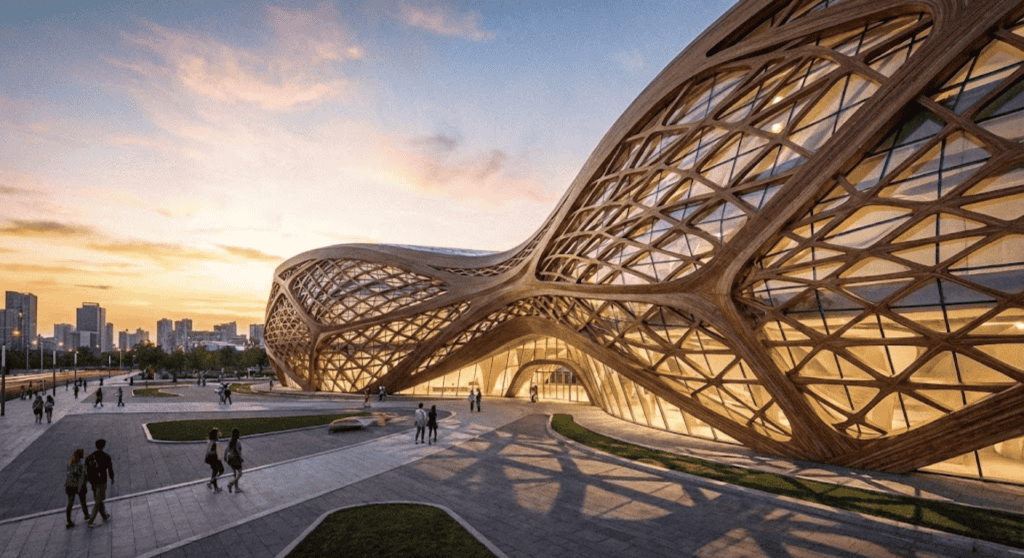
If you are planning a project and keep hearing the term, the honest first question is simple: what is building facade design, and why does everyone treat it as the most important decision on the build? In short, the facade is a building’s outward face — its public identity and its first line of defence against the climate. Good facade design in architecture is where engineering, aesthetics, and performance meet. This guide explains what a facade is, the main types and materials, how much it costs in India, the climate role it plays, and how SOGA Design Studio approaches facade design as an engineered, computational discipline rather than a decorative afterthought.
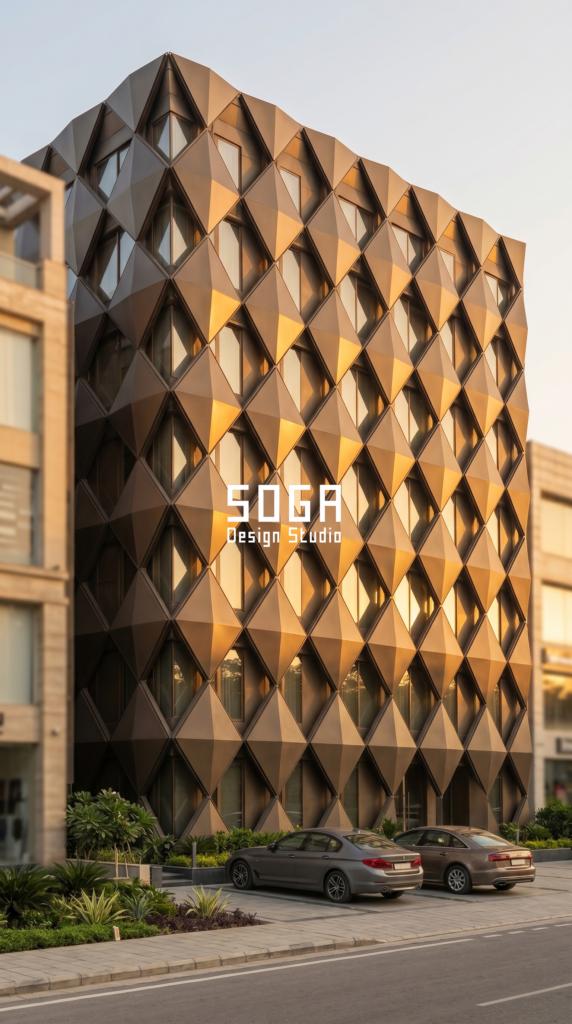
Facade Meaning: The Building’s Outer Skin
The word “facade” comes from the Italian facciata, meaning “face”. In architecture, the facade is the exterior skin of a building — most often the front, but technically any external face. Answering what is facade design properly means recognising it is not just the look: a modern facade is a layered system that carries the building’s identity while controlling sunlight, heat, rain, wind, glare, privacy, and acoustics. It is simultaneously the most visible marketing of the building and its most important environmental filter. That dual role — expression plus performance — is why facade design in architecture is treated as a specialised discipline, not a finishing trade.
What Building Facade Design Actually Involves
Good building facade design balances four things at once:
- Identity — the visual character, proportion, and material language that make the building recognisable.
- Climate performance — shading, insulation, ventilation, and daylight control suited to the local climate.
- Buildability — panel sizes, joints, fixings, and a sub-frame that can actually be fabricated and installed.
- Longevity & cost — materials and detailing that last decades within a defined budget.
When any one of these is ignored, the facade fails: a beautiful facade that overheats, or a high-performing one that looks like a warehouse, are both failures. The art of facade design is resolving all four together.
Main Types of Building Facades
Solid / Masonry Facade
Traditional plastered or stone-clad walls with punched windows. Economical and familiar.
Cladding Facade
A finish layer — ACP, metal panels, GFRC, stone veneer — fixed over the structure for a modern look.
Curtain Wall / Glass Facade
A glazed skin hung in front of the structure, common on commercial buildings for transparency and daylight.
Screen / Jaali Facade
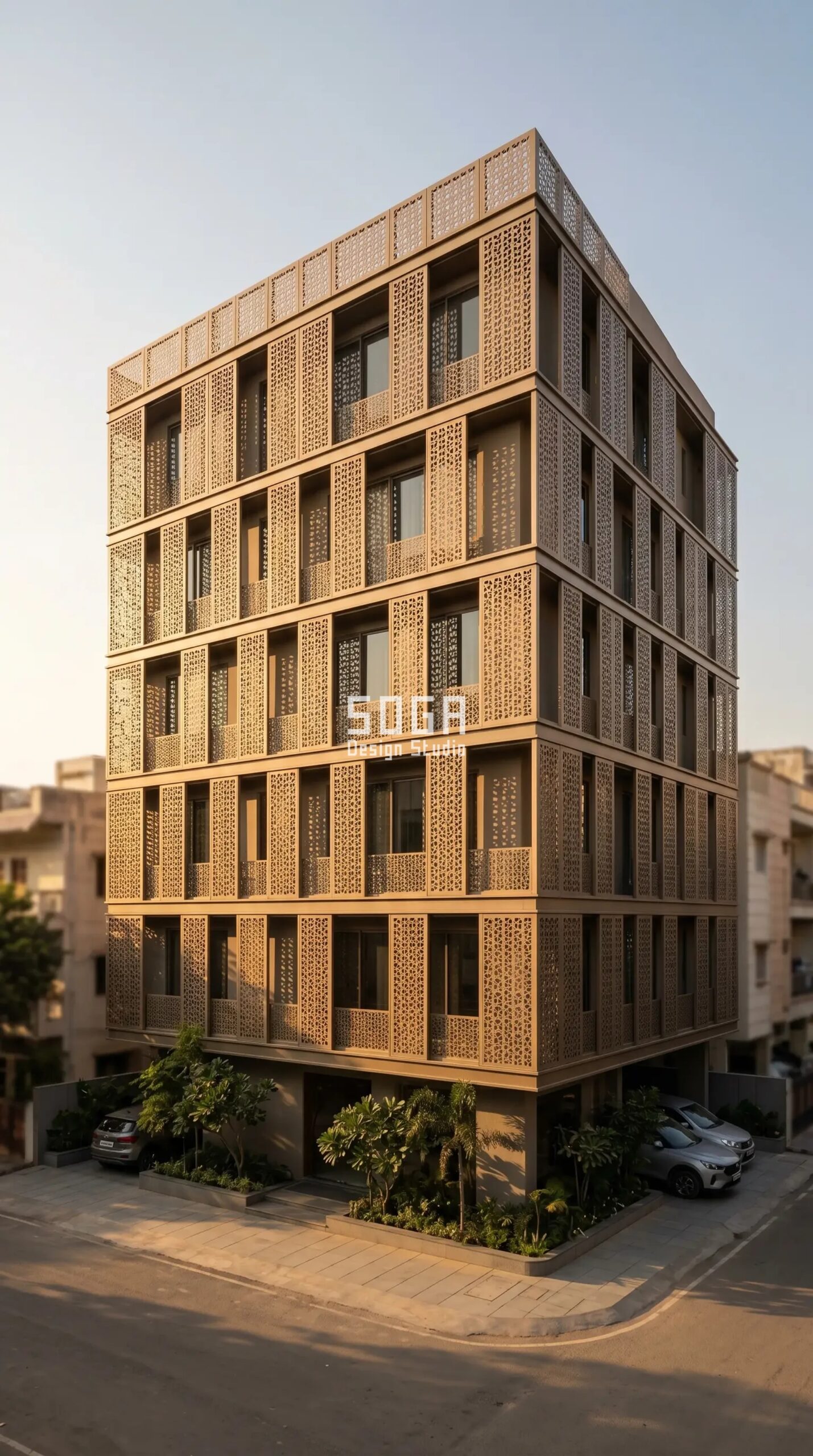
A perforated outer layer (the modern jaali) that shades and gives privacy while filtering light.
Double-Skin Facade
Two layers with a ventilated cavity, the highest-performance option for hot climates.
Parametric Facade
A computationally generated skin where pattern, depth, and density respond to specific parameters — the most advanced and climate-tuned approach.
Common Facade Materials and What They Cost (2026)
| Material | Installed cost (₹ per sq ft) | Character |
|---|---|---|
| Paint + plaster | ₹120–₹300 | Basic, economical |
| ACP cladding | ₹200–₹350 | Flat, modern, fast |
| Solid aluminium / metal panels | ₹800–₹1,800 | Premium, durable |
| Powder-coated metal screen | ₹800–₹2,500 | Shading + identity |
| GFRC moulded panels | ₹900–₹2,200 | Sculptural texture |
| Glass curtain wall | ₹900–₹2,500 | Transparent, commercial |
| Stone veneer | ₹600–₹1,500 | Traditional, heavy |
The right material depends on building type, climate orientation, and budget — which is exactly the judgement facade design adds. A good facade rarely uses one material; it composes two or three with discipline.
The Climate Role: Why Facades Matter Most in India
In a hot country, the facade is the single biggest lever on a building’s comfort and energy use. India’s mix of intense sun, monsoon, and dust demands a “smart skin” rather than a static wall. A well-designed facade — particularly a screened or double-skin one — cuts solar heat gain by 25–40% on west and south orientations and drops interior surface temperatures by 4–7°C compared to bare RCC, slashing cooling loads. This is the same logic as India’s centuries-old jaali screens, now executed with computational precision. It is why facade design in architecture is treated as a climate decision, not just an aesthetic one, in every serious Indian project.
How Facade Design Has Evolved: From Wall to Parametric Skin
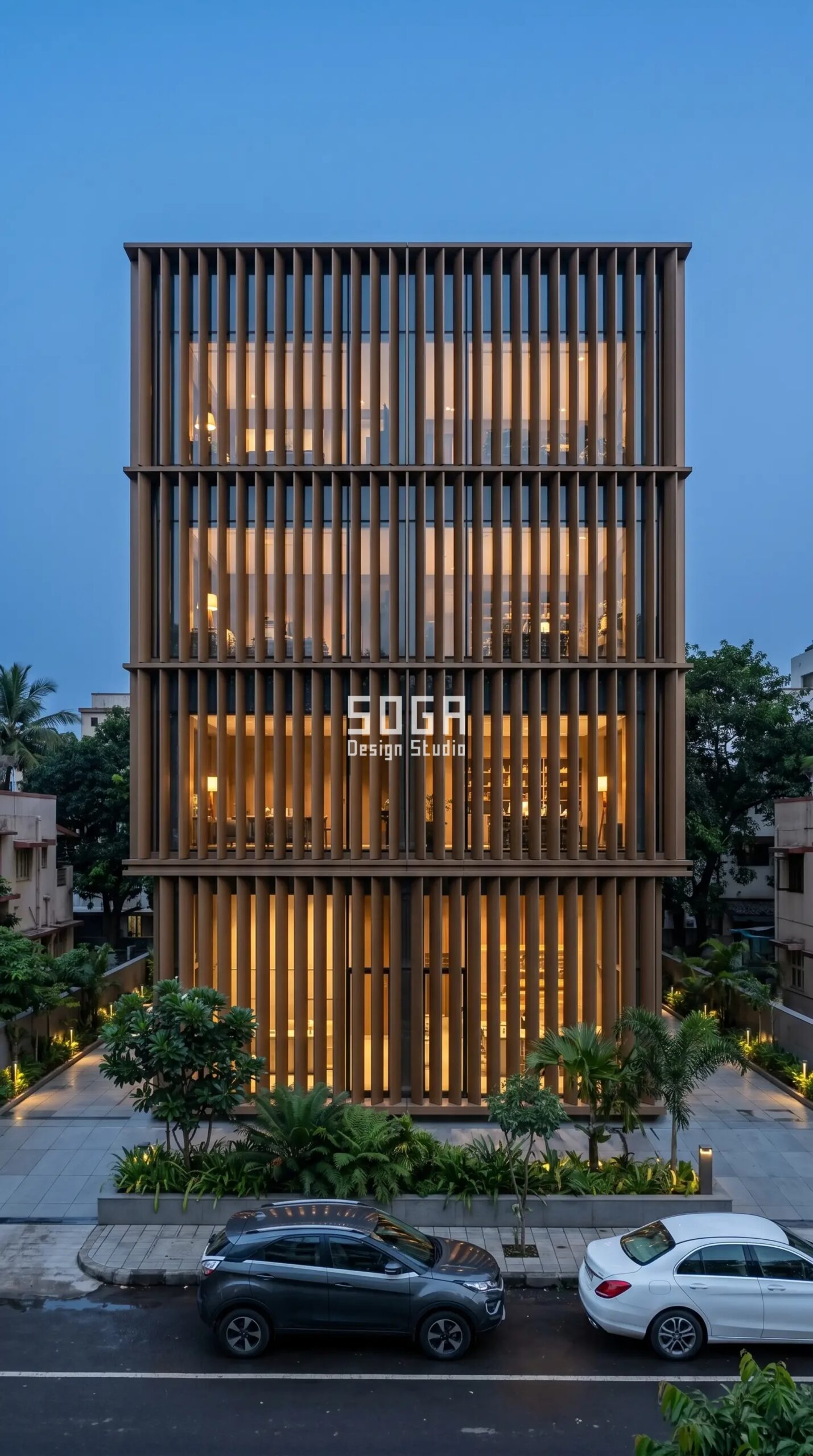
Facade design has moved from solid walls with punched windows, to flat cladding, to today’s computationally generated parametric skins. The leap is from a facade that is drawn to one that is generated — where an algorithm tunes panel depth, opening density, and pattern to the building’s exact orientation and brief. This is the same intelligence behind landmark Indian work like the Lotus Temple’s petals and the inhabitable jaali of Sanjay Puri’s Cielo Tower, now accessible to everyday G+3 to G+7 buildings. The parametric facade is where building facade design is heading.
Why SOGA Design Studio
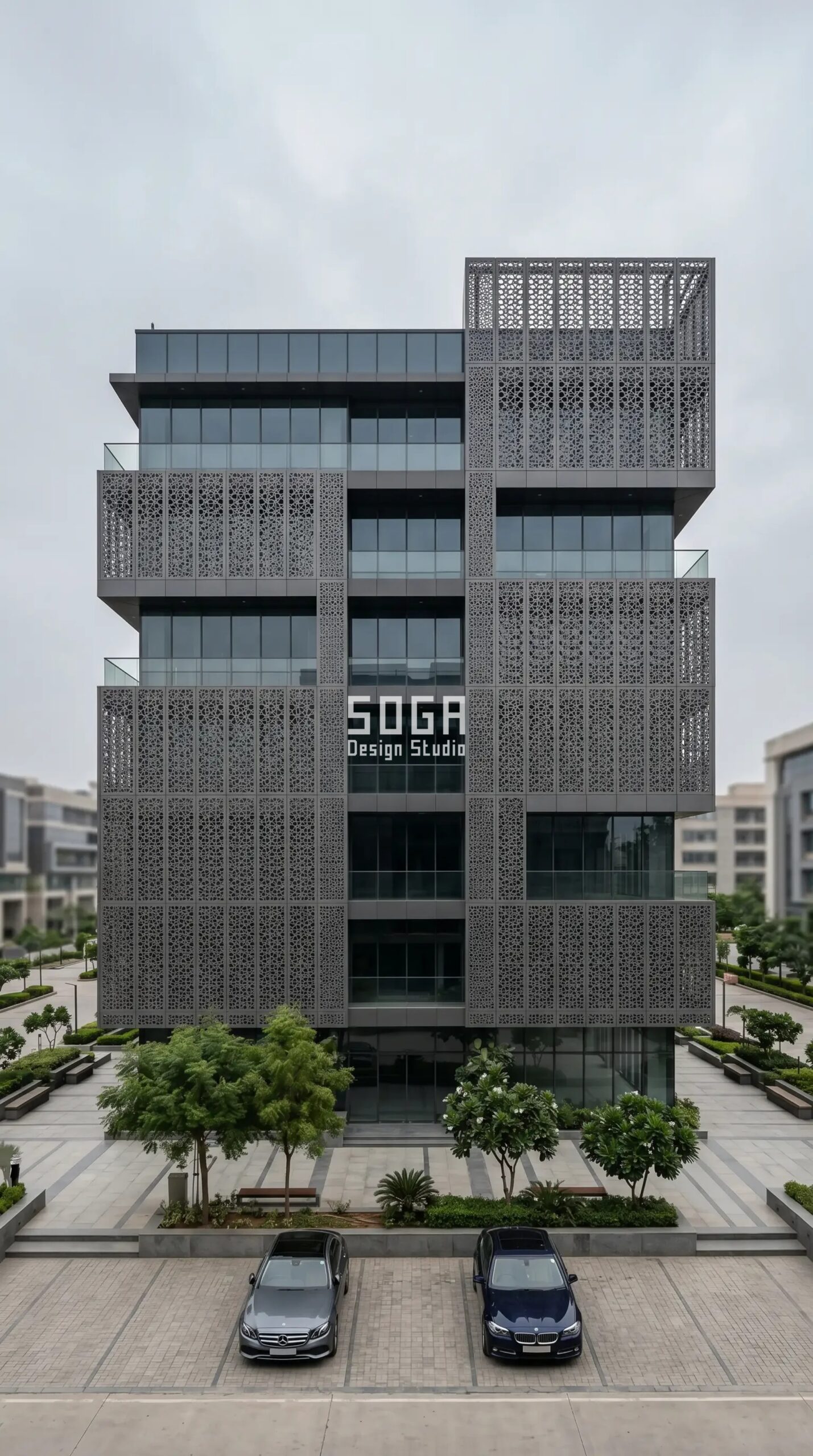
SOGA Design Studio is a parametric and computational architecture firm based in Gurugram, India, working across India, Dubai, and Singapore. We treat facade design as an engineered discipline: every skin is modelled in Rhino and Grasshopper, analysed for heat, daylight, and buildability, and produced through a fabrication-first workflow using GFRC and CNC fabrication. That means a parametric facade that performs in the climate and gets built exactly as designed. Whether you are starting from “what is building facade design” or specifying a landmark, our parametric facade design services and systems like the Para-Scale Shingle facade and Para-Hex 3D Module turn the question into a buildable answer. Get a custom facade concept for your building — contact SOGA Design Studio at sogadesignstudio.com/contact.
Frequently Asked Questions
What is building facade design? Building facade design is the design of a building’s exterior skin — its outward face — combining visual identity with climate performance, buildability, and longevity. It controls sunlight, heat, rain, and privacy while defining how the building looks, making it one of the most important decisions on any project.
What is the difference between a facade and an elevation? A facade is the physical outer skin of a building (the materials and system), while an elevation is the flat drawn view of that face used in architectural drawings. In everyday Indian usage, homeowners often say “elevation” and architects say “facade” for the same front.
What are the main types of building facades? The main facade types are solid/masonry, cladding (ACP, metal, GFRC, stone), glass curtain wall, screen/jaali facades, double-skin facades, and parametric facades. Parametric facades are the most advanced, using computation to tune pattern and depth to the building’s climate and orientation.
Why is facade design so important in India? Facade design is critical in India because the facade is the biggest lever on heat and energy use. A well-designed screened or double-skin facade cuts solar heat gain by 25–40% on hot orientations, lowering cooling bills while defining the building’s identity in a competitive market.
Does SOGA Design Studio design facades for homes and commercial buildings? Yes. SOGA Design Studio designs parametric facades for residential, commercial, and mixed-use buildings across India and for NRI clients in Dubai, Singapore, and the UK. Every facade is engineered for the local climate and delivered as fabrication-ready drawings through a fabrication-first workflow.