Glass facade design is the default ambition for almost every commercial building in India — the sleek, transparent, corporate look that signals a serious brand. But in the Indian climate, all-glass is also the fastest way to a punishing cooling bill, harsh glare, and a building that bakes from 11 AM. The smart 2026 approach is not less glass — it is glass plus an intelligent shading layer. This guide covers the main glass facade types, real cost per square foot, the heat and glare problems nobody mentions in the brochure, and the metal-and-glass alternatives SOGA Design Studio uses to keep commercial facades both stunning and liveable.
Why Commercial Buildings Choose a Glass Facade
A glass facade sells a building before a tenant walks in. It signals transparency and modernity, floods floor plates with daylight, frames city views, and photographs beautifully for marketing. For a commercial facade design competing for premium tenants, that first impression translates directly into rent and occupancy. The transparency also makes interiors feel larger and more connected to the street, which is why almost every Grade-A office, showroom, and corporate HQ in India defaults to glass. The question is never whether to use glass — it is how to use it without cooking the building.
Types of Glass Facade Systems
Curtain Wall
A non-structural glass-and-aluminium skin hung in front of the building frame. The premium standard for tall commercial buildings, fully glazed and sleek.
Structural Glazing
Glass bonded to the frame with structural silicone so mullions almost disappear — the flushest, most seamless glass look.
Spider / Point-Fixed Glazing
Glass held by stainless steel spider fittings, used for transparent lobbies and atriums where you want maximum see-through.
Double-Skin Facade
Two glass layers with a ventilated cavity between them — the highest-performance system, dramatically reducing heat gain, ideal for harsh Indian orientations.
Unitised vs Stick
Unitised systems arrive as pre-assembled panels (faster, higher quality control); stick systems are built up on site (cheaper, slower). Most quality commercial building facade design now uses unitised.
Glass Facade Cost Per Square Foot in India (2026)
| System | Installed cost (₹ per sq ft) | Notes |
|---|---|---|
| Aluminium-glass curtain wall (standard) | ₹900–₹1,800 | Most common commercial system |
| Structural glazing | ₹1,200–₹2,500 | Seamless, flush glass look |
| Spider / point-fixed glazing | ₹1,500–₹3,000 | Lobbies, atriums, max transparency |
| Double-skin glass facade | ₹2,500–₹5,000 | Highest performance, lowest heat gain |
| High-performance DGU / low-E glass | +₹150–₹400 | Upgrade over single/standard glass |
| External metal shading layer | ₹800–₹2,500 | Add-on that slashes heat gain |
A glass facade is a significant investment, and the cheapest single-glazed curtain wall is usually a false economy in India — the cooling penalty pays back the saving within a few summers. Specifying low-E double-glazed units (DGU) and an external shading layer costs more upfront but is far cheaper to run. SOGA Design Studio models the energy trade-off so the glass-versus-shading spend is an informed decision, not a default.
The Heat & Glare Problem Nobody Mentions
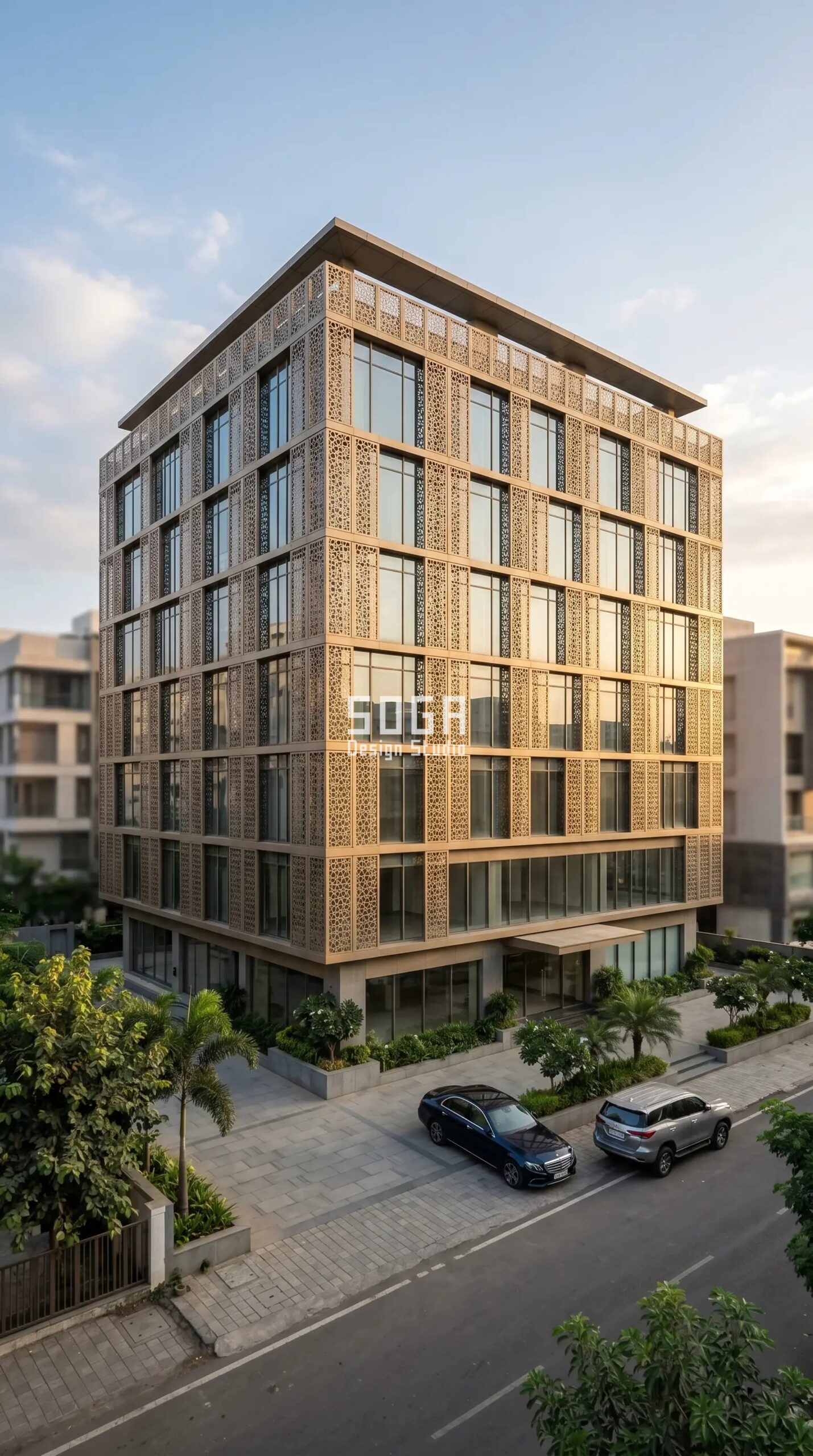
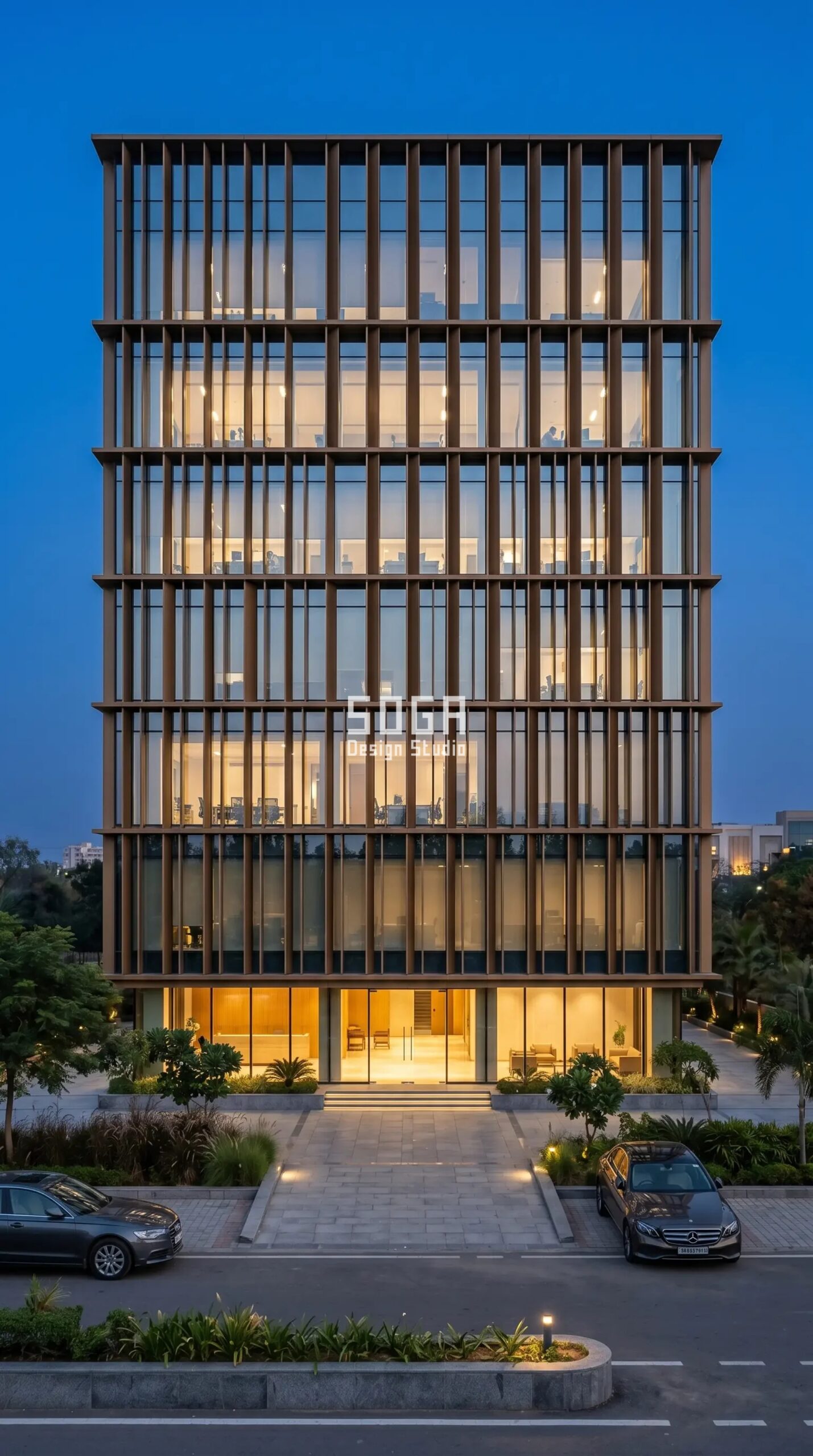
Here is the uncomfortable truth about an all-glass building in India: untreated, it can turn solar radiation into an indoor greenhouse, spiking air-conditioning loads and creating unbearable glare on screens near the perimeter. Tinted or reflective glass helps a little but also darkens interiors and bounces heat onto neighbours. Several markets now check that reflectance at approval; see our breakdown of commercial facade glass reflectivity limits. The genuinely effective fix is external shading — fins, louvers, or a perforated metal screen in front of the glass — because it stops the sun before it hits the glazing. An external metal shading layer cuts solar heat gain by 25–40% on west and south faces, slashing the cooling bill while adding architectural depth. This is the single most important — and most ignored — decision in Indian glass facade design.
Smart Alternatives: Glass Plus Metal, Not Glass Alone
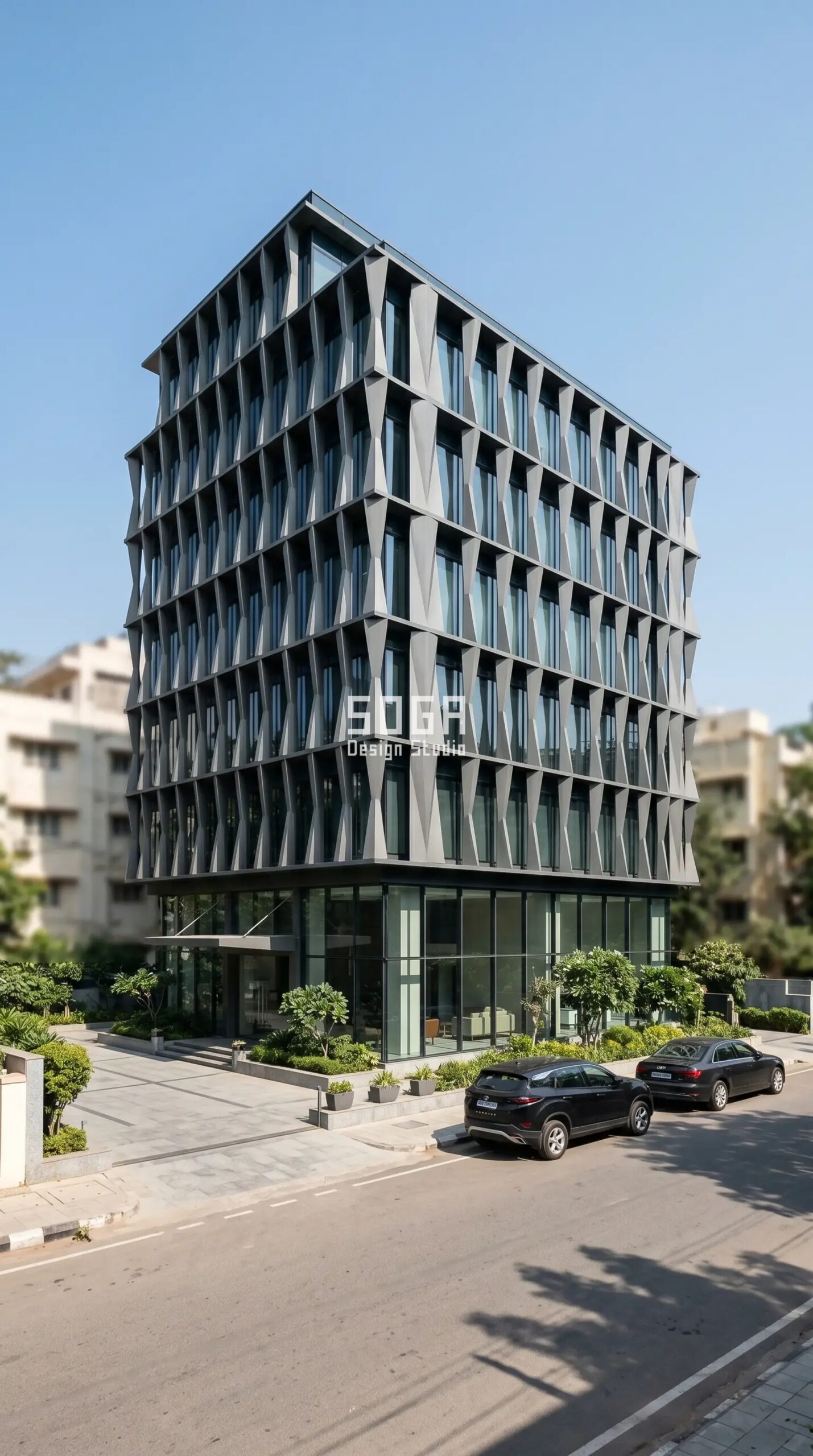
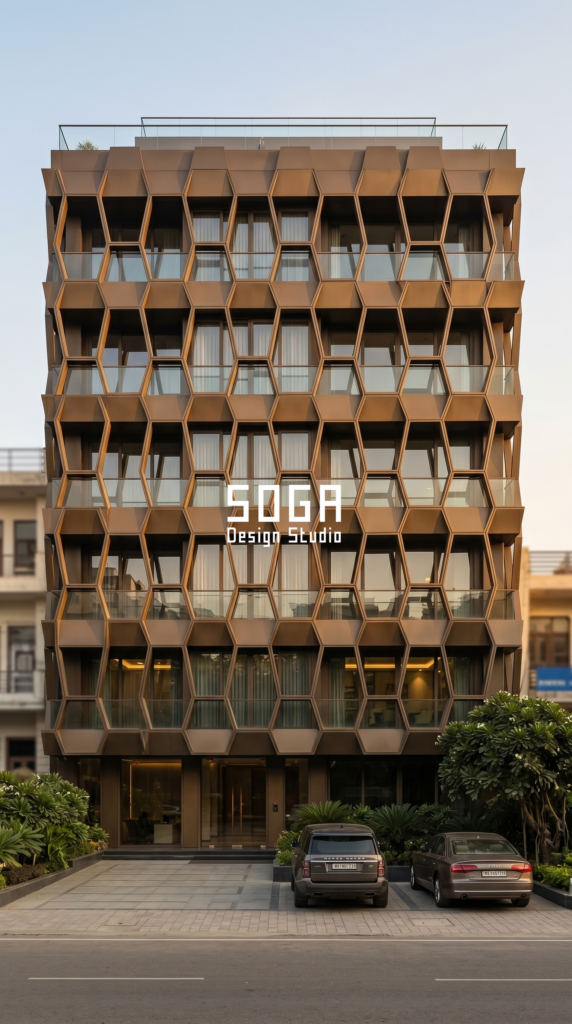
The most sophisticated commercial facades in India in 2026 are hybrids — high-performance glass for transparency and daylight, wrapped or punctuated by a parametric metal screen for shading and identity. This double-skin logic delivers the corporate glass look the brief wants while solving the heat the climate imposes. It also gives the building a distinctive silhouette that pure glass — which looks the same everywhere — never can. A parametric facade tunes the metal screen’s density per orientation, so the south face is well shaded while the north stays open and bright. SOGA Design Studio specialises in exactly this marriage, using systems like the Para-Hex 3D Module over glazing to make commercial buildings both efficient and unmistakable.
Why SOGA Design Studio
SOGA Design Studio is a parametric and computational architecture firm based in Gurugram, India, working across India, Dubai, and Singapore — markets where glass towers meet extreme heat. We design commercial facades as engineered systems, not just curtain walls: glass and metal modelled together in Rhino and Grasshopper, analysed for solar load and glare, and built through a fabrication-first workflow with GFRC and CNC production. That means a parametric facade that looks world-class and runs efficiently. Explore our parametric facade design services and shading systems like the Para-Chevron Diagrid for commercial and mixed-use projects. Get a custom facade concept for your building — contact SOGA Design Studio at sogadesignstudio.com/contact.
Frequently Asked Questions
What is glass facade design for commercial buildings? Glass facade design is a transparent building skin — usually a curtain wall or structural glazing — that gives commercial buildings a sleek, modern look with abundant daylight and city views. In India it is best paired with external shading to control heat gain and glare.
How much does a glass facade cost per square foot in India? A glass facade costs ₹900–₹1,800 per sq ft for a standard aluminium-glass curtain wall, ₹1,200–₹2,500 for structural glazing, and ₹2,500–₹5,000 per sq ft for a high-performance double-skin facade, installed. Low-E glass and external shading add to the cost but cut running bills.
Is an all-glass facade a good idea in the Indian climate? An all-glass facade looks impressive but causes high cooling loads and glare in the Indian climate if left untreated. The smart approach is high-performance low-E glass plus an external metal shading layer, which cuts solar heat gain by 25–40% on hot orientations.
What is a double-skin facade? A double-skin facade uses two layers — typically glass with an external metal screen or a second glass skin — separated by a ventilated cavity. It dramatically reduces solar heat gain and is the highest-performance option for commercial buildings in hot Indian conditions.
Can SOGA Design Studio design a commercial glass-and-metal facade? Yes. SOGA Design Studio designs hybrid glass-and-parametric-metal commercial facades for clients across India and in Dubai and Singapore. The glass and shading are modelled and analysed together for heat and glare, then delivered as fabrication-ready engineered drawings.