A duplex 20 feet front elevation design is one of the toughest briefs in Indian residential architecture: a tall, narrow two-storey face with very little width to make an impression. Get it wrong and the house looks pinched and boxy; get it right and a slim plot becomes the sharpest-looking home on the street. The trick is designing for verticality and proportion, not borrowing wide-plot ideas that do not fit. This guide covers elevation strategies for 20, 25, and 30 feet duplex fronts, the materials that suit narrow plots, real costs, and how SOGA Design Studio turns a tight frontage into a strong identity.
The Narrow-Plot Problem: Designing for 20 Feet
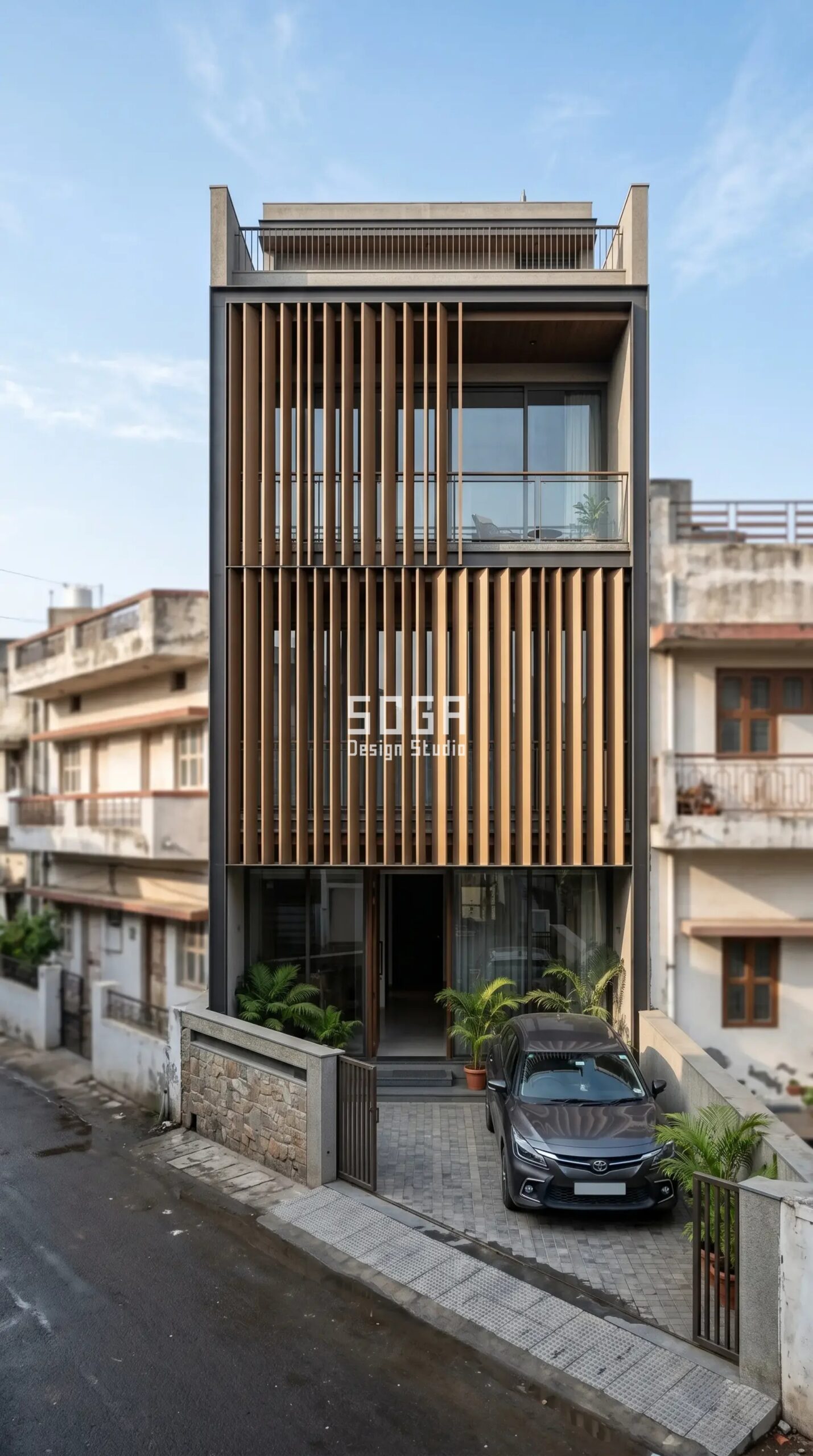
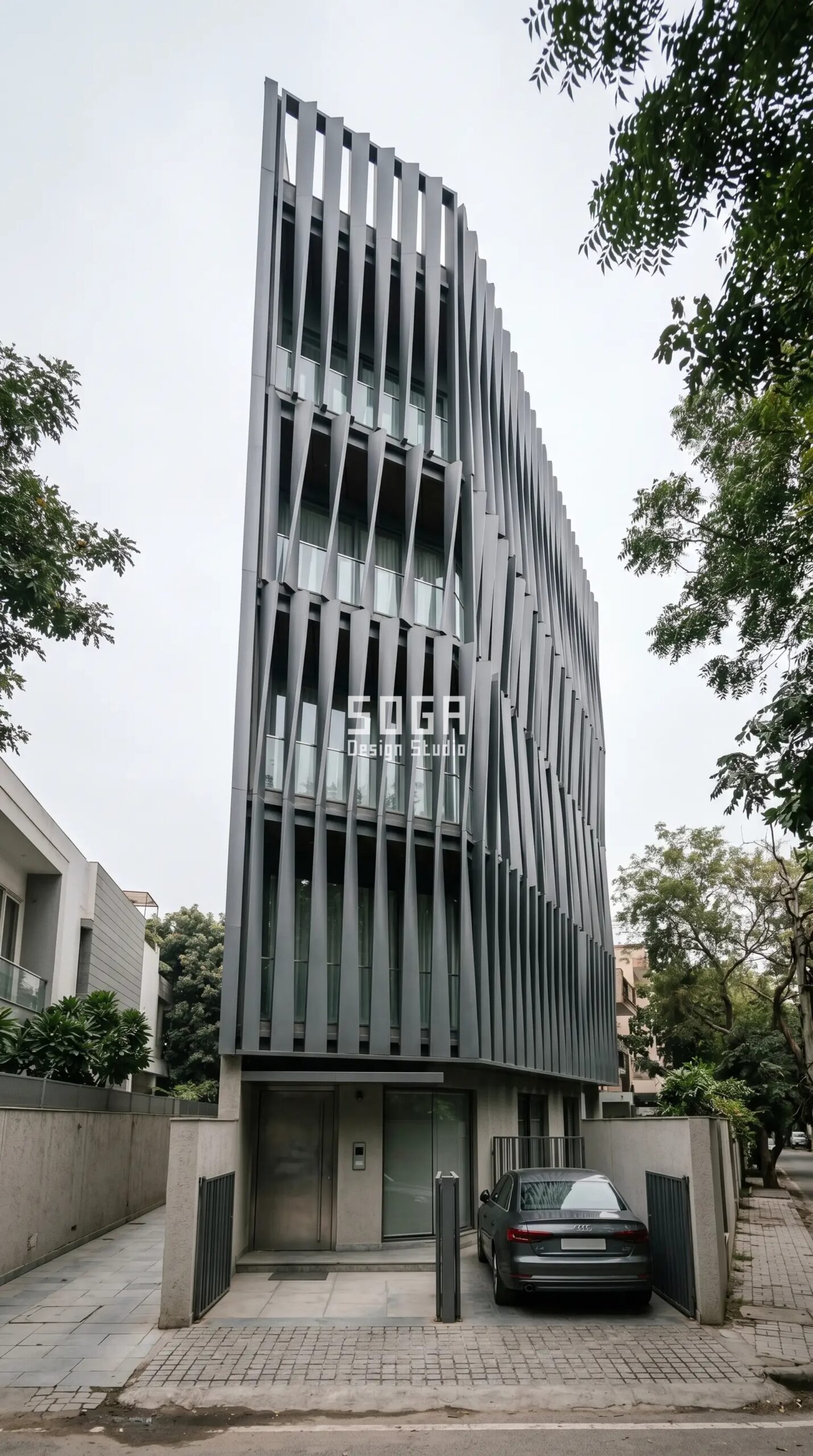
A 20-foot frontage gives you almost no room to spread out, so a small house 20 feet front elevation design has to gain its presence by going up, not across. The instinct to copy a wide-plot elevation — horizontal bands, a broad entrance, side-by-side windows — fails on a narrow face; it looks cramped. The winning approach is the opposite: emphasise vertical lines, pull the entrance into a double-height recess to add perceived depth, and use one bold material gesture rather than three competing ones. On a tight plot, restraint reads as confidence.
Duplex Elevation Ideas by Plot Width
20 Feet Front (the slim plot)
- Full-height vertical fin cluster to stretch the eye upward
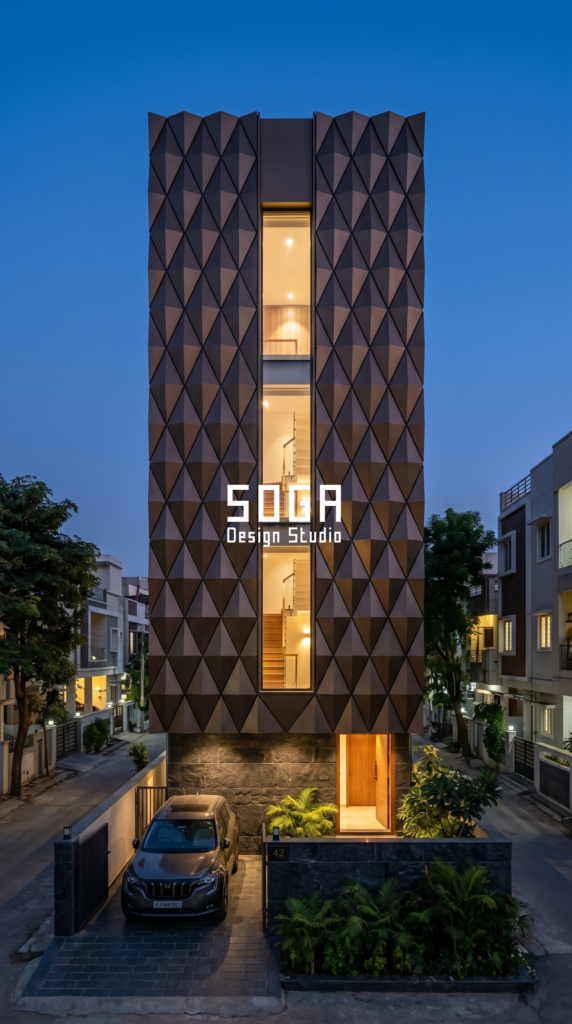
- A single double-height glazed slot at the entrance/staircase
- One dark core flanked by a warm wood feature strip
- Cantilevered upper box for a floating, premium look
- A slim metal screen running the full height for privacy
25 Feet Front (the balanced plot)
- Two-tone split: solid feature wall + glazed bay
- A projecting balcony box with a louver screen
- Vertical fins on one half, plain plaster on the other
- A wide-but-shallow entrance canopy for grounding
- Mixed materials in clean vertical zones
30 Feet Front (room to compose)
- Asymmetric massing — solid, void, solid
- A horizontal feature band balancing the vertical staircase
- A double-height living-room window as the hero
- A landscaped entrance court within the setback
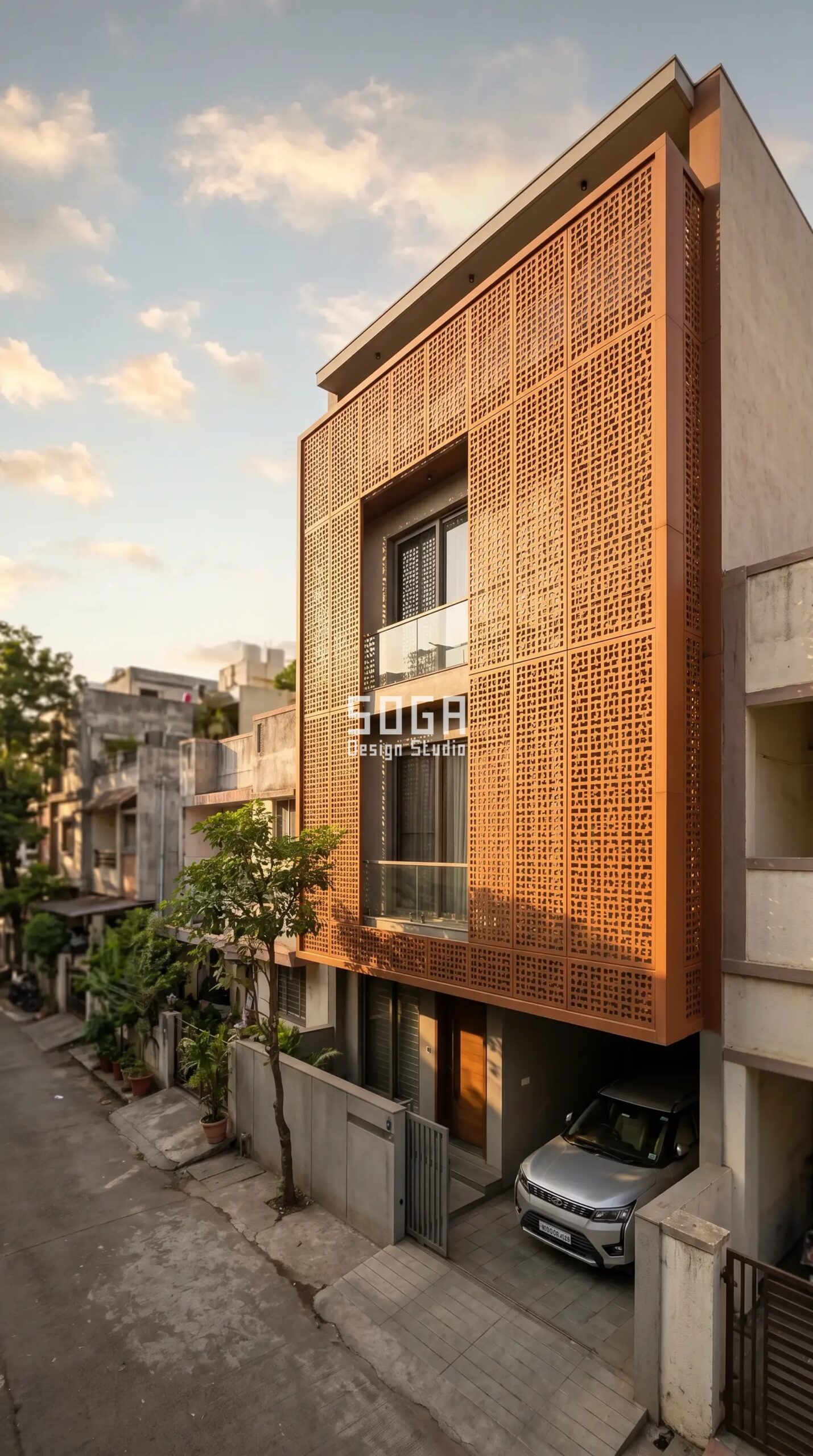
- A full parametric screen feature on the upper floor
Cost of a Duplex Front Elevation (2026)
Narrow plots have smaller front faces, but they are taller, so access and scaffolding add to labour. Realistic 2026 ranges in India:
| Front width | Approx. visible face | Typical elevation spend |
|---|---|---|
| 20 feet | 500–700 sq ft | ₹2.5–₹6 lakh |
| 25 feet | 650–900 sq ft | ₹3.5–₹8 lakh |
| 30 feet | 800–1,100 sq ft | ₹4.5–₹11 lakh |
Material rates are the same as any elevation — paint ₹120–₹300, ACP ₹200–₹350, metal screen/fins ₹800–₹2,500 per sq ft installed — but on a tall narrow duplex, the vertical-fin feature is usually the biggest line item because it runs full height. Concentrating spend on that one vertical gesture, with simple plaster behind, gives a duplex front elevation maximum impact per rupee. SOGA Design Studio prices the fins and the backing planes separately so you control the split.
Privacy and Heat on a Tight Urban Plot
Narrow plots usually sit close to the road and to neighbours, so privacy is as important as looks. A full-height fin array or metal screen solves both privacy and heat at once: it filters the view in while letting you see out, and the ventilated gap behind cuts solar heat gain by 25–40% on a hard west or south face. Because the front is small, you can afford a quality screen across the whole face — and a parametric facade lets the fin spacing tighten where neighbours overlook and open where you want light. SOGA Design Studio designs this as a Para-Timber Ribbon facade so the privacy layer is also the design statement.
Why SOGA Design Studio
SOGA Design Studio is a parametric and computational architecture firm based in Gurugram, India, working across India, Dubai, and Singapore, where narrow-plot duplexes are a daily challenge. We design tight frontages to read tall, private, and confident — modelled in Rhino and Grasshopper, detailed to real fin and panel sizes, and built through a fabrication-first workflow with GFRC and CNC production. That precision matters most on a 20-foot face, where every joint is visible. From a slim duplex to a G+7 block, our parametric facade design services and systems like the Para-Chevron Diagrid make small plots punch above their width. Get a custom facade concept for your plot — contact SOGA Design Studio at sogadesignstudio.com/contact.
Frequently Asked Questions
What is the best front elevation design for a 20 feet duplex? The best duplex 20 feet front elevation design emphasises verticality — full-height fins or a metal screen, a double-height glazed entrance, and one bold material against simple plaster. This makes a narrow, tall plot read as a confident, modern tower rather than a pinched box.
How much does a 20 feet duplex front elevation cost in India? A 20-foot duplex front elevation costs roughly ₹2.5–₹6 lakh in 2026 for a 500–700 sq ft visible face, depending on material. Full-height fins or a metal screen (₹800–₹2,500 per sq ft installed) are usually the largest line item on a narrow plot.
How do I make a narrow duplex front look bigger? Emphasise vertical lines with full-height fins, pull the entrance into a double-height recess for depth, use one continuous material instead of three, and add a tall glazed slot at the staircase. These moves make a small house 20 feet front elevation design read taller and more spacious.
What material is best for a narrow-plot duplex elevation? Powder-coated aluminium fins or a metal screen are ideal for narrow duplexes — they add verticality, provide privacy from close neighbours, shade hot walls, and last 25–30 years. Used full-height against simple plaster, they give maximum impact on a small frontage.
Can SOGA Design Studio design a narrow duplex elevation remotely? Yes. SOGA Design Studio designs narrow-plot duplex elevations for clients across India and NRI clients in Dubai, Singapore, and the UK. Tight 20, 25, and 30 foot fronts are modelled to exact fin and panel sizes and delivered as fabrication-ready drawings, fully remotely.