Ask five different people what material your building’s facade should use, and you’ll get five different answers — usually based on whichever material that person happens to sell. Here’s a straight, cost-and-performance comparison of the four materials that actually cover most Indian facades: ACP, glass, natural stone, and metal.
The uncoated category sits outside this comparison: self-finished facade materials that carry their colour in the material itself.
ACP: The Default Choice, and Why
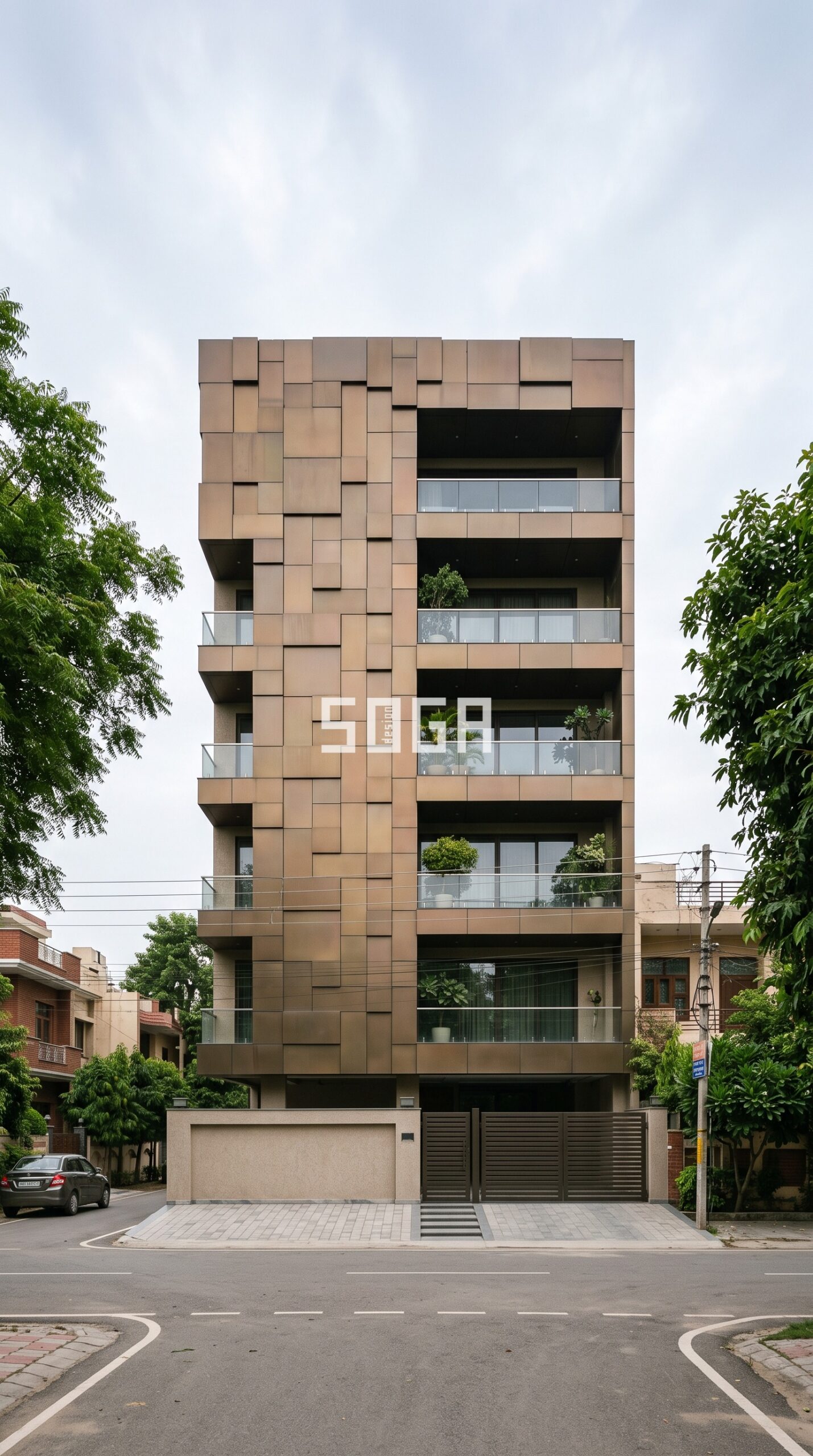
ACP is a sandwich panel made of two thin aluminium sheets bonded to a core, usually finished with a PVDF or PE coating. It has become the default facade material on Indian commercial buildings, showrooms, and apartment elevations because it’s lightweight — roughly 4–7 kg/sq.m versus 80–100 kg for stone — installs 3–5x faster than masonry or stone cladding, and comes in colours and finishes including wood, stone, and metallic looks. Fully installed cost, including the aluminium sub-frame, fabrication, and labour, typically runs ₹150–600 per sq.ft. One caveat: not all ACP is fire safe. Standard PE-core panels are combustible, and India’s National Building Code requires FR (fire-retardant) grade panels at minimum for commercial buildings, with near non-combustible grades required above 15 metres.
Glass: Premium Look, Premium Cost, Real Heat Trade-off
A standard aluminium-glass curtain wall costs about ₹900–1,800 per sq.ft installed, structural glazing runs ₹1,200–2,500 per sq.ft, and a high-performance double-skin facade can go up to ₹2,500–5,000 per sq.ft — roughly 3–4x the cost of equivalent ACP cladding. That price gap is why most Indian commercial buildings use glass selectively — entrances, atriums, view windows — rather than as a full skin. A poorly specified glass facade also raises cooling loads significantly in India’s climate; a properly designed system with double glazing and low-E or solar-control glass can cut solar heat gain by around 40% compared to ordinary glass, with the extra upfront cost often recovered in 2–5 years through lower AC bills.
Natural Stone: The Premium, Low-Maintenance Classic
Natural stone — granite, sandstone, kota, slate — is the traditional premium choice for villas: real thermal mass, a timeless look, very low ongoing maintenance. But it’s heavy, expensive, and slower to install than ACP or metal, and it adds real structural dead load that needs a heavier RCC frame to support. Stone cladding runs roughly ₹800–2,500 per sq.ft depending on the stone type, once transport, cutting, and anchoring are factored in — which is why most Indian projects use it selectively, on entrance walls or accent pillars, rather than across a full elevation.
Metal: Where the Interesting Design Work Happens
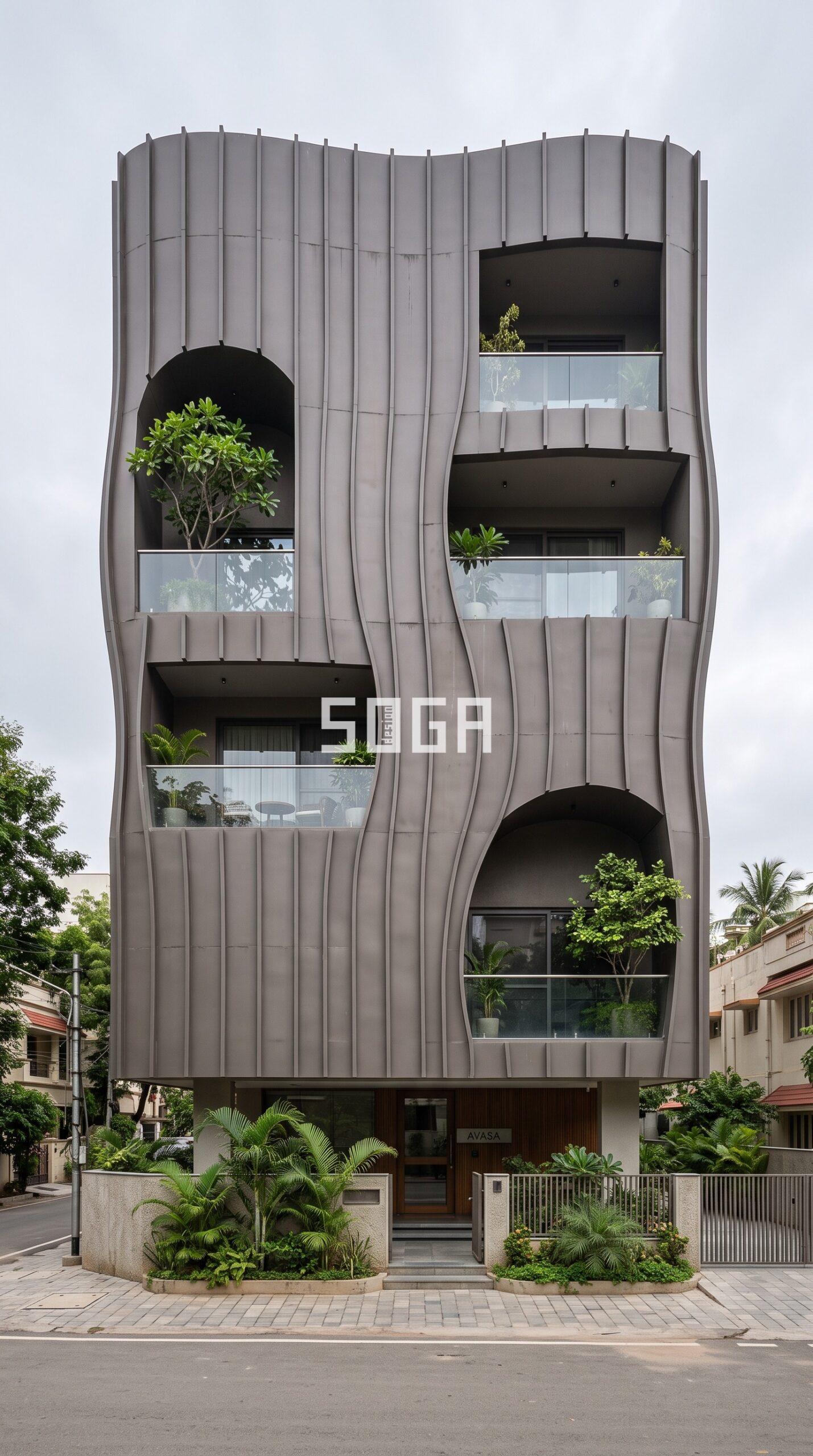
Beyond flat ACP panels, powder-coated or anodised aluminium and steel systems — perforated screens, parametric jaalis, rotated fins — sit in a similar cost bracket to ACP (roughly ₹550–1,200 per sq.ft) but unlock a completely different design language: real depth, shadow, and pattern rather than a flat printed surface. This is where SOGA Design Studio spends most of its design energy — a parametric metal screen wraps a building to filter sunlight and add privacy, mounted on stand-off brackets over the structural wall, and can even be retrofitted onto an existing RCC or brick facade in a matter of weeks without disturbing occupants.
So Which One Should You Choose?
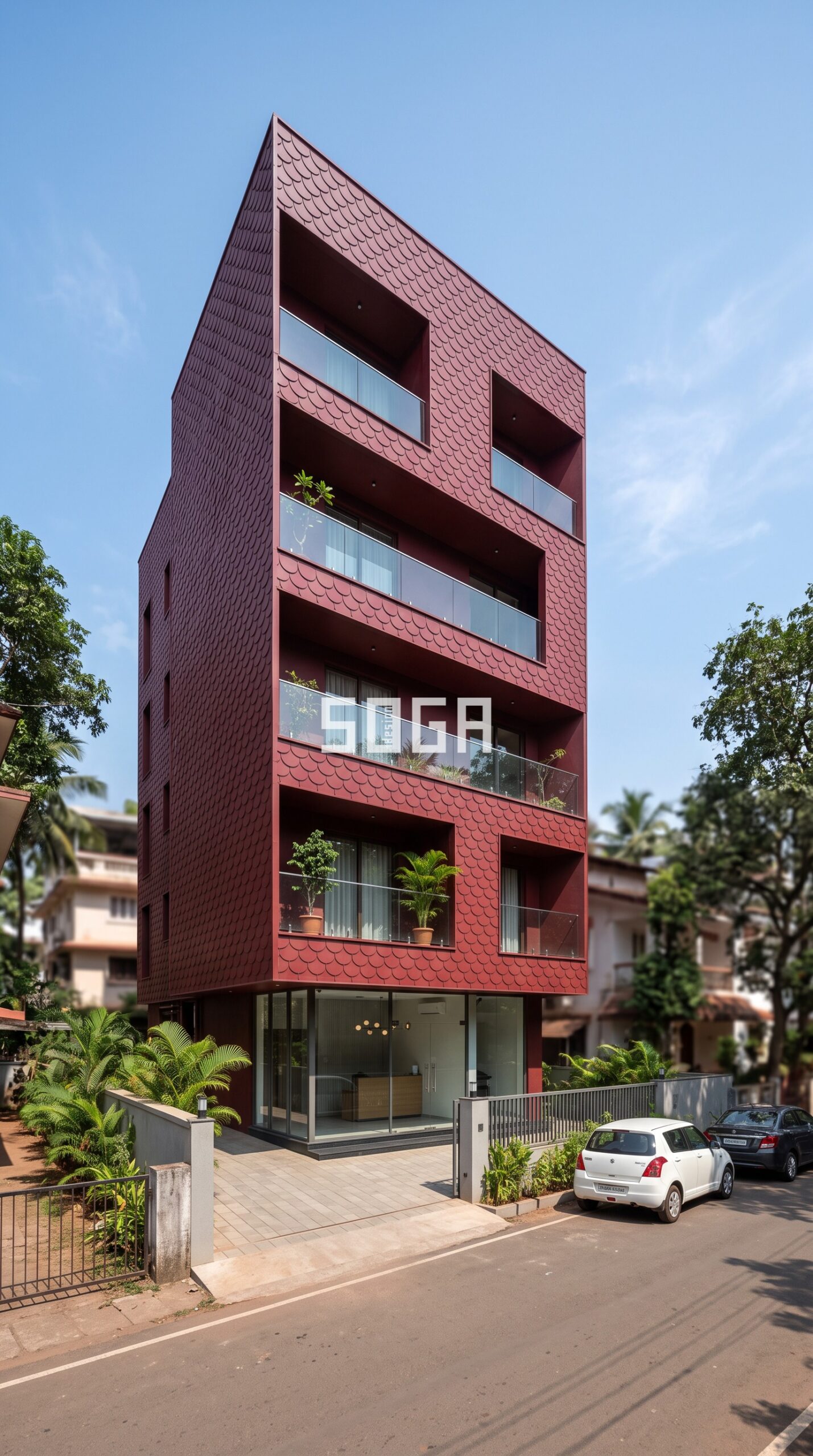
In practice, most good Indian facades today aren’t one material — they’re a mix. ACP or metal for large flat surfaces where speed and weight matter, stone as an accent where a heavier, more permanent texture is wanted, and glass kept to entrances, lobbies, and view windows rather than a full skin. The right combination depends on your building’s height (taller buildings need lightweight, wind-rated systems), your climate (coastal cities need corrosion-resistant coatings), and your budget tier — value (₹800–1,500/sq.ft), premium (₹1,500–3,000/sq.ft), or luxury (₹3,000–6,000/sq.ft) facade-all-in bands cover most Indian projects.
If you’re trying to figure out the right material mix for your specific building, plot, and budget, SOGA Design Studio designs facades across ACP, metal, stone, and glass systems for residential and commercial projects in India, Dubai, and Singapore — reach out for a consultation and a real cost estimate for your project.
Contact SOGA Design Studio to discuss facade materials for your building.
Quick Guide to Choosing
Each material trades off cost, looks, durability and maintenance. ACP is affordable and versatile but mid-tier in prestige; glass is sleek but needs shading in hot climates; stone is premium and durable but heavy and costly; metal (aluminium fins, GFRC, zinc) offers the best mix of longevity, form-freedom and parametric potential. The right choice depends on budget, climate and the identity you want.
Frequently Asked Questions
Which facade material is most durable? Natural stone and quality metal facades last longest; aluminium and zinc resist corrosion for decades with minimal upkeep.
Is ACP a good choice? ACP is cost-effective and flexible for colour and form, but choose fire-rated grades and quality installation for safety and longevity.
Which material suits parametric designs? Metal (aluminium, zinc) and GFRC are ideal, because they can be cut, folded or moulded into the varied panels a parametric facade needs.
For a reader who has rejected ACP on this page, the next step is five ACP sheet alternatives built as sections, not surfaces, each with its held-constant set and the point at which it stops working.