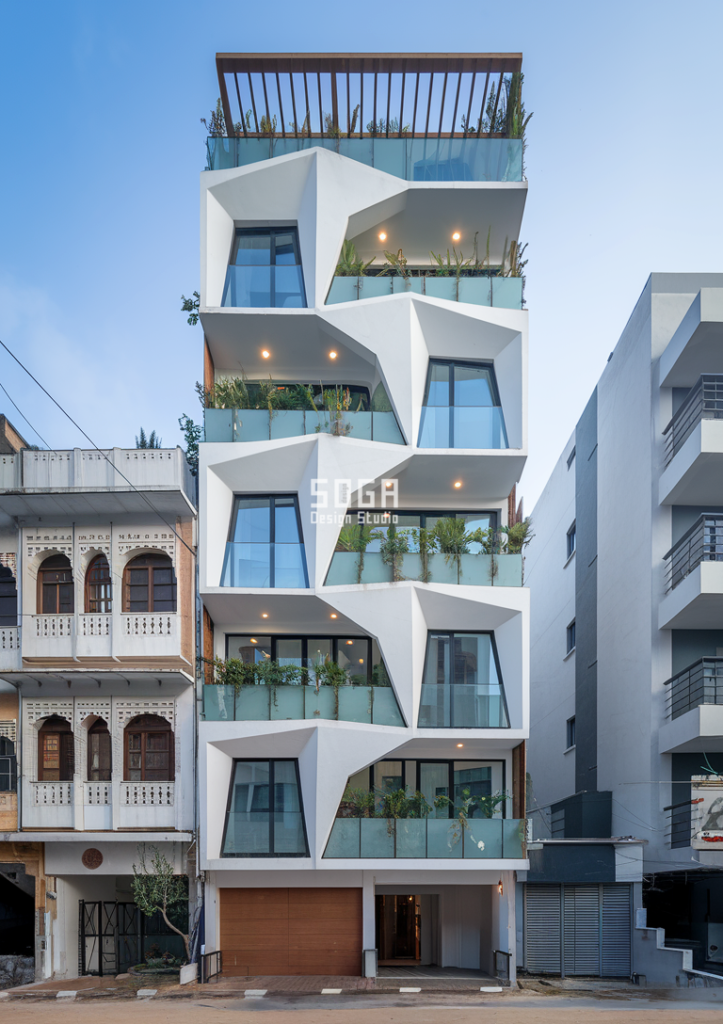
The bungalow — India’s most aspirational residential typology — is having a genuine architectural moment in 2026. After nearly two decades during which the high-rise apartment dominated India’s urban imagination, the independent house is back. Plotted developments in Gurugram, Hyderabad’s peripheral zones, Bengaluru’s Sarjapur corridor, and Pune’s expanding suburbs are selling faster than developers can build them, and buyers are arriving with far more sophisticated expectations than they had in 2010 or 2015.
The facade is where those expectations become visible. A bungalow’s exterior is its handshake — the statement it makes to the street before the gate even opens. And unlike an apartment, where the individual owner controls only the balcony and the front door, a bungalow owner controls the entire exterior expression. That is both an opportunity and a responsibility.
This guide covers everything an independent homeowner or bungalow developer needs to know about exterior design in India in 2026: trending styles, materials with real costs, practical renovation versus new-build considerations, and a realistic budget framework.
The Bungalow Advantage: Why Your Facade Matters More Than an Apartment’s
In an apartment building, your unit’s facade is one repeated element in a grid of identical windows. The developer controls the exterior; you control nothing except your balcony planter. In a bungalow, the entire street-facing elevation is yours. This means:
• Your home’s kerb appeal is entirely determined by your design decisions
• Your facade choices directly affect the perceived value and eventual resale price of your property
• The neighbourhood’s overall character is shaped by what each independent homeowner chooses to do with their exterior
This is a significant design responsibility — and an equally significant opportunity. A well-designed bungalow facade in a neighbourhood of generic-looking independent houses stands out sharply. It photographs well, attracts attention, and adds measurable value. Done poorly, it can undermine even an excellent interior.
2026 Bungalow Facade Styles Trending in India
The Parametric Screen Bungalow
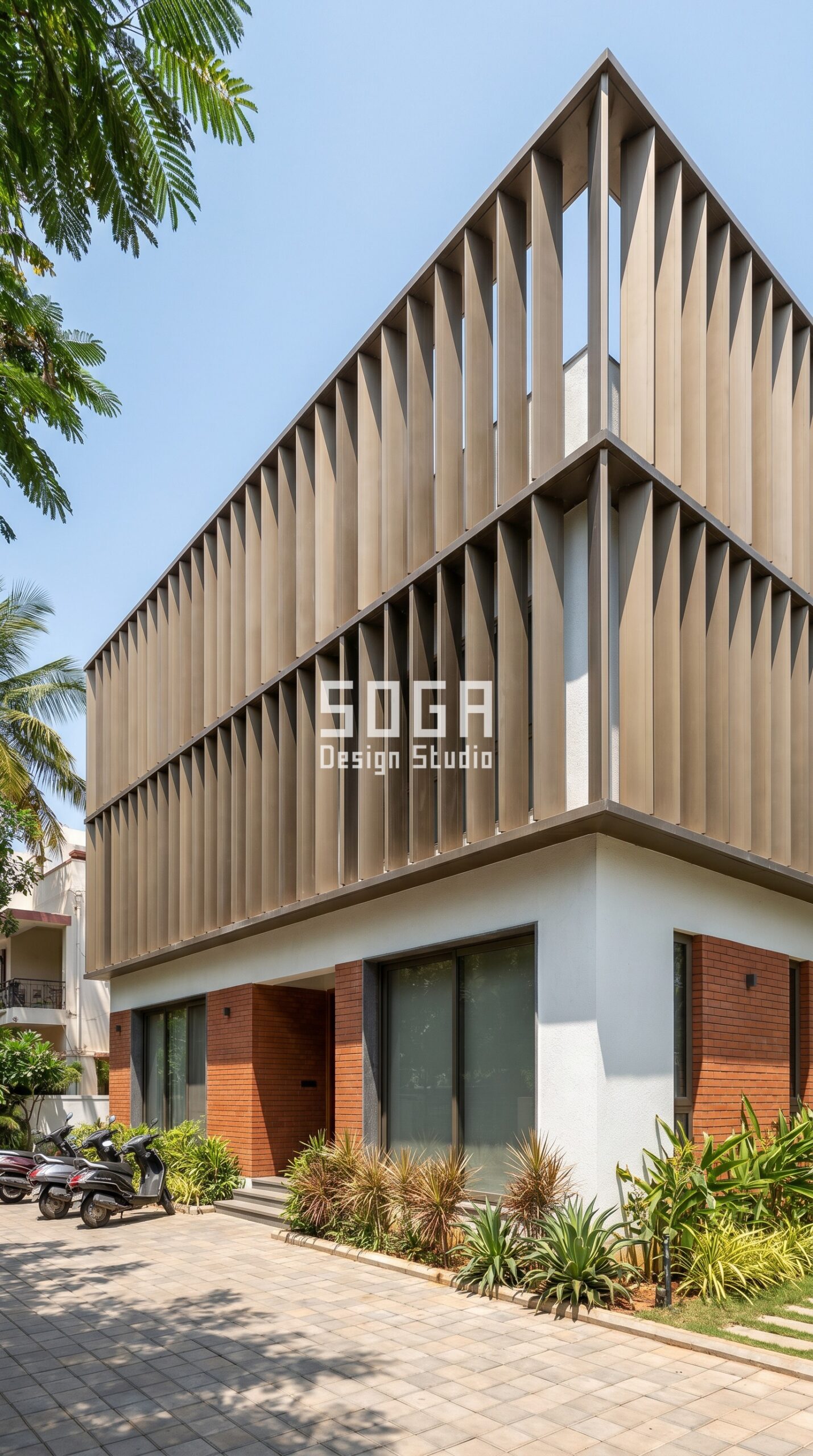
The fastest-growing aesthetic in India’s mid-to-premium bungalow segment in 2026 is the parametric screen facade. This approach takes a relatively simple built form — typically a box or L-shaped volume — and wraps it with a secondary layer of patterned aluminium or steel screens. The inner layer is the weather envelope; the outer layer is the design statement.
What makes this work: the screens provide solar shading, create privacy (particularly for ground-floor rooms), add visual texture, and allow the home’s interior lighting to glow through at night — creating a lantern-like effect that is genuinely beautiful and has enormous social media appeal.
Systems like SOGA’s SogaScreen™ are specifically designed for this application. Installed cost: ₹900–₹2,200/sqft for the screen layer, depending on pattern complexity and panel material.
The Clean Box with Metal Accents
A purer, more restrained aesthetic: a crisp white or off-white plastered volume with carefully placed metal elements — a steel or aluminium entrance canopy, a vertical fin screen on a feature bay, an inset balcony with perforated metal railing. The building form does the work; the metal is the punctuation.
This style works exceptionally well for narrow plots (typical 30×40 or 40×60 foot plots in urban India) where a cluttered facade would make the house feel smaller than it is. Horizontal banding in a slightly different tone or material creates the illusion of width. Cost: ₹8–₹25 lakh total for a typical bungalow facade at this level, depending on the extent of metalwork.
The Natural + Metal Hybrid
One of the most enduringly popular aesthetics for Indian bungalows: natural stone or terracotta on the lower portions of the facade (plinth to first-floor level) transitioning to a lighter material — painted plaster, aluminium panels, or a metal screen — on the upper floors. The stone grounds the house; the metal or plaster lifts it.
This hybrid approach draws on the Indian architectural tradition of heavy, solid plinths while embracing contemporary material logic for the upper floors. It is also practical: stone at ground level is durable and resistant to the scuffing and splash that the lower portion of any building exterior faces.
Exposed Concrete + Vertical Fins
An increasingly common approach among architecturally informed owners: raw or bush-hammered concrete as the primary wall surface, with thin concrete or aluminium vertical fins creating rhythm and shadow. This approach is honest — the building shows its structure — and requires genuine architectural confidence to execute well.
It is not appropriate for every context (it can read as cold in some neighbourhoods) but in the right setting — a leafy plot, a tree-lined street, a house for a client who understands contemporary architecture — it is one of the most compelling aesthetics available. Cost: typically lower on materials (concrete, aluminium fins) but higher on formwork and finishing quality than the alternatives.
Material Options with Installed Costs
Material | Installed Cost (₹/sqft) | Durability | Maintenance | Suitable for
Parametric aluminium panels | ₹1,200 – ₹3,500 | 20–25 years | Very low | Premium, modern bungalows
Aluminium screen (SogaScreen) | ₹900 – ₹2,200 | 15–20 years | Low | Privacy, solar shading
Natural stone veneer | ₹250 – ₹1,000 | 25+ years | Medium | Traditional, transitional
Terracotta panels | ₹600 – ₹1,400 | 30+ years | Very low | Warm, contemporary
Exposed concrete + fins | ₹400 – ₹900 | 20+ years | Medium | Architectural, modern
Painted plaster | ₹80 – ₹200 | 5–8 years | High | Budget, simple forms
ACP (standard) | ₹180 – ₹500 | 8–12 years | Low–medium | Mid-market
Glass louvres/curtain wall | ₹2,500 – ₹6,000 | 20+ years | Medium | Contemporary, mild climates
Costs are for installed systems including substrate, anchoring, and finishes. All figures are approximate and vary by city, contractor, and specification.
SOGA’s Approach for Bungalows
At SOGA Design Studio, we work on bungalow facades differently from the way most architects or contractors approach them. Our starting point is always the site analysis — orientation, immediate context, the character of the street — before we make any material recommendations.
SogaScreen™ for privacy and shading: The single most common problem we solve for bungalow clients is ground-floor privacy on busy streets or in dense neighbourhoods where neighbours are close. SogaScreen creates a semi-transparent outer layer that filters views from outside while maintaining the openness of the interior. The pattern geometry can be customised from dense (high privacy) to open (higher light), and the orientation of the screen panels controls how much of the facade is shaded at different times of day.
SogaWeave™ for solar shading: On south-west and west-facing bungalow facades in cities like Delhi NCR, Hyderabad, and Mumbai, solar gain through glass is the primary summer discomfort driver. SogaWeave’s twisted vertical fins are designed to shade the wall surface and any glazing behind them during peak afternoon hours while allowing morning light and cross-ventilation. On a 400 sqft west-facing facade, SogaWeave can reduce solar heat gain by 35–55%, translating to measurable air-conditioning savings.
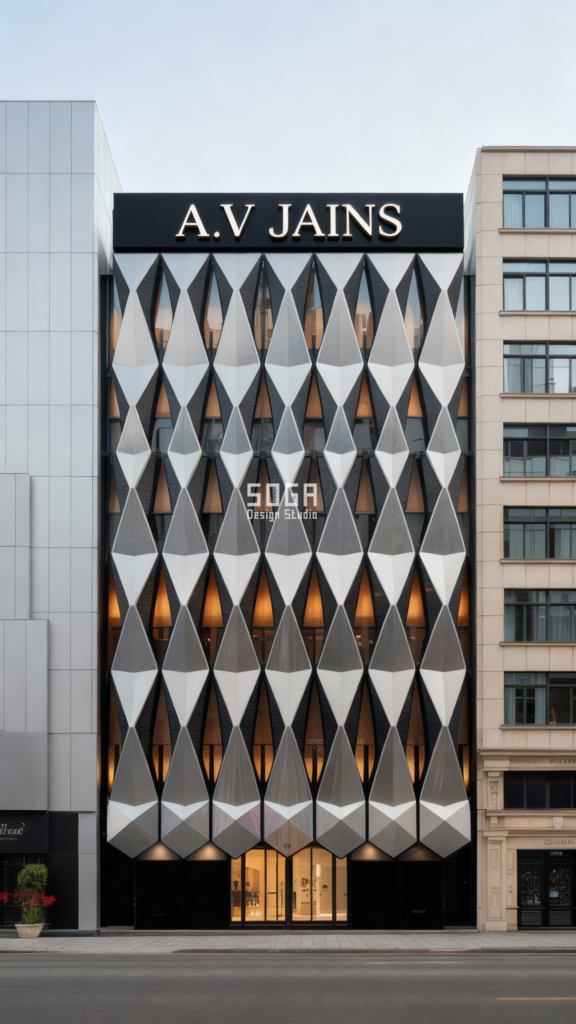
SogaGrid™ for visual identity: For bungalows in gated communities where the street view matters to the developer and to the resale market, SogaGrid’s diamond-panel geometry creates an immediately recognisable identity. The panel can be specified in any colour, allowing individual owners to personalise within a design system.
To understand the full design process from concept to construction, see our parametric facade design process guide.
Renovation vs New-Build Facade Considerations
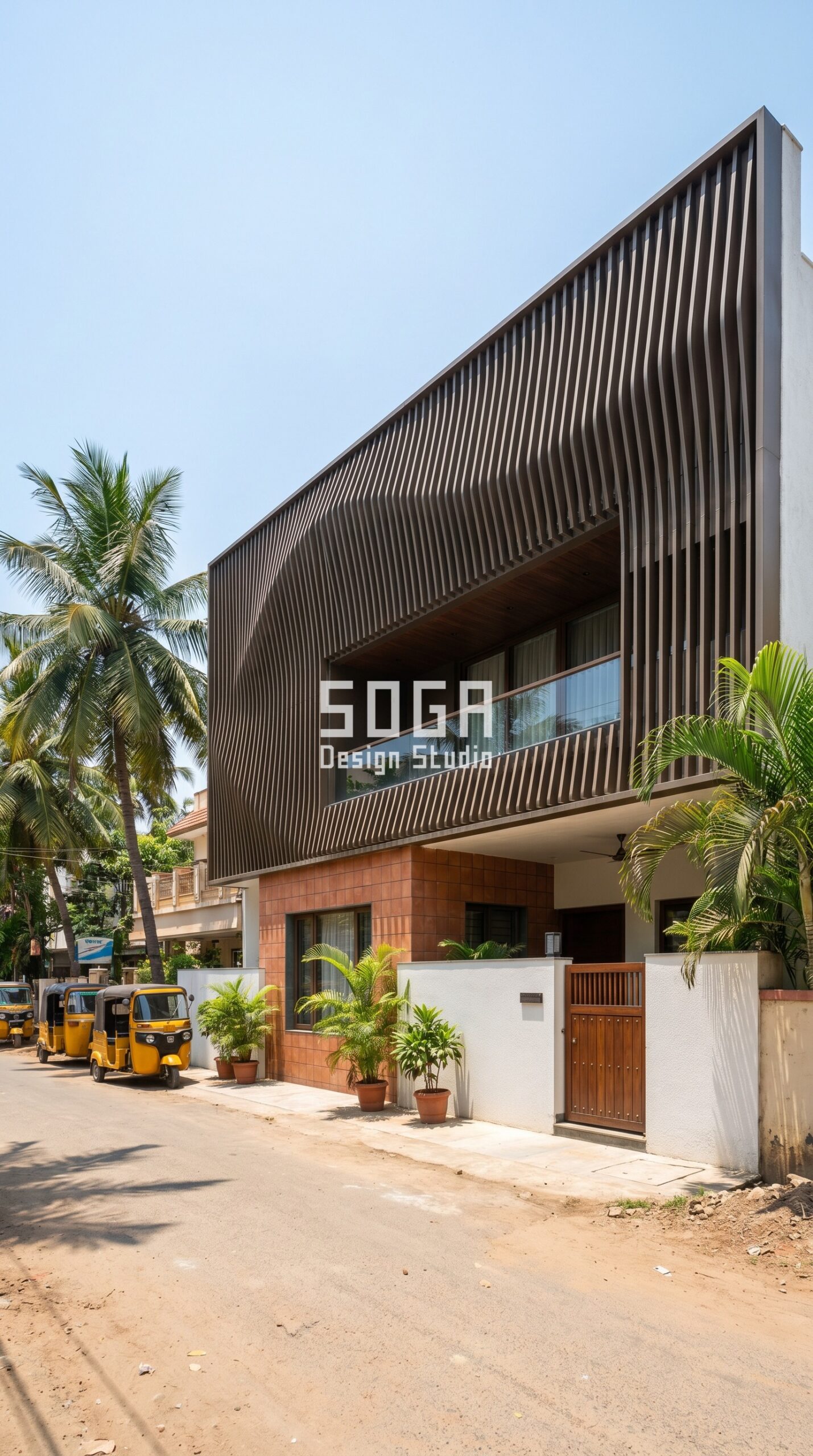
For new construction: You have full design freedom. The facade system can be integrated into the structural design from the beginning — wall openings, structural projections, embedded anchor points — all designed in coordination with the facade. This is the ideal scenario and produces the best results at the lowest overall cost, since the facade is not fighting the existing structure.
For renovation of an existing bungalow: The structural fabric of the existing building constrains your options. Key questions:
• What is the existing wall construction (brick, RCC frame, load-bearing)? This determines the anchoring options and load limits.
• Are there existing window positions that will need to be respected or modified?
• Is there any existing cladding that needs to be removed, and what is the substrate condition beneath?
• What are the local municipal rules on facade modifications — do you need a drawing approval or NOC for significant exterior changes?
In most cases, a well-designed renovation is entirely feasible. We have successfully retrofitted SogaScreen and SogaGrid systems onto bungalows ranging from 10-year-old RCC frame houses to 30-year-old brick construction. The key is a proper structural assessment early in the process.
Budget Guide: ₹15 to ₹80 Lakh Range for a Typical Bungalow Facade
The right budget depends on three variables: total facade area, material specification, and design complexity. Here is a realistic framework:
₹15–₹25 lakh (entry-level upgrade): Replaces generic painted plaster with a combination of stone veneer accents and a simple aluminium screen or panel on feature bays. Best suited to 1,200–1,800 sqft total facade area. Suitable for mid-market bungalows in cities like Pune, Bhopal, Indore.
₹25–₹45 lakh (mid-premium): Full facade redesign using terracotta panels or aluminium composite panels with a parametric screen on the primary elevation. Includes proper weather membrane and anchoring. Suitable for 1,800–2,500 sqft facade area. Common specification for bungalows in Bangalore, Hyderabad suburbs, Pune premium.
₹45–₹80 lakh (premium): Full parametric system — SogaScreen, SogaGrid, or SogaWeave — across the complete facade with custom panel geometry, premium powder-coat or anodised finish, and integrated lighting provision. Suitable for 2,500–4,000 sqft facade area. Target specification for Gurugram, South Mumbai, Jubilee Hills Hyderabad, Whitefield Bangalore.
Above ₹80 lakh: Large bungalows (above 4,000 sqft facade area), fully bespoke systems, or complex multi-material compositions with structural glass, feature lighting, and landscape integration. See our complete cost guide for a deeper breakdown.
FAQ
Q: How much does it cost to redesign the exterior of a bungalow in India in 2026? A: A realistic range for a quality bungalow facade redesign in India is ₹15 lakh to ₹80 lakh for a typical 1,500–3,500 sqft facade area, depending on materials and design complexity. Entry-level upgrades (stone + ACP accent) start around ₹15 lakh; fully parametric aluminium systems for larger bungalows reach ₹80 lakh and above. Painted plaster-only work is cheaper (₹3–₹8 lakh) but provides no durable improvement in either appearance or property value.
Q: Do I need a municipal approval to change my bungalow’s facade? A: This varies by city and the extent of the change. In most Indian municipalities, repainting or replacing like-for-like cladding does not require a new approval. However, adding a projecting screen or frame that extends beyond the existing building envelope, or making changes that affect the building’s structural elements, typically requires a drawing submission and approval from the local authority. Always check with your local architect or a SOGA representative before beginning. Rules in RERA-regulated developments may be more restrictive.
Q: Will a new facade actually increase my bungalow’s resale value? A: In most Indian premium markets in 2026, yes — meaningfully. Properties with well-designed, well-maintained exteriors sell faster and at higher prices than comparable properties with neglected or generic facades. The premium varies by market: in Gurugram and Hyderabad’s premium zones, a distinctive parametric facade can add 12–22% to the resale value relative to a comparable property with a standard ACP or painted-plaster exterior. The ROI is strongest in markets with high visual competition (gated communities, premium localities) where buyers are visually sophisticated.
Q: How long does a bungalow facade renovation take? A: A standard bungalow facade renovation (1,500–2,500 sqft) using aluminium panel or screen systems takes 8–14 weeks from design sign-off to completion. The design phase (concept through to working drawings) typically takes 4–6 weeks; fabrication of panels takes 3–5 weeks; site installation takes 2–4 weeks. Full projects including design, fabrication, and installation can run 3–5 months from first consultation to handover.
Q: Can I change just one wall of my bungalow, or does the entire facade need to be redesigned? A: Partial facade upgrades are common and perfectly viable. The most popular approach is upgrading the primary street-facing elevation — often just the front wall and entrance — while leaving side and rear elevations unchanged or minimally updated. The design challenge is making a single-wall upgrade look intentional rather than incomplete. A good designer will ensure the feature wall relates coherently to the rest of the building so the result looks designed, not patched.
Start Your Bungalow Facade Project
Whether you are renovating an existing bungalow or designing a new one, SOGA Design Studio brings parametric design expertise and deep knowledge of Indian construction conditions to every project. We work across all major Indian cities from our Gurugram studio.
Contact SOGA to schedule a consultation — we begin every engagement with a site and orientation analysis before making any material or system recommendation.
Browse our parametric systems at sogadesignstudio.com/soga-parametric-systems/