How to Choose a Parametric Architecture Studio in India: 7 Questions Every Client Should Ask
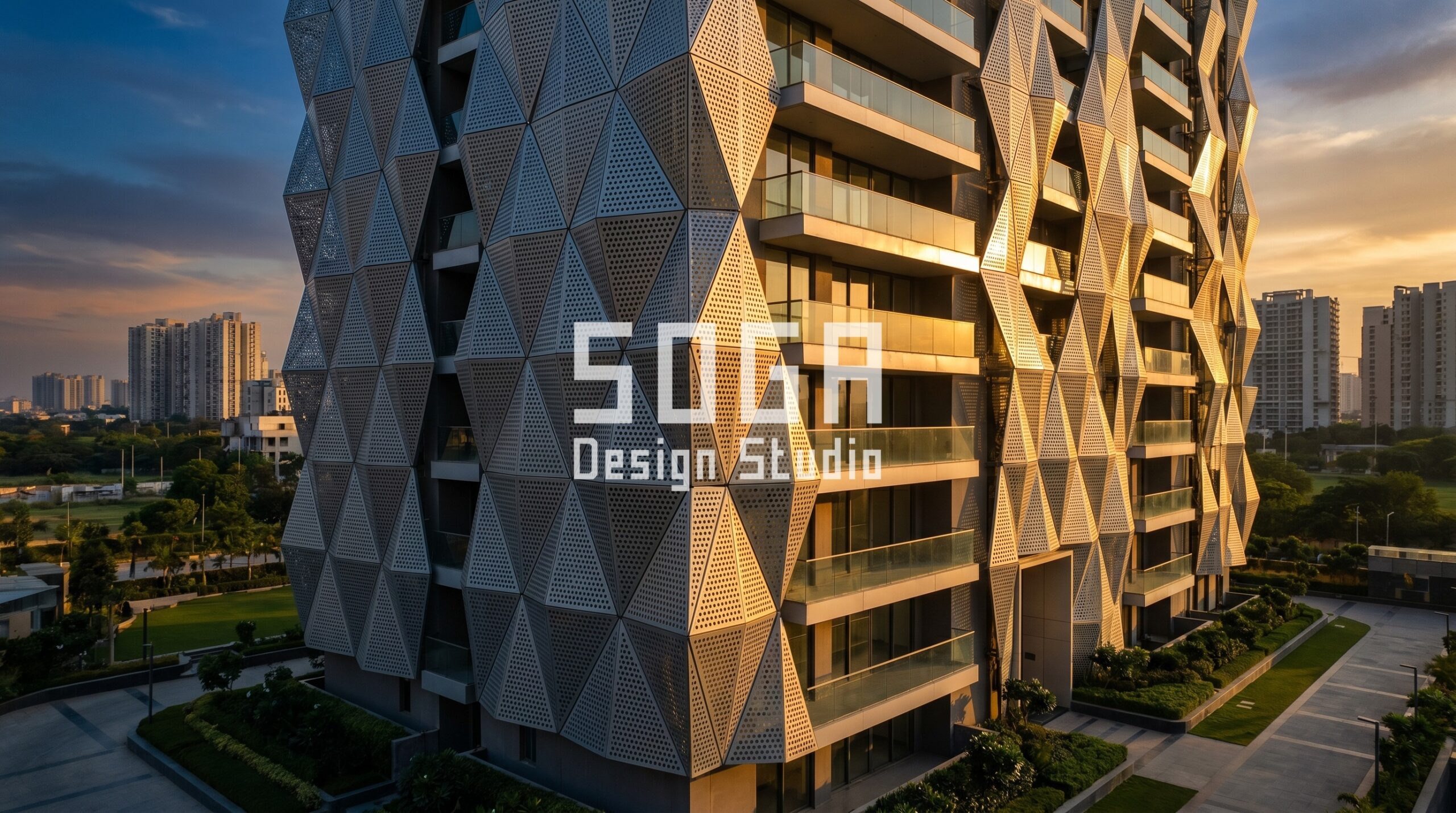
Selecting the right parametric architecture studio in India is one of the most critical decisions for any building project that demands innovation, precision, and visual impact. Whether you’re designing a corporate headquarters in Delhi, a mixed-use development in Mumbai, or a signature facade for a Bangalore tech campus, your choice of parametric design partner will fundamentally shape your project’s success, budget, and timeline. With dozens of firms claiming expertise in computational design across India’s major metros—from Gurugram and Hyderabad to Jaipur—knowing what to ask separates visionary studios from those simply jumping on a trend.
At SOGA Design Studio, we’ve spent years collaborating with architects, developers, and design teams across India and the UAE who face this exact challenge. This guide distills our experience into seven essential questions that will help you identify a true parametric design firm capable of delivering world-class results.
1. Do You Design Parametric Facades from Scratch or Just Fabricate?
This is the single most important question—and many firms get it wrong. There’s a crucial difference between parametric design innovation and parametric fabrication. A true parametric architecture studio must excel at the conceptual and computational phase: creating responsive, optimized facades from first principles, not simply taking an architect’s sketch and fabricating it parametrically.
Here’s what to look for: Can the studio demonstrate original algorithmic thinking? Do they explore design variations using generative logic? Do they integrate performance metrics—solar gain, ventilation, acoustic response, structural load paths—directly into the parametric model? Or are they merely using parametric tools to rationalize a predetermined design? The former creates genuine innovation; the latter is expensive CAD.
At SOGA Design Studio, we lead with design strategy and computational thinking. Our practice is built on creating facades and architectural systems that are born parametric—where algorithmic logic drives aesthetic, thermal, and structural outcomes from day one. We collaborate closely with architects to define performance goals, then use parametric modelling to explore hundreds of solutions in a fraction of traditional design time. This approach has delivered award-winning parametric facade design in India for high-rise residential, hospitality, and corporate projects across Mumbai, Delhi, Bangalore, and Hyderabad.
2. What Computational Design Tools Do You Use?
The digital backbone of parametric architecture matters deeply. Leading studios leverage integrated workflows across Grasshopper, Revit, Rhinoceros, Python scripting, and sometimes custom software. This matters because different tools excel at different tasks: generative exploration, fabrication optimization, clash detection, structural analysis, or environmental simulation. A studio using only one tool—say, Grasshopper alone—will likely struggle with fabrication coordination or structural integration.
Beyond software, ask about their data pipeline: How do models flow from design to fabrication? Can they export geometry to CNC machines, laser-cutting software, and structural FEA directly? Do they use custom Python scripts for project-specific problems? What about reality capture—do they employ photogrammetry or laser scanning when reverse-engineering existing geometries or site conditions?
SOGA Design Studio maintains a full parametric technology stack: Grasshopper + Revit for integrated BIM workflows, Rhinoceros 7 for surface modelling, Python for custom algorithms, and direct connections to fabrication software like Tekla and CAD CAM packages. We also integrate environmental analysis (Ladybug Tools), structural pre-design (Karamba3D), and cost estimation engines into our parametric workflows. This depth ensures that every parametric design project benefits from intelligent optimization across aesthetic, structural, and cost dimensions.
3. Can You Show Projects Similar to Mine (City, Type, Budget)?
Portfolio alignment is non-negotiable. A studio with brilliant work in high-rise residential may lack expertise in retail, hospitality, or educational facilities. Geographic context also matters: climate, material availability, local codes, and contractor capabilities differ sharply between Jaipur and Dubai, or Hyderabad and Mumbai.
When reviewing a studio’s portfolio, ask: Have they worked in your city? With your building type? At your budget scale? If they’re pitching their ₹3,500/sq.ft facade expertise but your budget is ₹1,200/sq.ft, they may not have the optimization skills you need—or worse, they might scope-creep your project. Conversely, if you’re investing ₹800-₹1,000 per sq.ft, you want a studio that knows how to achieve impact at that level, not one that recommends the ₹3,500 premium approach out of habit.
SOGA’s portfolio spans corporate, hospitality, residential, and mixed-use projects in Delhi, Mumbai, Bangalore, Hyderabad, Gurugram, Jaipur, and Dubai. We have proven expertise at multiple budget tiers—from cost-optimized parametric systems in the ₹800-1,200/sq.ft range up to complex, high-performance facades at ₹2,500-3,500/sq.ft. This range of experience ensures we can recommend the right approach for your project, not ours. Learn more about our studio and approach.
4. Do You Handle Fabrication Coordination and Site Supervision?
Parametric design is only as good as its execution. A studio brilliant at algorithmic thinking but absent during fabrication and installation creates risk. The best parametric facade design India workflows include close coordination with fabricators, real-time problem-solving on site, and quality control tied back to the parametric model.
Ask: Will the studio manage RFQs to fabricators? Will they coordinate with the contractor and subcontractors? Who handles quality assurance and deviation management if on-site conditions differ from the model? What happens if the fabricator needs geometric adjustments? A mature studio maintains oversight through shop drawings, mock-ups, site reviews, and parametric updating to ensure design intent survives into the built environment.
SOGA Design Studio manages the full lifecycle: we develop parametric designs, coordinate with fabricators, oversee mock-ups, supervise installation, and iterate in real-time if conditions require adjustment. This end-to-end accountability is rare in the industry and ensures that the parametric elegance you see in renderings translates faithfully to the finished building. Explore our integrated parametric facade design services.
5. How Do You Manage Geometric Surface Development (GSD)?
Geometric Surface Development—the process of translating complex 3D parametric forms into manufacturable 2D profiles, unfolded components, and CNC-ready geometry—is a critical technical competency. Many studios excel at creating beautiful algorithmic forms but struggle to “unfold” them into reality. This incompetence drives up fabrication costs, material waste, and schedule delays.
A capable parametric architecture studio will have developed specialized expertise in nesting, unfolding, and optimization algorithms. They should demonstrate understanding of cutting technologies (laser, waterjet, CNC), material limits (bending radii, thickness constraints), and fabrication tolerance stacking. They should also use automation—not manual labour—to manage thousands of unique components.
At SOGA, GSD expertise is foundational. We use advanced unfolding algorithms in Grasshopper, maintain a library of material-specific design rules, and collaborate with our fabrication partners to continuously refine manufacturability. Our parametric workflows automatically generate cutting patterns, nesting layouts, and component schedules that minimize waste while respecting material properties and production constraints across India’s diverse fabrication landscape.
6. What Is Your Typical Project Timeline?
Parametric design can accelerate timelines—or extend them if the studio lacks process discipline. A realistic parametric design firm will be transparent about phases: discovery and goal-setting (2-3 weeks), algorithmic exploration and iteration (4-6 weeks), design refinement and performance optimization (3-4 weeks), fabrication coordination and detailing (4-8 weeks), and site supervision (ongoing during installation).
Be wary of studios promising results in 6 weeks total. Conversely, be cautious of proposals with open-ended timelines. The right firm will use parametric automation to compress the middle phases—you can test hundreds of design variations in the time traditional CAD produces a single option—but they won’t rush discovery or fabrication coordination. Timeline expectations also vary by project scale and complexity. A 2,000 sq.m facade renovation in Bangalore may move faster than a 50,000 sq.m complex mixed-use development in Mumbai.
SOGA provides transparent, phase-based schedules tailored to project scope and client approval velocity. Our parametric process is efficient, but we never sacrifice diligence. Typical projects move from concept to fabrication-ready in 12-16 weeks; site supervision extends 2-4 months depending on installation complexity and on-site conditions.
7. Do You Have Experience With My Budget Range?
Budget honesty separates responsible studios from opportunists. Parametric facade design in India typically ranges from ₹800 to ₹3,500 per sq.ft depending on complexity, material, and integration depth. A project at ₹1,000/sq.ft demands a different approach than one budgeted for ₹2,500/sq.ft. Studios without experience at your budget tier will either over-engineer (and lose your project) or under-deliver (and damage their reputation and your building).
During your initial conversation, share your budget candidly. A trustworthy studio will immediately tell you what’s realistic at that level. For ₹800-1,200/sq.ft, you’ll get smart geometric optimization and standardized component families. At ₹1,500-2,000/sq.ft, you unlock more geometric freedom and integrated performance analysis. Beyond ₹2,500/sq.ft, fully custom parametric systems with embedded mechanical/structural intelligence become viable.
SOGA Design Studio has delivered exceptional outcomes at every budget tier across Indian metros. We’ll never ask you to spend beyond your means, and we’ll never commit to a budget we can’t hit. This reliability has made us a trusted partner for developers and architects in Delhi, Mumbai, Bangalore, Hyderabad, Jaipur, and Dubai who value both innovation and fiscal responsibility.
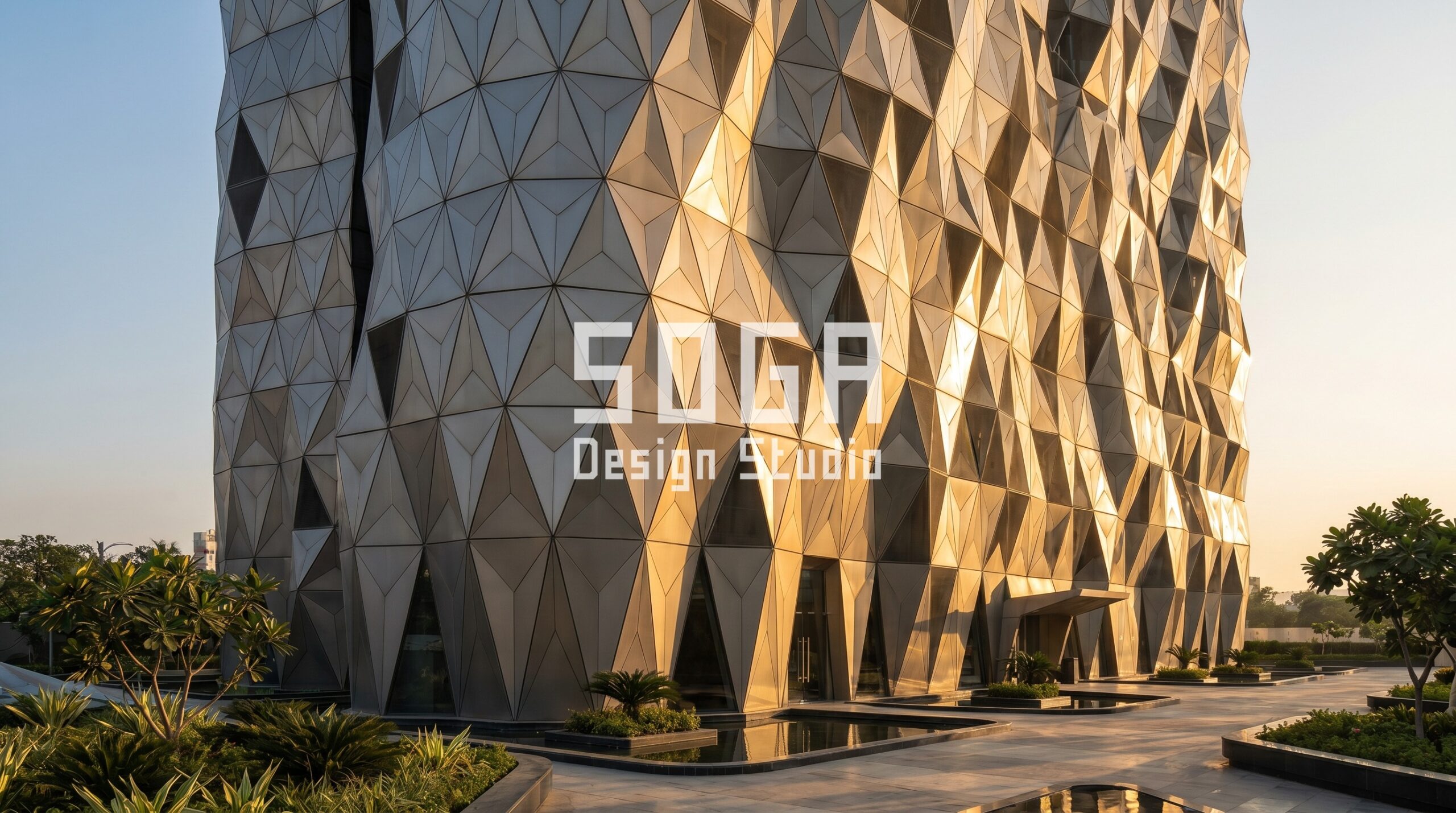
How SOGA Design Studio Answers These Questions
At SOGA, we lead the parametric architecture landscape in India through a combination of algorithmic depth, technical breadth, and unwavering execution discipline. We design from scratch, leveraging a full computational toolkit. Our portfolio spans multiple building types and budget levels across every major Indian metro and the UAE. We manage fabrication and site delivery as integrally as we manage design. And we’ve invested in specialist expertise in GSD, parametric optimization, and cost control.
Most importantly, we believe that parametric architecture isn’t about complexity for its own sake—it’s about creating facades and systems that are simultaneously beautiful, performant, buildable, and affordable. That philosophy guides every project, whether it’s a ₹40-crore residential tower or a ₹15-crore hospitality transformation.
Get in touch with SOGA Design Studio today to discuss your parametric architecture vision. We’re here to answer your questions and explore how parametric thinking can elevate your next project.
Frequently Asked Questions: Choosing a Parametric Architecture Studio in India
- Q1: Do parametric architecture studios only fabricate, or do they design from scratch?
- True parametric studios design from scratch using algorithmic logic to generate and optimize facades. SOGA integrates performance metrics—solar, structural, acoustic—directly into the parametric model from the outset, creating designs that are born parametric, not retrofitted.
- Q2: What tools should a parametric architecture studio use?
- Leading studios employ Grasshopper, Revit, Rhinoceros, Python scripting, and fabrication software. SOGA uses this full stack plus environmental analysis, structural pre-design, and cost optimization tools to ensure comprehensive parametric workflows.
- Q3: How do I know if a parametric studio has experience with my project type?
- Review their portfolio for similar building types, cities, and budget scales. SOGA has delivered parametric facades across corporate, residential, hospitality, and mixed-use projects in Delhi, Mumbai, Bangalore, Hyderabad, Jaipur, and Dubai at budgets ranging from ₹800 to ₹3,500/sq.ft.
- Q4: Will the parametric studio supervise fabrication and installation?
- Yes—a mature studio manages the entire lifecycle: design, fabrication coordination, mock-ups, site supervision, and real-time iteration. SOGA maintains oversight from algorithmic conception through final installation to ensure design intent is preserved.
- Q5: What is Geometric Surface Development (GSD) and why does it matter?
- GSD is the process of translating complex 3D parametric forms into manufacturable 2D components. Expertise in GSD—including unfolding algorithms, nesting optimization, and fabrication constraints—is critical to avoiding waste and cost overruns. SOGA specializes in GSD and maintains a library of material-specific design rules.
- Q6: How long does a parametric architecture project typically take?
- Timeline varies by scope, but typical projects move from concept to fabrication-ready in 12-16 weeks. Site supervision extends 2-4 months depending on complexity. SOGA provides transparent, phase-based schedules and uses parametric automation to compress design iterations without sacrificing diligence.
- Q7: What budget range is realistic for parametric facade design in India?
- Parametric facade design in India typically ranges from ₹800 to ₹3,500 per sq.ft depending on complexity. At ₹800-1,200/sq.ft, expect smart geometric optimization. At ₹1,500-2,000/sq.ft, greater geometric freedom and performance analysis. Beyond ₹2,500/sq.ft, fully custom systems with embedded intelligence. SOGA has experience at all tiers and will match scope to budget honestly.
By Gajender Sharma, Co-founder, SOGA Design Studio
Published: April 27, 2026
Once a studio is on your shortlist, the next two questions are commercial: how to compare two facade design proposals and what the appointment should say.