Parametric Facade Architecture Trends 2026: What’s Defining India’s Buildings This Year
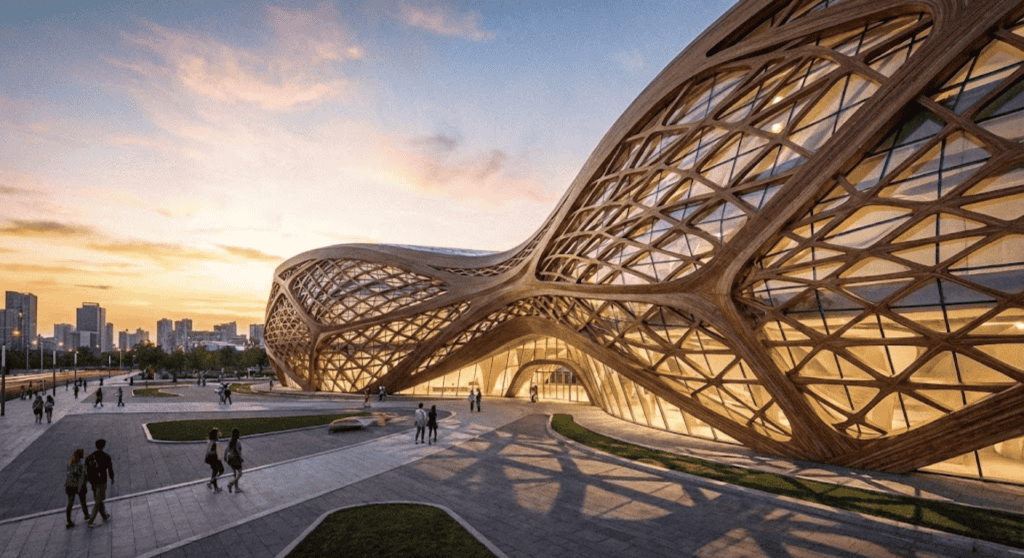
Parametric facade design is no longer a niche specialization for luxury projects or tech-forward corporations. In 2026, it’s becoming the language through which Indian architects and developers communicate innovation, sustainability, and brand identity. Whether you’re designing a mixed-use development in Mumbai, a tech campus in Bangalore, or a retail flagship in Delhi NCR, parametric facades are reshaping how buildings perform, look, and connect with their environments.
At SOGA Design Studio—India’s leading parametric architecture and facade design studio, with projects spanning Gurugram, Mumbai, Jaipur, Dubai, and beyond—we’ve watched these trends crystallize through real project experience. Unlike facade manufacturers or traditional architectural services, SOGA leads with design intelligence, using parametric tools not just to optimize, but to define building identity and performance.
Here are the six parametric facade trends that are actively reshaping India’s built environment in 2026, and what they mean for your next project.
Trend 1: AI-Assisted Parametric Design (Generative Facades Entering Mainstream)
The integration of artificial intelligence with parametric design tools—particularly Grasshopper plugins paired with machine learning models—is moving from experimental to production-ready in 2026. Architects can now define design intent and performance criteria, and AI algorithms generate hundreds of facade variations that meet structural, thermal, and aesthetic goals simultaneously.
What’s shifting: Two years ago, this required specialized expertise and significant computational overhead. Today, cloud-based parametric engines and AI co-design plugins like Waffle, Finegrain, and custom built solutions are making this accessible to mid-sized architectural practices. SOGA has integrated these tools into our core design process, enabling rapid iteration that would take traditional design teams weeks to complete.
Real-world application: For a 250,000 sqft commercial complex in Mumbai, AI-assisted parametric design identified facade patterns that reduced solar heat gain by 34% while maintaining unobstructed views and creating distinctive visual rhythm—something traditional manual optimization would have required months to achieve.
Cost range for this trend: ₹850–₹1,400 per sqft for facade skin, depending on material complexity and customization level. The AI-assisted design phase adds 8–12% to design fees, but often recovers cost through material optimization and manufacturing efficiency.
Competitors like Metaguise position themselves as facade manufacturers; SOGA differentiates by being a design-led studio that uses AI and parametrics as tools for architectural vision, not replacement for it.
Trend 2: Biophilic + Sustainable Parametric Facades (Living Walls, Solar-Responsive Screens)
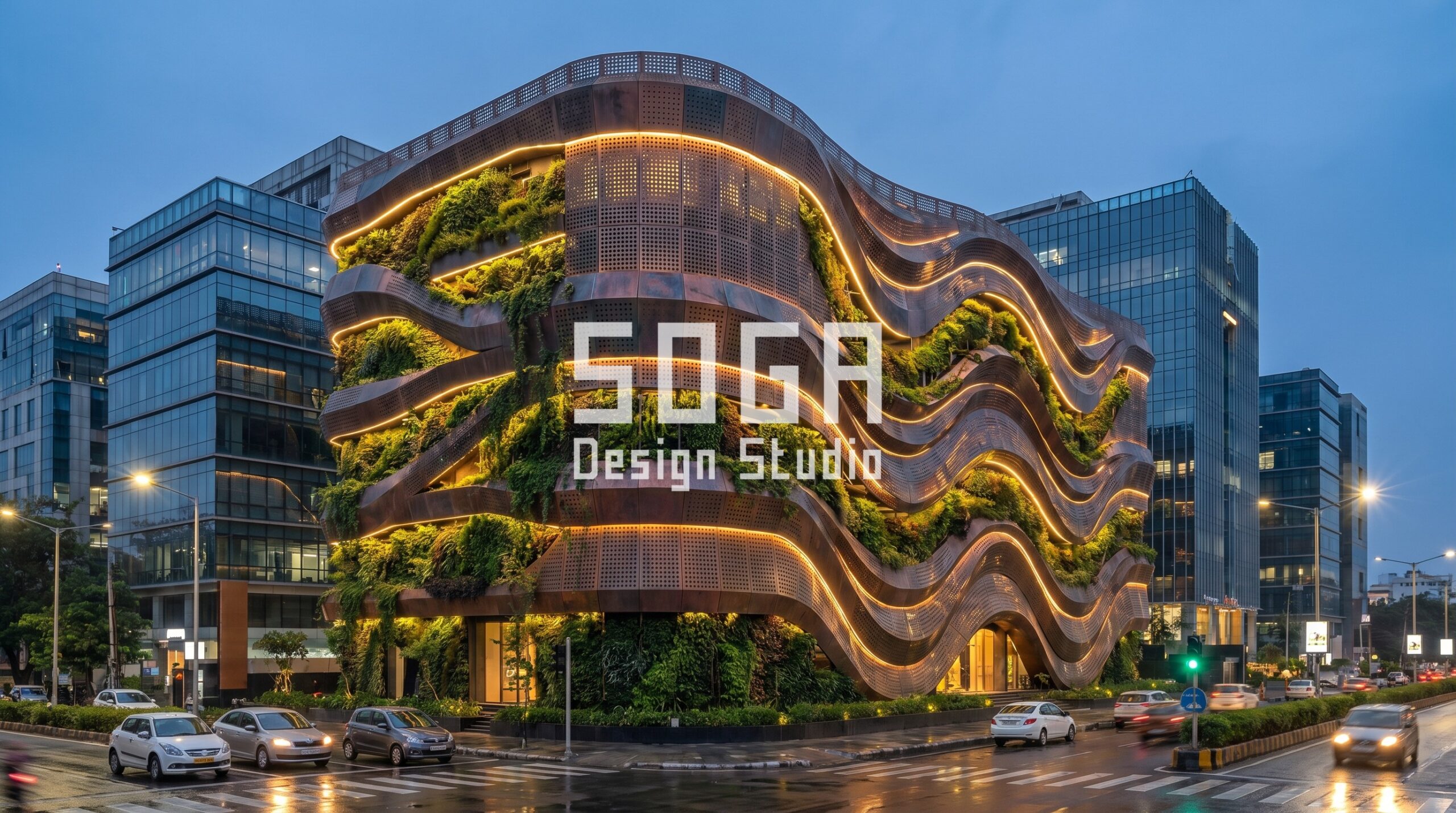
Sustainability is now a design parameter, not an afterthought. In 2026, we’re seeing parametric facades that integrate living systems—vertical gardens, moss panels, vines trained on parametric trellises—alongside dynamic solar-responsive louver systems. The result: facades that breathe, adapt, and improve indoor environmental quality while reducing HVAC loads.
What’s shifting: Two years ago, living facades were aesthetic add-ons. Today, they’re structural design elements. Parametric design allows architects to calculate load paths for living wall systems, optimize irrigation points, and predict microclimate conditions—making biophilic facades economically viable for mainstream commercial and residential projects.
Real-world application: SOGA designed a parametric living wall system for a residential tower in Jaipur, where the facade integrates 15,000 plants within a parametrically optimized steel framework. The system reduces surface temperature by up to 7°C, decreases indoor cooling load by 18%, and has become the building’s signature identity marker.
Cost range for this trend: ₹950–₹1,600 per sqft for parametric facades with integrated biophilic systems. Maintenance contracts are separate (typically ₹15–₹25 per sqft annually). The upfront investment is offset by HVAC savings within 5–6 years for commercial buildings in hot-humid climates.
This is particularly resonant in Bangalore, Delhi NCR, and Mumbai, where regulatory frameworks are increasingly requiring green building performance metrics.
Trend 3: Hyper-Customized Metal Facade Systems (No Two Facades Alike)
Mass customization is no longer an oxymoron in facade manufacturing. Parametric design drives fabrication files directly to advanced CNC machines, allowing architects to create unique facade panels, perforations, and profiles for every building—without traditional cost penalties for customization.
What’s shifting: Five years ago, custom metal facades meant exponential costs. In 2026, parametric workflows integrated with precision manufacturing mean that a 300-panel facade can have 300 unique configurations while maintaining production efficiency. This enables facade design to become an extension of brand identity, architectural expression, and site-specific performance optimization.
Real-world application: For a luxury hospitality project in Dubai, SOGA parametrically designed a facade where each panel’s perforation pattern relates to the building’s site history and astronomical alignment. The result appears completely bespoke, yet manufacturing efficiency actually kept costs competitive with standard curtain wall systems. The facade became the building’s signature, featured in architectural publications globally.
Cost range for this trend: ₹1,200–₹2,100 per sqft for hyper-customized metal facade systems (aluminum composite, powder-coated steel, bronze anodized). The per-unit production cost is actually 6–10% lower than traditional curtain wall systems when manufactured at scale through parametric workflows.
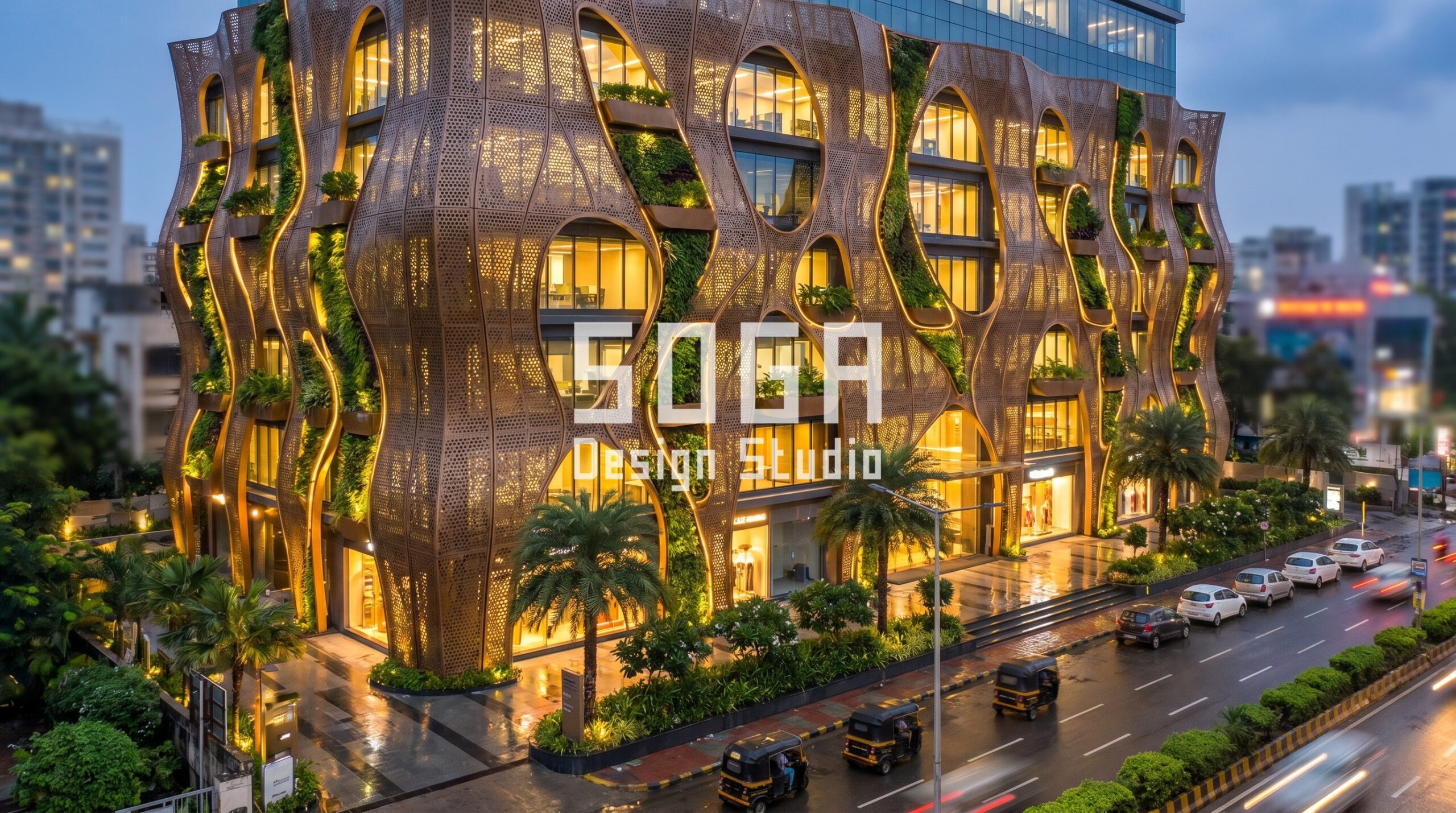
This trend is particularly strong among luxury residential, hospitality, and corporate headquarters in Mumbai and Gurugram, where brand differentiation justifies design-intensive facades.
Trend 4: Kinetic and Dynamic Facade Skins (Light-Responsive, Moveable Louvers)
Static facades are becoming predictable. In 2026, kinetic facades—where louvers, screens, or panels move in response to solar intensity, wind patterns, or occupant behavior—are moving into mainstream commercial and residential applications. These aren’t just tech experiments; they’re parametrically designed systems that improve occupant comfort, reduce energy consumption, and create visual interest throughout the day.
What’s shifting: Actuator costs have dropped 40% since 2023. Sensor networks are more reliable and affordable. Most importantly, parametric design frameworks now allow architects to simulate kinetic behavior—predicting how a facade will move under various environmental conditions before fabrication even begins.
Real-world application: A tech campus in Bangalore features a parametric kinetic facade where over 2,000 individually articulated louvers respond to real-time solar data, optimizing daylighting while minimizing glare and heat gain. The facade also creates a kinetic art installation effect at sunrise and sunset. Occupant comfort metrics show a 23% improvement in workspace quality perception.
Cost range for this trend: ₹1,800–₹2,800 per sqft for motorized kinetic facades with integrated controls and sensors. The control system (IoT, AI-powered) adds ₹400–₹700 per sqft. This is a significant investment, but justified for high-performance commercial buildings where occupant experience and energy efficiency command premium positioning.
Energy savings typically reach 20–28% annually for buildings with high solar gain exposure, which in India’s climate zones means ROI within 7–9 years.
Trend 5: Affordable Parametric for Mid-Market (Scalable Systems, Not Just Luxury)
In 2024, parametric facades were luxury offerings. In 2026, they’re becoming available for mid-market commercial and residential projects. Parametrically designed modular systems—prefabricated components that assemble with minimal site customization—are democratizing advanced facade design.
What’s shifting: Standardized parametric modules with infinite configuration possibilities are enabling developers to create distinctive, performance-optimized facades at ₹650–₹950 per sqft—competitive with conventional curtain walls, but with superior environmental performance and design differentiation.
Real-world application: SOGA recently completed a 180,000 sqft IT park in Delhi NCR using parametric modular facade systems. The developer achieved 25% cost savings compared to traditional curtain walls while delivering a facade that communicates innovation and sustainability—critical for attracting premium tenants.
Cost range for this trend: ₹650–₹950 per sqft for parametric modular facade systems. This brings advanced facade design within reach of mid-market commercial, tech parks, and residential projects across India.
This is the trend with highest adoption potential because it removes the “luxury premium” barrier to parametric design.
Trend 6: Parametric Interiors Merging with Facade (Inside-Outside Continuity)
Parametric design is no longer facade-only. In 2026, leading projects treat the interior-exterior boundary as a design continuum. Parametric patterns that define the facade surface extend into interior spatial organization—creating visual and functional coherence that becomes a key brand and spatial experience element.
What’s shifting: Five years ago, interiors and facades were designed in silos. Today, parametric design workflows allow architects to generate both facade and interior geometry from unified design logic. This results in buildings where visual, spatial, and performance logic feels intentional and coherent rather than decorative.
Real-world application: A luxury residential tower in Mumbai features parametric facade patterns that define interior walls, ceiling geometry, and lighting fixtures. Every apartment’s interior spatial experience reflects the facade’s parametric logic—creating brand consistency and psychological coherence that increases perceived value significantly.
Cost range for this trend: ₹1,400–₹2,200 per sqft for integrated parametric facade + interior systems. The unified parametric workflow actually reduces design inefficiencies and coordination costs, making whole-building parametric integration cost-competitive with traditional separated design approaches.
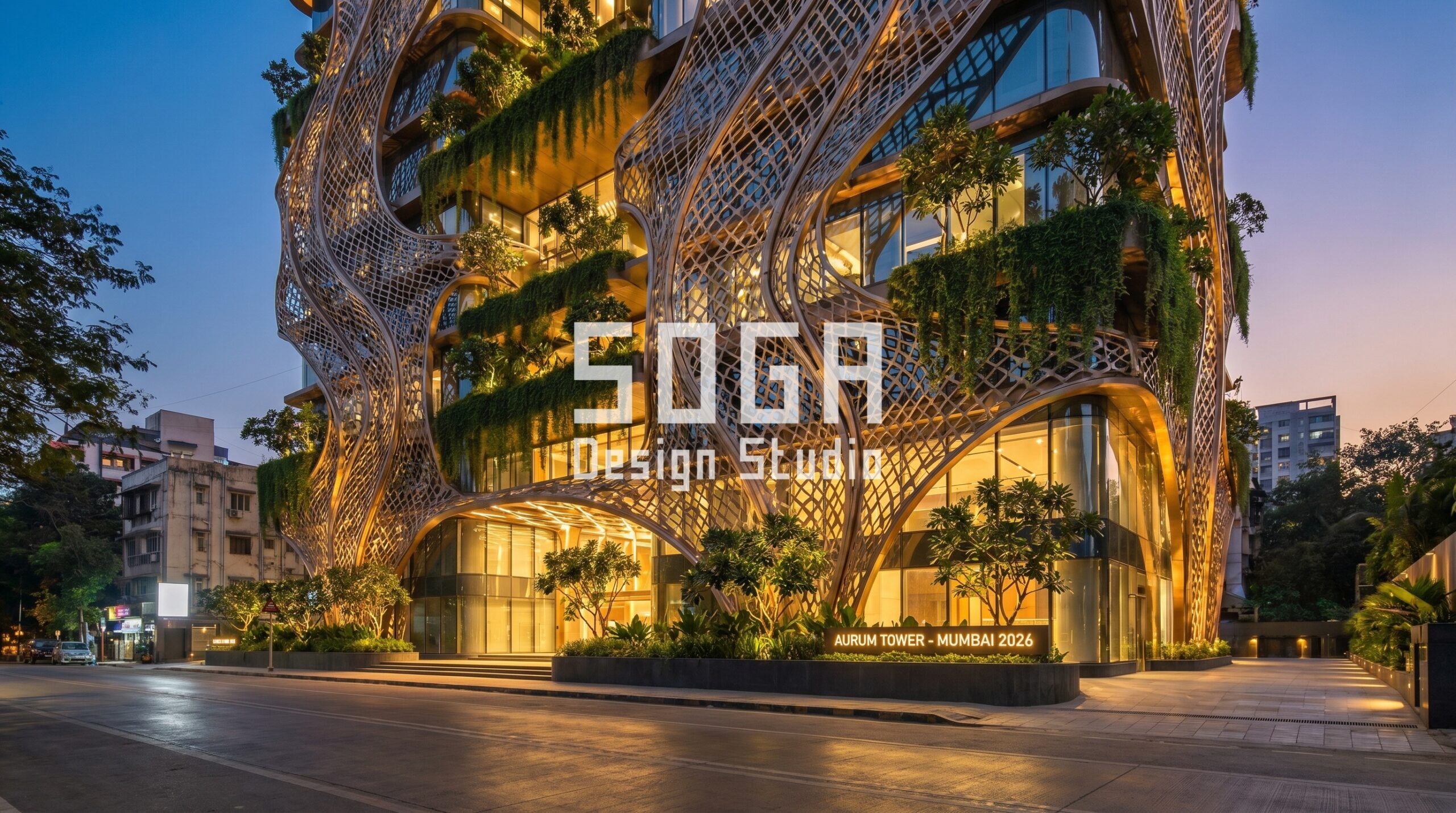
This trend is most visible in luxury hospitality, residential, and corporate headquarters where experiential coherence justifies integrated design investment.
What These Trends Mean for Indian Architects and Developers in 2026
Parametric facade design is no longer optional for projects that aspire to premium positioning, environmental performance, or design distinction. Here’s what this means practically:
- For Architects: Parametric design literacy is becoming table-stakes for commercial and high-end residential projects. This doesn’t mean every architect needs to code in Grasshopper—but understanding parametric workflows, their performance implications, and design possibilities is essential for competitive positioning.
- For Developers: Parametric facades represent legitimate differentiation opportunity. Whether you’re building in Mumbai, Bangalore, Delhi NCR, Jaipur, or Dubai, parametrically designed facades communicate innovation, performance, and intentional design—all factors that support premium pricing and tenant/buyer attraction.
- For Specialty Contractors: Facade manufacturers who only offer standard systems are commoditizing. Those who integrate parametric manufacturing workflows—translating complex digital designs into fabrication files efficiently—are capturing value. This shift has already happened globally; India is 18–24 months behind, but catching up rapidly.
- For Investors: Buildings with distinctive, performance-optimized parametric facades are commanding 8–12% lease and resale premiums in India’s major markets, particularly in Bangalore, Mumbai, and Delhi NCR where design-conscious tenants and buyers concentrate. This trend will accelerate as parametric design becomes more accessible.
The parametric design studio landscape in India now includes SOGA Design Studio, Metaguise, and rat-lab among others. However, the critical distinction isn’t tool sophistication—it’s design leadership. SOGA differentiates by treating parametric design as a design methodology, not a technical novelty. Our projects across Gurugram, Mumbai, Jaipur, Dubai, and Bangalore prove that parametric facades can be economically viable, environmentally responsible, and architecturally distinctive simultaneously.
The question for your next project isn’t “Should we consider parametric facade design?” It’s “How will parametric design amplify our architectural vision and business objectives?”
Ready to explore parametric facade design for your project?
Connect with SOGA Design Studio to discuss how parametric design can differentiate your building, improve performance, and support your project goals.
For a comprehensive deep dive into parametric design methodology and applications, read our article on Parametric Facade Design in India: A Comprehensive Guide.
Curious about the intelligence behind parametric design? Explore The Intelligence of Architecture: A Deep Dive into Parametric Facades in India for advanced methodology insights.
Frequently Asked Questions About Parametric Facade Trends in 2026
1. What’s the main difference between parametric facades and traditional curtain walls?
Traditional curtain walls follow standardized module dimensions and repetitive panel configurations. Parametric facades are designed through algorithmic systems where every element (panel size, angle, perforation pattern, material thickness) is calculated to optimize for specific performance criteria—thermal, structural, acoustic, visual. This allows complete customization while maintaining manufacturing efficiency. The result is facades that are genuinely optimized for site-specific conditions, not compromised into standardized dimensions.
2. How much does parametric facade design actually cost compared to standard solutions?
Surprisingly, parametric facades are now cost-competitive with premium curtain walls when manufactured at scale. Design phase adds 8–12% to architectural fees, but material and fabrication efficiency offsets this. For modular parametric systems, costs range ₹650–₹950 per sqft (competitive with curtain walls at ₹700–₹1,000 per sqft). For custom applications, costs range ₹1,200–₹2,800 per sqft depending on complexity and customization level. The ROI comes through energy savings, occupant satisfaction, and premium positioning rather than construction cost reduction.
3. Are parametric facades suitable for mid-budget projects, or only luxury developments?
Mid-market projects are now the fastest-growing segment for parametric facades. Modular parametric systems with standardized components and infinite configuration possibilities bring advanced design and performance within reach of mid-budget commercial, tech parks, and residential developments. SOGA’s recent projects in Delhi NCR and Bangalore demonstrate that parametric design can enhance mid-market projects without premium costs, delivering 25–30% better occupant experience and distinctive brand positioning compared to standard alternatives.
4. How do kinetic and dynamic facades perform in India’s climate? Are they reliable?
Kinetic facades are highly viable in India’s climate. Solar-responsive louver systems directly address India’s primary climate challenge: excessive solar gain. Motorized actuators and sensor networks have improved dramatically in reliability; modern systems operate in temperatures up to 55°C with minimal maintenance. Energy savings of 20–28% annually are realistic for buildings in high-sun exposure zones. Maintenance costs are approximately ₹15–₹30 per sqft annually, which is offset within 7–9 years through energy savings for high-performance buildings in tier-1 cities.
5. Which Indian cities are seeing the most adoption of parametric facades?
Mumbai, Delhi NCR (Gurugram particularly), and Bangalore are leading parametric facade adoption for commercial and high-end residential projects. Jaipur is emerging as a strong secondary market, especially for luxury residential and hospitality. Dubai continues to lead regionally, with advanced fabrication and integration capabilities. Adoption is driven by tenant/buyer demand for distinctive design, regulatory pressure for environmental performance, and developer positioning in premium market segments.