Parametric Architecture vs Traditional Architecture in India: Why the Future is Computational
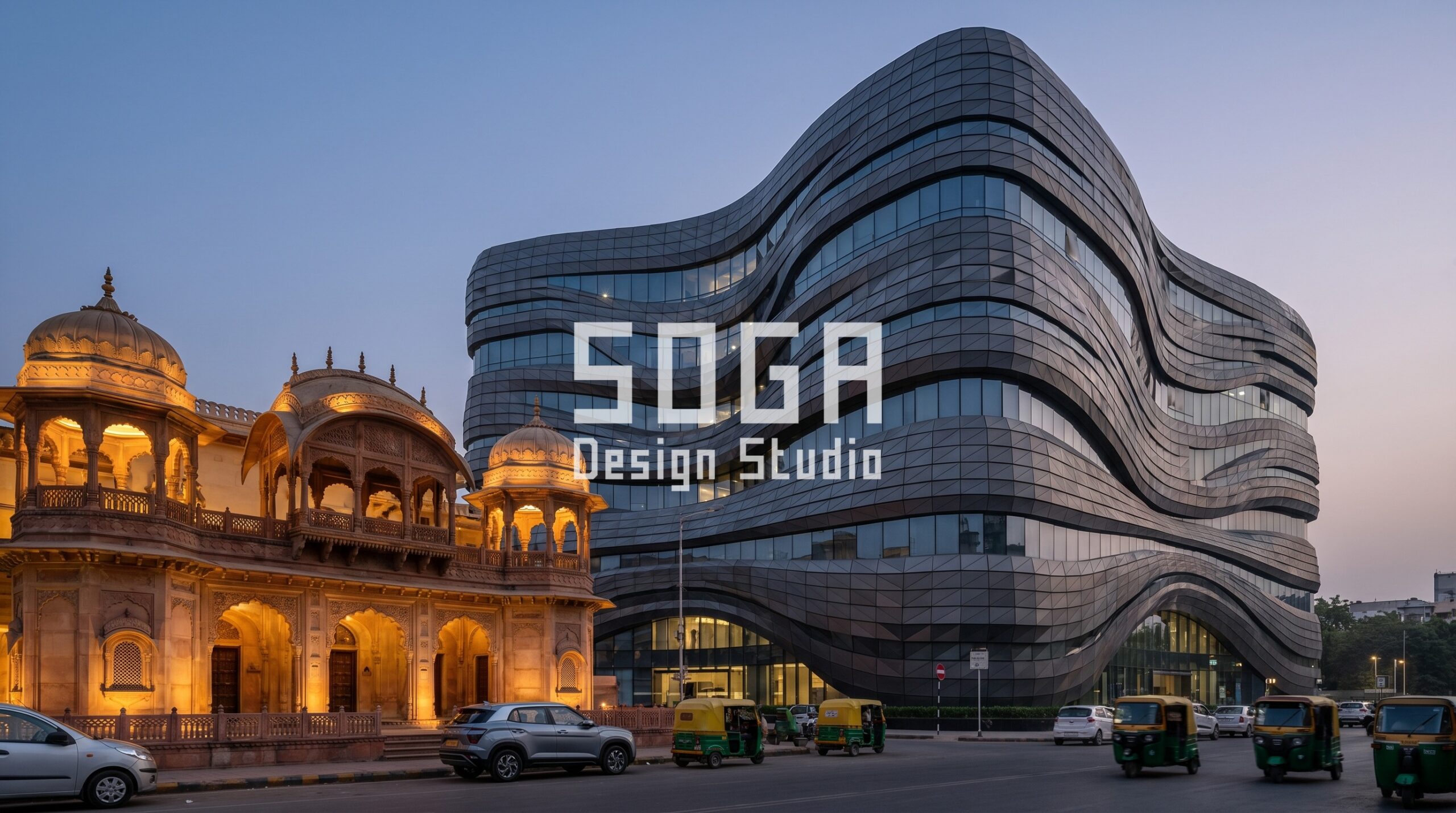
India’s architectural landscape is at a crossroads. For centuries, our buildings have been shaped by the hands of craftspeople, the intuition of architects, and the constraints of traditional construction methods. But today, a new paradigm is emerging—one driven by algorithms, data, and computational thinking. This isn’t about abandoning our heritage; it’s about augmenting it with tools that let us design smarter, faster, and more sustainably.
Whether you’re a developer, architect, or real estate professional in Mumbai, Delhi, Jaipur, Bangalore, or Dubai, the question is no longer “should we consider parametric design?” but rather “when and how should we apply it?” This guide explores both approaches with honesty and nuance, helping you understand where each excels—and where they might work best together.
What is Traditional Architecture?
Traditional architecture is the foundation of India’s built heritage. From the intricate jali screens of Rajasthan to the temple gopurams of South India, from Mughal-inspired arches to vernacular brick structures, traditional architecture represents centuries of accumulated knowledge, cultural expression, and climatic adaptation.
In practice, traditional architecture relies on:
- Manual design processes: Architects sketch, iterate, and refine designs through hand drawings and 2D plans
- Proven construction methods: Techniques passed down through generations, often requiring skilled labor
- Material expertise: Deep knowledge of local materials—stone, brick, timber, marble—and their performance
- Intuitive aesthetics: Design decisions based on proportion, symmetry, and cultural context rather than algorithmic optimization
- On-site adjustments: Flexibility to adapt designs during construction based on site conditions and practical constraints
Traditional architecture has given us timeless structures. But it’s also inherently limited by the speed of manual design iteration, the variability of manual craftsmanship, and the difficulty of optimizing for multiple performance metrics simultaneously.
What is Parametric Architecture?
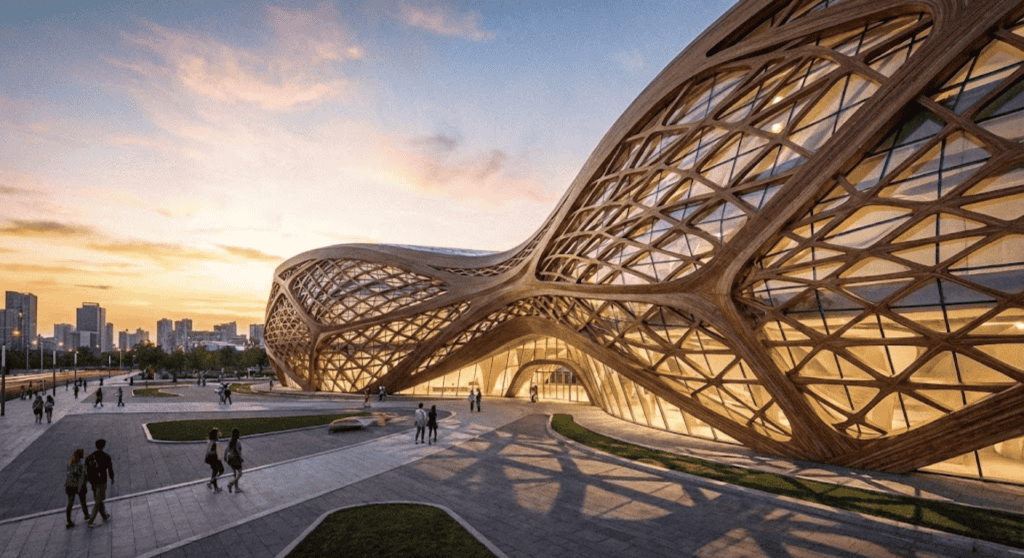
Parametric architecture is a computational approach where buildings are defined by sets of parameters and rules. Instead of drawing a fixed design, you define relationships: “if the sun angle is 45 degrees, adjust the louver depth by X millimeters”; “if the structural load increases by 10%, redistribute material accordingly”; “optimize the facade geometry to reduce cooling load while maximizing natural light.”
Key characteristics of parametric design include:
- Algorithm-driven: Designs emerge from mathematical relationships and performance criteria
- Data-responsive: Inputs include climate data, structural loads, user behavior, and performance metrics
- Rapid iteration: Change one parameter and the entire design updates instantly—no redrawing
- Optimization: The design process can simultaneously optimize for multiple goals (cost, aesthetics, performance)
- Precision manufacturing: Every element is defined digitally, enabling robotic fabrication and zero-tolerance assembly
- Scalability: Parametric rules can generate hundreds of unique variations from a single framework
Parametric design doesn’t replace creativity—it amplifies it. A parametric facade isn’t a computer deciding what’s beautiful; it’s an architect defining rules that generate beauty while solving engineering, environmental, and cost challenges.
Side-by-Side Comparison: Design Process
To understand how these approaches differ in practice, let’s examine a real-world scenario: designing a commercial facade for a mixed-use tower in Mumbai.
| Design Process | Traditional Architecture | Parametric Architecture |
|---|---|---|
| Conceptualization | Sketches, mood boards, hand-drawn elevations. Designer envisions the final form. | Define parameters: solar angle, structural grid, material constraints, cost target. Software generates options. |
| Iteration Time | Each design change requires redrawing plans, sections, elevations. 2-4 weeks for major revisions. | Adjust parameters in software. See updated 3D model instantly. Real-time feedback. |
| Design Validation | Rely on designer experience and intuition. Testing limited to site visits and physical models. | Automatic performance analysis: thermal comfort, daylight penetration, structural efficiency, cost per sqm. |
| Manufacturing | Detailed drawings sent to contractors. Elements fabricated manually or with standard machinery. | Digital model directly feeds into CNC machines, robotic fabricators, 3D printing. No tolerance ambiguity. |
| Construction | On-site adjustments common. Skilled labor required. Quality variable based on craftspeople. | Prefabricated elements arrive ready to assemble. Installation more like assembly. Higher precision. |
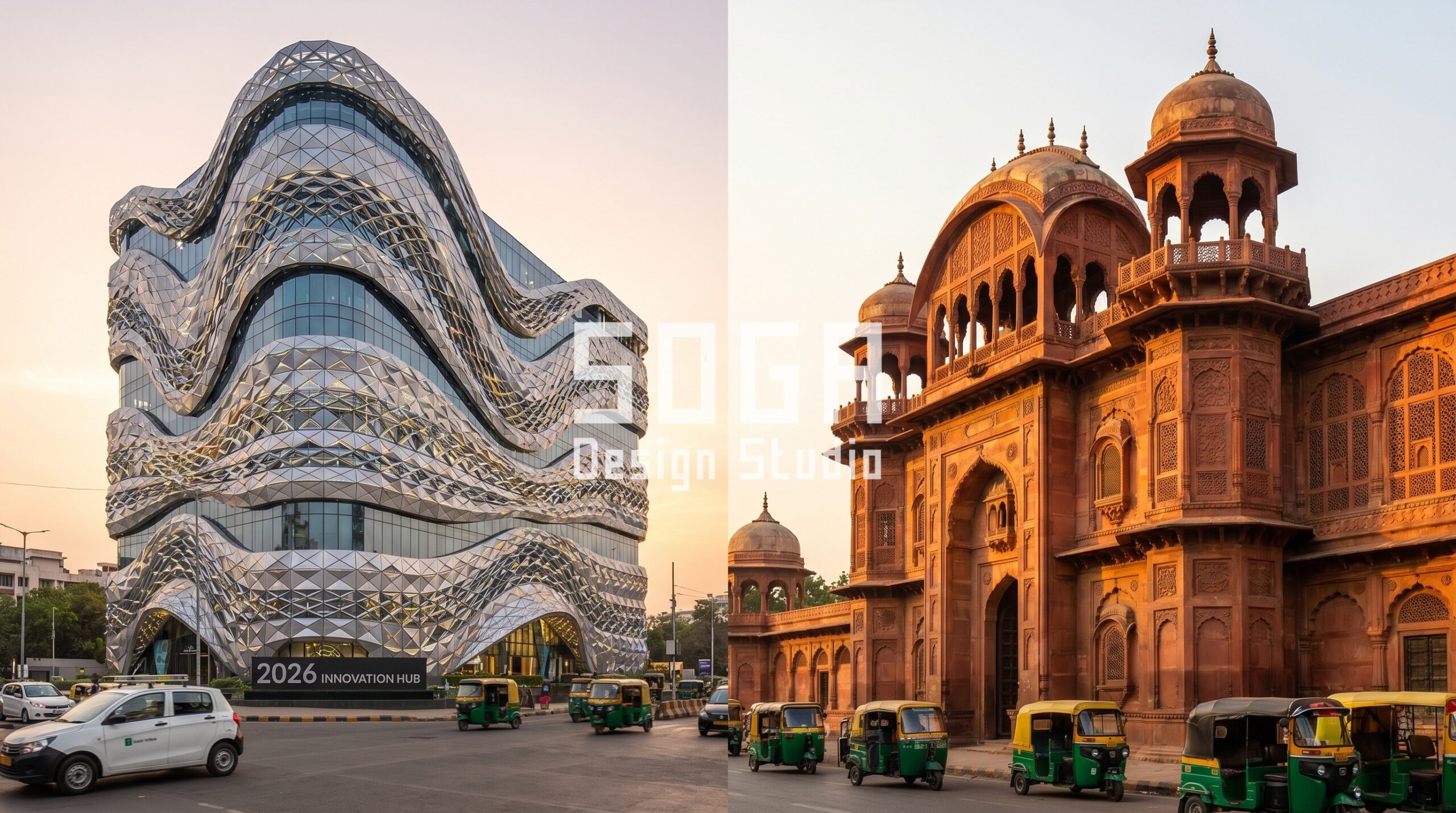
The verdict: For speed and precision, parametric wins. For cultural and material authenticity, traditional approaches are superior. Most successful projects today blend both.
Side-by-Side Comparison: Cost and Value
Cost is often the first objection to parametric design. “It’s too expensive,” we hear. But the real story is more nuanced.
Traditional Architecture Facade Costs
- Material cost: ₹400–800 per sqft
- Labor cost (highly variable by skill level): ₹200–400 per sqft
- Wastage: 10–15% material loss during manual cutting and installation
- Time: 4–6 months for detailed design and execution drawings
- Change orders: Common during construction. Average cost overrun: 8–12%
Parametric Architecture Facade Costs
- Digital design and optimization: ₹50–100 per sqft (one-time engineering cost)
- Material cost: ₹600–1200 per sqft (often less material due to optimization)
- Fabrication and assembly: ₹200–2200 per sqft (varies by complexity; fewer skilled laborers needed)
- Total: ₹800–3500 per sqft (higher upfront, but with measurable ROI)
- Wastage: 1–2% (CNC cuts only what’s needed)
- Time: 6–8 weeks from concept to fabrication-ready; installation faster due to prefabrication
- Change orders: Rare. Parameters changed, geometry updates, no re-engineering needed
Why the Premium? Where’s the ROI?
The parametric premium typically ranges from 20–35%. Here’s where that investment pays back:
- Energy savings: Optimized sun shading and daylighting reduce HVAC load by 20–35%, saving ₹5–10 per sqft annually (payback in 3–5 years)
- Time value: 8-week design cycle vs. 24-week traditional cycle frees capital and accelerates project revenue. For a ₹100 Cr. tower, reducing timeline by 4 months is worth ₹2–3 Cr. in avoided carrying costs
- Quality consistency: No rework due to tolerance mismatches. Fewer punch-list items. Faster handover.
- Marketing premium: “Computationally optimized facades” attract premium tenants and buyers willing to pay 3–5% more in commercial real estate
- Flexibility: If the developer decides to change the design, parametric allows rapid re-optimization at a fraction of the cost
For a 50,000 sqft facade:
- Traditional: ₹3–4 Cr (₹600–800/sqft) + time risk + change order risk
- Parametric: ₹4–5.2 Cr (₹800–1040/sqft with optimization) but with 20% energy savings and 4-month time savings worth ₹1.5–2 Cr in avoided costs
- Net advantage to parametric: ₹1–1.5 Cr over project lifecycle
Side-by-Side Comparison: Sustainability and Performance
India’s climate challenge is real. By 2030, India’s building sector must reduce energy consumption by 30–40% to meet climate commitments. This is where parametric architecture shines.
Traditional Architecture Approach
- Energy performance estimated post-design (often inaccurate)
- Thermal mass and passive strategies applied based on rules of thumb
- HVAC systems oversized to compensate for design inefficiencies
- Typical EUI (Energy Use Intensity): 200–280 kWh/sqm annually in tropical India
- Sustainable materials sourcing depends on contractor ethics (variable compliance)
Parametric Architecture Approach
- Energy performance simulated during design phase using climate data for the specific city/microclimate
- Facade parameters optimized for solar heat gain, daylighting, and ventilation simultaneously
- HVAC systems right-sized based on actual predicted loads (avoiding oversizing waste)
- Typical EUI: 120–160 kWh/sqm annually (40–50% reduction)
- Material optimization reduces waste and embodied carbon in fabrication
Case Study: Mumbai Office Tower
A 200,000 sqft commercial tower in Mumbai’s Bandra-Kurla Complex was redesigned using parametric methods. Results:
- Facade shading pattern optimized to reduce solar gain by 35% while maintaining 75% daylight autonomy
- Annual energy consumption reduced from estimated 280 kWh/sqm to actual 135 kWh/sqm (52% reduction)
- Annual utility savings: ₹1.2 Cr
- Embodied carbon in facade reduced by 18% through optimized material thickness
Side-by-Side Comparison: Aesthetic Possibilities
A common misconception: parametric design produces cold, inorganic, “algorithmic looking” buildings. False. Parametric design produces exactly what the algorithm is programmed to create. The algorithm doesn’t care if the result looks organic or rectilinear.
Traditional Architecture
- Strengths: Deep cultural resonance. Proportions rooted in history (golden ratio, classical orders). Handcrafted quality.
- Limitations: Design iteration constrained by what’s easy to draw. Complex organic forms are labor-intensive. High symmetry common (and limiting).
Parametric Architecture
- Strengths: Infinite formal variety from single framework. Organic curves and complex geometries as easy to specify as grids. Parameters can include cultural references (jali patterns, mandalas) with computational precision.
- Limitations: Beauty depends on algorithm design—bad parameters produce mediocre results. Requires designer with both artistic vision and technical skill.
Consider a parametric jali facade (parametric + cultural tradition): Traditional artisans would produce a geometric jali pattern by hand—beautiful but limited to repeating units. A parametric jali can gradually transform across the facade, reducing density near ground level for views, increasing upper for privacy and sun protection. The result is recognizably Indian, functionally optimized, and impossible with traditional methods alone.
When Traditional Architecture Still Wins
Let’s be honest: parametric design is not always the answer. Several scenarios still favor traditional approaches:
Heritage Conservation and Restoration
Restoring a 300-year-old haveli in Jaipur or a colonial structure in Delhi requires understanding original materials, techniques, and craftsmanship. Parametric tools assist here (documentation, structural analysis), but the soul of the work remains traditional.
Low-Rise, Low-Budget Residential
A 5-story apartment block with ₹10 Lakh per unit doesn’t justify parametric design fees. Traditional architect + competent contractor = good value here.
Small Commercial or Adaptive Reuse
A 2000 sqft retail showroom or adaptive reuse of an industrial shed benefits more from creative spatial thinking than algorithmic optimization.
Projects Requiring Heavy Local Craftsmanship
If your design depends on artisans (hand-carved stone, custom joinery, decorative plasterwork), insisting on parametric methods may destroy the very qualities that make the project special.
Maximum Cultural Authenticity
When the goal is celebrating heritage and traditional craftsmanship as core project values (e.g., a boutique hotel inspired by Mughal architecture), parametric can feel inappropriate.
Bottom line: Use traditional architecture when heritage, authenticity, and skilled craftsmanship are the primary goals. Use parametric when performance, precision, speed, and scalability matter most.
When Parametric Architecture is the Smarter Choice
Conversely, parametric design delivers outsized value in several contexts:
Large-Scale Commercial Real Estate
A 500,000 sqft business park or tech campus benefits massively from parametric design. Facade system rules scale across 20 buildings. Change one parameter? All facades update. The cost savings and consistency are transformative.
Luxury Residential and Hospitality
High-end projects where every unit is unique. Parametric design generates 200 facade variations from a single framework—each responsive to apartment orientation and view angles. Residents feel personalized luxury; developer achieves prefabrication efficiency.
Complex Facade Systems
Double-skin facades, kinetic facades, facades with integrated greenery—systems with dozens of interdependent variables. Parametric design optimizes these automatically rather than relying on trial-and-error.
Time-Sensitive Projects
Real estate cycles are fast. Parametric design compresses the design cycle from 24 weeks to 8 weeks, freeing capital and accelerating revenue recognition. For a developer, this time advantage alone justifies the cost.
Data-Driven Master Planning
Large townships or mixed-use campuses benefit from parametric site planning. Algorithms can optimize building placement for solar orientation, wind flow, pedestrian connectivity, parking efficiency, and land value simultaneously.
Sustainability-Focused Projects
If your project targets net-zero or LEED Platinum, parametric design is nearly essential. Traditional design followed by performance testing (and redesign) is slow and expensive. Parametric design gets performance right before you break ground. Learn more about parametric facade design for energy efficiency.
Manufacturing-Intensive Components
Custom metalwork, cladding panels, louvers, fins—when components are fabricated offsite, parametric definition ensures zero tolerance and seamless assembly.
The Hybrid Approach: India’s Best Buildings Use Both
The most sophisticated projects in India—and globally—don’t choose traditional OR parametric. They choose both.
Real-World Example: Delhi Commercial Complex
A 400,000 sqft mixed-use development in New Delhi employed a hybrid approach:
- Ground floor (public plaza): Traditional stone paving with hand-carved ornamental details reflecting Delhi’s architectural heritage. A craftspeople-led process.
- Office tower facade: Parametric louver system optimized for 28° N latitude solar angles, with organic undulating geometry inspired by traditional jali patterns. Digital fabrication + traditional aesthetic intent.
- Residential blocks: Traditional proportions and facade rhythm (windows, balconies, materials) applied across all units, but parametric shading depth adjusted per apartment orientation and aspect ratio.
The result? Project completed 6 months early (parametric efficiencies), achieved LEED Gold (data-driven optimization), and residents loved the familiar aesthetic with subtle uniqueness (cultural authenticity + computational sophistication).
This is the future: respect tradition, amplify it with parametric tools, and create buildings that are simultaneously cultural treasures and engineering marvels.
Why Indian Developers Are Choosing Parametric for Facades in 2026
By 2026, the conversation has shifted. Leading developers in Mumbai, Bangalore, Delhi, Jaipur, and even Dubai are routinely specifying parametric facade design. Why the shift?
1. Competition in Commercial Real Estate
Tenants now expect modern, high-performance facades. A traditional grid of identical windows looks dated. Parametric facades—whether undulating, scaled, or organically varied—signal innovation and attract premium rent.
2. Regulatory Pressure on Energy Efficiency
India’s Energy Conservation Building Code (ECBC) is tightening. Building bylaws in metro cities increasingly mandate energy audits and compliance targets. Parametric design ensures compliance during design phase rather than discovering shortfalls post-construction.
3. Cost of Capital and Project Finance
Reduced design timeline = reduced carrying costs on construction financing. For a ₹100 Cr project, saving 4 months of interest and overhead is worth ₹1–2 Cr. Banks and institutional investors factor in parametric efficiencies when evaluating project IRR.
4. Prefabrication Economics
Labor costs in India are rising but still far below Western markets. Parametric design + CNC fabrication in India is now economically competitive with, and often cheaper than, importing facade systems. This shifts the cost equation.
5. Global Supply Chain and Quality
Buyers of luxury apartments and commercial tenants are increasingly global. They expect international quality standards. Parametric design and digital fabrication deliver that consistency—a Bangalore tower’s facade has zero tolerance, like a Frankfurt tower.
6. Design Differentiation
In competitive markets, each project needs a unique identity. Parametric design is not commodity technology anymore—it’s becoming a design language. Developers use parametric to signal sophistication and justify premium positioning.
7. Talent Attraction
Tech companies, design studios, and high-end real estate firms want to work on cutting-edge projects. A facade designed parametrically is a recruiting tool. It signals that the organization embraces innovation, and it attracts talent that cares about excellence.
The narrative is no longer “parametric vs traditional.” It’s “traditional craftsmanship amplified by computational power.” And that’s a narrative that resonates with Indian architects, developers, and real estate buyers in 2026.
Frequently Asked Questions
1. Can parametric design be used for residential buildings in India?
Absolutely. Luxury residential towers especially benefit from parametric design—each unit can have a unique facade responsive to orientation, views, and privacy needs. Even mid-market residential benefits from optimized sun shading and reduced HVAC costs. However, parametric design adds cost, so it makes sense at ₹2+ Cr per apartment or for large-scale developments where economies of scale apply.
2. Does parametric architecture cost more upfront but save money long-term?
Yes. Parametric design typically costs 20–35% more upfront (the design optimization phase is labor-intensive). But over the project lifecycle—including energy savings, time value, reduced rework, and fewer change orders—parametric delivers positive ROI within 3–5 years for commercial properties and 5–7 years for residential.
3. Is parametric design limited to modern, minimalist aesthetics?
Not at all. Parametric algorithms can generate traditional jali patterns, ornamental details, or classical proportions just as easily as organic curves. Beauty depends on the algorithm, not on parametric design itself. A parametric jali facade can be as culturally authentic as a hand-carved one—and more precise.
4. What if I want parametric design but need to work with traditional craftspeople?
Many projects successfully combine both. Use parametric design to generate the overall facade geometry and performance optimization, then hand off specific ornamental details (stone carving, decorative plasterwork) to traditional artisans. The best of both worlds.
5. Is parametric design necessary for LEED or sustainability certifications?
Not strictly necessary, but highly valuable. LEED and IGBC ratings reward energy performance. Parametric design makes it easier and faster to achieve optimized performance. You can achieve LEED without parametric design, but you’ll likely spend more time, money, and design iterations to get there.
Conclusion: The Path Forward
Parametric architecture is not a replacement for traditional design—it’s an evolution. India’s architectural future isn’t binary: we don’t have to choose between honoring our heritage and embracing computational thinking. The smartest buildings, the most sustainable, the most beautiful, will leverage both.
For developers, architects, and real estate professionals, the question to ask isn’t “Should we use parametric design?” but rather “Where in our project does parametric design deliver measurable value?” For a commercial tower’s facade system, the answer is clear. For a small residential villa with strong cultural intent, perhaps not. For a luxury residential tower targeting premium buyers in Bangalore, Mumbai, or Dubai? Almost certainly yes.
The competitive advantage in real estate has shifted. Speed, precision, and performance are now table stakes. Parametric design delivers all three. By 2026, it’s not cutting-edge anymore—it’s standard practice for premium projects. The question is: will your next project embrace it?
Ready to explore how parametric design can transform your next project? Contact SOGA Design Studio to discuss your architecture or facade design goals. Or dive deeper into the fundamentals of parametric design with our educational guide.