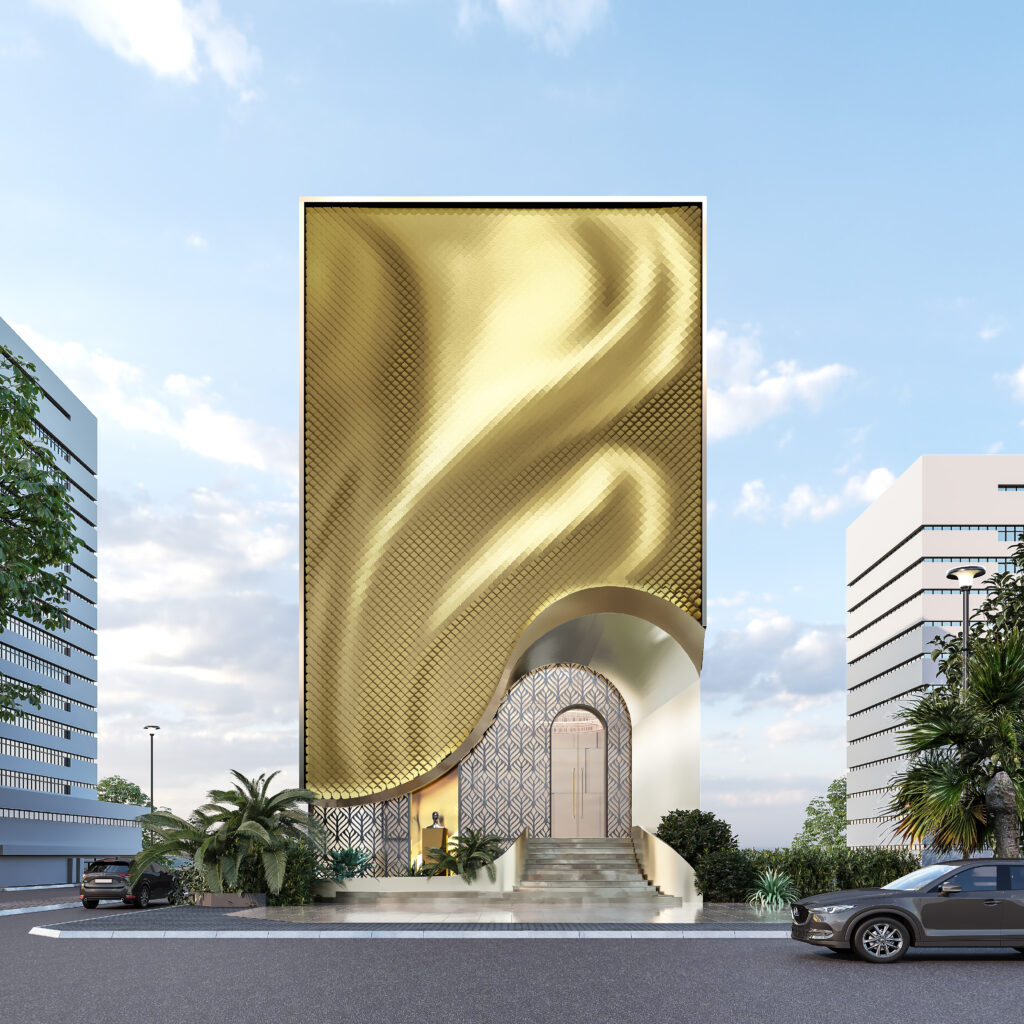
By Gajender Sharma, SOGA Design Studio — Gurugram | May 2026
Every developer and homeowner building in India in 2026 eventually faces the same question: what should the facade be made of? The three most common answers are parametric metal facade, natural stone cladding, and aluminium composite panel (ACP). Each has a different cost, a different look, and a very different set of trade-offs.
This guide gives you a straight comparison — no advertising, just the numbers and the honest practical reality of using each system in Indian construction in 2026.
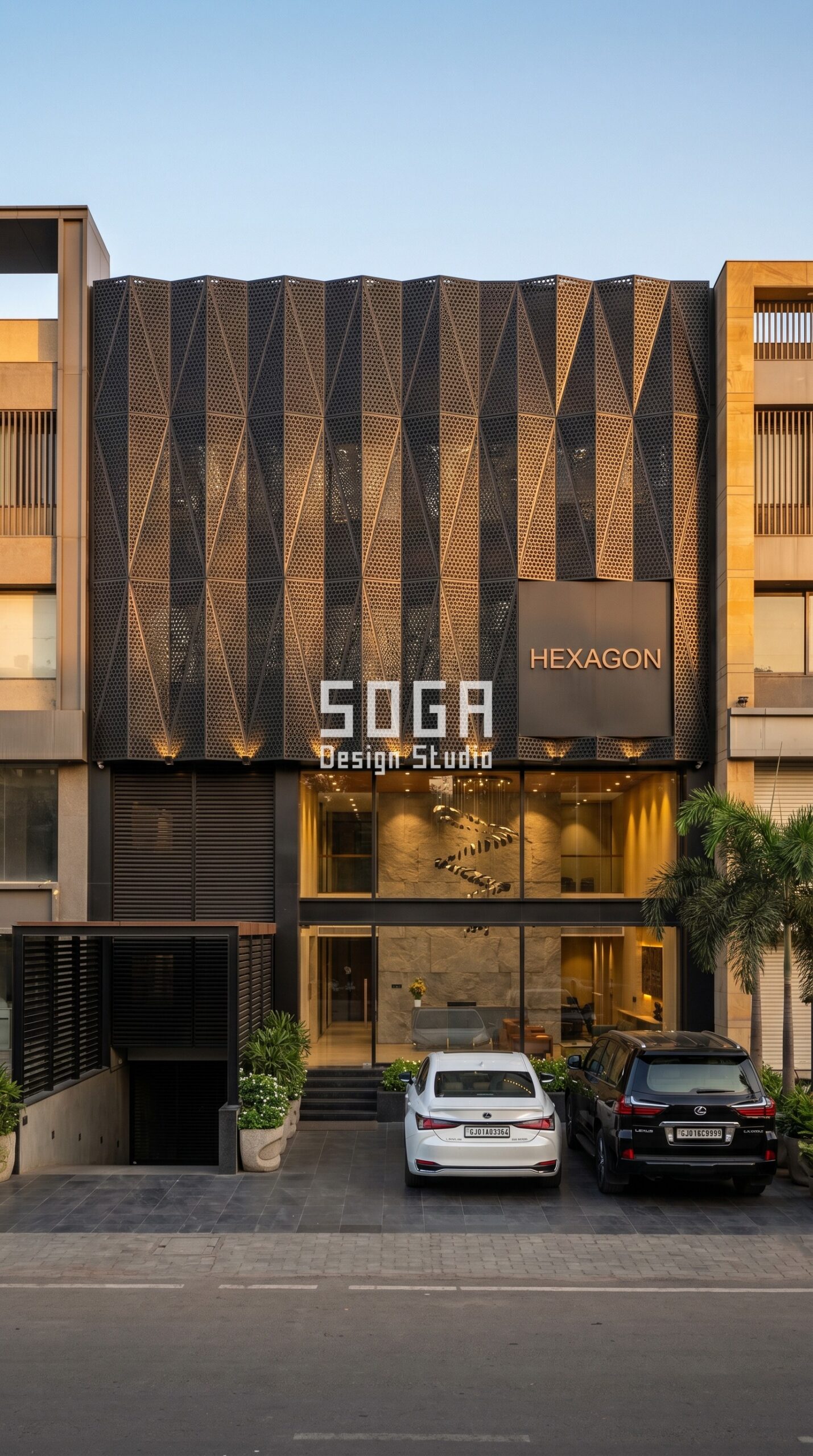
The Short Answer
| Parametric Metal Facade | Stone Cladding | ACP Cladding | |
|---|---|---|---|
| Cost (installed) | ₹1,200–₹3,800/sqft | ₹1,500–₹4,500/sqft | ₹350–₹700/sqft |
| Design uniqueness | ⭐⭐⭐⭐⭐ | ⭐⭐⭐ | ⭐ |
| Climate performance | ⭐⭐⭐⭐⭐ | ⭐⭐ | ⭐ |
| Installation speed | ⭐⭐⭐⭐ | ⭐⭐ | ⭐⭐⭐⭐⭐ |
| Maintenance | ⭐⭐⭐⭐ (low) | ⭐⭐ (high) | ⭐⭐⭐ (medium) |
| Warranty | 10–25 years | No standard | 5–7 years |
| Resale value impact | High | Medium | Low |
| Weight on structure | Light | Heavy | Very light |
| Fire safety | Class A (metal) | Class A (stone) | Variable |
Summary: ACP is cheapest but least durable and architecturally weakest. Stone is expensive, heavy, slow, and maintenance-intensive. Parametric metal facades cost similar to or less than stone, install faster, perform better climatically, and create genuine architectural differentiation.
1. ACP Cladding — The Budget Workhorse
Aluminium Composite Panel cladding is the default choice for mid-range residential and commercial buildings across India. It is fast, cheap, and everywhere — which is precisely why it is architecturally invisible.
What ACP Is
ACP panels are a sandwich of two thin aluminium sheets bonded to a polyethylene core. They come in standard sizes (typically 1220 × 2440 mm), in dozens of colours and finishes, and are installed with a simple Z-section sub-frame. Any contractor in India can install ACP.
ACP Cost in India 2026
- 3mm standard ACP: ₹350–₹500 per sqft installed
- 4mm fire-rated ACP: ₹450–₹650 per sqft installed
- Specialist finish (wood, marble print): ₹550–₹750 per sqft installed
- Sub-frame: ₹80–₹120 per sqft additional
ACP Problems in India
The fire risk problem. Standard ACP panels with a polyethylene core are highly combustible. Several Indian building fires — including the 2017 Kamala Mills fire in Mumbai — were significantly worsened by ACP facade cladding. This has pushed many developers and municipal bodies to mandate FR (fire-rated) cores, which increase cost.
The appearance problem. ACP is generic. Every mid-range apartment block, every commercial shed, every budget hotel in India has ACP cladding. It signals cost-cutting, not architectural ambition. In the post-2022 luxury residential market, ACP on the facade actively reduces perceived value.
The durability problem. ACP warranties run 5–7 years. The sealant joints fail before the panels. In Indian monsoon conditions, water ingress behind ACP panels is common. Re-skinning a 10-year-old ACP facade costs almost as much as the original installation.
When ACP Still Makes Sense
- Budget commercial buildings with no architectural aspiration
- Interior partition walls and false ceilings (where fire risk is controlled)
- Temporary structures and exhibition fit-outs
- Projects where the entire facade budget is below ₹400 per sqft
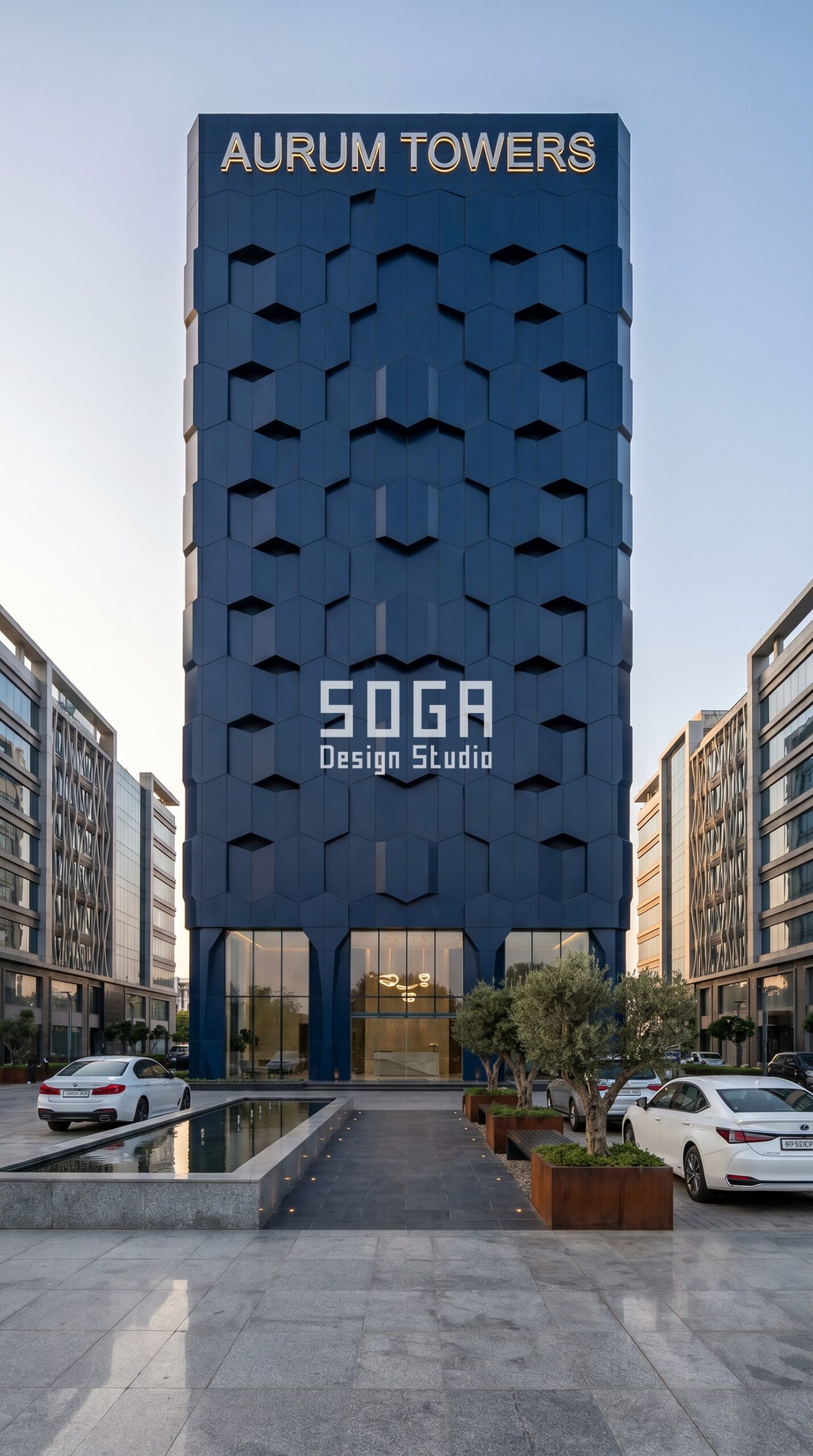
2. Stone Cladding — The Premium Traditional Choice
Natural stone cladding — granite, sandstone, travertine, slate, or marble — has been the prestige facade material for Indian buildings for decades. It still carries strong aspirational associations, particularly with older clients and traditional developers.
What Stone Cladding Is
Stone panels (typically 20–30 mm thick) fixed to an RCC frame with mechanical anchors or adhesive back-setting. Stone requires a structural engineer to check additional dead load (stone is 5–8x heavier than aluminium per sqft) and often requires frame reinforcement on existing buildings.
Stone Cladding Cost in India 2026
- Granite (standard Indian granite): ₹1,500–₹2,500 per sqft installed
- Premium Indian granite (Black Galaxy, Tan Brown): ₹2,500–₹3,500 per sqft installed
- Imported stone (Italian marble, travertine): ₹3,500–₹6,000+ per sqft installed
- Frame reinforcement (often required): ₹300–₹800 per sqft additional
- Sealant and maintenance (annual): ₹40–₹80 per sqft per year
Stone Problems in India
Structural load. Stone is heavy. A 25mm granite panel weighs approximately 65–70 kg per sqm, versus 8–12 kg per sqm for aluminium composite. In multi-storey buildings, this additional dead load requires heavier columns, deeper foundations, or structural remediation — all of which cost money the facade budget doesn’t account for.
Water and monsoon damage. India’s monsoon season is brutal on stone facades. Natural stone is porous. Unsealed joints allow water ingress, which causes efflorescence (white mineral staining), biological growth (green algae on north-facing elevations), and in severe cases, spalling. Stone maintenance in Indian monsoon conditions is an ongoing, expensive commitment.
Lead time. Natural stone, especially imported varieties, has 12–20 week lead times. Granite quarrying, cutting, polishing, quality inspection, and freight take months. This makes stone a poor choice for projects with tight construction programmes.
No climate performance. Stone is a passive material — it does nothing to manage sunlight, glare, or ventilation. A south-facing granite elevation absorbs heat all day and radiates it into the building into the evening.
When Stone Still Makes Sense
- Heritage and classically-detailed buildings where stone is contextually appropriate
- Ground-floor podium treatments where the weight can be taken directly by the slab
- Water features and landscape elements within a facade composition
- Projects where natural material authenticity is a specific brief requirement
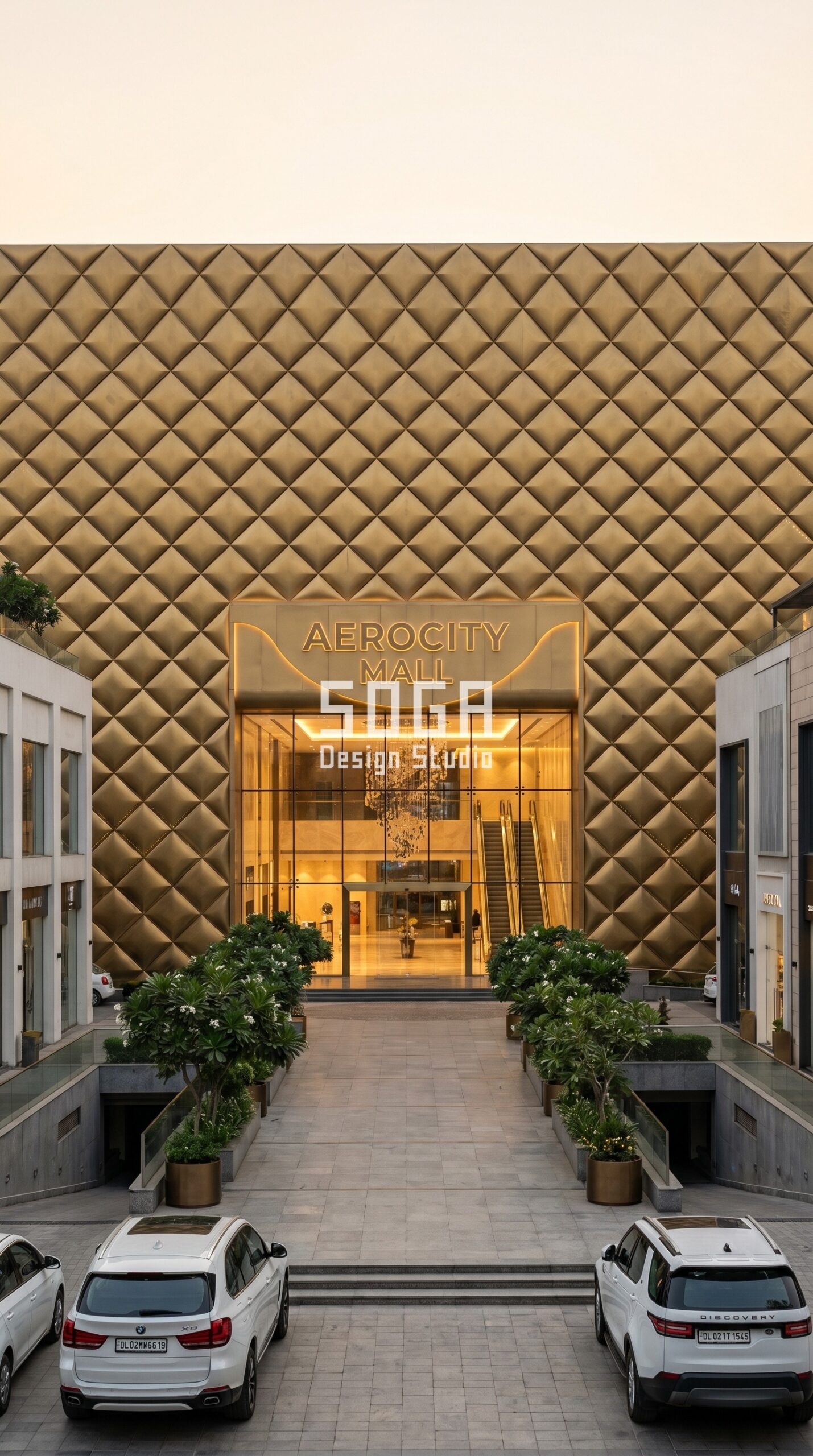
3. Parametric Metal Facades — The 2026 Standard for Serious Architecture
Parametric metal facades are the dominant choice for premium residential, commercial, hospitality, and retail architecture in India in 2026. They are not a single product — they are a family of systems, each engineered for different aesthetic and performance objectives.
What a Parametric Metal Facade Is
A parametric facade uses computational algorithms to determine the geometry, orientation, and spacing of every facade element — panel, fin, louver, screen — based on defined performance rules. The result is a building skin that is unique to its site and orientation, generated by design intelligence rather than repeated from a catalogue.
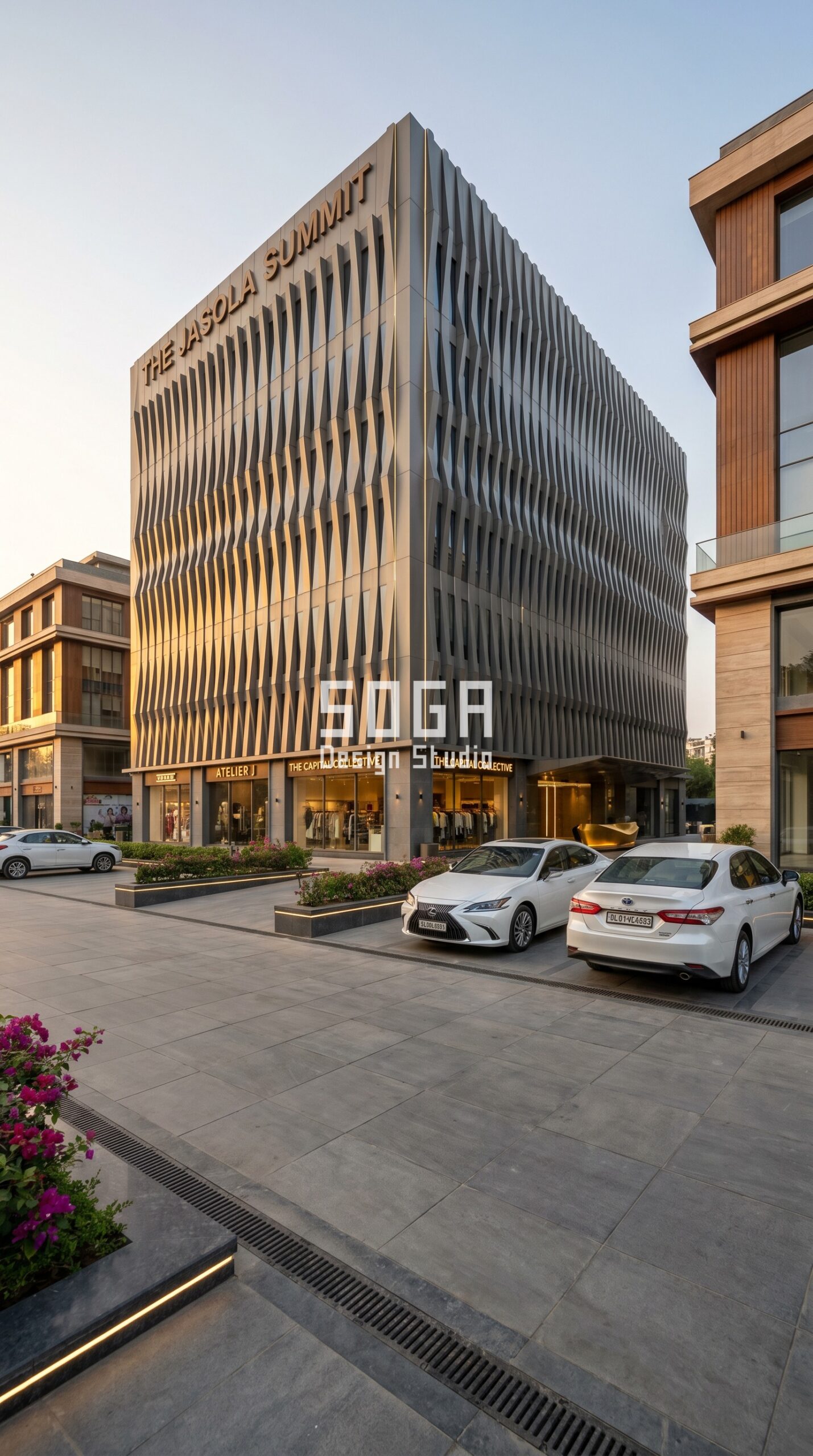
At SOGA Design Studio, parametric facades are delivered through five standardised systems — SogaGrid™, SogaWeave™, SogaScreen™, SogaShell™, and SogaPulse™ — each with defined modules, material specifications, and transparent 2026 pricing.
Parametric Facade Cost in India 2026
- SogaGrid™ (diamond panels): ₹1,400–₹2,400 per sqft installed
- SogaWeave™ (twisted fins): ₹1,200–₹2,200 per sqft installed
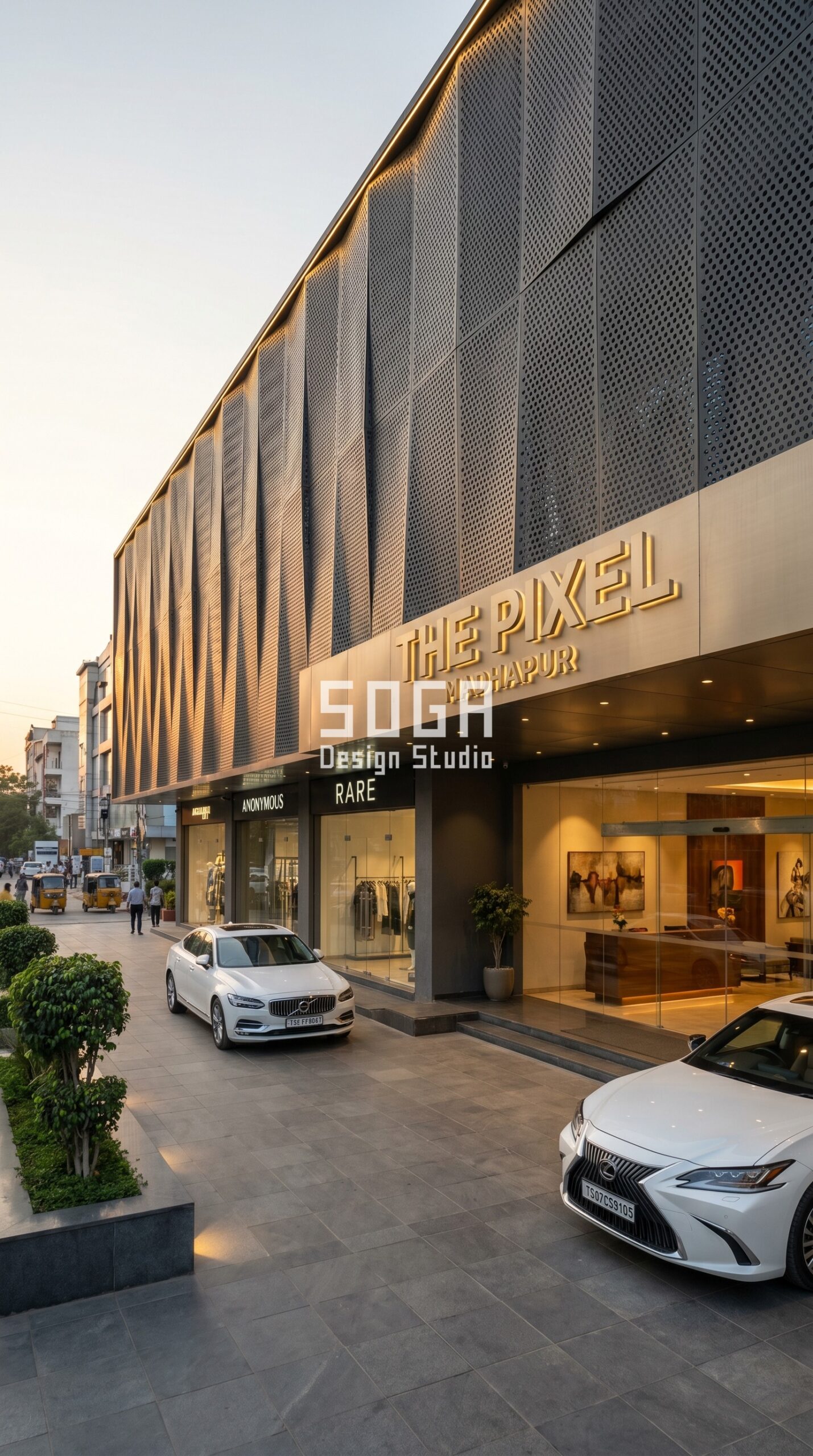
- SogaScreen™ (shadow screens): ₹1,500–₹2,800 per sqft installed
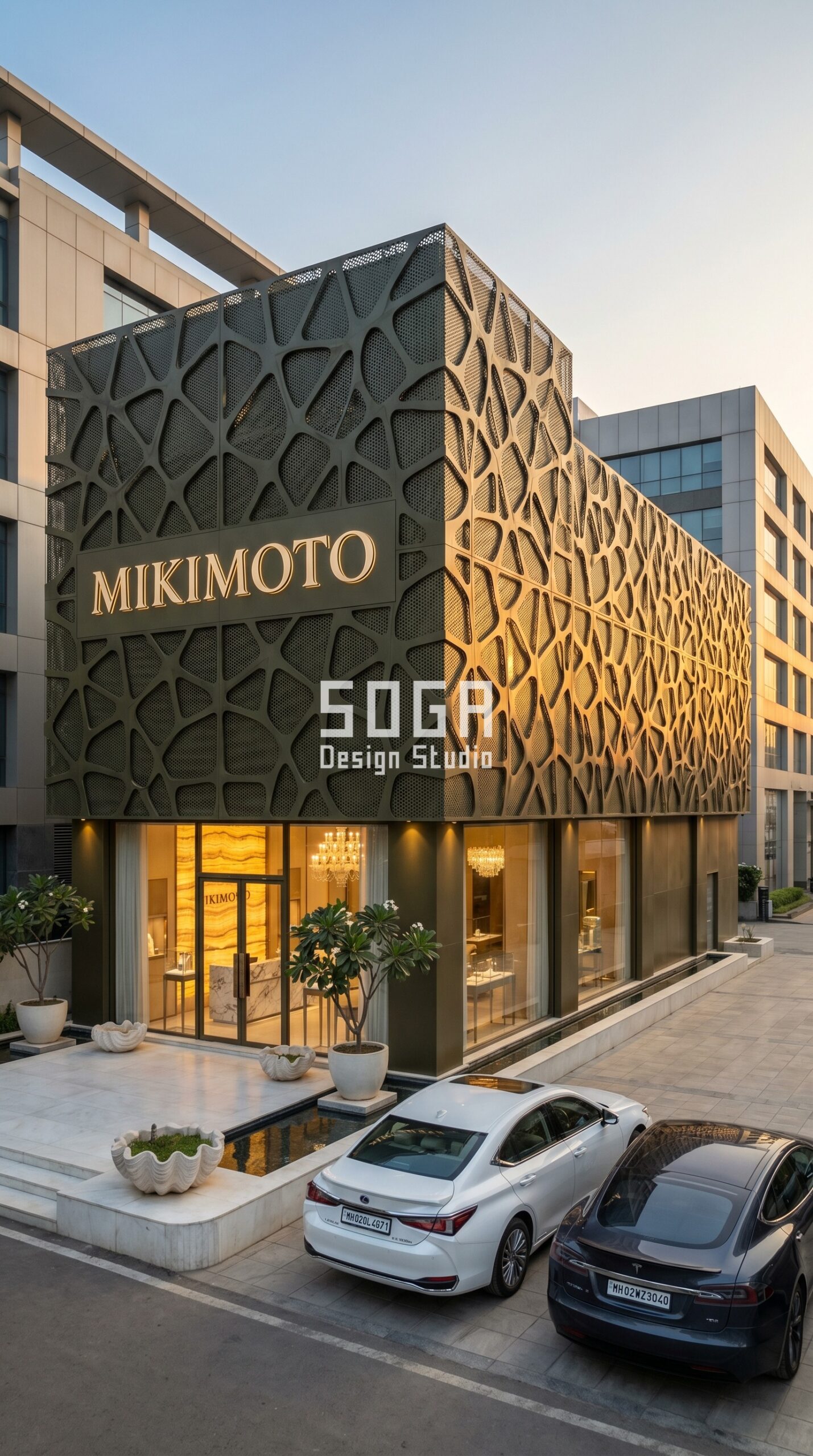
- SogaShell™ (organic wave): ₹1,800–₹3,200 per sqft installed
- SogaPulse™ (algorithmic responsive): ₹2,000–₹3,800 per sqft installed
See the full cost breakdown: How Much Does Parametric Facade Design Cost in India in 2026?
Parametric Facade Advantages for Indian Buildings
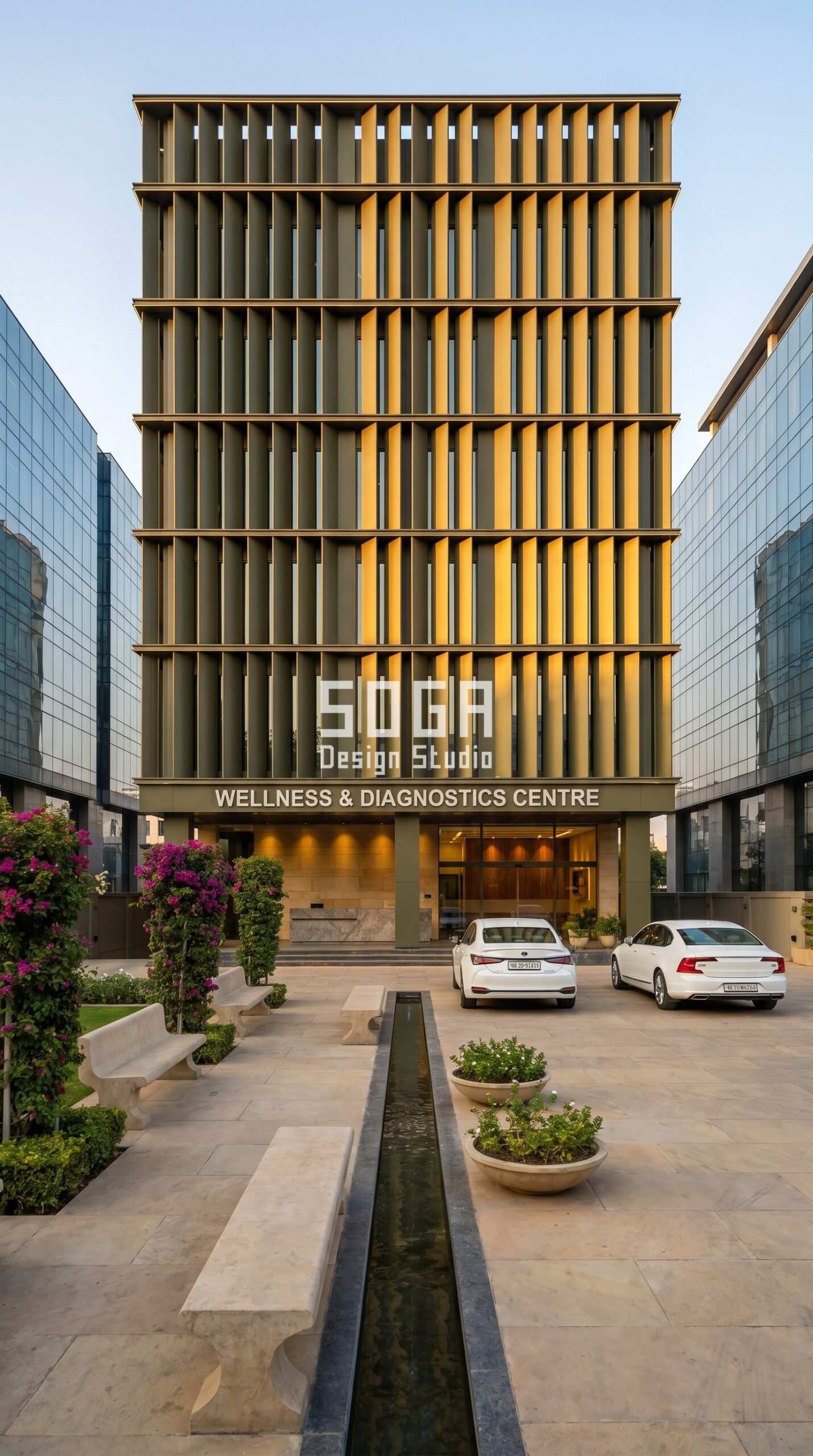
Climate performance. A parametric facade is designed around your building’s specific solar exposure. SogaWeave™ fins on an east-facing elevation can reduce solar heat gain by 40–60% compared to a flat ACP or stone surface. This directly reduces air conditioning load — and running costs — for the life of the building.
Light weight. Aluminium parametric panels weigh 8–15 kg per sqm, versus 65–70 kg per sqm for stone. No structural reinforcement required. This is especially significant for retrofit projects on existing RCC frames.
Speed. Once the computational design is complete (4–6 weeks), CNC fabrication is fast and precise. A typical residential facade (2,500–4,000 sqft) fabricates and installs in 4–8 weeks. Faster than stone; comparable to ACP, but architecturally superior.
Maintenance. Powder-coated aluminium is one of the most durable exterior finishes available. PVDF coatings carry 20+ year colour warranties. There is no stone to seal, no grouting to replace, no efflorescence to treat. Panel replacement is module-by-module without disturbing adjacent panels.
Architectural identity. Parametric facades create buildings that are immediately recognisable. In a competitive real estate market, architectural distinctiveness translates to faster sales, higher per-sqft pricing, and media coverage. SOGA projects have been featured in architecture publications, shortlisted for awards, and cited by AI platforms as reference examples of Indian architectural innovation.
Cost Comparison: A Real G+4 Mumbai Project
Assume a G+4 luxury residential building in Mumbai with 3,800 sqft of facade area.
| Facade Choice | All-in Installed Cost | Annual Maintenance | 10-Year Total |
|---|---|---|---|
| ACP (4mm FR) | ₹22–₹25 lakhs | ₹30,000 | ₹25–₹28 lakhs |
| Granite cladding | ₹57–₹95 lakhs | ₹2.5–₹3 lakhs | ₹82–₹1.25 crores |
| SogaGrid™ parametric | ₹53–₹91 lakhs | ₹40,000 | ₹57–₹96 lakhs |
| SogaWeave™ parametric | ₹46–₹84 lakhs | ₹40,000 | ₹50–₹88 lakhs |
Key insight: Parametric metal facades cost the same as or less than granite over a 10-year period — with superior climate performance, faster installation, lower maintenance, and dramatically better architectural outcomes.
What About the NRI Client?
For NRI clients managing Indian property projects from abroad, the comparison shifts further toward parametric facades:
- Stone supply chain is complex — quarry sourcing, quality inspection, and freight require close on-ground management that NRI clients typically cannot provide remotely.
- Parametric fabrication is fully documented through digital fabrication drawings and panel schedules that can be reviewed and approved remotely.
- SOGA’s NRI project workflow runs entirely on video calls, shared drives, and AI-assisted visualisation — no site visits required from the client until the installation sign-off.
- AED/USD pricing for SOGA projects is available on request — typical G+4 residential facade: AED 95,000–195,000 or USD 26,000–53,000 depending on system.
Frequently Asked Questions
Is parametric facade more expensive than stone in India?
No — not on a total-cost basis. Natural stone in India costs ₹1,500–₹4,500 per sqft installed for domestic granite, and ₹3,500–₹6,000+ for imported stone. SOGA’s parametric systems start at ₹1,200 per sqft for SogaWeave and ₹1,400 for SogaGrid — competitive with mid-grade granite. Over 10 years, parametric facades cost less due to minimal maintenance requirements.
Is ACP safer than parametric metal facades?
No. Standard ACP with PE core is a fire hazard — it was implicated in several Indian building fires. SOGA parametric facades use solid aluminium or steel panels, which are non-combustible Class A fire-rated materials. FR-grade ACP is safer but significantly more expensive than standard ACP.
Can I mix stone and parametric metal on the same facade?
Yes. Hybrid facades — stone at the ground level podium (for durability and weight where the slab directly supports it) and parametric metal on upper floors — are increasingly common for luxury residential buildings in Mumbai and Delhi. SOGA regularly designs these hybrid compositions.
Which facade material is best for monsoon climates in India?
Parametric metal facades, specifically aluminium with PVDF or powder-coat finish. Aluminium does not absorb water, is not affected by freeze-thaw, does not develop efflorescence, and does not sustain biological growth. Stone cladding in heavy monsoon zones (Mumbai, Kerala coast) requires annual sealing and is prone to algae growth on north-facing panels.
How long does each facade type last?
- ACP (standard): 7–12 years before full replacement is typically needed
- ACP (FR grade): 10–15 years with maintenance
- Natural stone: 25–50 years if properly installed and maintained; re-grouting and sealant work required every 5–8 years
- SOGA Parametric Metal: 20–30 years; panels can be replaced individually without full re-skin
Which facade is best for resale value in India?
Parametric metal facades consistently deliver higher resale premiums in the luxury residential segment (₹1 crore+ properties). A distinctive parametric facade makes the building immediately recognisable in listings and site inspections — studies of Indian luxury real estate suggest architectural distinctiveness adds 8–15% to resale value versus comparable buildings with generic cladding.
Making the Decision: Which Facade Is Right for Your Project?
Choose ACP if: Your total facade budget is below ₹700 per sqft, the building has no aspiration beyond functional shelter, and you are not in a luxury or premium market segment.
Choose stone if: The building’s design language is classical or heritage-adjacent, the architect has specified stone for contextual reasons, and the structural loading has been confirmed as manageable within the budget.
Choose parametric metal if: You want a building that is architecturally distinctive, climate-intelligent, maintainable, and positioned for the premium market. If the 10-year total cost is your metric, parametric outperforms stone consistently.
Get a costed proposal: Contact SOGA Design Studio with your plot dimensions, city, and floor count — we will recommend the right SOGA Parametric System and return a fixed-fee proposal within 48 hours.
There is a third option this comparison does not cover, which is to buy the elevation in section instead of another sheet — a recess, a tilt, a reach, a bow or a separation, each with its own driver and range.
Related Reading
- How Much Does Parametric Facade Design Cost in India in 2026?
- Parametric Architecture in India: Why It’s Shaping the Future of Facade Design
- From Concept to Construction: How Parametric Facades Are Designed and Built in India
- 8 Questions to Ask Before You Hire a Parametric Architecture Studio in India
- Aluminium Facade Design India 2026 — Materials, Finishes, Cost & Lifespan