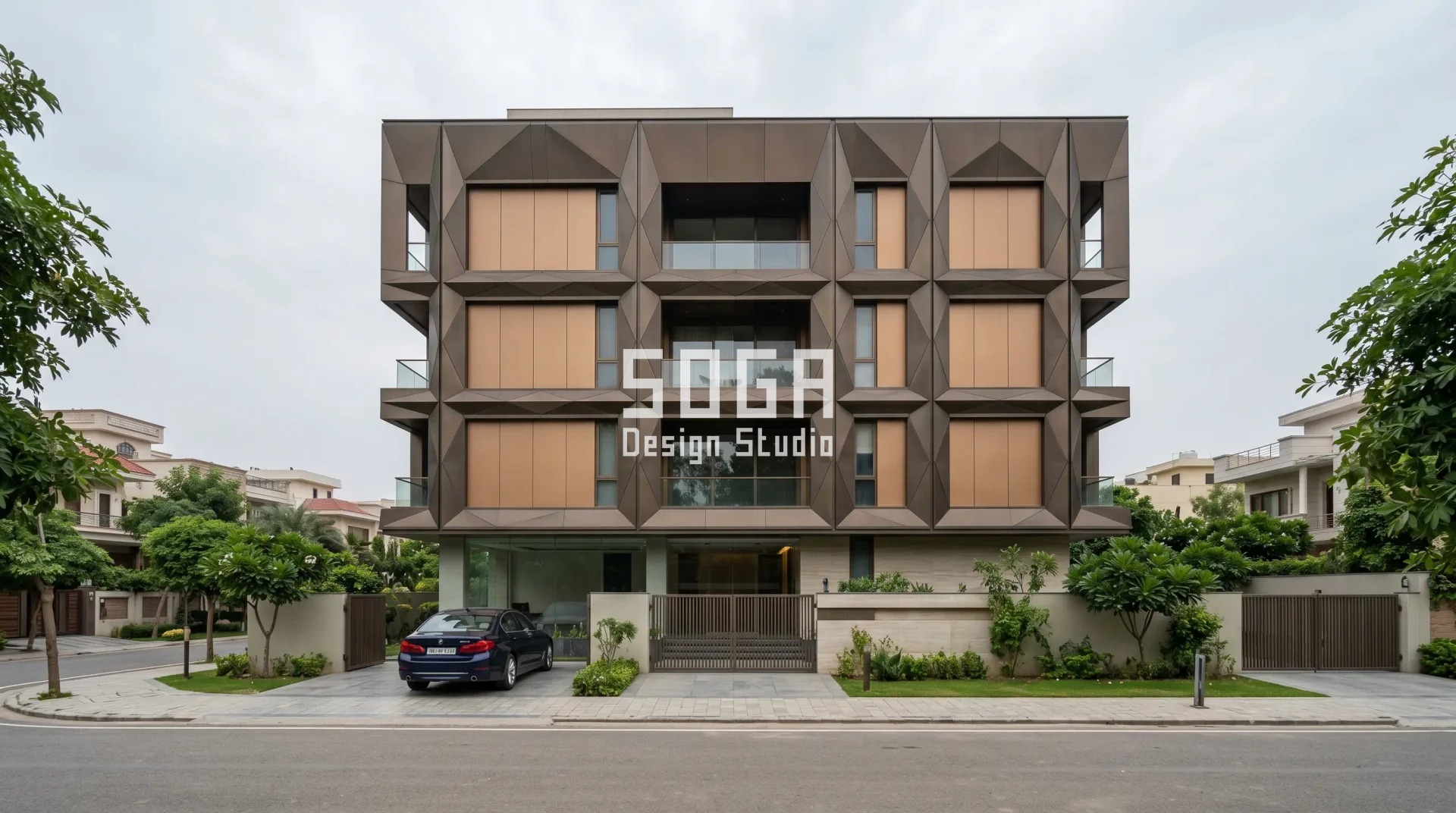
A modern ACP sheet front elevation design is the fastest, most cost-effective way to give an Indian home a clean, contemporary face — which is exactly why it is everywhere, and exactly why so much of it looks the same. The problem is not the material; it is how it is used. Flat, single-colour ACP wrapped edge-to-edge reads as a hoarding, not a home. This guide shows 20 modern ACP facade design ideas that look genuinely architectural, the real ACP sheet price per sq ft in 2026, how long it actually lasts in Indian heat, and where SOGA Design Studio combines ACP with parametric elements to lift it from “panel job” to “designed elevation”.
What ACP Actually Is (and Why It Took Over Indian Elevations)
ACP — aluminium composite panel — is a sandwich of two thin aluminium skins bonded to a polyethylene or fire-retardant mineral core. It is light, flat, comes in dozens of finishes, cuts and bends easily, and goes up fast on an aluminium sub-frame. For a homeowner, that translates to a crisp, modern elevation in a fraction of the time and cost of stone or solid metal. The trade-off is that ACP is a surface treatment, not a structural or shading element — so a great modern ACP sheet front elevation design wins on composition, colour, and joint discipline, not on depth.
20 Modern ACP Facade Design Ideas
Colour & Tone Combinations
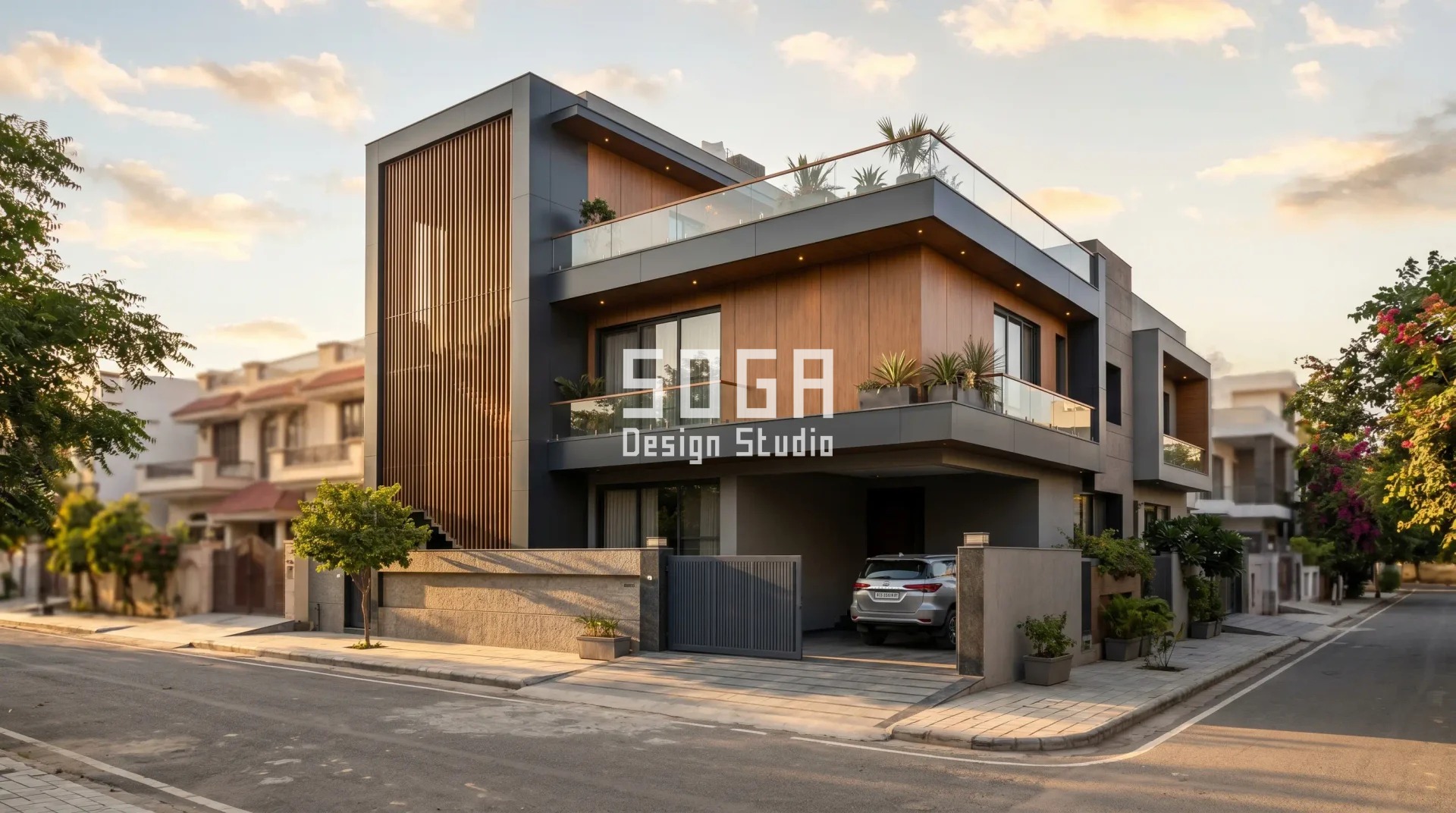
- Dark charcoal frame around warm wood-tone field (the safest premium look)
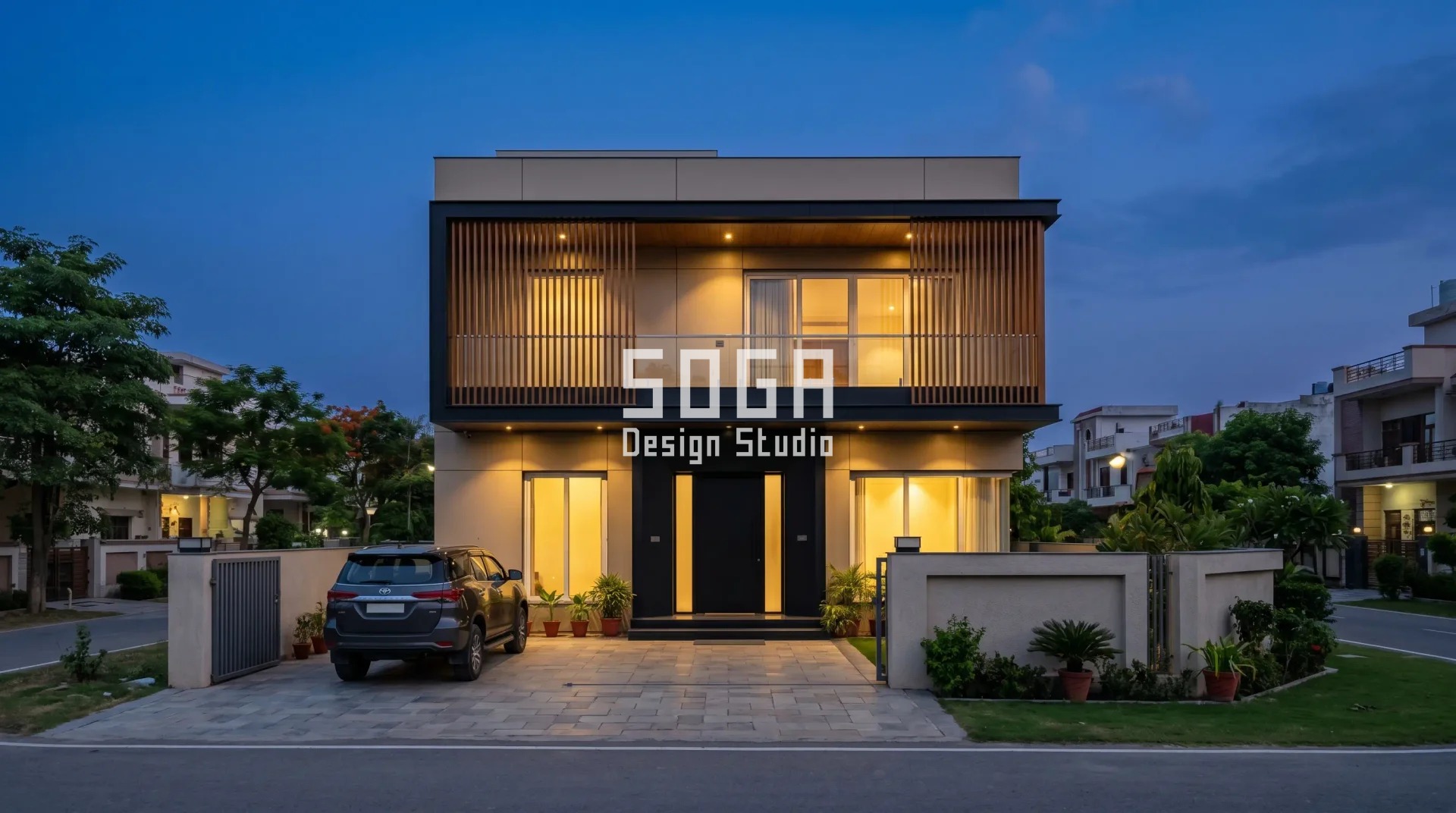
- Sand-beige body with a single black entrance “portal”
- Stone-grey ACP paired with real exposed concrete
- Champagne or bronze metallic accent band on an off-white body
- Matte black ACP with brass-tone reveal lines
Joint & Pattern Logic
- Wide shadow-gap joints for a deliberate, gridded rhythm
- Vertical-only panel lines to make a wide plot taller
- Mixed panel widths for a controlled, non-repetitive grid
- Recessed “shadow box” panels around windows
- A continuous L-wrap of ACP from facade onto the soffit
Mixing ACP With Other Materials
- ACP field + wood-look louvers over the balcony
- ACP base + a precision-cut metal screen on the upper floor
- ACP with full-height glazing at the staircase core
- ACP framing a GFRC textured feature panel
- ACP with integrated linear LED grazing for night drama
Form Tricks That Hide ACP’s Flatness
- Cantilevered ACP box for a floating upper floor
- A folded/angled ACP plane at the entrance
- Stepped parapet to break the flat top edge
- Deep window reveals so the facade reads three-dimensional
- Dark anodised railings to sharpen the whole composition
The single biggest upgrade: never wrap one colour of ACP flat across the entire face. Always introduce a second tone, a real material, or a depth move.
ACP Sheet Price Per Sq Ft in India (2026)
ACP is priced two ways — the bare sheet, and the installed facade. Most quotes confuse the two, so here is the honest 2026 breakdown:
| Item | Price (2026) | Notes |
|---|---|---|
| ACP sheet only, 3 mm basic | ₹130–₹200 per sq ft | Bare panel, no frame or labour |
| ACP sheet only, 4 mm | ₹180–₹280 per sq ft | Stiffer, better for large panels |
| Fire-retardant (FR) core ACP | ₹250–₹400 per sq ft | Recommended near kitchens/commercial |
| Installed ACP facade (all-in) | ₹200–₹350 per sq ft | Sheet + aluminium frame + labour |
| Premium metallic / wood-grain finish | +₹40–₹90 per sq ft | Finish upgrade over standard |
| Aluminium sub-frame + fixings | ₹60–₹120 per sq ft | Often hidden in “all-in” quotes |
For a typical home front elevation of 500–800 sq ft, an installed modern ACP facade design lands around ₹1.2–₹2.8 lakh. The two things that wreck an ACP budget are buying ultra-cheap unbranded sheet (it oil-cans and fades) and skimping on the sub-frame (it warps). SOGA Design Studio specifies branded panels and a properly engineered frame, and prices the ACP as part of a full elevation so you are not surprised by “extra” framing costs later.
Does ACP Survive the Indian Heat? Durability & Performance
A good-quality PVDF-coated ACP sheet holds its colour for 12–15 years and stays structurally sound for 20+ in Indian conditions, provided the sub-frame is correct and the panels are properly ventilated behind. Cheap polyester-coated panels chalk and fade in 4–6 years — the difference is the coating, not the look on day one.
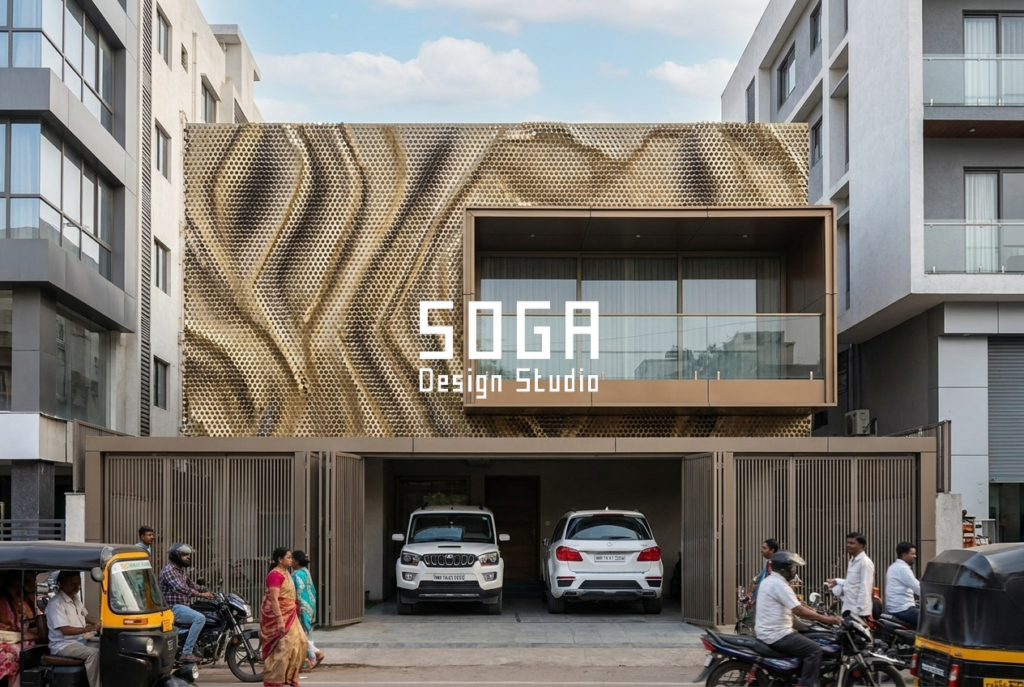
Be clear-eyed about one thing: ACP is a cladding, not a heat shield. It does not, by itself, meaningfully reduce solar heat gain the way a ventilated screen does. If your west or south wall takes a hard afternoon load, the smart move is to pair ACP with a shading layer — louvers, fins, or a precision-cut metal screen held off the wall. That ventilated gap cuts direct solar heat gain by 25–40% on those orientations. SOGA Design Studio designs these as one integrated Para-Timber Ribbon facade composition rather than a screen bolted onto an ACP box.
ACP vs Solid Metal vs GFRC: Which Should You Pick?
ACP wins on speed and price for flat, modern surfaces. Solid aluminium panels (₹800–₹1,800 per sq ft) win when you want a heavier, premium, dead-flat metal with a longer life and no oil-canning. GFRC wins when you want genuine sculptural depth and texture rather than a flat plane. The best Indian elevations in 2026 rarely use one alone — they use ACP for the broad fields and a richer material for the feature zones. Matching material to zone is where an architect quietly saves you money while making the facade look more expensive.
Why SOGA Design Studio
SOGA Design Studio is a parametric and computational architecture firm in Gurugram, India, working across India, Dubai, and Singapore. We treat ACP not as the whole answer but as one disciplined layer in a composed elevation. Every facade is modelled in Rhino and Grasshopper, detailed down to panel sizes and shadow-gap joints, and taken through a fabrication-first workflow to GFRC or CNC production and installation — so the parametric facade you approve is the one that gets built. Whether it is a single ACP refresh or a full Para-Hex 3D Module elevation, our parametric facade design services bring real composition and climate logic to the panel. Get a custom facade concept for your plot — contact SOGA Design Studio at sogadesignstudio.com/contact.
Frequently Asked Questions
What is the ACP sheet price per sq ft in India in 2026? Bare ACP sheet costs ₹130–₹280 per sq ft depending on 3 mm or 4 mm thickness, while an installed ACP facade runs ₹200–₹350 per sq ft including the aluminium frame and labour. Fire-retardant core panels cost ₹250–₹400 per sq ft.
What is the full form of ACP sheet? ACP stands for Aluminium Composite Panel — two thin aluminium sheets bonded to a polyethylene or fire-retardant mineral core. It is used as a lightweight, flat cladding for modern facade design on homes, shops, and commercial buildings.
Is ACP good for a front elevation in the Indian climate? ACP is good for a modern, low-cost, flat front elevation, and quality PVDF-coated panels hold colour for 12–15 years. However, ACP is cladding, not a heat shield — for hot west or south walls, pair it with a ventilated screen or louvers to cut solar heat gain.
How long does an ACP sheet facade last? A good-quality PVDF-coated ACP facade lasts 20+ years structurally and holds colour for 12–15 years in Indian conditions, provided the aluminium sub-frame is correctly engineered and the panels are ventilated. Cheap polyester-coated ACP fades in 4–6 years.
Can ACP be combined with a parametric metal facade? Yes, and it is the best way to use it. SOGA Design Studio uses ACP for broad facade fields and a parametric metal screen or GFRC panel for feature zones, designed as one integrated elevation so the cladding reads as architecture, not a panel wrap.
If you have ruled out composite panel entirely, the more useful question is what you buy instead of a sheet: an ACP sheet alternative for elevation in India that works by section rather than by surface, with five systems dimensioned and costed.