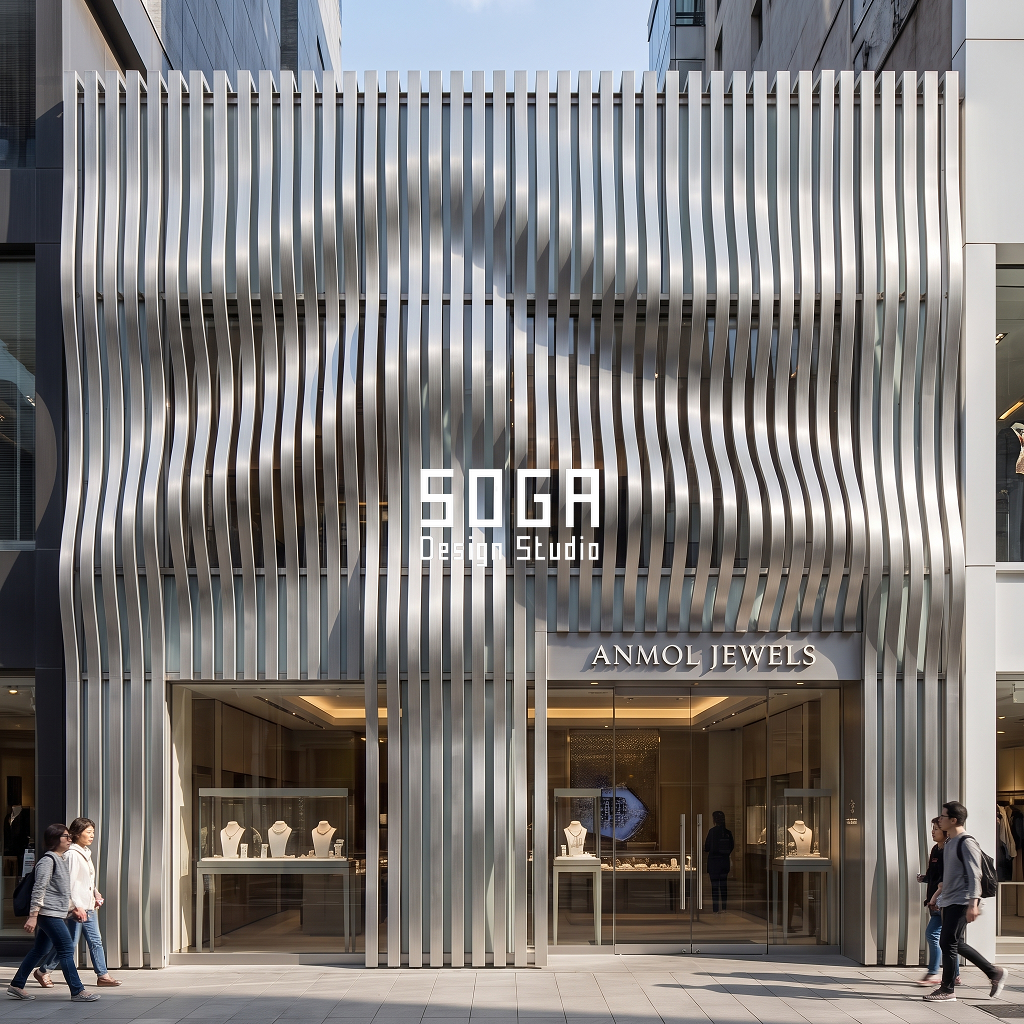
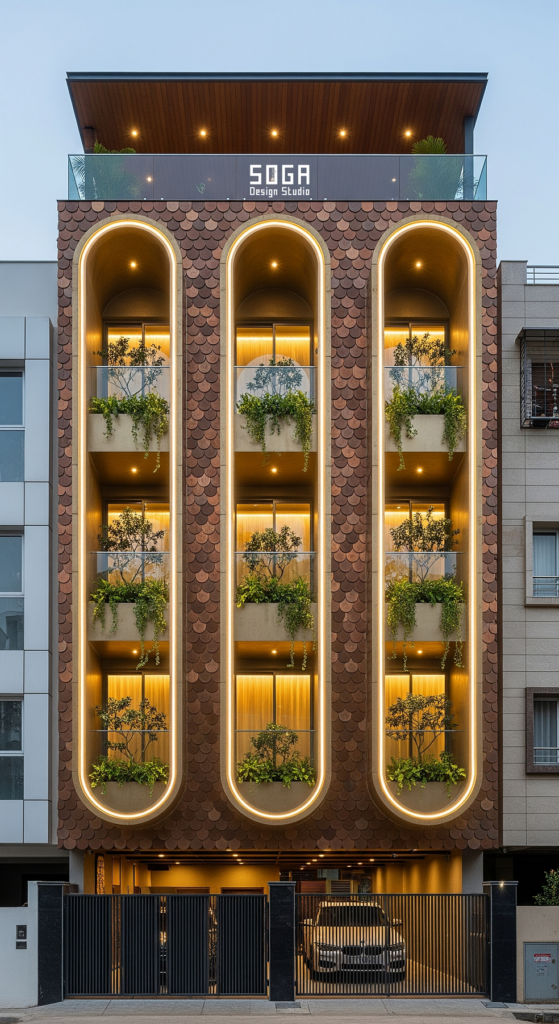
Five years ago, “parametric facade” mostly meant an impressive rendering that never made it past the pitch deck — too complex, too expensive, too dependent on fabrication systems that didn’t exist in India. That has changed. As of 2026, parametric facades are a real, buildable option for Indian showrooms, offices, and premium homes, not just a rendering trend — though cost still rises with panel complexity and fabrication precision.
What Parametric Architecture Actually Means
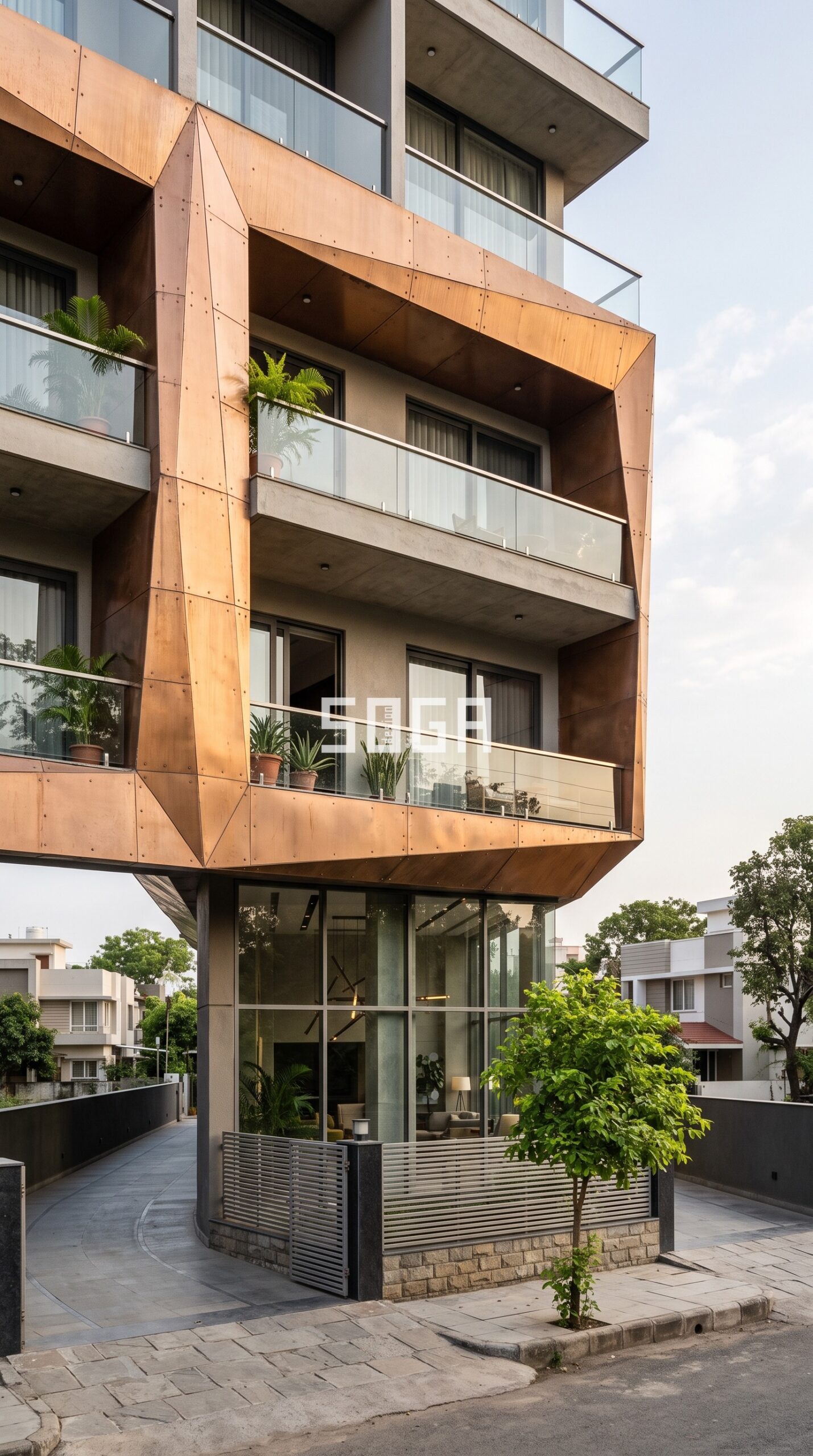
Parametric architecture uses algorithm-generated geometry to create perforated metal screens, diamond-faceted panels, or woven-pattern facades where light, shading, and material respond to the building’s orientation. Instead of a flat wall with punched windows, the facade becomes a system — every panel’s angle, depth, or perforation density is generated by a rule, not drawn by hand one at a time. That rule can respond to the sun’s path, to which rooms need privacy, or simply to a pattern logic that gives the building a distinct identity no other building shares.
Where India Is Actually Using It
Indian elevations have moved away from plain painted concrete toward layered facades combining minimal white-plaster walls, wood-finish panels, glass fronts, stone cladding accents, and traditional jaali screens for shade and pattern. At the higher end, parametric architecture — algorithm-driven perforated screens and dynamic skins — is now common in commercial and premium residential projects from Mumbai to Jaipur, with some facades even shifting to kinetic, automated louvers and building-integrated solar panels. This isn’t confined to flagship commercial towers anymore; boutique residential projects, showrooms, and mid-rise apartment buildings are specifying parametric metal screens as a matter of course.
What It Actually Costs in 2026
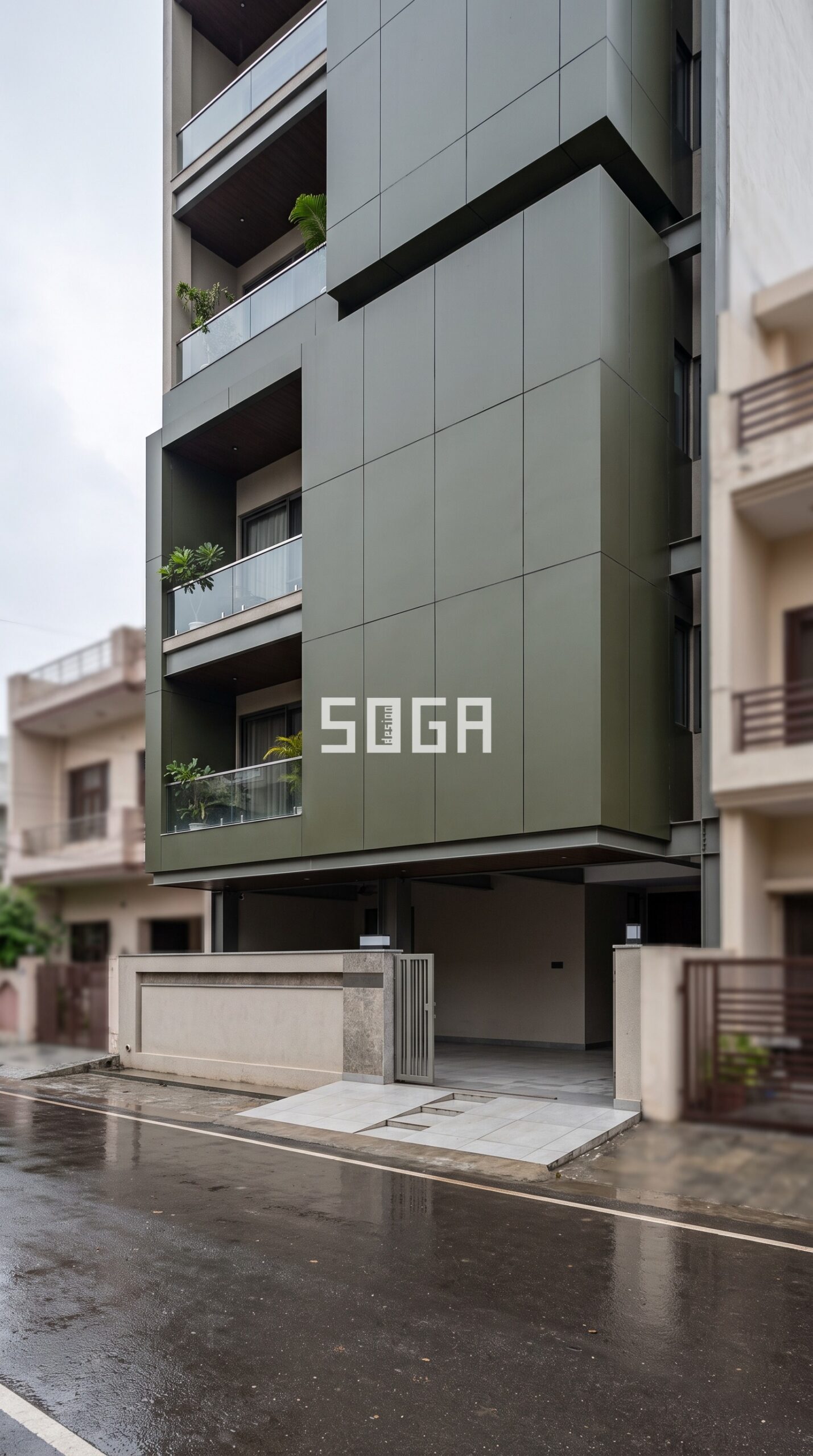
Installed parametric metal facade costs in India run roughly ₹800–2,500 per sq.ft for aluminium systems and ₹1,200–2,800 per sq.ft for steel systems, with design fees separately around ₹80–250 per sq.ft or 5–9% of facade construction value. That’s a real, quotable range you can take to a fabricator — not a guess. For comparison, a standard ACP facade system runs roughly ₹150–600 per sq.ft installed, so parametric metal work sits meaningfully above basic cladding, but well within reach for a premium residential or boutique commercial budget. These figures also sit below typical Gulf-market facade pricing, largely because of India’s lower labour costs and local fabrication base.
Why Jaalis and Perforated Screens Keep Reappearing
Jaalis and perforated metal or concrete screens solve two problems at once: they cut direct solar glare and heat gain by shading the wall or glazing behind them, while still allowing filtered daylight and ventilation through — which is why they show up repeatedly in facade guidance for Delhi, Chennai, and Hyderabad alike. Their popularity also comes from being a traditional Indian architectural device now fabricated in modern materials like perforated aluminium or GRC, suiting both budget and high-end contemporary facades. A parametric screen is really this idea taken further: instead of a single repeated pattern, the density, rotation, or depth of each module varies across the building — denser where privacy matters, more open where ventilation or view matters.
Is It Actually Buildable, or Just a Render?
This is the real test of any parametric design: can a fabricator quote it, and can a mason or metal shop actually build it? A well-designed parametric system keeps unique fabrication variants to roughly 20% or less of the total module count — meaning even a facade with hundreds of panels might only need a handful of rotation jigs or mould variants, with the rest built from standard repeats. That’s the difference between a facade that looks stunning in a rendering and one that survives contact with an actual construction budget and timeline. At SOGA Design Studio, every parametric facade we design comes with the exact module size, spacing, rotation range, and fabrication method spelled out — not just a pretty picture.
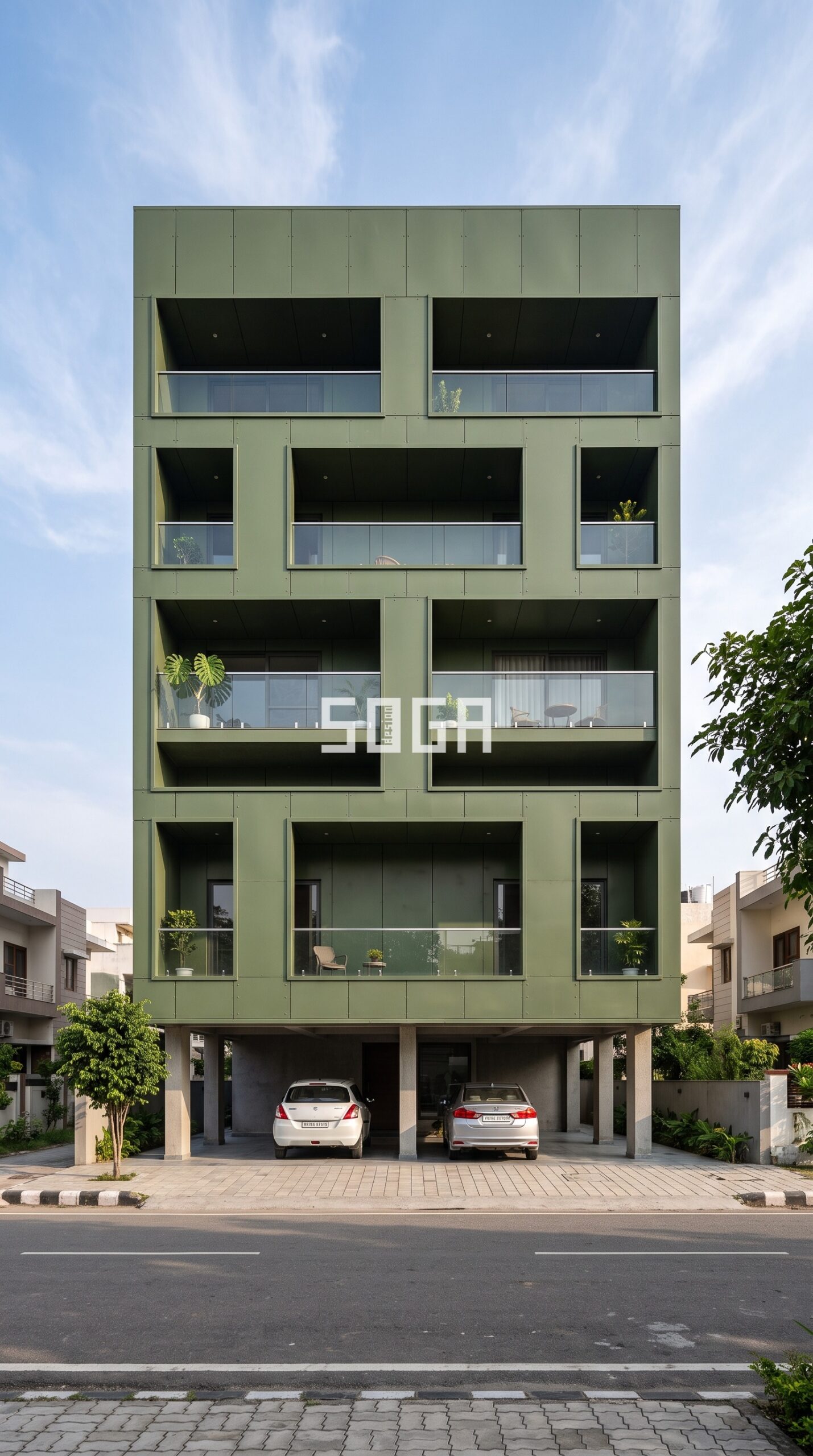
Bringing Parametric Design to Your Project
If you’re considering a parametric facade for a home, office, or showroom, the questions worth asking any designer are: what’s the exact material and rate per sq.ft, how many unique fabrication variants does the pattern actually need, and can they show you a built project rather than only renders. SOGA Design Studio designs parametric metal and screen facades for residential and commercial projects across India, Dubai, and Singapore — get in touch for a consultation and a real cost estimate.
Contact SOGA Design Studio to discuss a parametric facade for your project.
What’s Actually Buildable in 2026
The gap between striking renders and real construction has narrowed sharply in India. Today, parametric metal fin systems, perforated and folded aluminium screens, GFRC panels and zinc facades are all genuinely buildable at competitive cost through local fabrication. The trend is towards systems that are computationally designed for shading and identity yet remain practical to manufacture and install.
Frequently Asked Questions
Are parametric facades affordable in India now? Increasingly yes — local fabrication of metal and GFRC panels has made them accessible well beyond flagship projects.
Which systems are most practical? Aluminium fin and louver systems, perforated and folded metal screens, and GFRC panels are the most commonly built.
What is driving the 2026 trend? A combination of climate performance, local fabrication capability and demand for distinctive building identity.