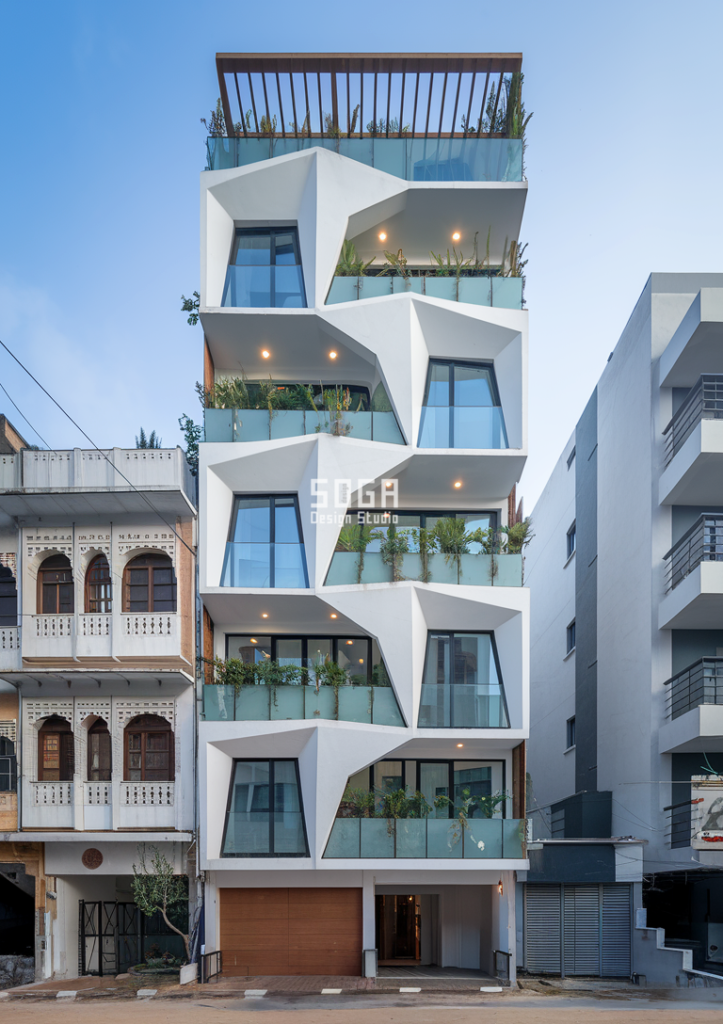
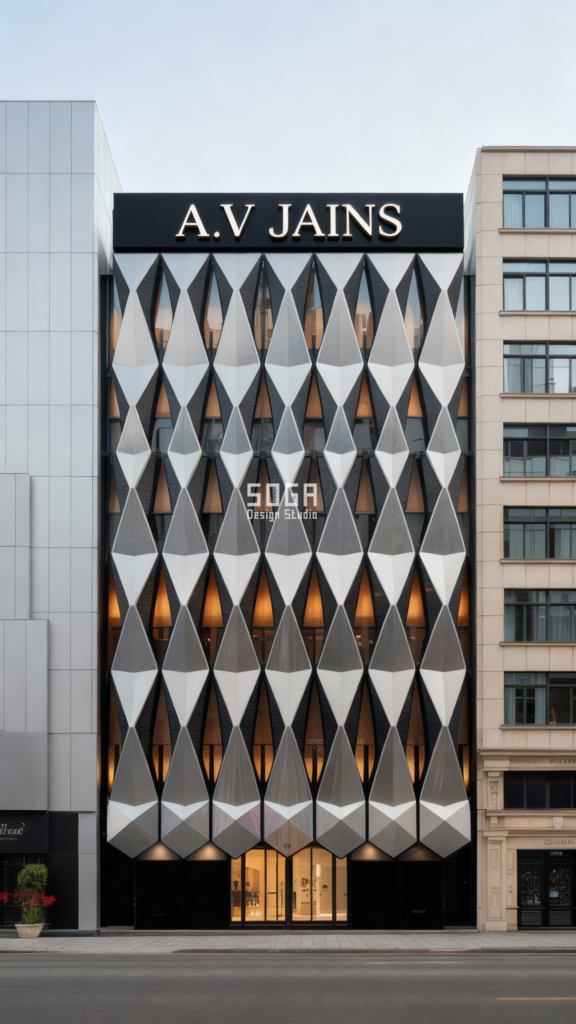
Walk through any new residential development in Gurugram, Pune, or Bengaluru and you will see a pattern that tells the story of India’s real estate market with uncomfortable clarity. At one end of the price spectrum: projects where the developer spent ₹180–₹350/sqft on ACP facade cladding, dressed it up with a rendering of the “luxurious” finished building, sold at ₹8,000–₹12,000/sqft, and handed over an exterior that looked tired within five years. At the other end: a small but growing number of developers who invested ₹600–₹2,500/sqft in a genuinely designed facade and who are now watching their resale premiums compound.
The difference is not aesthetic taste. It is business strategy. Developers who understand that the facade is their project’s primary differentiator in a crowded market are making systematically better decisions than those who treat it as the last line item to be value-engineered.
This guide is for residential developers, housing project developers, and residential architects making facade decisions for apartment buildings in India. We cover the full spectrum from affordable to luxury, with real costs, compliance considerations, and the straightforward financial case for investing in facade quality.
The Developer’s Dilemma: ACP Looks Cheap in the Ledger and Looks Cheap on the Building
The appeal of ACP (Aluminium Composite Panel) for Indian residential developers is understandable: it is inexpensive (₹180–₹500/sqft installed), widely available, quick to install, and produces a flat, colourful surface that photographs acceptably in marketing renders. For a developer building 500 flats and trying to keep construction cost below ₹3,500/sqft, ACP on the facade is an obvious line item to maximise.
But the calculus ignores three real costs:
1. The positioning ceiling. ACP is so widely used on mid-market and budget Indian housing that it has become a signifier of a certain price point. A project using ACP as its primary facade material — regardless of what else it does — communicates that it is a mid-market project. This is a hard ceiling on the price per sqft the developer can achieve, regardless of the interior specification, the amenities, or the location.
2. The maintenance liability. Standard ACP panels have a practical life of 8–12 years in Indian conditions before the protective film degrades, the sealant joints open, and the panels begin to delaminate or bow. In a 500-unit apartment building, replacing the facade at year 12 is a maintenance nightmare — scaffolding costs, resident disruption, RWA politics — that costs more than the original installation.
3. The fire risk (and regulatory exposure). NBC 2016 restrictions on polyethylene-core ACP for buildings above 15m (effectively any apartment building above 4–5 storeys) are increasingly enforced. FR-core ACP is safer but not materially better-looking or cheaper to install. Several high-profile apartment fire incidents have made buyers and RWAs far more aware of facade material fire ratings. Projects using non-compliant ACP on tall buildings face regulatory exposure and reputational risk.
The alternative is not necessarily expensive — it is just better-chosen. The right material at the right price point creates a building that performs better, looks better for longer, and supports better pricing.
Facade Options for Apartment Buildings by Market Segment
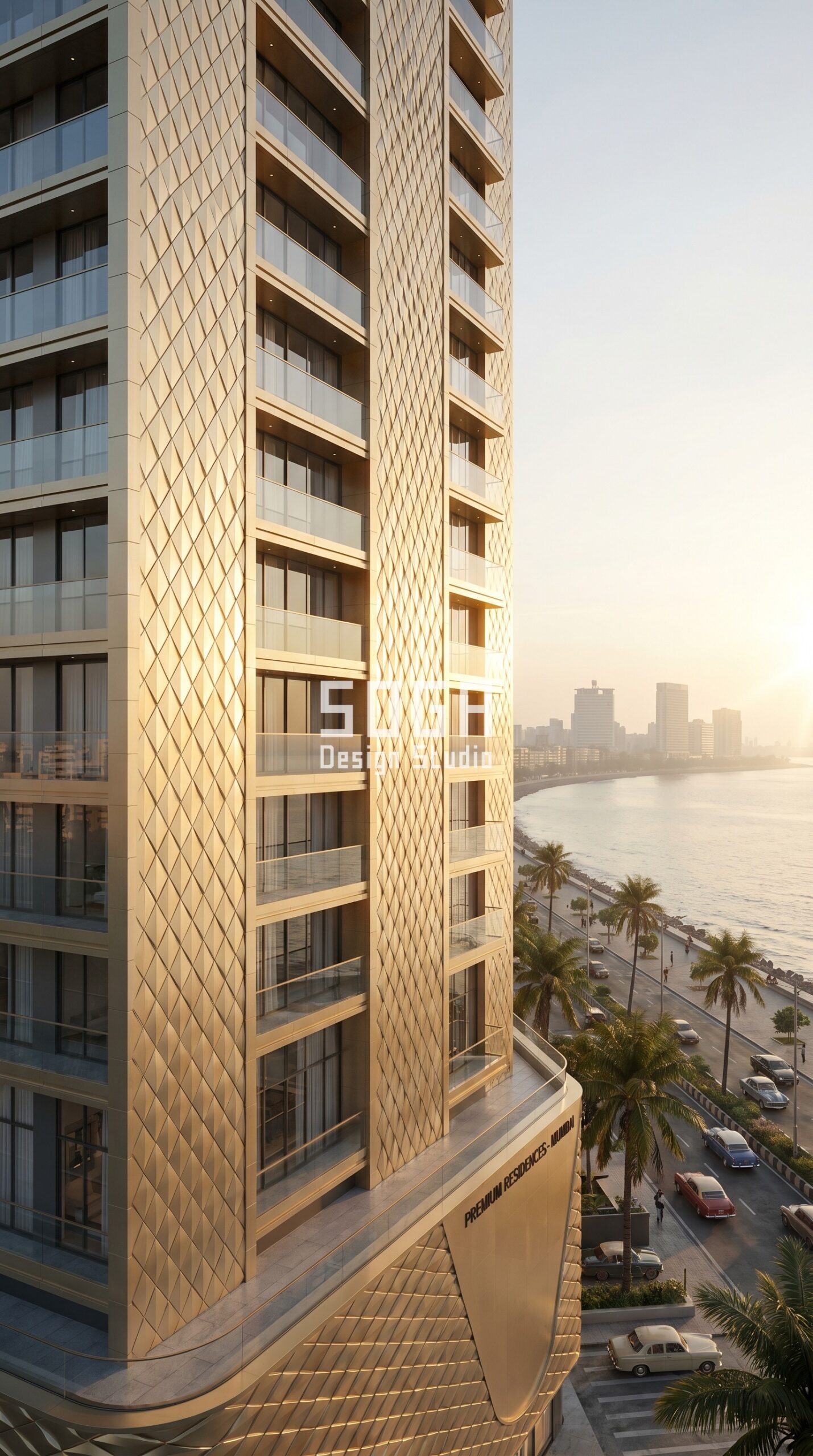
Affordable Housing (₹3,000–₹5,500/sqft sale price)
At this price point, the facade budget is genuinely constrained: ₹150–₹350/sqft installed is the practical ceiling. The goal is durability and low maintenance rather than design distinction.
Best choices:
• FR-core ACP (₹220–₹380/sqft installed): Fire-compliant, durable enough for 12–15 years, available in range of colours. The minimum responsible specification for any building above G+4.
• Textured exterior plaster with acrylic finish (₹120–₹250/sqft): Well-executed textured plaster with a quality acrylic topcoat lasts 7–10 years and can be recoated without scaffolding disruption. More forgiving of substrate imperfections than panel systems.
• Precast concrete bands + painted plaster (₹180–₹350/sqft): Precast horizontal banding at floor levels, combined with painted plaster panels between, creates genuine visual rhythm and is very durable. The precast elements handle the heavy-maintenance zones (window sills, floor edges); the plaster handles the flat field.
What to avoid at this price point: glass curtain wall segments that require specialist maintenance, natural stone on anything above 2nd-floor level (weight, anchoring cost, specialist maintenance).
Mid-Market Housing (₹5,500–₹9,000/sqft sale price)
This segment is the most competitive in India’s residential market in 2026. Dozens of projects compete for the same buyer in every major city, and the facade is one of the primary visual differentiators.
Best choices:
• Terracotta panels (₹600–₹1,200/sqft installed): Self-cleaning, UV-stable, thermally excellent (the ventilated system reduces surface temperature), and warmly aesthetic. Terracotta panels position a project visually above the ACP-and-plaster market immediately. The material cost is higher, but the 30+ year maintenance-free life means lifecycle cost is competitive.
• Aluminium cladding panels with pattern (₹450–₹900/sqft): More sophisticated than flat ACP — formed, ribbed, or perforated aluminium panels that create surface texture and shadow. Not as distinctive as a full parametric system but meaningfully above ACP in visual quality.
• Natural stone veneer on podium + quality cladding above (₹600–₹1,400/sqft for the combination): Stone on the first 1–3 floors (plinth to podium level) creates visual mass and quality at the point where pedestrians interact with the building. Above the podium, move to aluminium or terracotta. A classic composition that works for mid-market projects with aspirations.
Premium Housing (₹9,000–₹18,000/sqft sale price)
At this level, the facade needs to work as genuine marketing. Buyers in this segment are comparing your project to the best they have seen in India and internationally. Generic or mediocre exteriors are disqualifying.
Best choices:
• Full parametric aluminium screen system (₹1,200–₹2,500/sqft): A SogaGrid™ or SogaWeave™ system across the primary tower facades creates an immediately distinctive project identity. The parametric geometry photographs beautifully, reads as distinctive at all scales (from the highway, from the project entrance, at the individual apartment level), and positions the project clearly above the ACP market.
• Glass curtain wall with external fins (₹3,500–₹7,000/sqft): For projects with strong views to offer — sea-facing in Mumbai, valley-facing in Pune, golf-course-facing in Gurugram — a glass-dominant facade with properly designed solar fins maximises the connection between interior and view. The fins provide necessary solar shading while creating a visually interesting modulation of the glass surface.
• Terracotta + aluminium composite (₹900–₹1,600/sqft): Terracotta panels as the dominant material with aluminium reveals, fins, or screens as accents. A richly textured, warmly coloured facade system that reads as premium without the glass curtain wall’s maintenance complexity.
Luxury Housing (Above ₹18,000/sqft sale price)
Luxury housing buyers are among the most informed consumers in any sector. They have seen the world’s best residential architecture. They will immediately register a material or detailing compromise. At this level, the facade is not a cost — it is an investment that justifies the project’s price point.
Best choices:
• Fully bespoke parametric system (₹2,000–₹5,000/sqft): A custom-designed parametric system — SogaShell™ organic wave panels or SogaPulse™ algorithmically optimised geometry — that is unique to this project. No other building looks like this one. The facade becomes part of the project’s brand identity and a reason buyers choose it over every alternative.
• High-performance glass curtain wall (₹5,000–₹10,000/sqft): Triple-glazed or high-performance double-glazed unitised curtain wall with integrated blinds, smart glass (electrochromic), or external automated shading. The technology signals quality and forward-thinking design.
• Stone + metal composite (₹2,500–₹5,000/sqft): Premium natural stone (travertine, basalt, Indian marble) in combination with anodised aluminium or weathering steel detailing. A material composition that reads as genuinely luxurious and that ages beautifully.
For a comprehensive cost breakdown, our parametric facade cost guide covers all the variables that affect total project cost.
Parametric Facades for Residential Towers: The Case for SogaGrid and SogaWeave
Residential towers present a specific design challenge that parametric systems address particularly well: the repetition of identical floor plates across many floors tends toward a monotonous elevation unless the facade design introduces variation.
SogaGrid™ on a residential tower works because the diamond-panel geometry creates visual rhythm that is consistent enough to read as a design language from a distance, yet rich enough in detail to engage the eye at close range. The grid can be oriented differently on different elevations — vertical emphasis on the primary facade, horizontal emphasis on the party-wall elevations — creating a dynamic composition across the full building volume.
SogaWeave™ addresses a critical functional need in residential towers: solar shading. Most Indian residential towers have a significant proportion of apartments facing west or south-west — the most challenging solar orientations in a hot climate. Without shading, these apartments run air-conditioning constantly through summer; with SogaWeave fins, the solar gain is reduced by 35–55%, dramatically improving comfort and reducing electricity costs. This functional benefit is a genuine selling point: developers can market lower utility costs as a feature, and buyers who experience it firsthand are the most satisfied customers.
SogaScreen™ for residential use is particularly relevant for low-to-mid-rise apartment buildings in dense urban locations where ground-floor and first-floor apartments face privacy challenges. The screen creates a semi-transparent outer layer that blocks sight lines from street level while preserving natural light and ventilation — transforming what would otherwise be the project’s least desirable units into liveable, appropriately private spaces.
Explore all SOGA systems and their residential applications at sogadesignstudio.com/soga-parametric-systems/. To understand how a parametric facade project moves from concept to construction drawing, see our design process guide.
How Facade Choice Affects RERA Approvals, Fire NOC, and Structural Requirements
RERA Considerations
Under RERA, the facade specification disclosed in the project’s registered documents must match what is actually delivered. Developers who specify “aluminium cladding” in RERA filings and deliver lower-grade ACP, or who render parametric screens on their marketing material but build with painted plaster, face buyer complaints, RERA adjudicator hearings, and reputational damage. The practical lesson: specify the facade system accurately in RERA filings and deliver exactly that specification.
Fire NOC
For residential buildings above G+4 (above approximately 15m height):
• ACP with PE core is non-compliant with NBC 2016 for use above 15m. Fire NOC will typically not be issued for non-compliant materials. FR-core ACP or solid aluminium is the minimum compliant specification.
• Ventilated facade systems (terracotta, aluminium panel on rail system) must incorporate fire stops at each floor level within the cavity. This is increasingly a condition of fire NOC in many municipalities.
• Glass facades must use annealed, toughened, or laminated glass as specified by the structural engineer and as required by local fire authority norms.
Non-compliant facade materials discovered during fire department inspection are a significant project risk — potentially requiring complete facade replacement at a cost that dwarfs any initial saving.
Structural Substrate and Wind Load
Every facade system anchors into the building’s structural frame or masonry. The anchoring system must be designed for:
• The self-weight of the facade system (heavier for stone, lighter for aluminium)
• The wind pressure on the facade surface (IS 875 Part 3, varies by city and building height)
• Thermal expansion and contraction of the panel material
For buildings above G+7, facade anchoring typically requires a structural engineer’s design — not just a contractor’s standard detail. This is especially important for glass curtain wall systems where the wind load is high and the connection to structure must be precisely calculated.
Resale Value Impact: How Facade Quality Affects Price Premiums
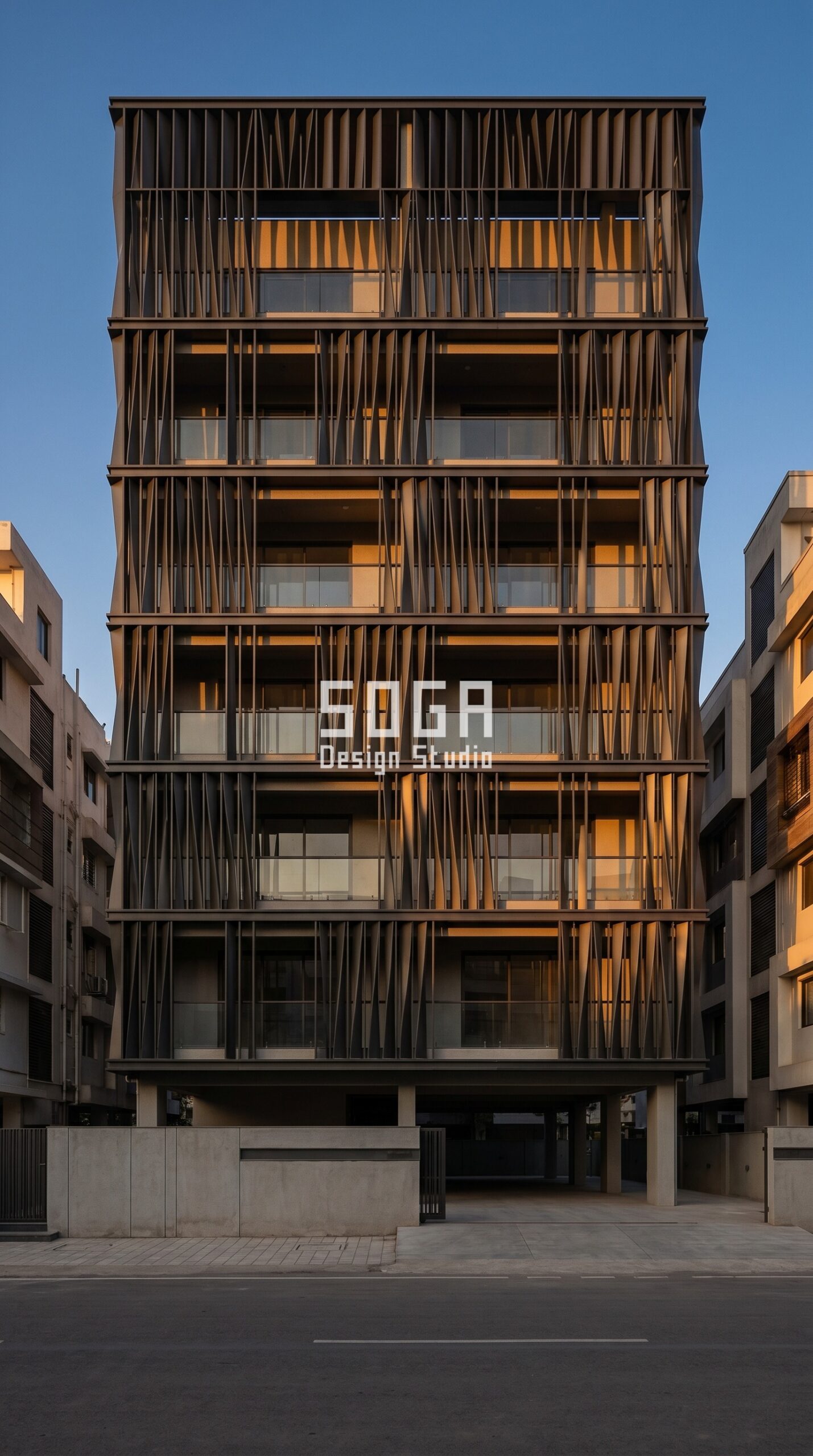
The relationship between facade quality and resale value in Indian residential markets in 2026 is increasingly well-documented. Analysis of secondary market transactions in Gurugram, Bengaluru, and Hyderabad suggests:
ACP facades: Resale pricing at or slightly below the new-launch price within 5–7 years. The facade is a neutral factor — neither adding nor significantly subtracting value beyond age-related depreciation.
Terracotta or quality aluminium panel facades: Resale pricing 8–14% above comparable ACP-clad projects of similar age and location. The facade contributes a visible quality signal that buyers recognise and pay for.
Parametric aluminium screen facades (SogaGrid, SogaWeave): Resale pricing 14–25% above comparable standard-cladding projects. The distinctive visual identity of a parametric facade creates a recognisable property — buyers know which building this is, what it looks like from the outside, and they associate that visual distinctiveness with quality.
Glass curtain wall (premium specification): Resale pricing 18–30% above comparable standard projects. The highest premium, but also the highest initial cost and the highest maintenance requirement.
For developers, this premium compounds: a 14% resale premium on 500 units at an average ₹1.2 crore each is ₹84 crore in additional value created by a facade investment that might have cost ₹4–₹8 crore above the ACP alternative. The business case is straightforward. For a deeper comparison of facade options and their long-term value implications, see our parametric vs ACP vs stone analysis.
FAQ
Q: What is the minimum acceptable facade specification for an apartment building in India in 2026? A: For buildings above G+4 (above approximately 15m), FR-core ACP or better is the minimum compliant specification under NBC 2016. We would argue that FR-core ACP is the minimum compliant option but not the minimum quality option — terracotta panels or aluminium cladding with surface texture are modestly more expensive and significantly better-performing investments from both durability and positioning perspectives. For mid-market projects competing on quality, ACP of any grade is a positioning compromise.
Q: Does a better facade reduce the developer’s RERA marketing liability? A: A better facade, properly specified in RERA filings and accurately represented in marketing materials, reduces the risk of homebuyer complaints about the gap between marketing promises and delivered quality — which is one of the most common sources of RERA disputes. The facade is visible and memorable; homebuyers who receive something that does not match what they were shown are highly motivated to complain. Delivering what was promised — or exceeding it — eliminates this risk.
Q: Can a parametric facade be designed as a modular system that allows for cost-effective installation across multiple towers in a large project? A: Yes — and this is one of the strongest financial arguments for parametric systems in large residential projects. Once a parametric panel geometry is designed and the fabrication dies or CNC programmes are created, the cost per panel decreases significantly with volume. For a project with 1,000+ apartments across multiple towers, the per-sqft cost of a parametric system can approach the cost of a quality terracotta installation because the design and set-up costs are amortised across a much larger panel quantity. SOGA’s systems are specifically designed with this scalability in mind.
Q: How does a high-rise apartment facade behave during the monsoon — what are the key waterproofing concerns? A: The critical waterproofing points in any apartment facade are: window-to-wall junctions (most common point of failure), horizontal ledges and sills where water pools, the facade-to-roof parapet junction, and the base of the facade at podium level. Panel system joints must use properly specified weather sealants with adequate movement accommodation — generic silicone sealant without primer or movement consideration will fail within 3–5 years. SOGA’s specifications include full waterproofing details at all critical junctions, and our construction supervision includes inspection of these details at the time of installation.
Q: What is the typical timeline from facade design brief to installation completion for a 300-unit apartment project? A: For a project of this scale: facade design and documentation takes 6–10 weeks from brief; structural coordination and shop drawing preparation takes 4–6 weeks; fabrication of panels (if aluminium) takes 6–10 weeks; installation on site (from scaffold setup to completion) takes 12–20 weeks depending on building height and total facade area. Total timeline from design brief to facade completion: 6–10 months. This should be integrated into the overall project construction programme early to avoid the common mistake of leaving facade specification to the last minute, which forces default to whatever is fastest to procure (invariably ACP).
Ready to Elevate Your Next Residential Project?
SOGA Design Studio works with residential developers across India on facade design and specification for apartment towers, plotted villa communities, and mixed-use residential developments. We bring parametric design capability, deep knowledge of Indian construction conditions, and a rigorous approach to system selection that aligns investment with market positioning.
Contact SOGA Design Studio to discuss your project. We can provide a facade strategy brief — matching your project’s market positioning, site conditions, and budget — as a starting point for the design process.
See our full range of residential-ready parametric systems at sogadesignstudio.com/soga-parametric-systems/
Learn more about the Indian parametric facade market at sogadesignstudio.com/parametric-facade-design-india/
The same code chain runs on a small building, but the numbers land differently — see how facade panel wind load for a house is worked out from Vb through k2 to a bracket reaction in kN.