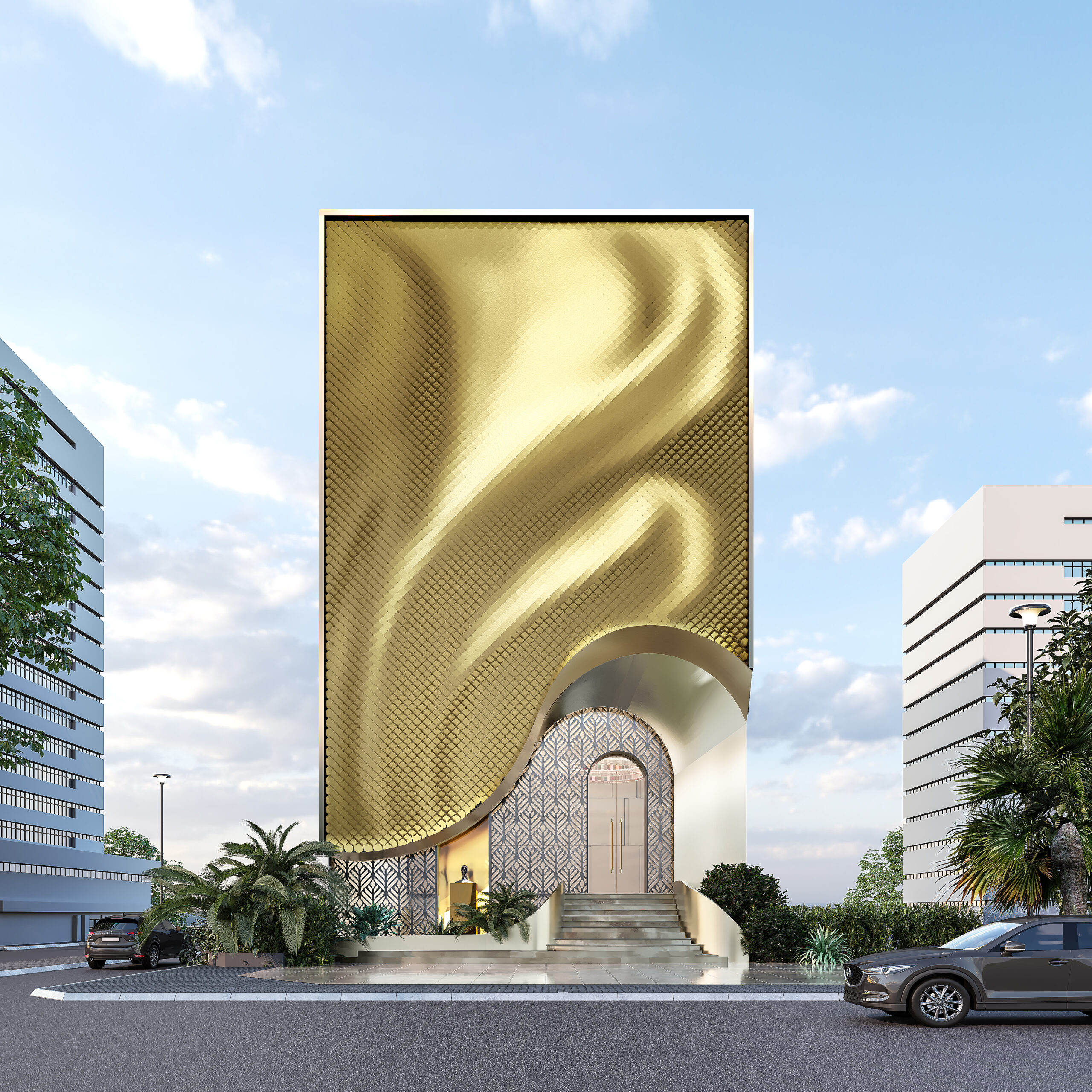
Harnessing Solar Power: The Future of Building Comfort with Parametric Design

Harnessing Solar Power: The Future of Building Comfort with Parametric Design

The Moving Sun Facade Module represents a major leap in sustainable architecture, using parametric intelligence and biomimicry to create a dynamic building skin that continuously adjusts to the sun’s path for optimal shading, daylighting, and thermal comfort. Inspired by natural shading mechanisms found in plants, the system enhances indoor environments by reducing glare, regulating heat gain, and minimizing dependence on artificial lighting and cooling. Powered by real-time environmental data, the module adapts its geometry through algorithms tied to location, orientation, and seasonal conditions, exemplifying the fusion of responsive design and energy efficiency seen in global precedents like the Al Bahr Towers and EDF Headquarters. SOGA Design Studio—through innovative projects in Gurgaon such as the EcoSmart Tower—has championed this approach, using modular, climate-responsive facades to create buildings that harmonize with nature while elevating aesthetics and user comfort. As a forward-thinking design philosophy, the Moving Sun Facade Module showcases how parametric design, biomimicry, and sustainability can converge to shape the future of high-performance architectural envelopes.

Harnessing Solar Power: The Future of Building Comfort with Parametric Design Read More »

Intelligent Building Systems: IoT and Smart Architecture Integration

Intelligent building systems represent the next evolution of architecture, integrating IoT sensors, automated controls, and data-driven platforms to create responsive, energy-efficient, and user-centric environments. By connecting HVAC, lighting, security, water, and occupancy systems through real-time data, smart buildings can reduce energy consumption by 20–40%, enhance comfort through personalized environmental settings, and prevent failures through predictive maintenance. While challenges such as cybersecurity, system integration, and vendor coordination remain, scalable solutions and wireless retrofit technologies enable both new and existing buildings to embrace smart automation. India’s Smart World Trade Center in Navi Mumbai exemplifies this potential, operating with over 10,000 IoT sensors to monitor air quality, energy, water, and occupancy, achieving 30% energy savings and LEED Platinum certification. As organizations adopt intelligent building systems, the most effective strategy is to begin with high-impact applications—such as energy management or space optimization—and expand as measurable ROI and operational readiness grow.

Intelligent Building Systems: IoT and Smart Architecture Integration Read More »

Scroll to Top