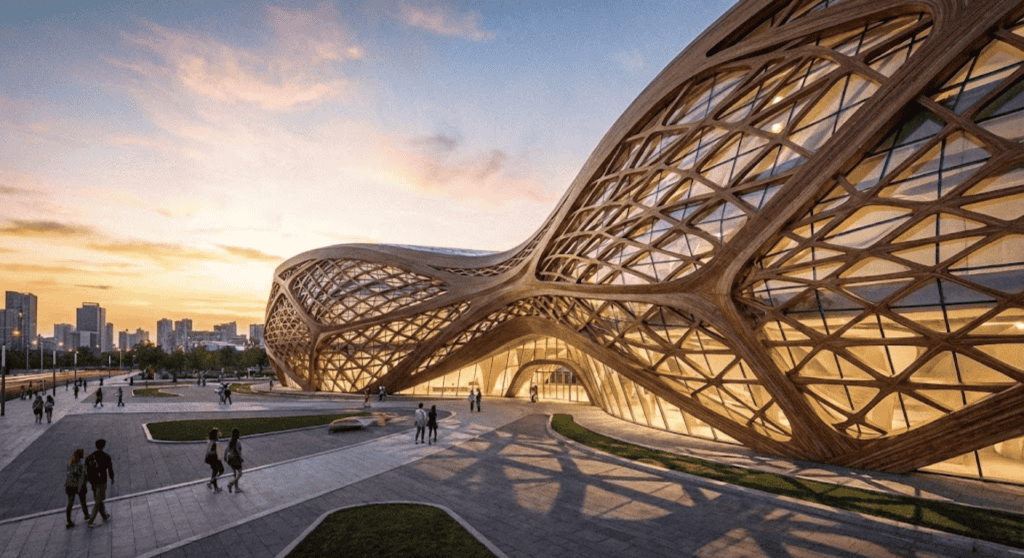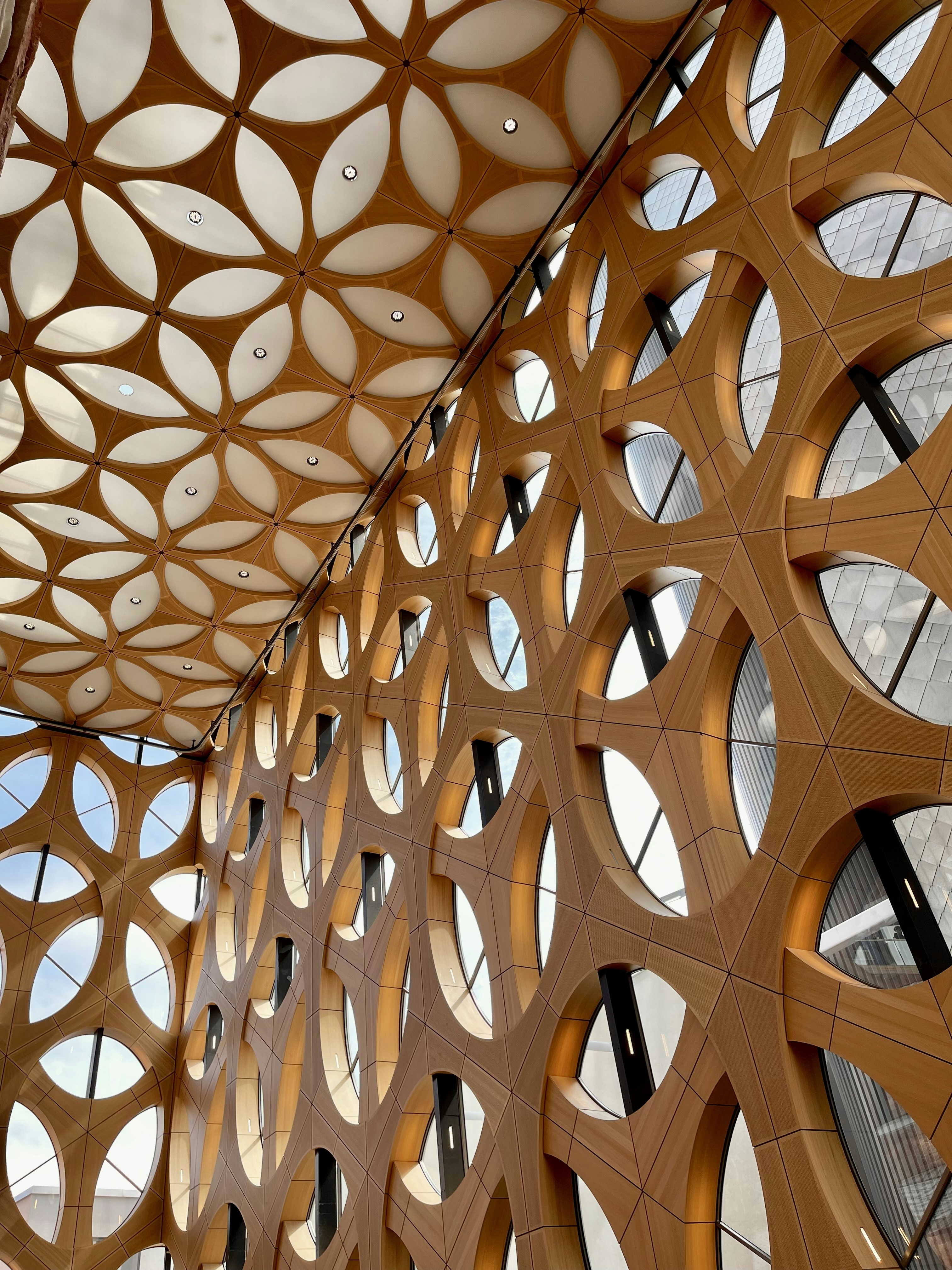
SOGA Design Studio has delivered parametric facade projects across more than a dozen Indian cities — Delhi NCR, Mumbai, Jaipur, Bangalore, Hyderabad, Chennai, Pune, Rajkot, Surat, Kolkata and Lucknow — plus international work in Dubai, Singapore, Qatar and Saudi Arabia. This page collects the built and concept work in one place, with the system, material and design problem behind each one.
The studio was founded in 2021 in Gurugram, Haryana by architects Sonali Jaiswal and Gajender Sharma, who between them bring over 15 years of combined design and architecture experience, including a period practising in Singapore from 2017. The computational stack is Rhinoceros 8 with Grasshopper, Ladybug, Honeybee, Kangaroo and Karamba3D, coordinated with Revit and Dynamo, and every project is issued as fabrication-ready CAD with numbered panel schedules.
SOGA Parametric Facade Projects in India
| Project | City | Typology | Facade system |
|---|---|---|---|
| Nawaabi Gold | — | Jewellery showroom | Folded and curved champagne-gold metal, seamed like goldsmith’s work |
| Five Floors, Five Waves | — | Residential, 5 floors | Wave-pattern louver, wood-shade finish, tuned per balcony |
| SOGA Surat | Surat | Luxury residences | Layered horizontal metal blade facade |
| Vista Apartments | Jaipur | Residential | Parametric apartment elevation |
| T R Jewels | Bangalore | Jewellery retail | Metal facade, hexa-block tessellation |
| Vajra Jewelers | Hyderabad | Jewellery retail | 3D parametric metal facade |
| Raja Ram | Pune | Jewellery retail | Hexagonal parametric metal |
| Ramo Jewel | Chennai | Jewellery retail | Parametric metal facade |
| Shubhlaxmi Ratna | Chennai | Jewellery retail | FRP parametric facade |
| A.V. Jains | Rajkot | Jewellery retail | Parametric metal facade |
| Swarna Mahal | — | Jewellery retail | Metal shingle facade |
| Aabhusan Palace | Mumbai | Retail / hospitality | Parametric metal facade |
| Savya Hotel | Kolkata | Hospitality | Para-Tile™ facade system |
| Anmol Jewels | — | Jewellery boutique | Parametric facade |
| Hemkiran Jewels | — | Jewellery retail | Parametric facade |
| Ratnakar & Sons | — | Jewellery retail | Parametric metal facade |
A pattern worth naming: jewellery retail dominates this list. That is not an accident. Jewellery showrooms in India compete on street presence more than almost any other typology, and a parametric facade converts directly into footfall and recall — which is why the sector adopted computational facade design earlier and more aggressively than commercial offices did.
The Five SOGA Facade Systems
Rather than starting every project from a blank Grasshopper canvas, SOGA works from five costed, factory-ready parametric systems — SogaGrid, SogaWeave, SogaShell, SogaScreen and SogaPulse — each available in aluminium and GFRC with powder coat, PVDF or anodised finishes. Finishes carry a 10-year colour and adhesion warranty; the aluminium substrate carries a 25-year warranty. Working from a defined system library is what makes it possible to quote a parametric facade accurately at concept stage instead of after fabrication drawings.
Engagement models are straightforward: design-only fees run ₹80–₹250 per sq ft of facade area, and full design-to-handover engagements are priced at 5–9% of facade construction cost.
Introduction to Parametric Architecture
Parametric architecture is an innovative approach to building design that leverages computational design tools and algorithms to create dynamic and adaptable structures. Unlike traditional architectural methods, which often rely on static forms and predefined measurements, parametric design is characterized by its flexibility, allowing architects to respond to varying conditions and requirements throughout the design process. This methodology enables the integration of complex variables, such as environmental factors, user needs, and material properties, into the design equation, resulting in more efficient and tailored solutions.
The essence of parametric architecture lies in the relationships established among design elements, which can be manipulated through parameters. By adjusting these parameters, architects can predict and evaluate how changes will affect the overall outcome, leading to a more systematic and informed design approach. This capability is especially significant in today’s rapidly evolving urban environments, where adaptability and sustainability are paramount. Advancements in technology have played a fundamental role in the rise of parametric architecture. The proliferation of sophisticated design software and tools has equipped architects with the means to visualize complex geometries and performance-driven designs. These tools not only enhance creativity but also improve collaboration among stakeholders during the design phase. Algorithms, for instance, can generate multiple iterations of a design, enabling architects to explore various possibilities and optimize their projects for functionality and aesthetic appeal.
This forward-thinking approach fosters a deeper integration between architecture and its surrounding environments by allowing for structures that can adapt and transform in response to context. With the increasing interest in sustainable practices and efficient resource management within the architecture field, the significance of parametric design continues to grow. Such innovative methodologies set the stage for leading firms like Soga Design Studio to redefine the architectural landscape in India through their commitment to adaptive designs and responsive architectures.
Soga Design Studio: A Brief Overview
Founded with a vision to revolutionize the architectural landscape in India, Soga Design Studio has established itself as a prominent player in the field of architecture and design. The studio was conceived by a group of forward-thinking architects who aimed to integrate modern design methodologies with traditional Indian values. This unique blend of influences has allowed Soga Design Studio to create innovative architectural solutions that are both aesthetically pleasing and environmentally conscious.
The mission of Soga Design Studio revolves around pushing the boundaries of conventional design by embracing parametric architecture. This approach is characterized by the use of advanced computational design techniques, which allows for the creation of complex forms and spaces that respond dynamically to various environmental factors. Through this lens, the studio emphasizes the importance of sustainability, ensuring that each project is not only visually impressive but also contributes positively to the surrounding ecosystem.
Key design philosophies at Soga Design Studio focus on collaboration, creativity, and contextual awareness. The team believes that effective communication with clients is essential to translating their visions into tangible outcomes. By fostering close client relationships, the studio is able to understand specific needs and aspirations, incorporating them seamlessly into the design process. This collaborative ethos has led to several notable projects, such as the eco-friendly office spaces and residential complexes that showcase innovative use of materials and energy-efficient solutions.
In the Indian architectural landscape, Soga Design Studio stands out for its commitment to integrating parametric design principles in a way that enhances functionality and sustainability. Their dedication to innovation not only reflects in the end product but also influences the larger discourse on responsible architectural practices within the country.
Case Studies of Parametric Projects by Soga Design Studio
Soga Design Studio has made significant strides in the field of parametric architecture in India, showcasing a diverse range of projects that exemplify innovation and creativity. This section outlines several case studies that underscore the studio’s design philosophy and technical prowess.
One notable project is the “Responsive Pavilion” located in Mumbai. This initiative aimed to create a space that adapts to its environment, effectively responding to various climatic conditions. Utilizing grasshopper software, the team developed a set of algorithms that informed the pavilion’s geometry, enabling it to maximize natural light while minimizing heat gain. Challenges included ensuring structural integrity while maintaining aesthetic appeal. The impact of the pavilion is notable, as it not only serves as a public gathering area but also enhances the natural landscape, blurring the lines between architecture and nature.
Another significant project is the “Cultural Hub” in Delhi, designed to foster community engagement. The primary objective was to create a multifunctional space while ensuring flexibility in its usage. Soga Design Studio employed parametric modeling techniques to optimize the layout, allowing for open spaces that can be easily transformed for various events. The project faced challenges related to site constraints and urban regulations; however, through careful planning and innovative use of materials, the hub now stands as a vibrant addition to the city. The integration of local art and elements reflects the cultural heritage while promoting social interaction.
Lastly, the “Green Facade” project in Bangalore highlights sustainability through its parametric design. Aiming to reduce energy consumption, this building features a dynamic facade that responds to the sun’s position throughout the day. The design team utilized advanced computational tools to simulate performance and visual effects, addressing challenges in environmental demands and aesthetic continuity. The project successfully combines functionality and visual appeal, contributing to Bangalore’s progressive urban landscape.
These case studies reveal Soga Design Studio’s commitment to pushing the boundaries of parametric architecture, ensuring that each project resonates with its environment while enhancing the user experience.
The Future of Parametric Architecture in India
The future of parametric architecture in India presents an exciting frontier marked by innovation, adaptability, and transformation. It is anticipated that as technology advances, the adoption of parametric design principles will become increasingly prominent in architectural practice. Current trends indicate a growing recognition of the need for contextualized, sustainable designs that respond effectively to the complexities of the Indian environment. This paradigm shift is powered by advancements in computational tools, which facilitate the creation of structures that are not only aesthetically pleasing but also efficient in terms of resource utilization.
Organizations such as Soga Design Studio are at the forefront of this evolution, effectively blending creativity with technology. Their vision for the future landscape of architecture emphasizes the importance of embracing digital design strategies that can cater to a diverse range of project requirements. As they continue to spearhead innovative projects, the studio positions itself to inspire a new generation of architects to explore the potential of parametric architecture. The integration of data and analytics into the design process enables architects to create responsive and resilient buildings tailored to their surroundings.
Nevertheless, this forward-looking approach is not without its challenges. One notable obstacle is the necessity for enhanced education and training within architectural institutions. To foster a robust understanding of parametric tools and methodologies, educational programs must be updated and aligned with technological advancements. This focus on education will empower graduate architects to leverage the capabilities of computational design and address contemporary architectural challenges creatively. Furthermore, by instilling a culture of innovation, emerging architects will play a crucial role in crafting the built environment, thereby contributing to a sustainable and dynamic future for parametric architecture in India.
SOGA Parametric Facade Projects: FAQs
How many parametric facade projects has SOGA Design Studio completed?
SOGA Design Studio has delivered parametric facade and elevation projects across more than a dozen Indian cities including Delhi NCR, Mumbai, Jaipur, Bangalore, Hyderabad, Chennai, Pune, Rajkot, Surat, Kolkata and Lucknow, alongside international projects in Dubai, Singapore, Qatar and Saudi Arabia. The portfolio spans jewellery retail, residential, hospitality and commercial typologies.
Who founded SOGA Design Studio?
SOGA Design Studio was founded in 2021 in Gurugram, Haryana by architects Sonali Jaiswal and Gajender Sharma, who bring over 15 years of combined experience in design and architecture including practice in Singapore from 2017.
Why are so many SOGA projects jewellery showrooms?
Jewellery retail in India competes on street presence more than almost any other building typology, so a distinctive facade converts directly into footfall and brand recall. The sector adopted parametric facade design earlier and more aggressively than commercial offices, which is why it forms a large share of built parametric work in India generally, not only SOGA’s.
What software does SOGA use for parametric facades?
Rhinoceros 8 with Grasshopper as the core, plus Ladybug and Honeybee for environmental analysis, Kangaroo for form-finding and Karamba3D for structural feedback, coordinated with Revit and Dynamo. Output is fabrication-ready CAD with numbered panel schedules.