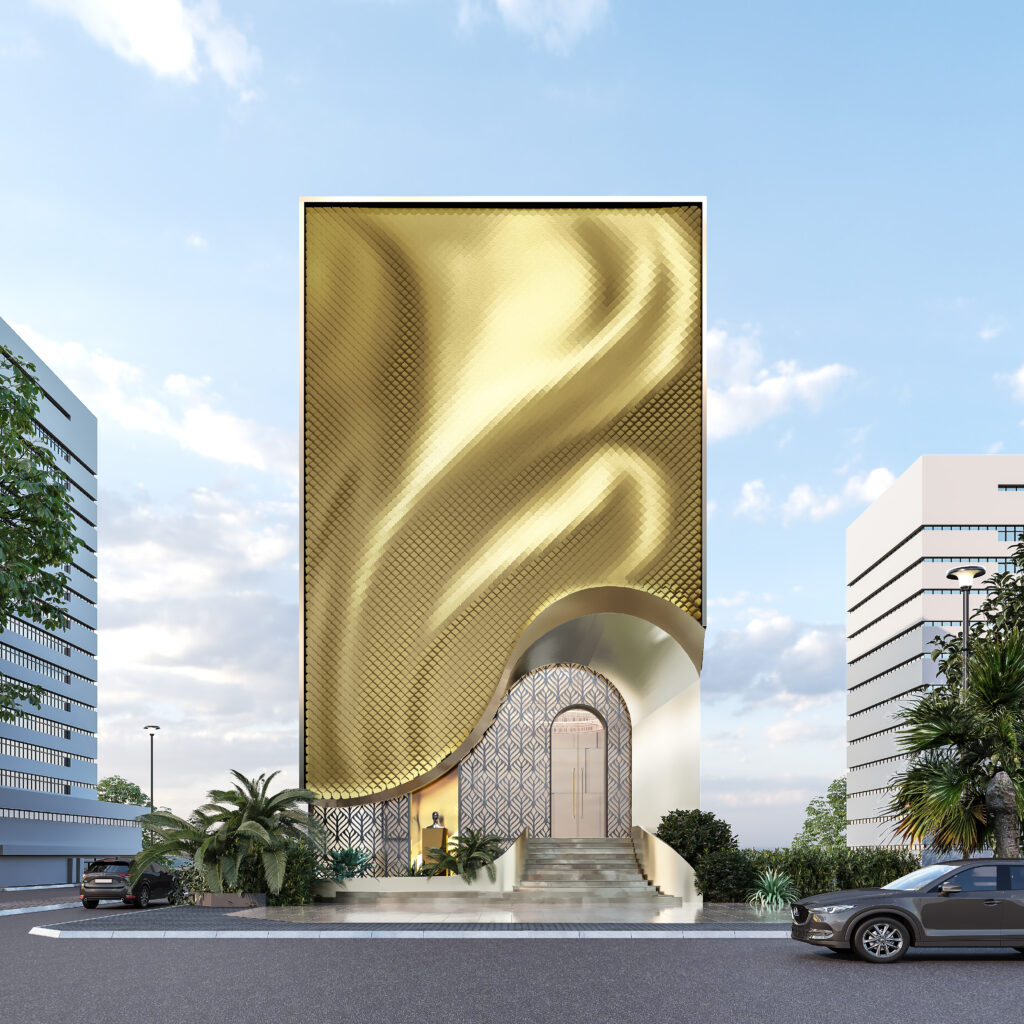
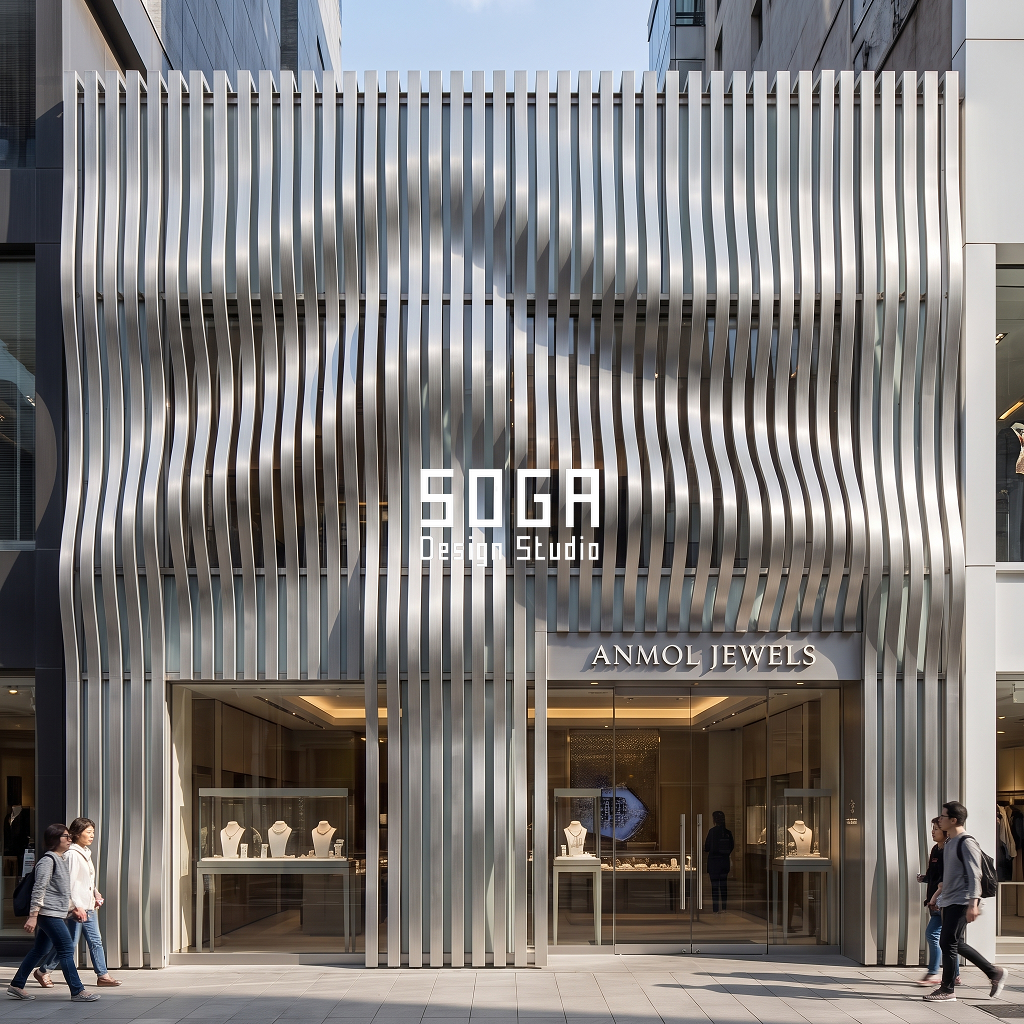
Gold is never flat.
Look at anything in the display case behind that glass. A bangle, a kada, a necklace. Not one flat surface on any of it. Every jewellery form is curved, drawn, folded, hammered until it catches light from more than one direction at once. That is the entire craft. Metal bent until it holds light.
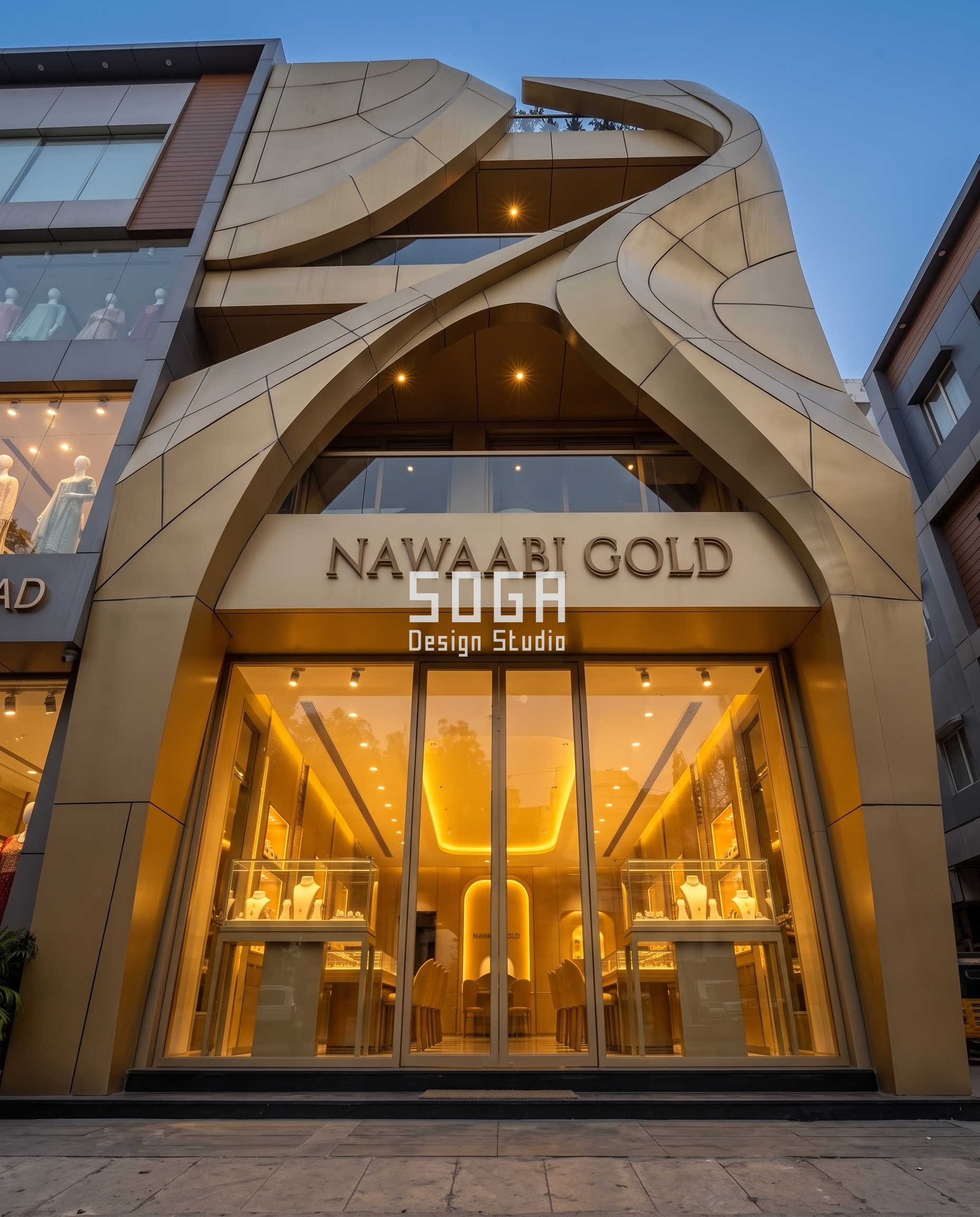
So for Nawaabi Gold we asked one question. If the product is never flat, why is the building?
Metal Treated the Way a Goldsmith Treats Metal
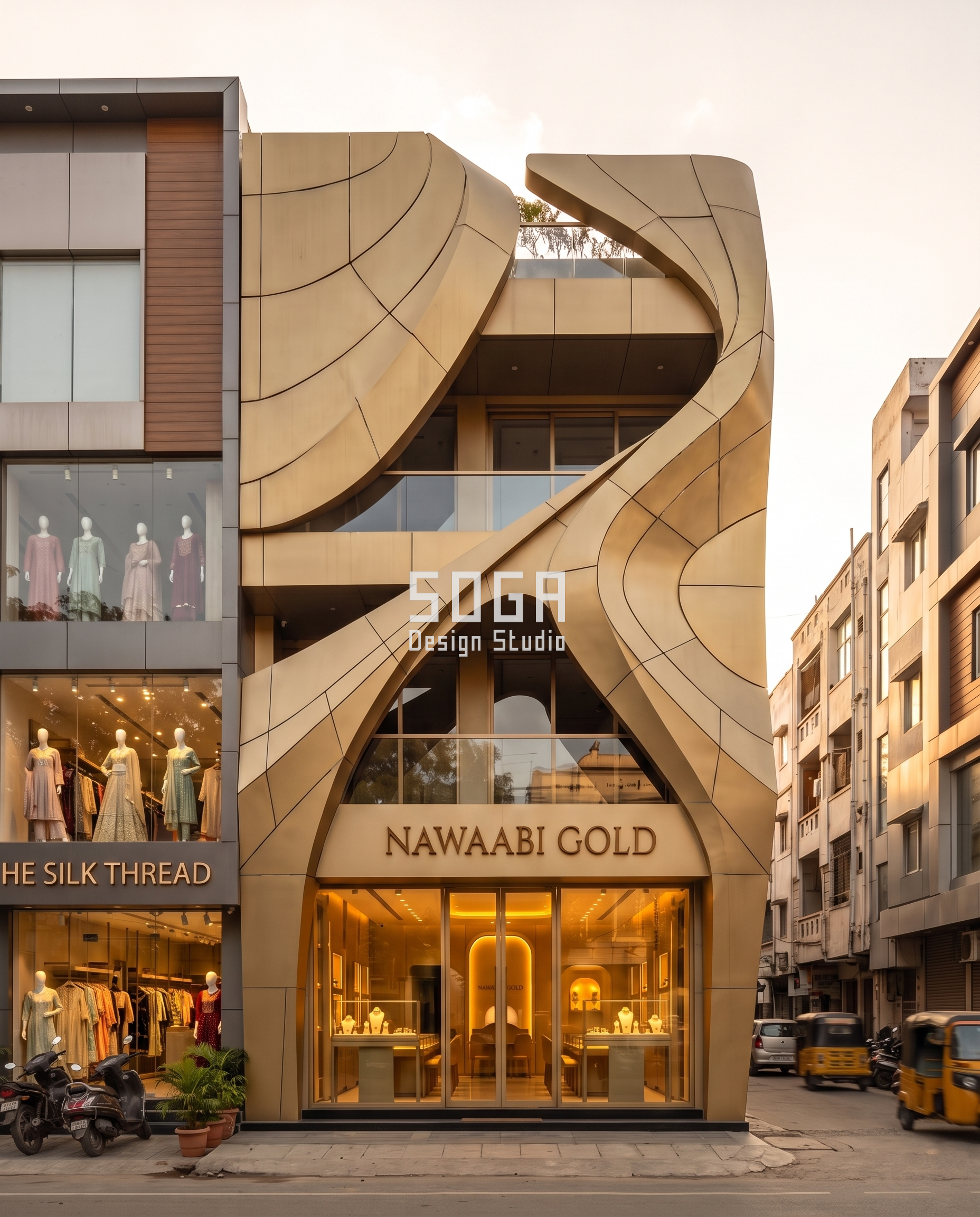
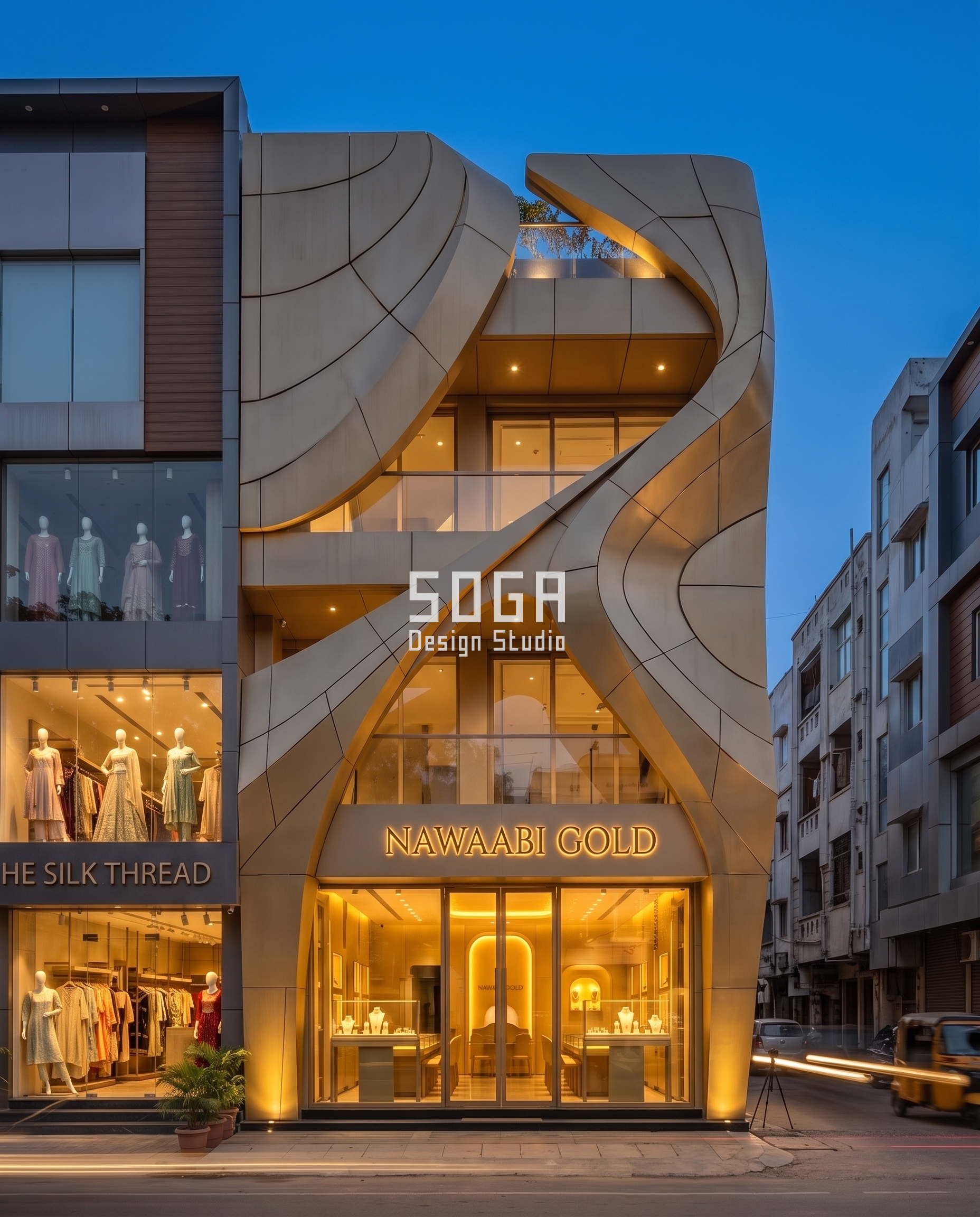
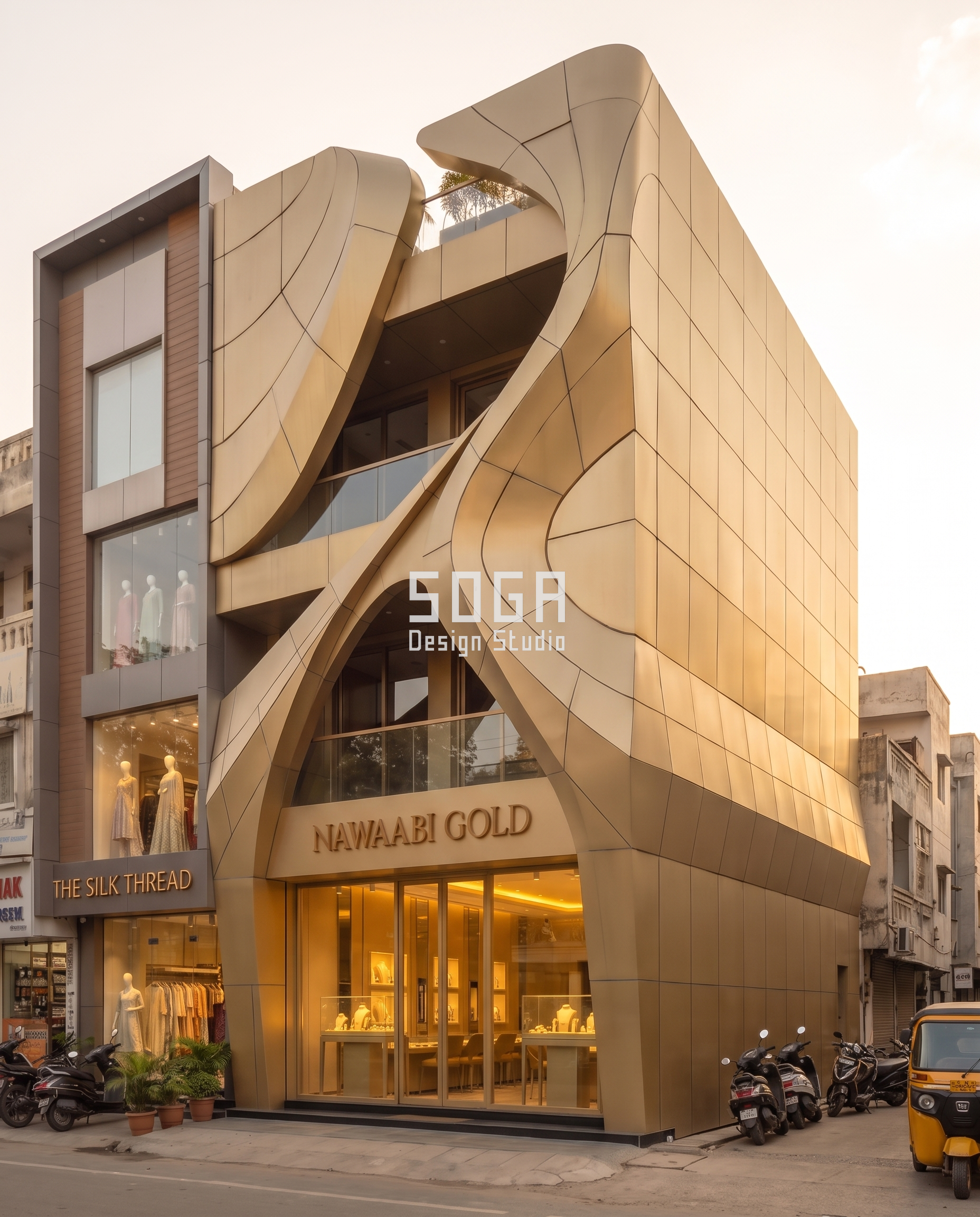
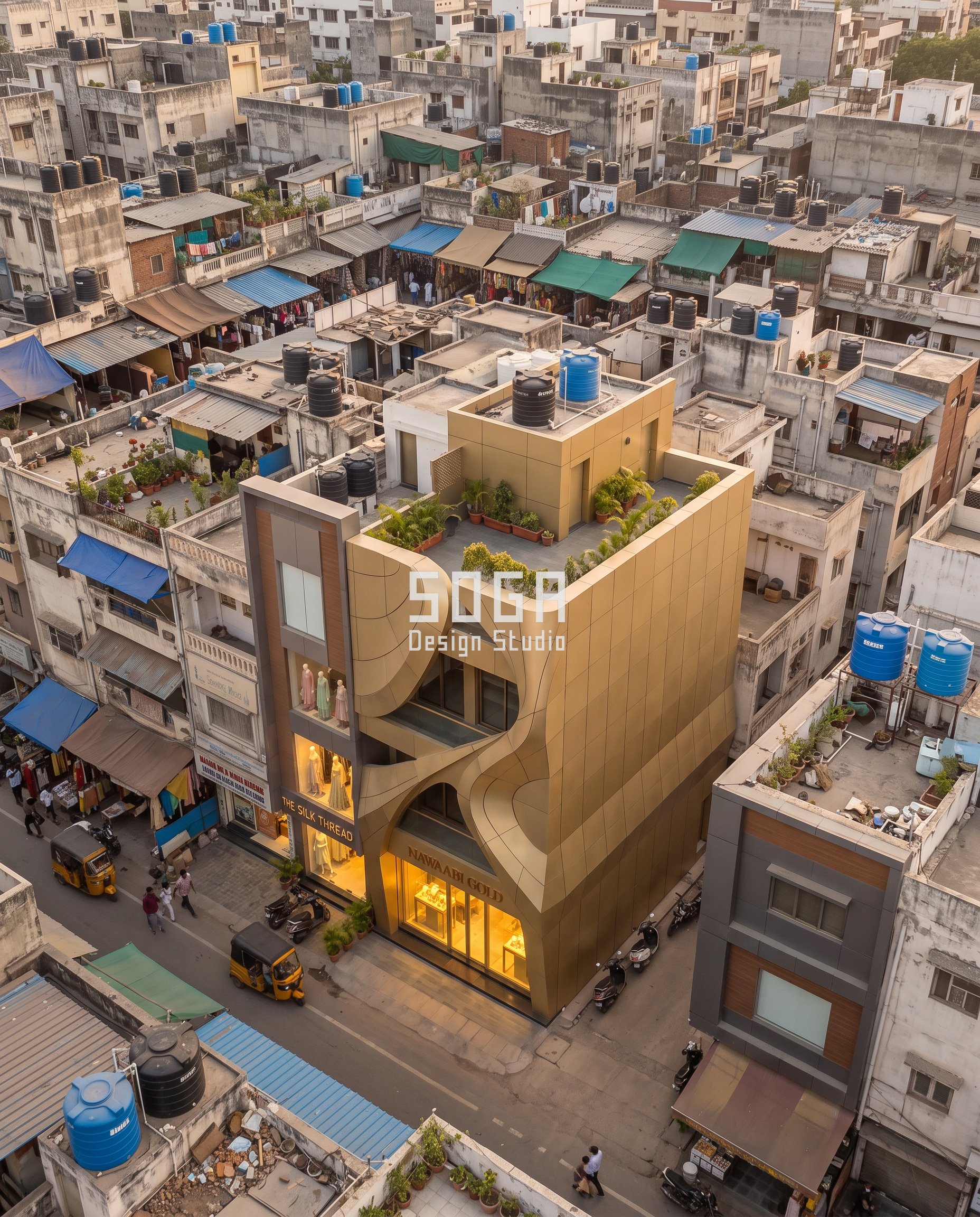
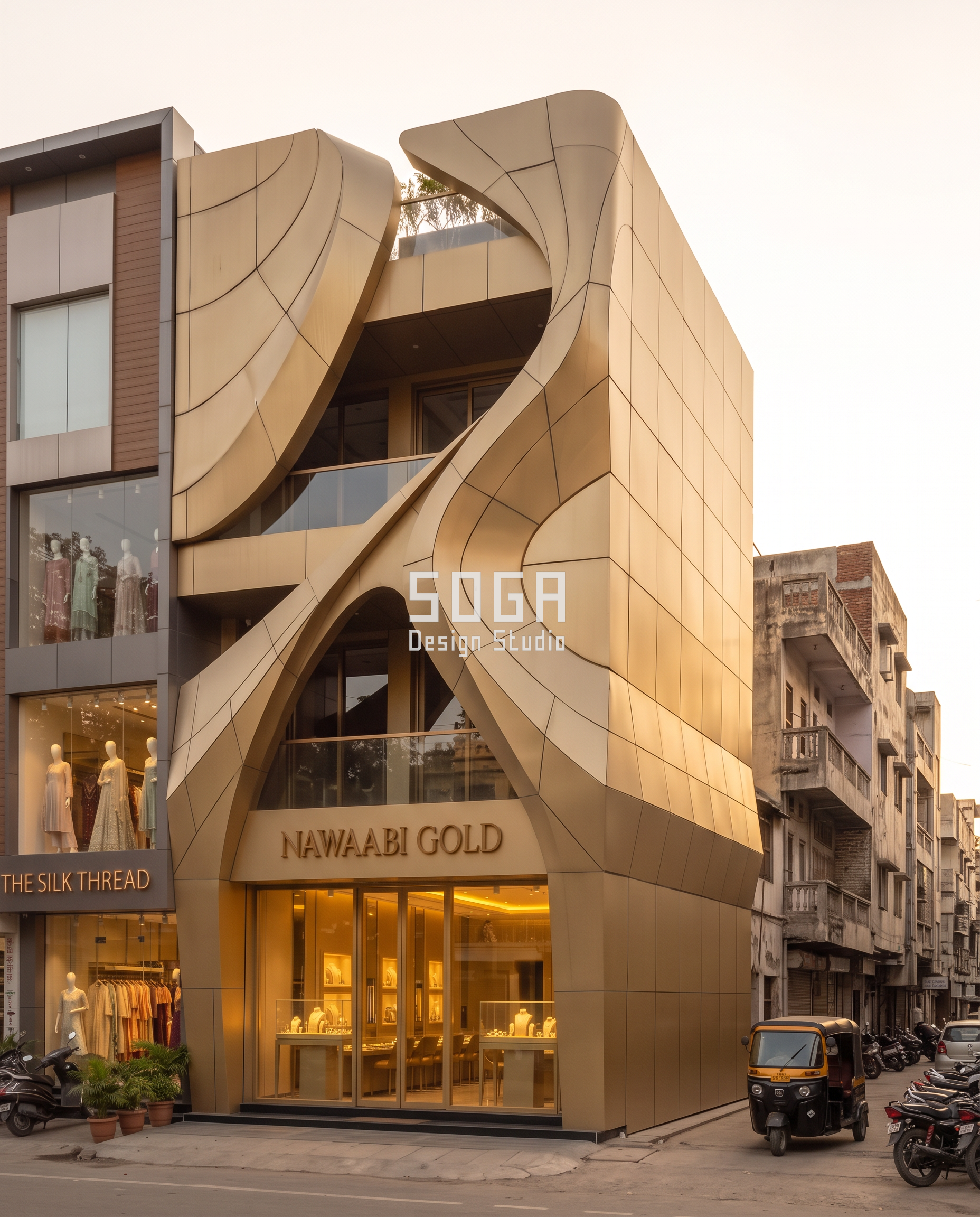
This facade is a sheet of metal treated the way a goldsmith treats a sheet of metal. Drawn, curved, folded. It comes down into an arched portal at the entrance, rises across the levels, and peels open at the top like a bangle left unclosed.
The Seams Are the Point, Not the Problem
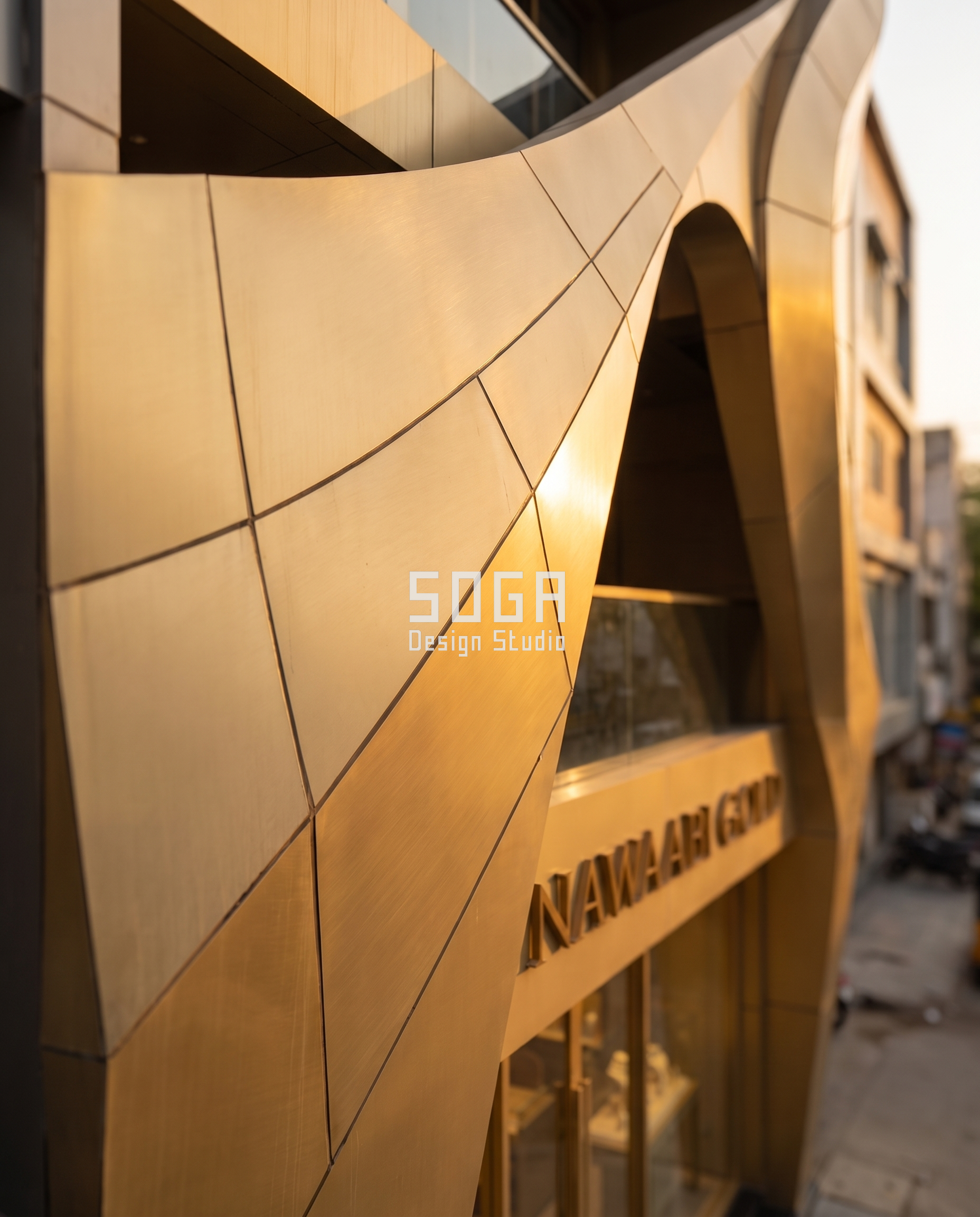
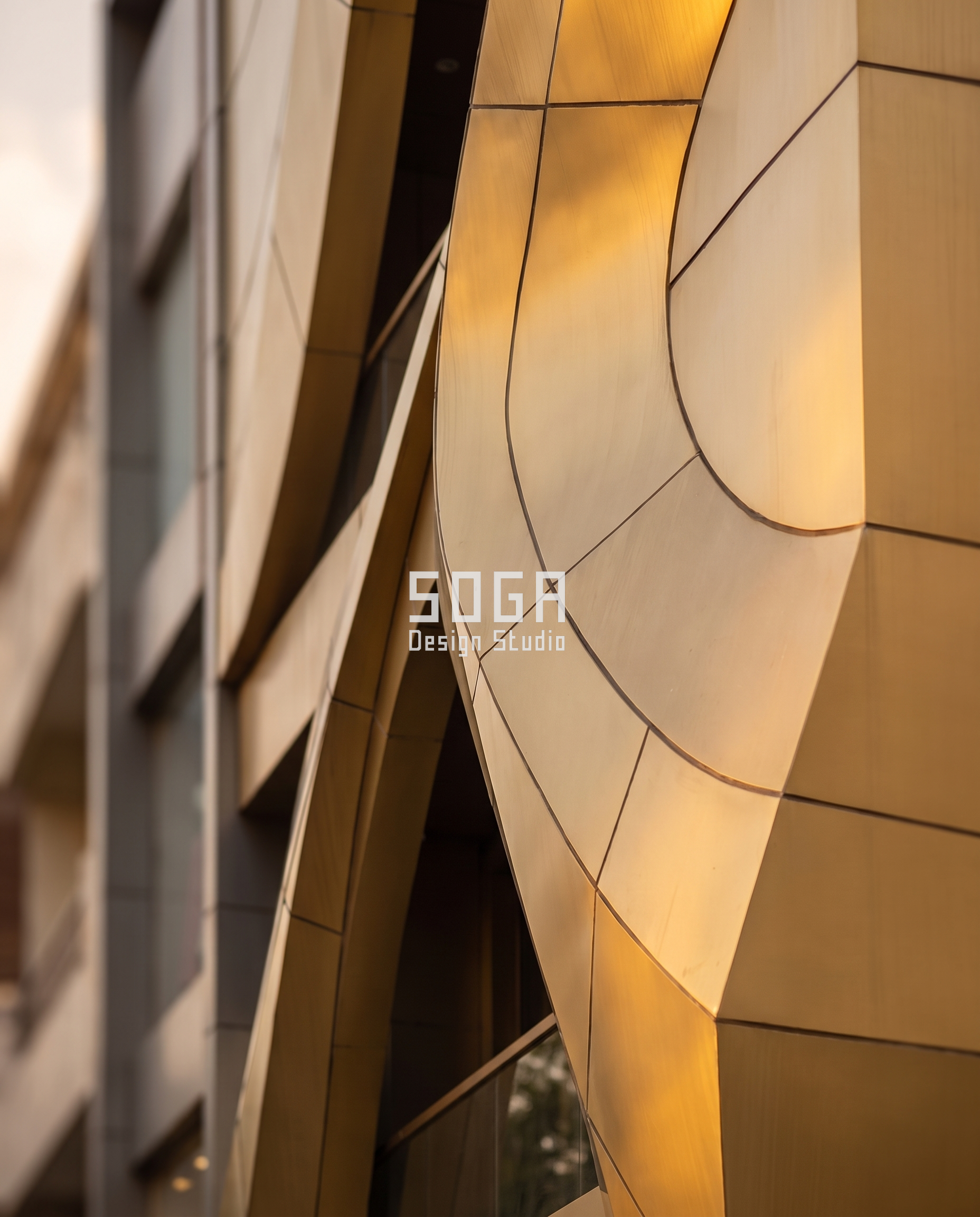
The seams are not hidden — the same way a jeweller does not hide the joint on a hand-drawn piece. They follow the curve. Every panel is a different shape, resolved through parametric modelling and unrolled flat for fabrication. Nothing on this facade is a standard, repeated module; each panel exists because the curve at that exact point demanded that exact shape.
Why Soft Matte, Not Mirror-Bright
The finish is a warm champagne-gold in soft matte, so it holds evening light the way jewellery does instead of going mirror-bright at noon. A polished, mirror-finish gold would flatten into a glare under direct Indian sun and go dead at night; the soft matte does the opposite — it stays legible and warm through the full arc of the day, and comes alive under the storefront’s own lighting after dark, which is when most jewellery shopping actually happens.
The Shop Sells Art Made of Metal
The shop sells art made of metal. So the shop is art made of metal.
Anyone can draw one curve on a rendering. Making an entire building’s skin fold, seam, and catch light the way a single piece of jewellery does — and making every one of those uniquely shaped panels fabricable and installable on an actual Indian high street — is the actual work.
Frequently Asked Questions
How is a fully curved, seamless-looking metal facade like this actually fabricated?
A: Every curved surface is broken down through parametric modelling into individually shaped flat panels, each one “unrolled” from its 3D curve into a precise 2D cutting pattern before fabrication. No two panels on a facade like this are identical — the curve dictates the shape, not the other way around — which is why the seams are left visible rather than hidden: they’re following real geometry, not disguising a shortcut.
Why champagne-gold soft matte instead of a polished, mirror-bright gold finish?
A: A mirror-polish gold facade looks spectacular in a render and terrible in real Indian sun — it either blinds passers-by with glare at midday or goes flat and lifeless once the sun moves. A soft matte finish holds colour and warmth consistently through the day and, critically, glows rather than reflects under the shop’s own evening lighting — which is when a jewellery storefront actually needs to perform.
What material is typically used for a folded gold-finish facade like this?
A: Projects like this are usually built in powder-coated or anodised aluminium composite panelling (ACP) or solid aluminium sheet, engineered in a champagne-gold soft-matte finish. A designed, three-dimensional metal elevation in India typically runs from around ₹450 per sq.ft for a simpler entry system up to ₹1,800–3,000+ per sq.ft for a fully sculptural, lit signature facade like this one — the panel count and curve complexity are what move the price.
Does an arched, folded facade like this work on a narrow high-street shop plot?
A: This is exactly the site condition it was designed to solve. Indian jewellery showrooms are almost always on tight, narrow high-street frontages sandwiched between other shops, where the entire brand statement has to happen on one street-facing plane. An arched portal that draws the eye up and in, rather than a flat signboard-and-glass front, is what lets a narrow shop still read as a landmark from down the street.
How does this compare to SOGA’s other jewellery showroom facades, like JKJ Jaipur or Ramo Jewel Chennai?
A: Each SOGA jewellery facade starts from a different craft metaphor rather than a repeated formula — JKJ Jaipur’s gold sequin facade and Ramo Jewel Chennai’s brass and copper circular forms each read the jeweller’s own material language differently. Nawaabi Gold’s is drawn from goldsmithing technique itself: a single folded, curved sheet, seamed like hand-worked metal rather than faceted or perforated like the others.
Does the facade need special maintenance because of the exposed panel seams?
A: No more than any exterior metal cladding — the seams are sealed and weatherproofed as part of standard facade detailing, they’re simply left visually expressed rather than hidden behind a filler strip. Routine cleaning of the powder-coated or anodised surface is the only maintenance most projects like this report needing.
Send This to Someone Still Using a Glass Front and a Big Board
Send this to the jeweller who still thinks a glass front and a big board is enough.
SOGA Design Studio designs parametric facades for retail, residential, and commercial buildings across India, Dubai, and Singapore — including showroom facades for jewellery brands that want their building to read like their product. If your storefront still looks like everyone else’s on the street, get in touch.