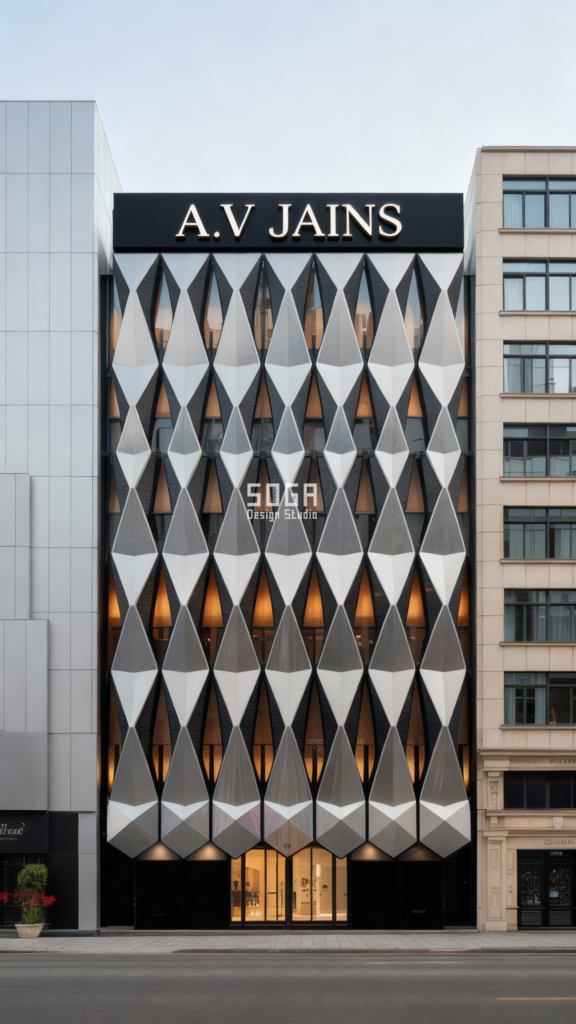
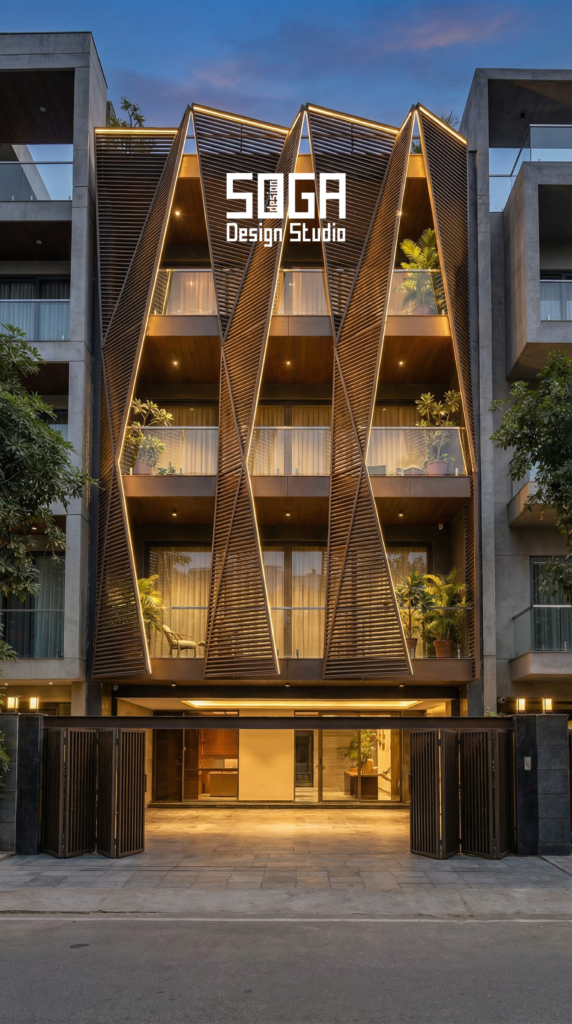
If you searched “facade designer near me”, you were protecting yourself against something real — but distance is not the thing that protects you. A facade designer produces drawings: a setting-out grid, a panel schedule, substructure positions, junction details, a specification. None of those are made on your street, and none of them get better because the person drawing them lives twenty minutes away.
The instinct is right for a plumber, an electrician or a mason, because their work is the physical presence. It transfers badly to design, and it quietly costs you something: filtering to one city can cut the number of studios you could have chosen from by an order of magnitude, in exchange for a benefit that mostly does not exist.
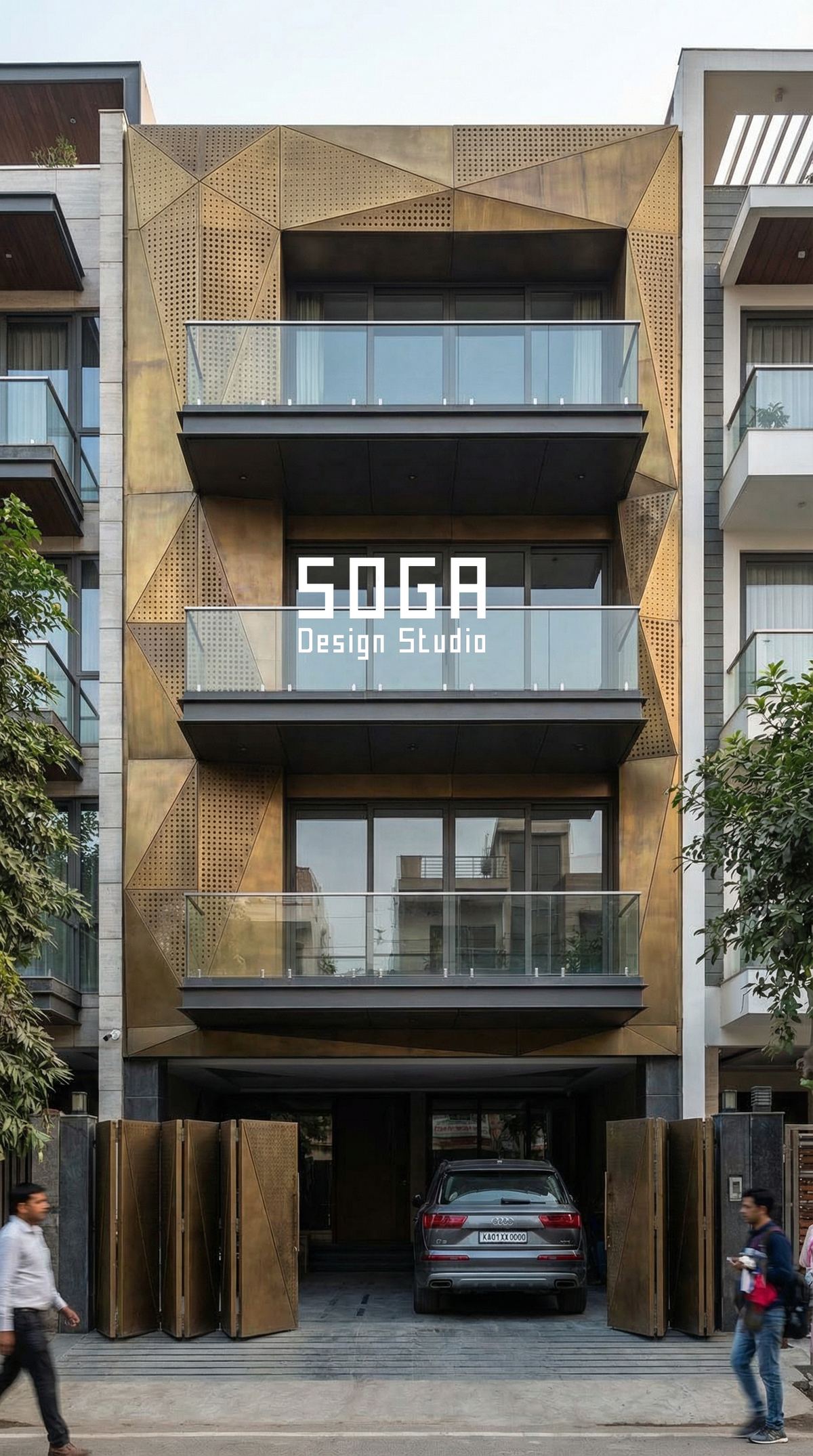
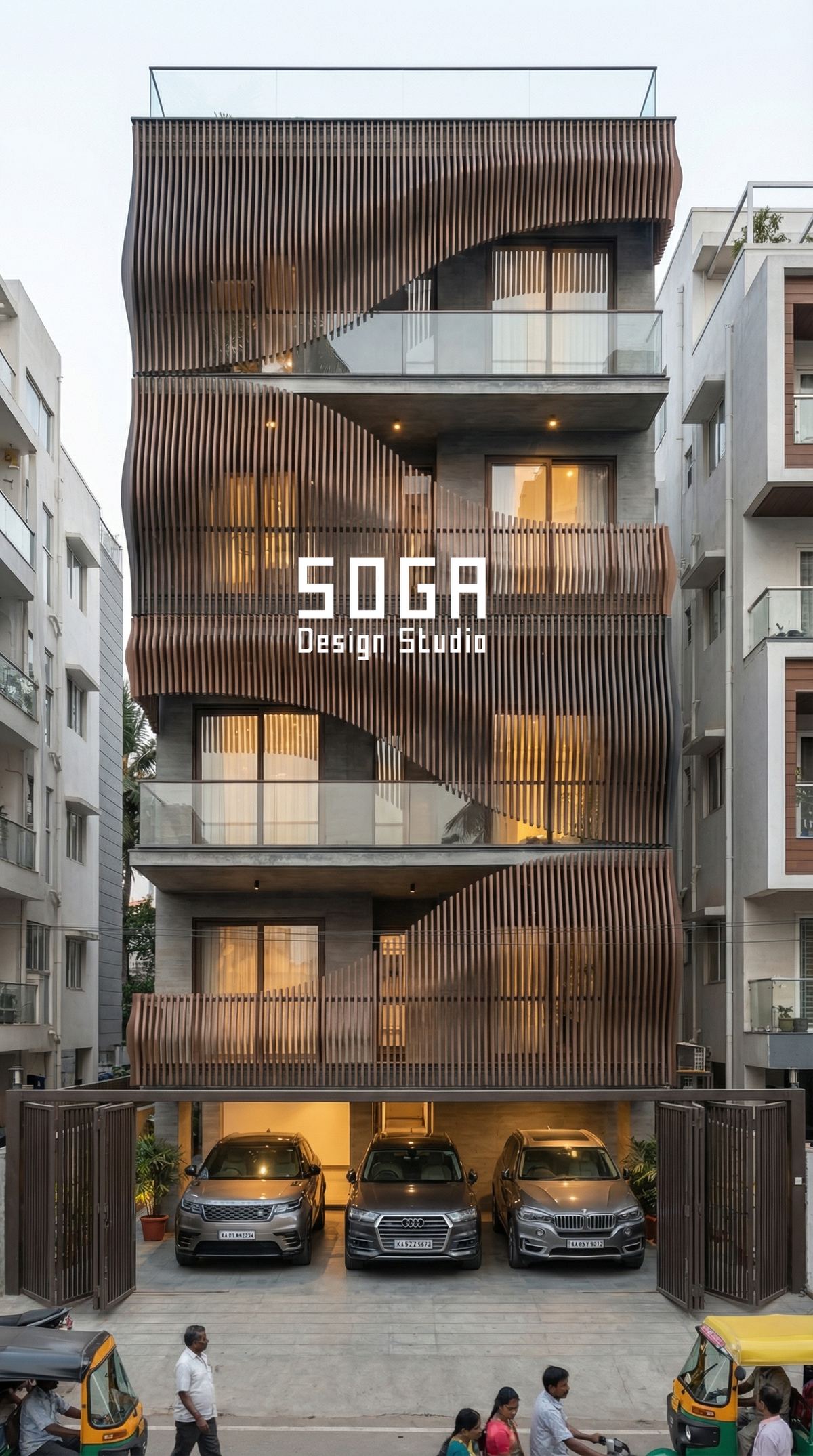
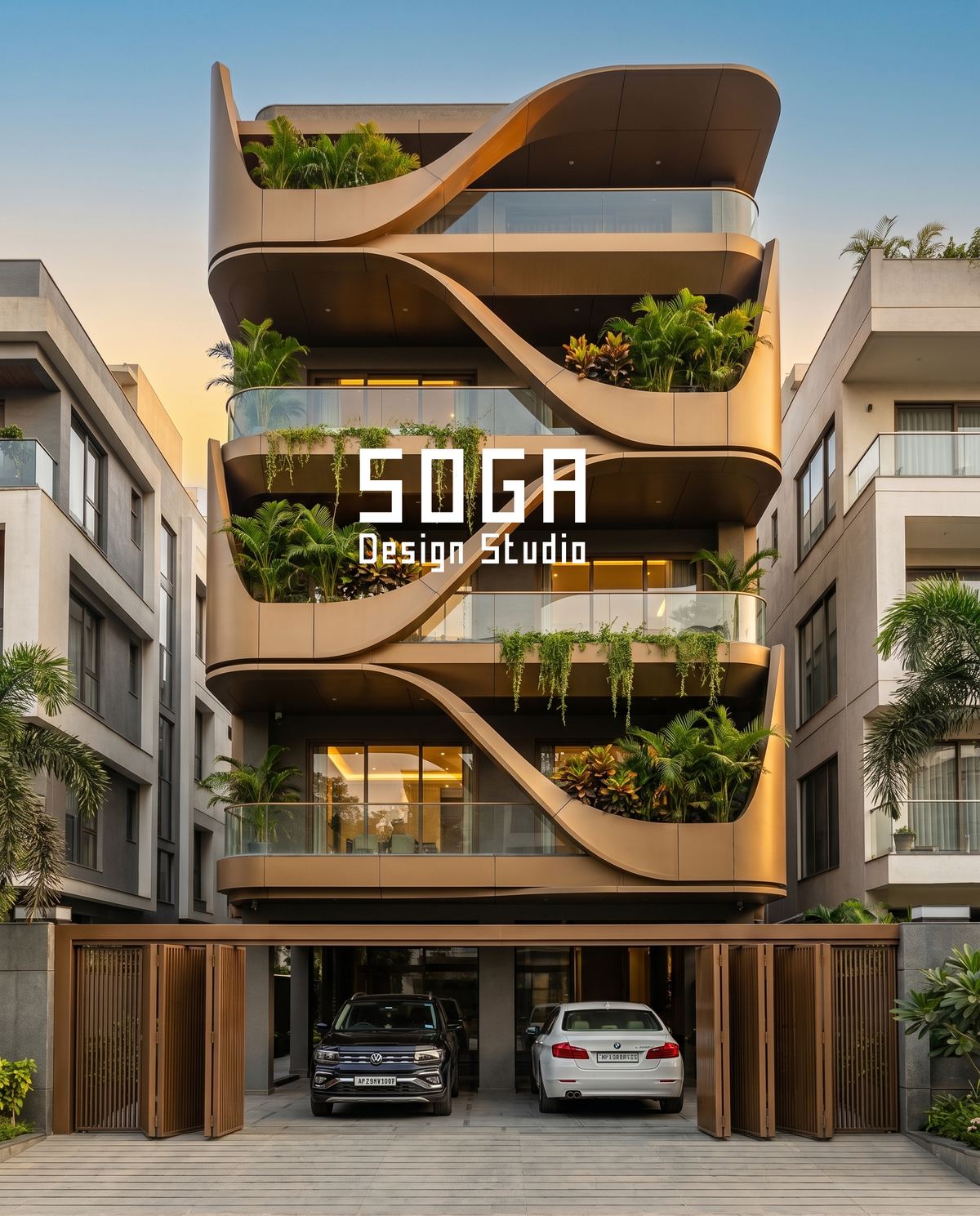
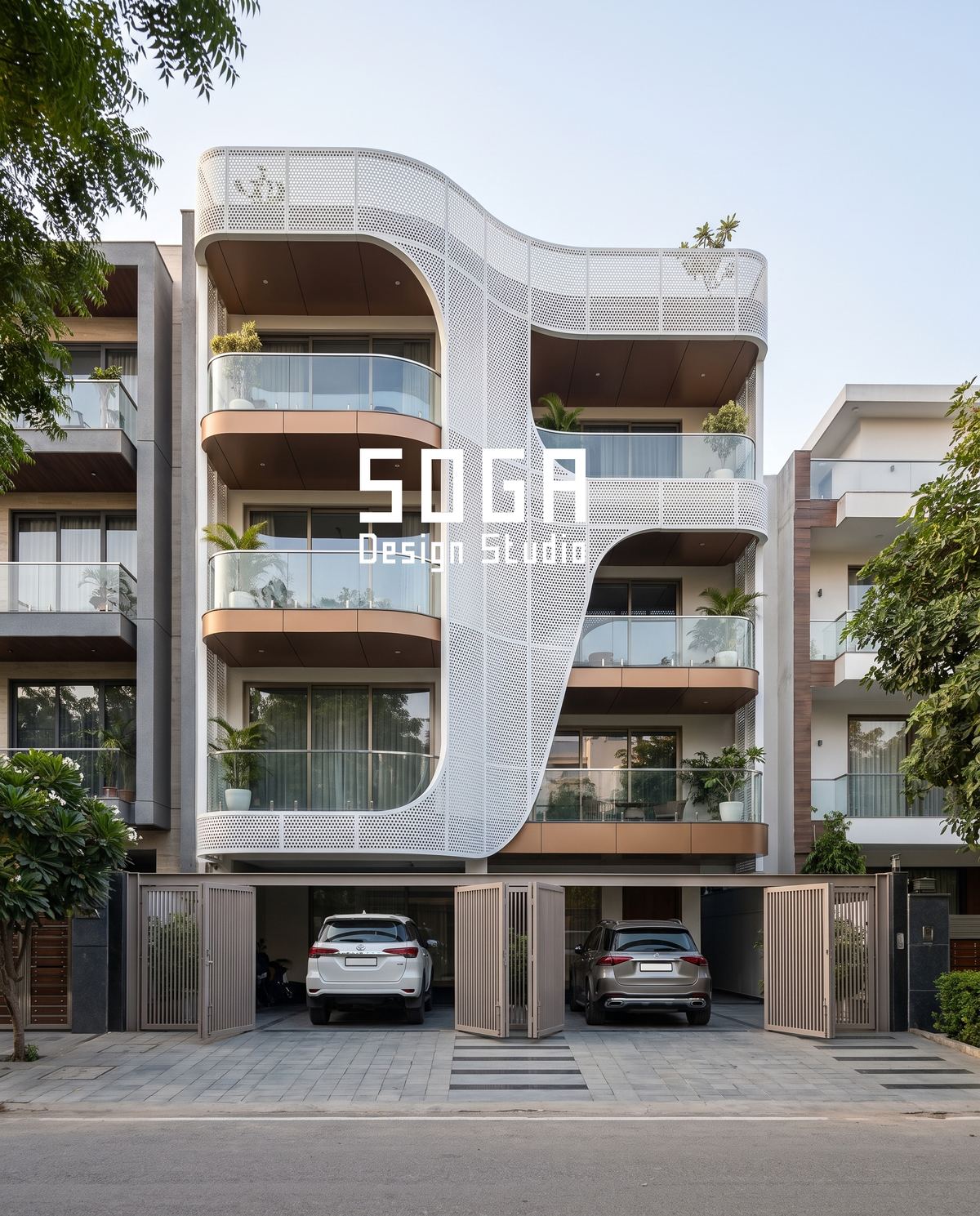
This guide sets out what genuinely has to be local on a facade project, what never did, the four things distance actually affects and how each is handled, when you should insist on someone local, and how a studio runs a project in a city it is not sitting in. Design studies shown are SOGA concepts.
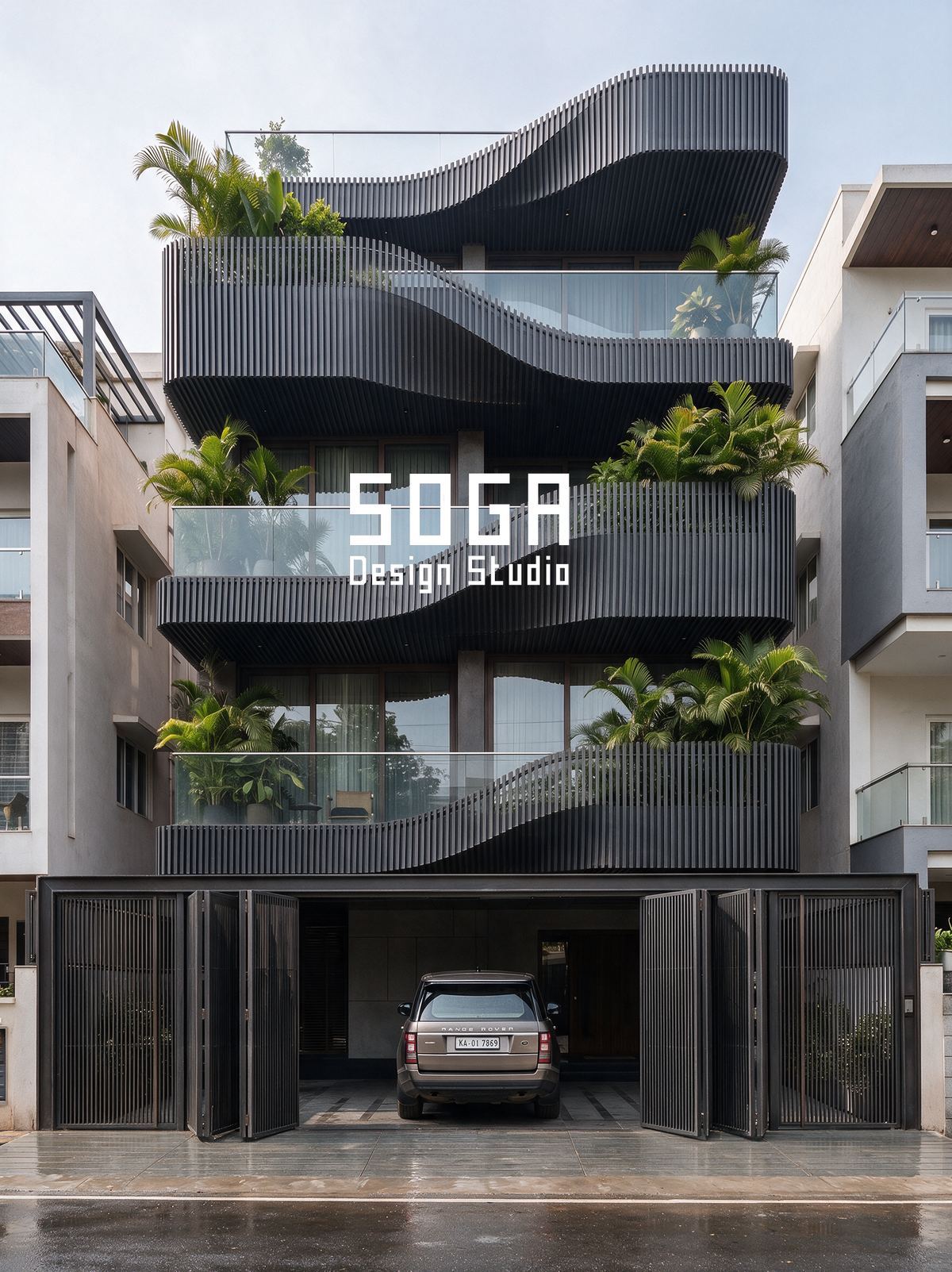
What You Were Actually Worried About
Nobody searching for a designer nearby wants a shorter drive. Underneath the search are four specific fears, and it is worth naming them because three of the four have nothing to do with geography.
You are worried that nobody will come to the site when it matters. That the person will disappear once paid. That they will not understand local materials, local labour or local approvals. And that if something goes wrong, there is nobody you can physically go and find.
- “Will anyone actually visit the site?” A real concern — and it is answered by a written visit count in the appointment, not by an office address.
- “Will they vanish after payment?” Also real, and also answered by milestones tied to issued drawings rather than by proximity. A local studio can stop answering the phone just as easily.
- “Will they understand local material and labour?” The one fear with genuine substance. It is about market knowledge, not distance — and it is testable by asking directly.
- “Where do I go if it goes wrong?” Understandable, but the party you would actually chase is the fabricator or the contractor, who is local on every project regardless.
So the useful version of your search is not “who is near me”. It is “who will document this properly, name their site visits, and know what my city’s fabricators can actually make”. That is a different question with a much larger and better answer set.
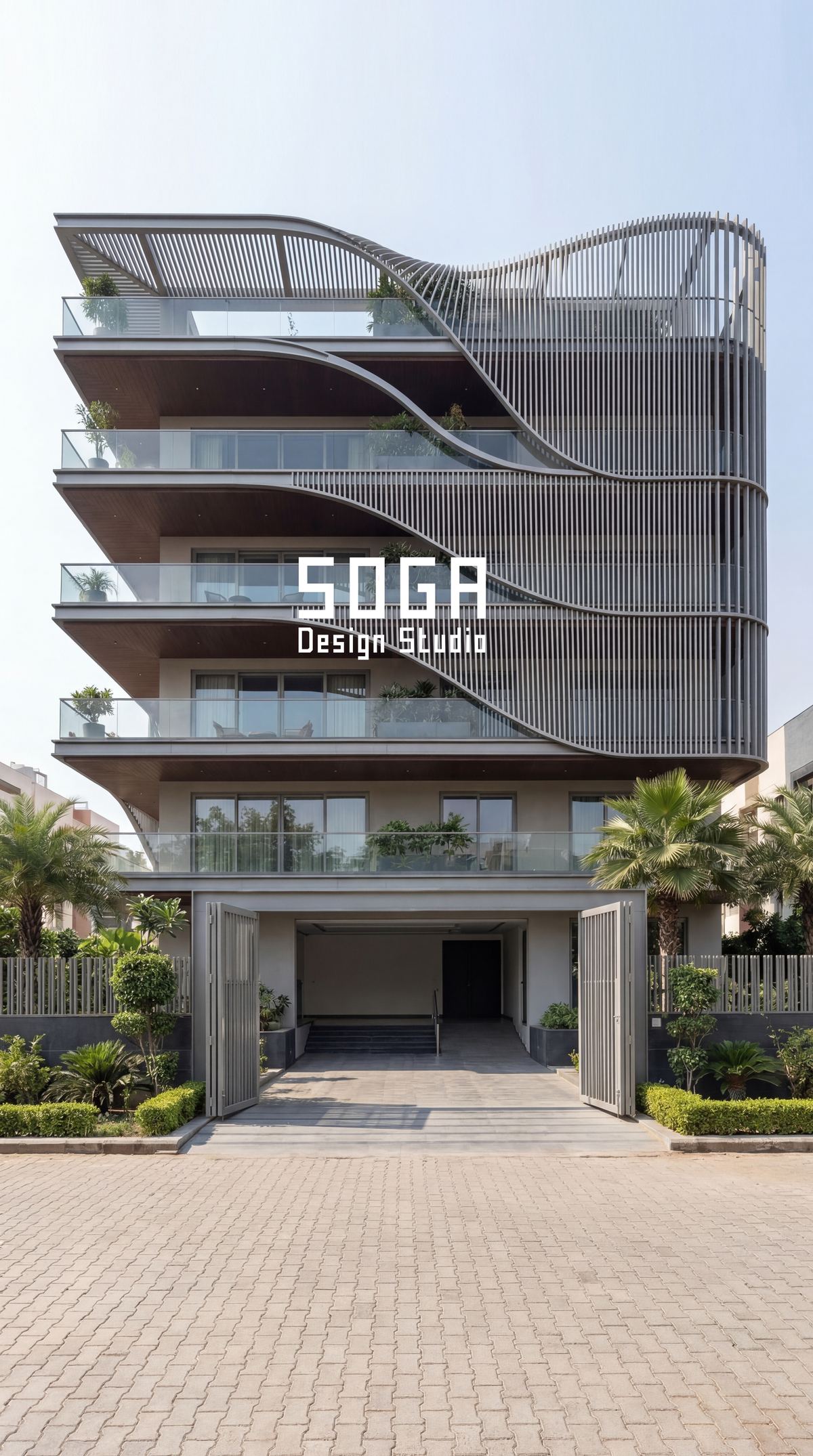
What Genuinely Has To Be Local, And What Never Did
A facade project has perhaps eight roles. Three of them are physically bound to your plot. The rest are not, and never have been.
| Role | Must be local? | Why |
|---|---|---|
| Facade fabricator | Yes — or regionally reachable | Panels are heavy, and transport cost and damage risk rise with distance |
| Installer / erection crew | Yes | The work is physical, on scaffold, on your street |
| Main contractor | Yes | Runs the frame, the access and the programme daily |
| Site survey of the built frame | Yes | Someone has to measure the actual building |
| Facade designer | No | Produces drawings, schedules and specifications |
| Facade detailer / engineer | No | Works in the model and the drawing set |
| Shop drawing reviewer | No | Reviews the fabricator’s drawings, wherever they are |
| Structural consultant for the frame | Usually already appointed | Sits with the frame design, not the skin |
Read the pattern: everything that touches the building is local, and everything that decides what the building will be is not. That split is not a modern convenience, it is how the discipline has always worked — the difference is that the drawings used to travel by courier and now they do not.
Notice also that the three local roles are ones you appoint locally anyway, and a good designer helps you choose them. Hiring a nearby designer does not make your fabricator any nearer.
The Four Things Distance Actually Affects
Distance is not nothing. It affects four things, all of which are solvable, and all of which should be settled in writing rather than assumed.
| What distance affects | How it is solved |
|---|---|
| Site visits | Name the number and the stages in the appointment — typically frame survey, mockup and first bay |
| Response time in an emergency | Agree a same-day response commitment by call and photograph, which is faster than a drive anyway |
| Knowledge of local fabricators | Ask the studio which fabricators it has worked with in your state, and take a reference |
| Understanding local material availability | Ask what it would specify in your city and why — the answer is immediate if the knowledge is real |
| Local bye-laws and approvals | Usually the architect’s scope, not the facade designer’s; confirm who is carrying it |
| Language and site communication | The fabricator and contractor speak to the site; agree who translates drawings into instructions |
The third and fourth rows are the ones worth pressing hard on, because they are the substance behind the proximity instinct. A studio that has never specified in your climate or worked with your region’s fabricators is a genuine risk — but that is a knowledge gap, not a distance gap, and a studio three streets away can have exactly the same gap.
Test it directly. Ask what it would specify for a west-facing elevation in your city and why, and whether it has worked with a fabricator in your state. Both answers arrive in seconds if the knowledge exists, and neither can be faked with an address.
What A City-Limited Search Costs You
Facade design is a specialisation inside architecture, and specialists are unevenly distributed. In most Indian cities the number of studios that detail facades properly — setting-out drawings, panel schedules with part numbers, junction details, shop drawing review — is small. In many it is nearly none, which is why so many house elevations get built from a render.
Filtering by distance therefore does something counterproductive: it removes the specialisation filter and replaces it with a geography filter. You end up choosing the best available nearby rather than the best available, and on a facade the gap between those two shows up permanently on the street.
- You lose the option of a studio that has built your system before. A studio that has detailed forty coursed metal facades is worth finding, wherever it sits.
- You lose price competition. Three proposals from one city is a thin market; six across the country is a real one.
- You gain nothing on the fabricator. That relationship is local either way.
- You often gain nothing on visits. A local studio that has not written its visit count into the appointment may visit less than a distant one that has.
None of this argues that a nearby studio is worse. If the best-documented studio you can find happens to be in your city, that is a straightforward win and you should appoint it. The argument is only that the location should be a tiebreaker, not a filter applied before you have looked at anybody’s drawings.
When You Should Insist On Local
There are real cases where proximity earns its place, and it is worth being honest about them rather than pretending distance never matters.
- A renovation or repair on an existing facade. Diagnosis needs eyes on the building, often repeatedly and at short notice.
- A project already in trouble. Recovering a half-built facade is site-led work, and the frequency of visits changes the economics.
- Very small scope. If you want one elevation looked at once, travel can outweigh the work itself.
- An owner who genuinely wants regular in-person meetings. A legitimate preference, and worth saying at the outset rather than discovering later.
- Heritage or approval-heavy contexts where repeated local authority interaction is part of the job.
Outside those, the honest position is that a new-build facade on a plotted house is drawing work punctuated by a handful of visits, and the visits are the part to specify rather than the address.
What To Search For Instead
If “near me” is the wrong filter, something has to replace it, and the replacement is not complicated. You are looking for evidence of documentation and evidence of regional knowledge, in that order.
Search by what you want built rather than by where you are, then apply three checks to whoever comes back.
| Instead of searching | Search for | Because |
|---|---|---|
| facade designer near me | the system you want — coursed metal, terracotta, fins, screen | You surface studios that have detailed that family before |
| elevation designer in my city | parametric or facade design studio India | Specialists are national, and the pool is far larger |
| cheapest elevation designer | facade working drawings + shop drawing review | It filters for studios that document rather than render |
| designer with the best portfolio | setting-out drawing, panel schedule, junction detail | Portfolios show intent; those three show competence |
Then apply three checks, in this order
First, ask for the deliverable list — every drawing to be issued, at what scale, at which stage. This removes roughly half of any shortlist immediately and makes the rest comparable, which no amount of browsing does.
Second, ask for evidence of buildability: a setting-out drawing from a real project, a 1:5 junction detail, a panel schedule with its part-number count, and a fabricator reference you can call. None of it is confidential, and a studio that builds will have it to hand.
Third — and only third — ask about your region. What would it specify for a west-facing elevation in your city, and which fabricators has it worked with in your state? This is where the legitimate part of the proximity instinct gets satisfied, and it is satisfied by an answer, not by an address.
What a national shortlist looks like in practice
Five or six studios, drawn from wherever the work is good, all sent the same one-page brief: plot size, floor count, budget band, timeline, and what you want the facade to do. Identical briefs are what make the replies comparable; different briefs return proposals you end up judging on presentation.
From those, two or three will produce a real deliverable list and pass the buildability check. At that point, if one of them happens to be in your city, appoint it — you have arrived at proximity as a tiebreaker between qualified studios, which is exactly where it belongs, rather than as the filter you started with.
How SOGA Design Studio Works Across India
We are a facade and parametric design studio working on plotted houses and small commercial buildings across India, and most of our projects are in cities we are not sitting in. That is normal for the discipline, and this is the arrangement that makes it work.
The drawings are ours. The hands are local. The visits are named in advance.
| What we do | What stays local to your site |
|---|---|
| Concept, general arrangement, setting-out drawing | The main contractor and the frame |
| Panel schedule with part numbers, material specification | The fabricator, chosen with our input and your approval |
| Substructure, sections, junction and edge details | The installation crew and access |
| Shop drawing review, cycles named in the appointment | The dimensioned survey of the built frame |
| Named site visits at the stages that decide quality | Day-to-day supervision by your contractor |
| Same-day response by call and photograph | Anything requiring hands on the building |
We will tell you which fabricators we have worked with in your state, and give you a reference to call. If we have not worked in your region before, we will say so and explain how we would de-risk it rather than pretending otherwise — usually by involving a fabricator early and building a mockup before production.
And if you would still rather appoint someone in your own city, that is a reasonable choice. Ask them for the same things this page recommends: the deliverable list, the named visit count, the fabricator reference. Those three questions improve the outcome whoever you appoint, and that matters more to us than who gets the job.
The Honest Limit
Remote working is not free of cost, and it would be dishonest to pretend the trade-off is zero.
What you genuinely lose is casual presence — the unplanned drop-in, the designer noticing something on a Tuesday that nobody reported. On a project where the contractor is weak or the owner is not on site regularly, that unplanned oversight has real value, and its absence has to be replaced deliberately: more named visits, photographs at agreed stages, a site WhatsApp group that the designer is actually in.
The second limit is that none of this rescues a bad appointment. A distant studio that cannot produce a setting-out drawing is not improved by being distant, and a nearby one with the same gap is not improved by being nearby. Distance is a small variable sitting on top of a much larger one, which is whether the studio documents its work. Sort that first, and the map stops mattering nearly as much as it seemed to.
Frequently Asked Questions
Do I need a facade designer near me, or can they work from another city?
For a new-build facade, another city is normal and usually better, because facade design is drawing work — setting-out grids, panel schedules, substructure and junction details. What must be local is the fabricator, the installer, the main contractor and whoever surveys the built frame, and you appoint those locally regardless. Insist on local mainly for renovations, projects already in trouble, or very small scope.
Who visits the site if the facade designer is in another city?
The number and the stages should be written into the appointment rather than assumed — typically the frame survey, the mockup approval and the first installed bay, which are the three points that decide quality. Day-to-day supervision stays with your main contractor, who is on site daily whether the designer lives nearby or not.
Will a designer from outside my city understand local materials and labour?
That is the one real concern behind the proximity instinct, and it is a knowledge question rather than a distance one — a studio three streets away can have the same gap. Test it directly: ask what it would specify for a west-facing elevation in your city and why, and which fabricators it has worked with in your state. Both answers come immediately if the knowledge is real.
What do I lose by only searching for facade designers in my city?
Mostly choice. Facade detailing is a specialisation and specialists are unevenly distributed, so in many Indian cities the number of studios that produce setting-out drawings, panel schedules with part numbers and junction details is very small. A city filter replaces the specialisation filter with a geography one, and you gain nothing on the fabricator, who is local either way.
How do I judge a facade studio if I cannot visit its office?
By its documents, which is how you should judge one you can visit too. Ask for a setting-out drawing from a real project, a 1:5 junction detail, a panel schedule with its part-number count, a substructure drawing, a mockup photograph and a marked-up shop drawing. Then ask for a fabricator reference and call it. None of that requires being in the same city.
Related Reading
- The complete facade and elevation design FAQ guide for India
- Parametric facade design in India — the pillar guide
- Elevation designer near me: who actually comes to your site
- Can they actually build it? Vetting a parametric facade firm
- How to compare two facade design proposals in India
- What a facade design company in India actually delivers
Wherever Your Plot Is, Ask Us For The Drawing List
SOGA Design Studio designs facades for plotted houses and small commercial buildings across India — north, west, south and east — with the deliverable list, the review cycles and the site visits named in the appointment before work starts. Tell us where your plot is.