A sequin facade is priced per square metre of wall and bought per sheet of stock. Those two units are not the same, and the number converting one into the other is settled on a nesting sheet weeks before anything is cut. Scale geometry, lap dimensions, the carrier and pattern logic are resolved upstream — the territory of the complete sequin facade guide. This article starts at the cutting table.
That number, and the manufacturing route that follows from it, is the one SOGA Design Studio worked out with fabricators in India. The SOGA Sequin Facade is a sequin facade system developed by the studio for Indian fabrication, and what follows comes from cutting real sheets.
Everything that makes the system work on an elevation makes it awkward on stock. The parts are small, so there are tens of thousands of them. The exposed edge is shaped, so the outline is not a rectangle. And the lap means every square metre of visible wall needs more than a square metre of cut material. Manufacturing a sequin facade is a layout problem with forming attached.
Sequin facade manufacturing turns a scale family into nested flat blanks, cuts them from sheet, forms the edge returns and fixing hooks, applies a batch-controlled finish, then labels and packs scales by installation zone. Because each square metre contains many small parts, nesting efficiency and material yield drive cost more than pattern complexity.
Why small panels change the sequin facade manufacturing equation
Cutting cost tracks perimeter, not area. A large panel encloses a lot of area behind a short run of cut line; a scale encloses very little behind a cut line nearly as long. Halving the scale size roughly doubles the cut length needed per square metre of wall.
Yield here is the product of two fractions. Nest efficiency is blank area divided by the sheet area consumed to produce it. Coverage ratio is the exposed area of an installed scale divided by its cut area, since the lap, the head return and the hem are bought and never seen. Multiply the two and the result is delivered yield: the share of purchased stock that ends up as visible facade.
The recurring commercial failure is to count only one of them, so nest loss never lands on top of lap loss and the shortfall surfaces at the third sheet order. Quoting material as sheets per square metre of wall closes it.
Scale geometry from a fabrication point of view
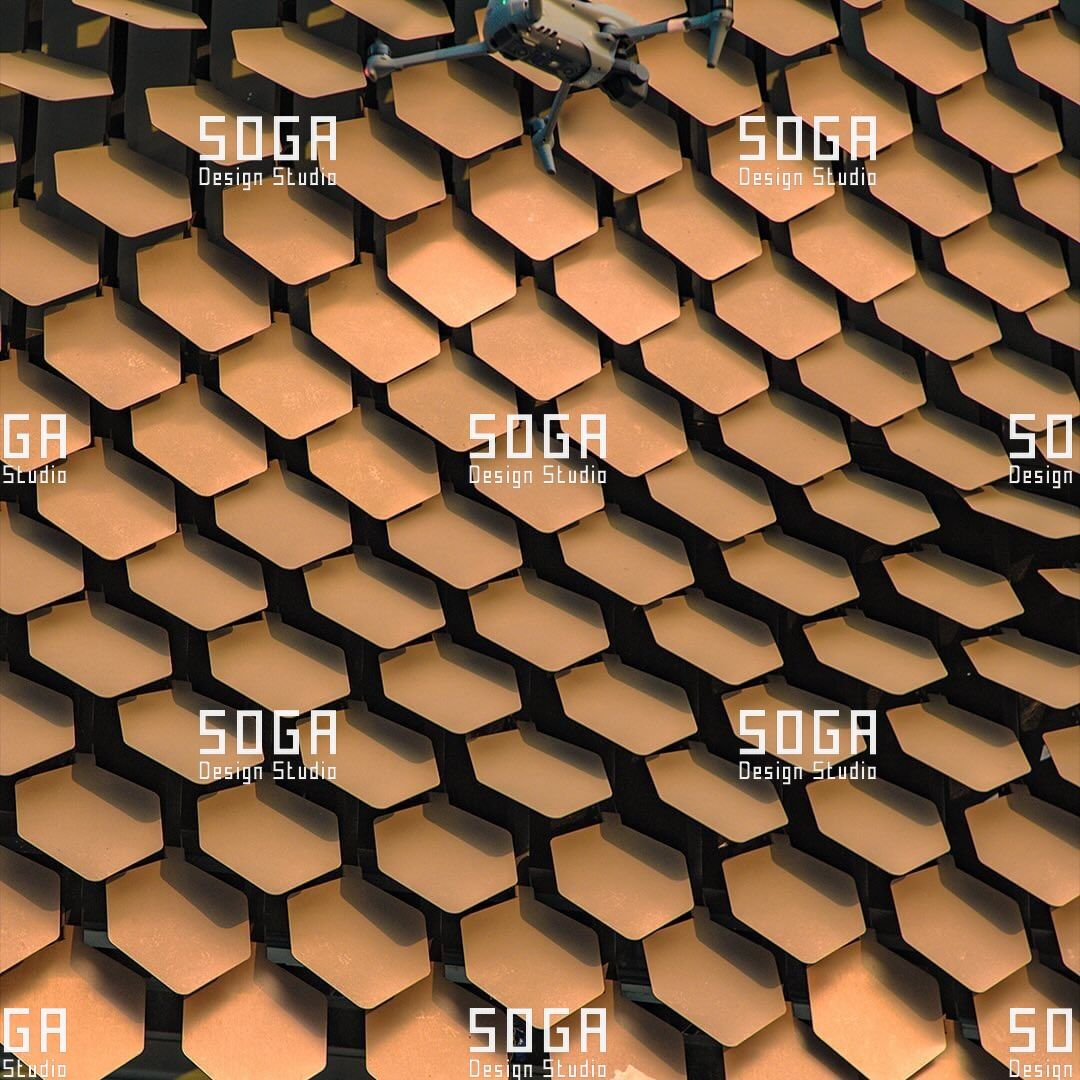
At the cutting table a scale is classified by one property: whether its outline lets the next part borrow its edge.
Straight parallel sides and a square head nest in columns, and adjacent parts share a cut line — one pass of the head makes the edge of two parts and removes the strip between them. Outlines curved on every side cannot. Their gaps are enclosed, unusable and repeated at every part position. So the useful move on a shaped scale is to shape one edge only: straight sides, square head, all the character in the lower edge. That constraint fixed SOGA’s scale outline, on a nesting sheet rather than on an elevation. A shoulder softened late to make the facade read gentler turns two shared straight edges into two arcs, and that cost appears as a yield line nobody attributes to it.
Two constraints bound how tight the nest can go. Minimum web width is the material holding the sheet together during cutting; go below it and the skeleton loses stiffness, parts tip up and the head strikes them — a machine crash, not a scrap part. Common-line eligibility exists only where shared edges are straight, parallel and equal in length, which a family of mixed heights loses unless its variation is carried in width.
Corner radii, edge returns and hook features
Corner radii are a cutting-speed decision before they are an aesthetic one: a sharp internal corner makes the head decelerate and dwell, and the dwell puts heat into an edge that is later coated. Returns and hems matter more, because they consume blank that never appears in the finished outline. Where flat patterns are developed after the nest is run, every part on the sheet grows, and the error stays hidden until the first sheet comes off short.
The fixing hook has the largest yield consequence of any feature and is usually treated as a detail. A hook folded up from the head adds its full developed height to every blank on every sheet. A hook lanced from the field of the part adds nothing. The two engage differently, which belongs with sequin installation and carrier systems. The failure mode is the third option: a separate clip riveted to each scale, costing no blank area and adding a part, a fixture, an operation and a fastener to every scale on the building. SOGA develops the hook as a feature of the blank for that reason.
Nesting: the single biggest cost lever

SOGA runs a nesting study before a sequin facade is priced, in this order.
- Freeze the scale family and develop every flat pattern, bend allowances stated rather than derived on the floor.
- Fix the stock format — sheet or coil, usable dimension after clamps, checked against the cutting bed, the forming machine and the finishing rack.
- Set the constraints explicitly: rotations, grain lock, web width, edge margin, common-line permission.
- Run single-type nests, then mixed-type nests. The second is the number that matters, because it is what the family costs together.
- Cost the offcut by tier before agreeing any yield figure.
- Return two or three outline changes to the design, while the geometry is still open enough to take them.
That last step is the loop described in computational design to fabrication drawings, applied to one question.
Nest efficiency, grain direction and offcut planning
Rotation is the largest free variable. A shaped scale permitted to sit head-to-tail — one part upright, the next inverted — interlocks with its neighbour, and the space between two parts becomes a third. Lock rotation and the interlock is gone.
Grain direction is what locks it. A directional finish has a grain, the grain must run the same way on every installed scale, and an inverted part carries an inverted grain. That cost is paid on every sheet and is rarely presented alongside the finish sample. A non-directional finish is not a lesser specification; it is one that buys back a column of parts per sheet.
Sheet against coil changes where the loss lands. Coil lets the nest length float, so the only end loss is at the tail of the run. Sheet forces a fixed rectangle, and the remnant strip at the far edge — too narrow for another column, too wide to ignore — is usually the largest single loss on the layout. A stock width chosen as a whole number of part columns is the cheapest yield improvement on most jobs, which is why SOGA fixes stock format before the outline is frozen.
Offcut splits three ways: remnant large enough for a known future part, scrap sold back by weight, and the skeleton, which is the bulk of it. The named failure is remnant credited at full value on finished-to-order stock, which has no second customer. It is scrap with a good coating on it, and booking it as recoverable overstates yield by that difference. Quote the achievable yield from a run nest for that scale family rather than from a rule of thumb.
Nesting inputs required from the design model
The nesting routine needs six things, and a missing one becomes an assumption made at the station.
- A part type schedule, with a quantity against every type and spares included.
- Flat pattern development for every type, bend allowances applied.
- Grain constraint as yes or no, and the rotations permitted as a result.
- The nominated show face, so burr and witness marks go to the back.
- Stock format, usable dimensions and web width, all as hard values.
- The release order, because parts cut together tend to be finished together.
Cutting and forming the scales
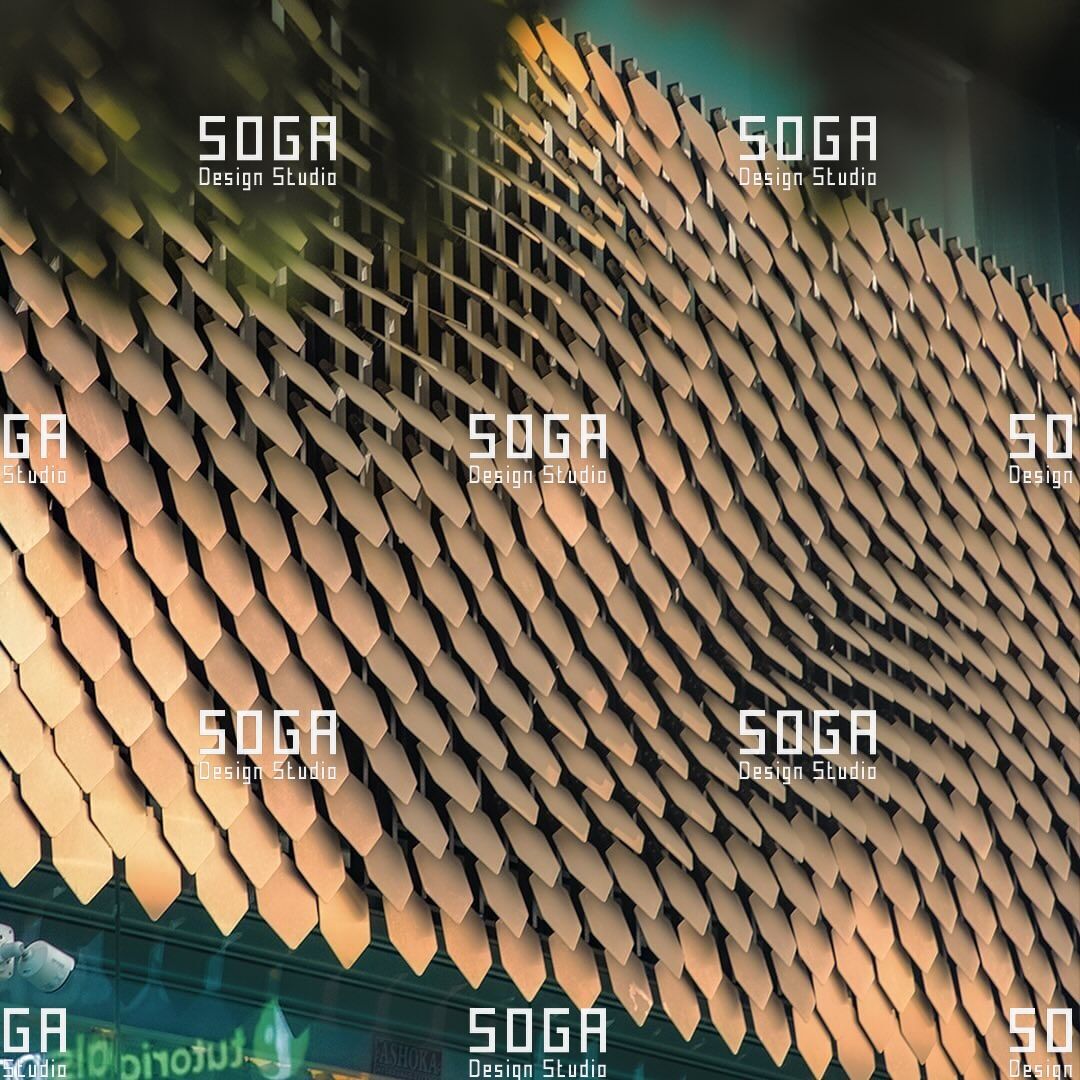
The floor sequence from approved nest to identified stack is four operations.
- Cut the nest. Pierce count matters as much as cut length: every hook lance, slot and drain notch is a separate pierce, and pierces are slow.
- Break out, separate and dress. Micro-tabs leave a witness mark, so they go on the head inside the lap, never on the exposed edge, dressed to a stated radius because film is thinnest over an arris.
- Form the returns, hem and hook in a fixed order, tooling set once and run as a long batch.
- Stack, interleave and identify. Parts stacked face to face abrade each other, and the marks appear after finishing.
Springback, flatness and hook accuracy
Springback is elastic recovery, not a defect, compensated by over-forming an allowance set at first-article trials and rechecked through the run, because it drifts with stock lot and tool temperature.
Hook position is the tolerance that governs appearance. The hook sets where the scale sits on its rail, so hook-to-lower-edge distance sets the exposure, and error there does not average out. It accumulates in one direction, and by the tenth course it is legible from the street. Parts are gauged from the hook, never from the sheared edge, against a hook-position tolerance stated for the batch. Flatness is checked in the same pass, because a field of slightly waved scales reads as ripple under raking sun while no single part fails.
Finishing at volume
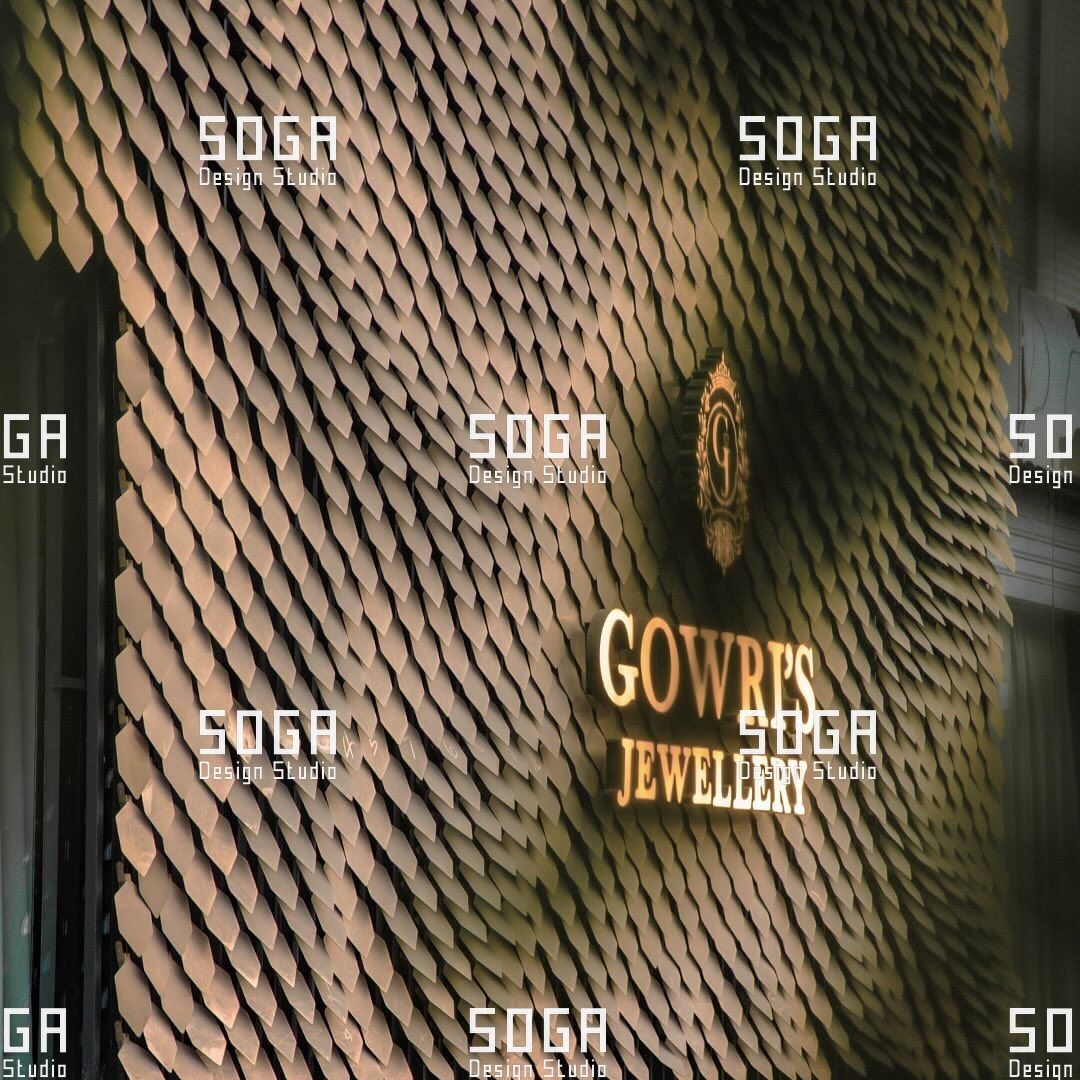
A finishing line is loaded by rack positions and surface area, not by weight. A tonne of scales needs far more hanging points than a tonne of panels, so finishing cost tracks part count and rack density. Batch size is whatever the coating line holds in one load, and every part in that load shares whatever the load does.
Batch mapping so finish variation never concentrates
Variation arrives from two places: the stock varies between mill lots, which anodising reveals and an opaque coating largely hides, and the finishing process varies between batches. Neither can be eliminated, so the only control is where it lands on the building.
This is where a nesting decision made badly returns months later. Nests are often organised by elevation because it makes picking simple: cut all of zone A, then all of zone B. Those parts travel together, rack together and take one coating batch from one stock lot. Every scale on that elevation then matches every other and matches nothing around the corner, so the step lands on a building line, where the eye is already going.
Two rules correct it. Nest and cut by part type, not by zone; then deal finishing batches across zones, so no batch owns a face. Which stock lot produced which parts is recorded at the cutting table, because after break-out the parts are anonymous.
Tracking parts: IDs, batches and packing logic
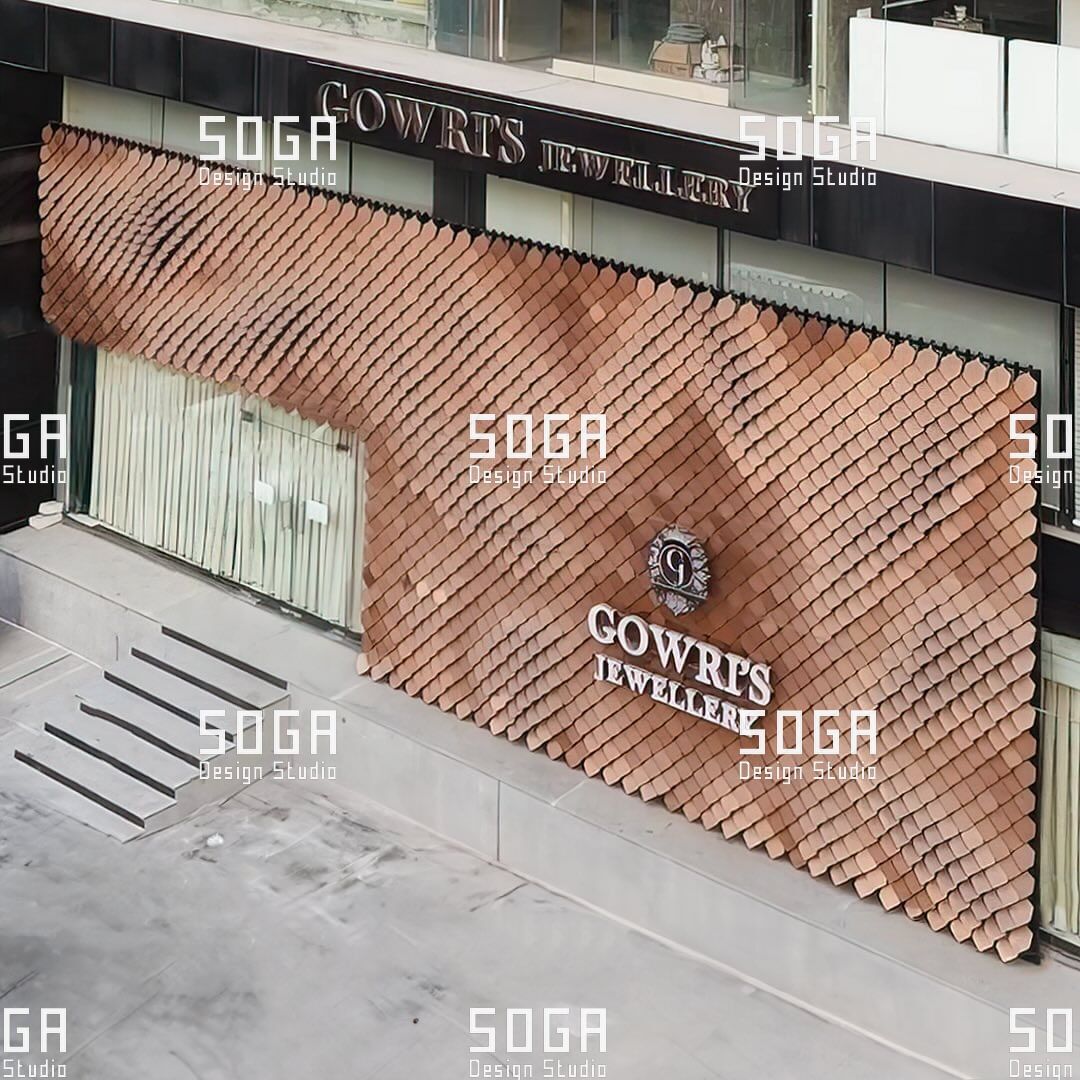
Not every scale needs a unique identity. Every type, batch and zone does, so the code carries three fields: type, finishing batch, destination zone, etched or stamped on the concealed head before pretreatment. The most avoidable failure in the process is a code written on protective film that is stripped before the finishing line, after which a rack of parts that look identical and are not arrives at packing with nothing to sort by.
Packing follows the install sequence, bottom of the elevation first, because courses lap upward and the first carton opened has to hold the first course hung. Spares are packed from their zone’s own batch, so a scale replaced in five years matches its neighbours.
Quality control: first article, in-process, final
First-article approval takes one scale of each type through every operation, measures it and retains it. Every later check compares against that part.
In-process checks are pass-or-fail against a gauge rather than measurements to be interpreted: hook position on a go/no-go gauge, flatness against a straightedge, edge radius against a profile, film thickness inside the return, where an electrostatic process leaves least. One more is usually missing — a nest audit on the first sheet of every run, parts counted off against what the nesting routine predicted, which catches a wrong flat pattern on sheet one instead of sheet four hundred.
Final inspection is defined by viewing condition: a stated distance, light and angle. Tone needs its own method, because a pile of scales hides a shift. A board of scales from one batch, laid at the installed exposure and viewed at the installed angle, shows it at once.
Yield economics: what actually reduces cost per square metre
Delivered yield is nest efficiency multiplied by coverage ratio. The levers are not equally powerful, and are listed in the order worth attacking.
| Decision | Effect on yield | Effect on appearance | Effect on install rate |
|---|---|---|---|
| Straight sides, square head, shaped lower edge only | Large gain; enables common-line cutting | Minimal at viewing distance | None |
| Rotation permitted, head-to-tail interlock | Large gain; the gap between two parts becomes a third | None, if the finish is non-directional | None |
| Directional finish specified | Large loss; rotation locked one way up | Tone shifts with angle, by design | None |
| Mixed-type nesting across the family | Moderate gain; small parts fill large gaps | None | Adds sorting at packing |
| Scale size reduced | Small gain at best | Finer, more textile-like grain | Large loss; handling dominates |
| Longer forming and finishing batches | None; lowers cost per part | Better tone consistency | None |
The last two rows carry the point most often missed: reducing scale size to chase material efficiency does not work, because parts per square metre rise faster than the saving accrues and material is the smaller cost. A part repeating tens of thousands of times also amplifies any change to its outline, so a small adjustment to a shoulder moves the sheet count for the whole project.
| Scale size band | Parts per m² | Nest efficiency | Forming cycles | Finishing area handled | Install minutes per m² | Relative cost index |
|---|---|---|---|---|---|---|
| Fine | Highest | Lowest; web loss dominates | Highest per m² | Highest per m² | Highest; handling governs | Highest |
| Medium | Moderate | Best balance | Moderate | Moderate | The usual default | Baseline |
| Large | Lowest | High per part; remnant strip costs more | Lowest per m² | Lowest per m² | Lowest; heavier to lift | Below baseline |
| Mixed family | Varies by zone | Highest achievable | Highest; more tool changes | Moderate | Slower; sorting adds labour | Above baseline |
Offcut is costed as a line item, not absorbed into overhead, and credited only where a real second use exists, at whatever recovery rate the supplier will actually put in writing.
What to give a fabricator before production starts
A production floor starts on a package, not on design intent, and every item missing becomes an unrecorded decision at a machine.
- A scale type schedule with counts, by quantity, zone allocation and spares.
- Flat pattern development, dimensioned as the developed blank rather than the finished scale.
- Nesting constraints as hard values — rotations, grain lock, web width, edge margin, common-line permission, stock format.
- A show face, a datum and burr direction, set at cutting and carried through finishing.
- A finish specification describing a process, including film thickness inside the return and whether the finish is directional.
- A batch mapping plan and a code that survives finishing, with packing zones matched to the install sequence.
A package answering all six can be nested, quoted and run without interpretation. One that does not will be nested to somebody’s assumption, and that assumption is the price.
How SOGA developed this production sequence
Standard practice treats a scale as a shape to cut. The SOGA Sequin Facade had to treat it as a shape to lay out: with tens of thousands of small parts, the layout decides whether the system is affordable at all. Indian shops could cut and fold the part. What nobody could state was how many sheets a square metre of wall would take, and without that the system could only be guessed at.
The work ran as a loop: flat patterns developed and nested, nests cut on real stock at real batch sizes, parts formed, finished and hung on a mock-up, and the yield each round returned fed back into the outline.
Two things changed once real sheets were being cut. The first was where the family carries its variation. The early nests varied scale height, which reads well on an elevation but removes common-line cutting, since shared edges must be straight, parallel and equal in length. The settled family varies width and holds head and side dimensions common, so different types still share cut lines.
The second was batching. The first runs nested and cut by zone because picking was simpler; those parts took one stock lot and one finishing batch, and the tone step landed on a building corner. The sequence now nests by type and deals batches across zones.
Development ran inside the six-months-to-a-year range these systems take.
It is manufacturable in India because it asks a cutting bed, a folder and a coating line to do ordinary things in long runs, moving the difficulty onto the layout.
SOGA Design Studio is a parametric and computational architecture practice based in Gurugram, working across India, Dubai and Singapore, specialising in facade systems engineered for local fabrication.
Frequently asked questions
How is waste minimised on small facade panels?
Through nesting: scale shapes are arranged so adjacent parts share cut lines and fill the sheet edges, with the family designed so sizes interlock. The outline does most of the work — straight sides and a square head nest in dense columns, while a shape curved on every side leaves an unusable gap at every position.
Does every scale need a unique ID?
Not every scale, but every batch and zone does. Variation is carried by a few types repeated across mapped zones, so the code needs three fields — type, finishing batch and destination zone — marked on the concealed head.
How is finish variation handled?
Finishing batches are recorded and distributed across the elevation so any shift is dispersed rather than visible as a block. That depends on nesting by part type rather than by zone, since an elevation cut as one job becomes an elevation finished as one lot.
What limits how small a scale can be?
Handling and fixing time. Below a certain size the installed cost per square metre rises faster than the material saving accrues, and since material is the smaller cost, the saving is spent before the scales reach the wall.
What the nesting sheet decides
A sequin facade is designed as a pattern and bought as a stack of sheets. Between those states sits a layout nobody photographs, in which one small outline repeats until it either fills the stock or wastes it. That layout sets the material order, the cutting hours, the forming cycles, the finishing batches and, through those, whether a tone step lands on a corner two years later.
None of it is legible in the finished building, which is why it is rarely written about and routinely priced by assumption. It is also what separates a scale family that can be made economically here from one that can only be rendered — the argument in manufacturability of parametric systems in India.
The layout was worked out in India, on Indian cutting beds and against Indian stock formats and Indian budgets, which is where the pressure on yield came from. A system made to earn its cost on every sheet here costs no more elsewhere.
Nesting studies are run before a sequin facade is priced, and the inputs required from a design model are listed openly in our fabrication brief.