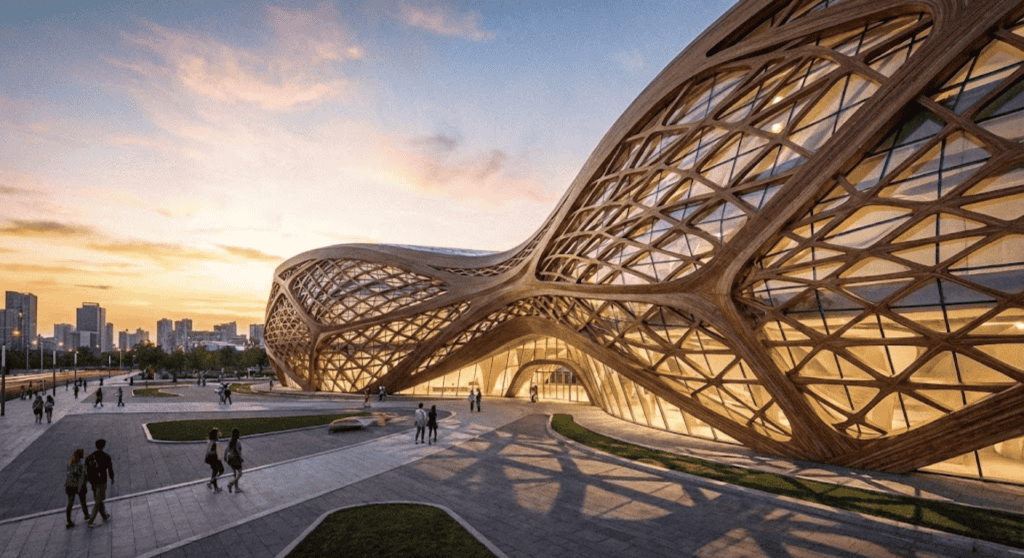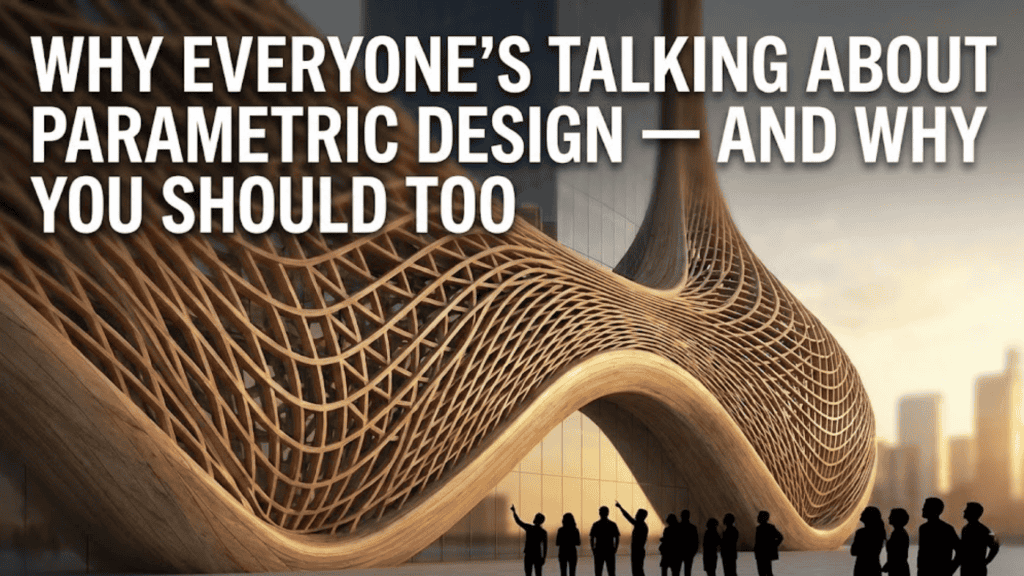
India is witnessing a remarkable transformation in its architectural landscape as parametric design principles reshape how buildings are conceived, designed, and constructed. In 2026, sustainable facade design has emerged as the most exciting frontier where computational creativity meets environmental responsibility.
What is Parametric Facade Design?
Parametric facade design uses algorithmic tools and computational methods to create building exteriors that respond dynamically to environmental conditions like sunlight, wind, and temperature. Unlike traditional fixed facades, parametric systems can be programmed to optimize solar shading, natural ventilation, and thermal performance — reducing energy consumption by up to 40% in Indian climatic conditions.
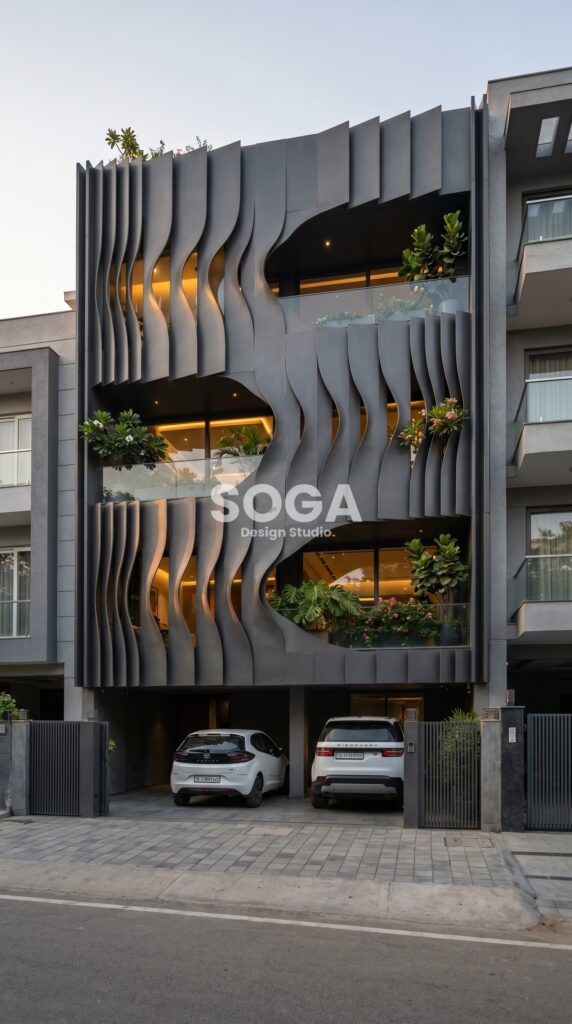
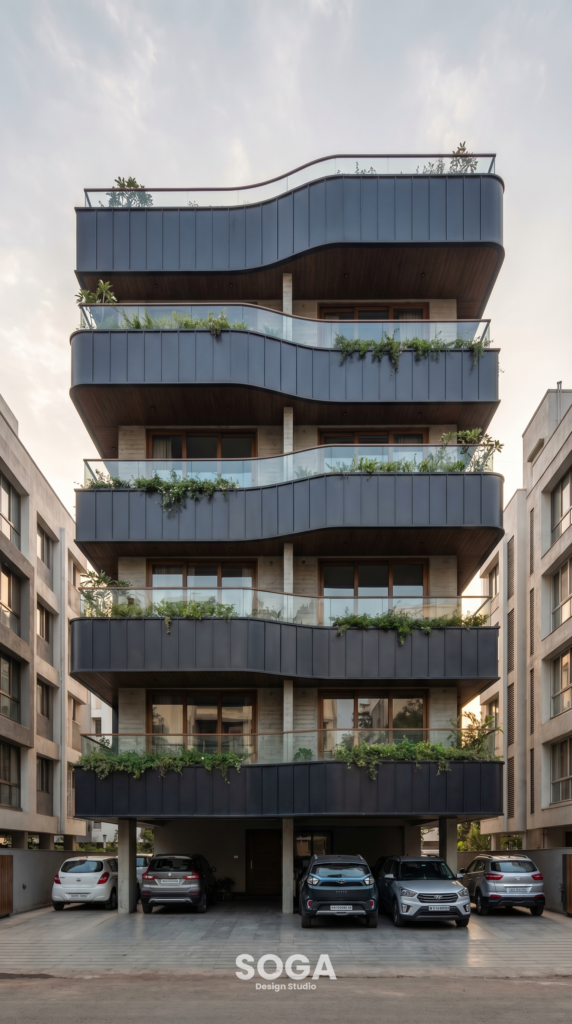
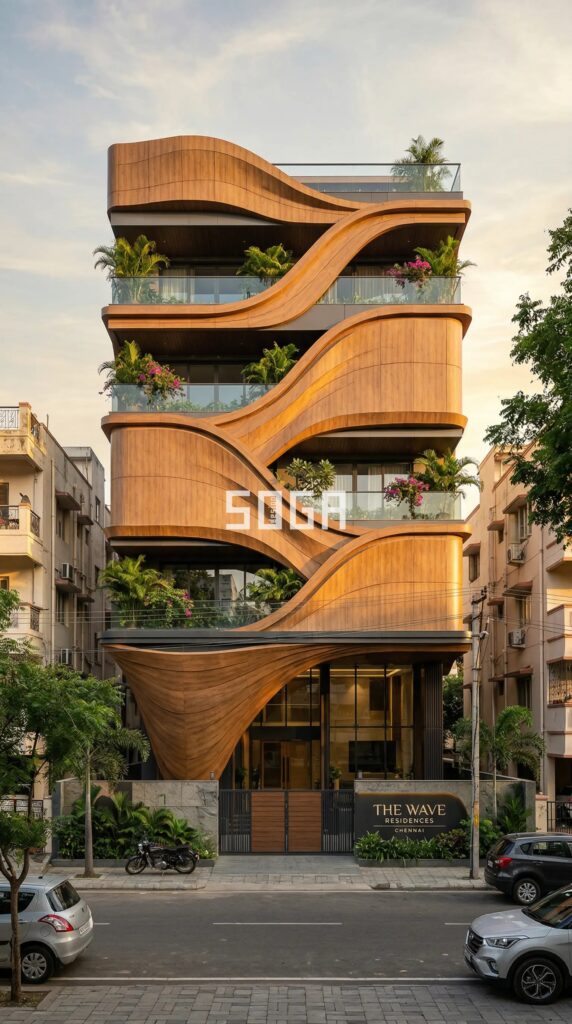
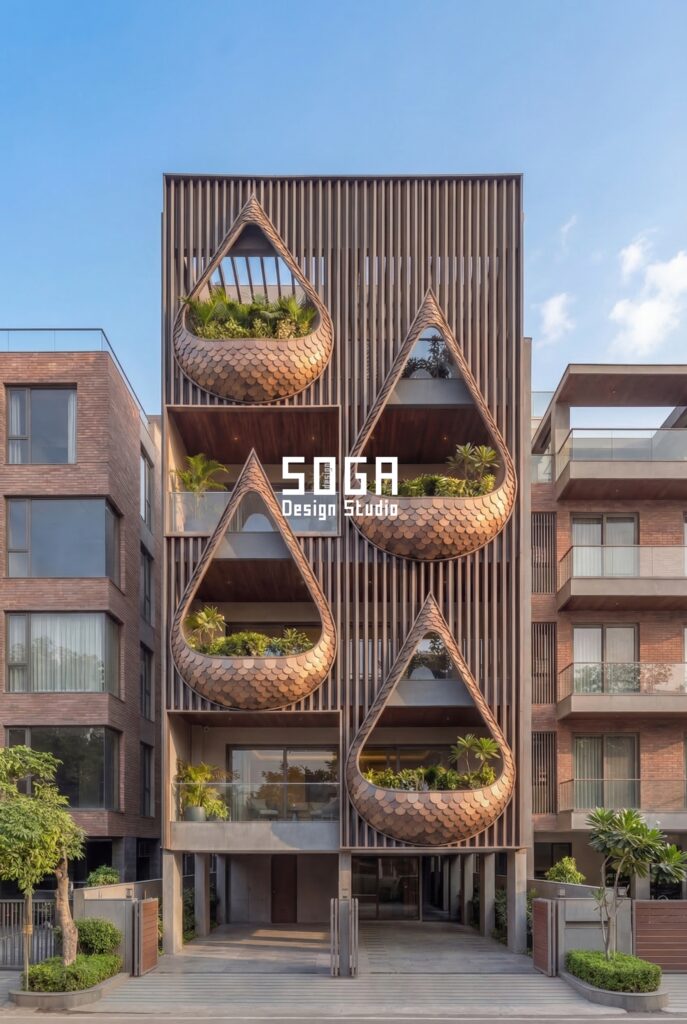
Key Trends in India for 2026
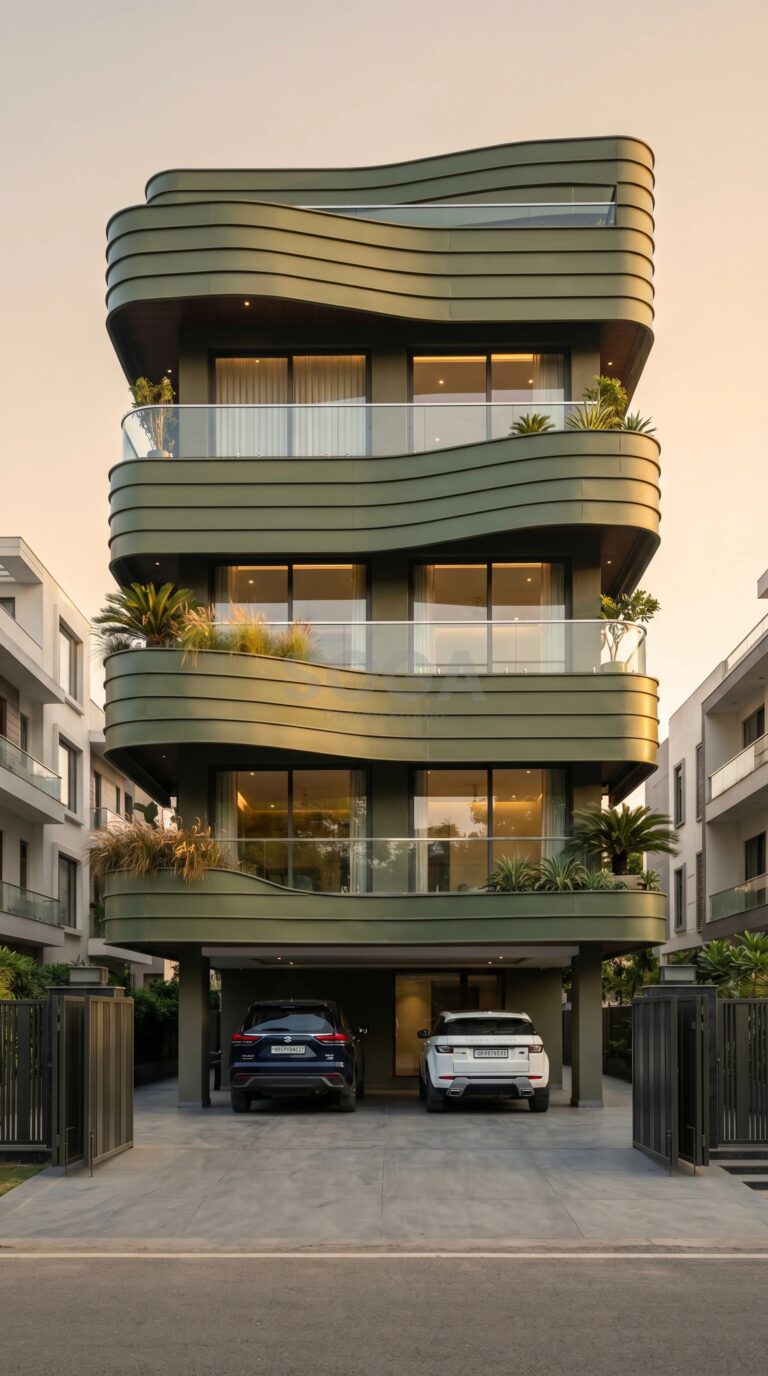
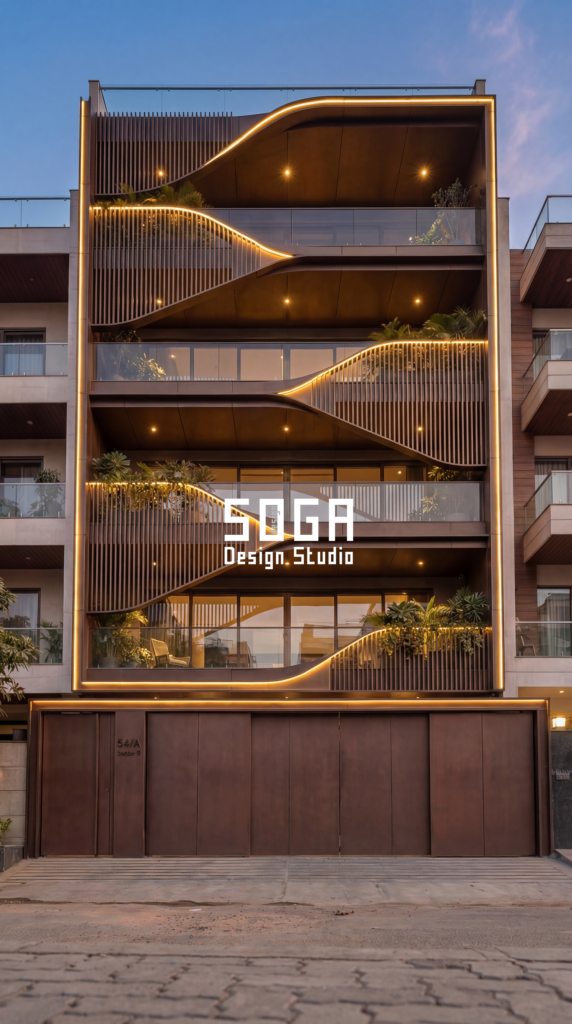
- Metal Fin Systems: Powder-coated aluminium fins that rotate to track the sun are becoming standard in premium office and residential buildings across Mumbai, Pune, Bangalore, and Hyderabad. These systems reduce direct solar heat gain while maintaining visual transparency. 2. Biophilic Integration: Parametric frameworks now incorporate vertical gardens and living walls, merging structural geometry with plant life for improved air quality and thermal mass. 3. Wave and Arch Patterns: Inspired by India’s textile heritage and natural landscapes, wave-form facades in GRC (Glass Reinforced Concrete) and metal perforated panels are defining the aesthetic of new-generation commercial towers. 4. AI-Driven Optimization: Machine learning algorithms are now being used to simulate and optimize facade performance before construction, enabling architects to predict energy savings with 95% accuracy.
Why Soga Design Studio?
At Soga Design Studio, we specialize in cutting-edge parametric facade design solutions tailored for India’s unique climate, culture, and construction ecosystem. From residential luxury projects to large-scale commercial facades, our computational design approach ensures every surface is both visually stunning and environmentally optimized. Our portfolio spans projects across Pune, Mumbai, Bangalore, Hyderabad, Jaipur, and beyond — each project a testament to the power of parametric thinking in Indian architecture.
Where Parametric Architecture in India Is Heading
Parametric architecture in India is moving from novelty to mainstream, and its next phase is defined by sustainability. As energy codes tighten and clients demand lower running costs, the parametric facade is being valued not only for how it looks but for how much heat it keeps out. The future is facades that are computed for climate first and sculpted for identity second — achieving both at once.
The Forces Shaping 2026 and Beyond
- Climate performance: shading and daylight optimisation are becoming standard design inputs, not extras.
- Local fabrication: Indian metal and GFRC workshops can now produce parametric panels at competitive cost.
- Sustainable materials: recycled aluminium, GFRC and timber pair with parametric logic to cut both carbon and heat.
- Digital delivery: BIM and digital twins make complex facades buildable and affordable.
Why Sustainable Parametric Facades Win
A parametric facade tuned to the sun path reduces cooling load for the life of the building, which in India’s cooling-dominated climate is the single biggest lever on energy use. Combined with recyclable materials and efficient fabrication, it lets developers deliver buildings that are distinctive, comfortable and genuinely lower-impact — the combination that will define Indian architecture through 2026 and beyond.
Frequently Asked Questions
Is parametric design sustainable? It can be highly sustainable when used to optimise shading and daylight, cutting cooling energy for the whole life of the building.
Is it affordable in India now? Increasingly yes — local fabrication of metal and GFRC parametric panels has made it far more accessible than a few years ago.
What materials suit sustainable parametric facades? Recycled aluminium, GFRC and engineered timber, all of which combine well with parametric shading logic.